
Is 4 Energy Drinks a Week Bad for Your Health?
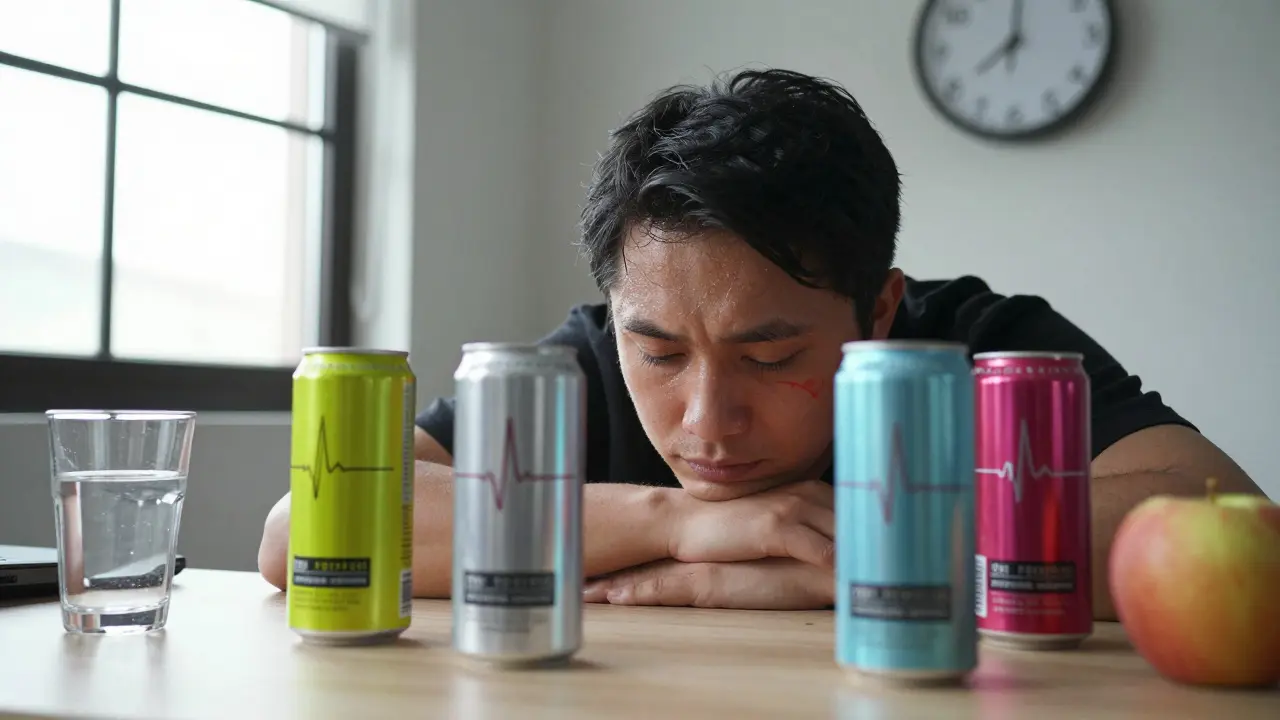
Drinking four energy drinks a week might seem harmless-after all, you’re not downing one every day. But when you look closer at what’s inside those cans, the picture changes. It’s not just about caffeine. It’s about sugar, artificial sweeteners, stimulants, and how your body reacts when you make this a regular habit.
What’s really in your energy drink?
Most popular energy drinks pack between 80 and 160 milligrams of caffeine per can. That’s about the same as a strong cup of coffee. But unlike coffee, energy drinks often contain 27 to 30 grams of sugar-nearly seven teaspoons-in a single serving. Even the "sugar-free" versions aren’t harmless. They replace sugar with artificial sweeteners like sucralose or acesulfame K, which studies link to changes in gut bacteria and insulin response over time.
Then there’s the cocktail of other ingredients: taurine, guarana, L-carnitine, B-vitamins, and sometimes even yohimbine or synephrine. These aren’t just flavor additives. Guarana alone can add another 20-40 mg of caffeine. And while your body can handle small amounts of these compounds, stacking them up four times a week adds up.
How your body responds to four energy drinks a week
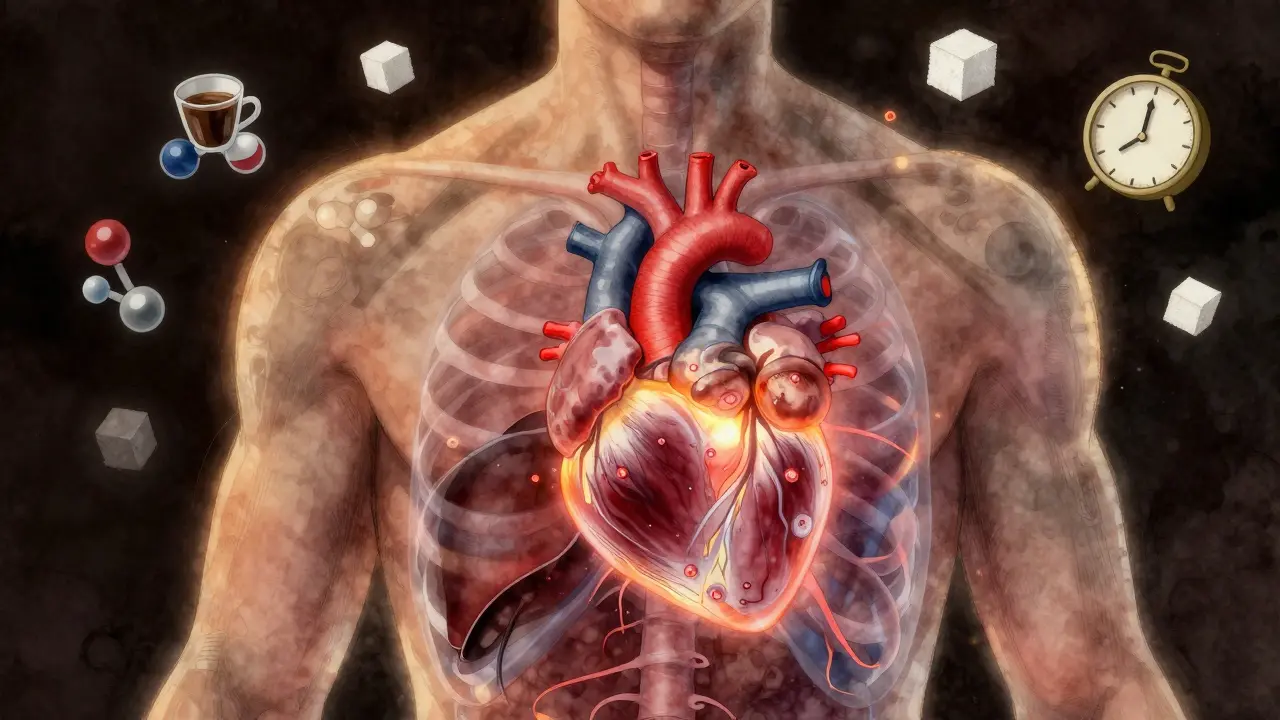
Your heart doesn’t care if you drink one energy drink on Friday night or spread them out over the week. Each one triggers a spike in adrenaline and blood pressure. A 2023 study from the American Heart Association tracked over 2,000 healthy adults who consumed one to four energy drinks per week. Those who drank four or more had a 22% higher chance of experiencing palpitations, dizziness, or elevated resting heart rate compared to those who drank none.
Even if you don’t feel symptoms, your body is still reacting. Caffeine blocks adenosine, the chemical that tells your brain it’s time to rest. Over time, your brain adapts by making more adenosine receptors. That means you need more caffeine to get the same effect-and you’re more likely to crash harder when you skip it.
Sugar spikes are another issue. Four drinks a week means you’re getting 108-120 grams of sugar weekly from energy drinks alone. That’s over 30% of the recommended daily limit for added sugars, just from one source. The liver turns excess sugar into fat. Over months, that can lead to fatty liver, even in people who aren’t overweight.
Who’s at risk?
Not everyone reacts the same way. Teenagers, pregnant women, people with anxiety disorders, and those with heart conditions are at higher risk. But even healthy adults aren’t immune. A 32-year-old office worker in Brisbane I spoke with started drinking two energy drinks on weekdays to get through afternoon slumps. Within three months, she developed chronic headaches and trouble sleeping. She cut back to one per week-and her symptoms vanished.
People who mix energy drinks with alcohol are especially vulnerable. The caffeine masks how drunk you feel, leading to riskier behavior and higher alcohol consumption. The combination also puts extra stress on the heart. Emergency rooms see a spike in cases during weekends when this combo is common.
What’s the safe limit?
The FDA recommends no more than 400 mg of caffeine per day for healthy adults. That’s about two to three energy drinks, depending on the brand. But that’s total caffeine-from coffee, tea, soda, and supplements too. If you drink a cup of coffee in the morning and two energy drinks later, you’re already over the limit.
For sugar, the World Health Organization says adults should consume no more than 25 grams of added sugar per day. That means even one energy drink a day pushes you past the limit. Four a week might seem okay, but if you’re also having soda, yogurt, or dessert, you’re likely exceeding it.
There’s no official "safe" number of energy drinks per week. But experts agree: if you’re drinking more than two a week, you’re increasing your risk of long-term health issues-even if you feel fine now.
Alternatives that actually work
You don’t need a can of chemicals to feel energized. Real energy comes from sleep, hydration, and food. Here’s what works better:
- Drink a glass of water first thing in the morning and before meals. Dehydration is a major cause of afternoon fatigue.
- Swap one energy drink for a small handful of nuts and an apple. The natural sugars and healthy fats give steady energy without the crash.
- Try green tea. It has about 30 mg of caffeine plus L-theanine, which calms your nervous system while keeping you alert.
- Take a 10-minute walk outside. Sunlight and movement reset your circadian rhythm better than any stimulant.
Some people swear by electrolyte drinks like Nuun or LMNT. They have no caffeine, no sugar, and help with hydration-especially if you’re active. These aren’t energy boosters, but they prevent the fatigue that makes you reach for energy drinks in the first place.
When to cut back-or quit
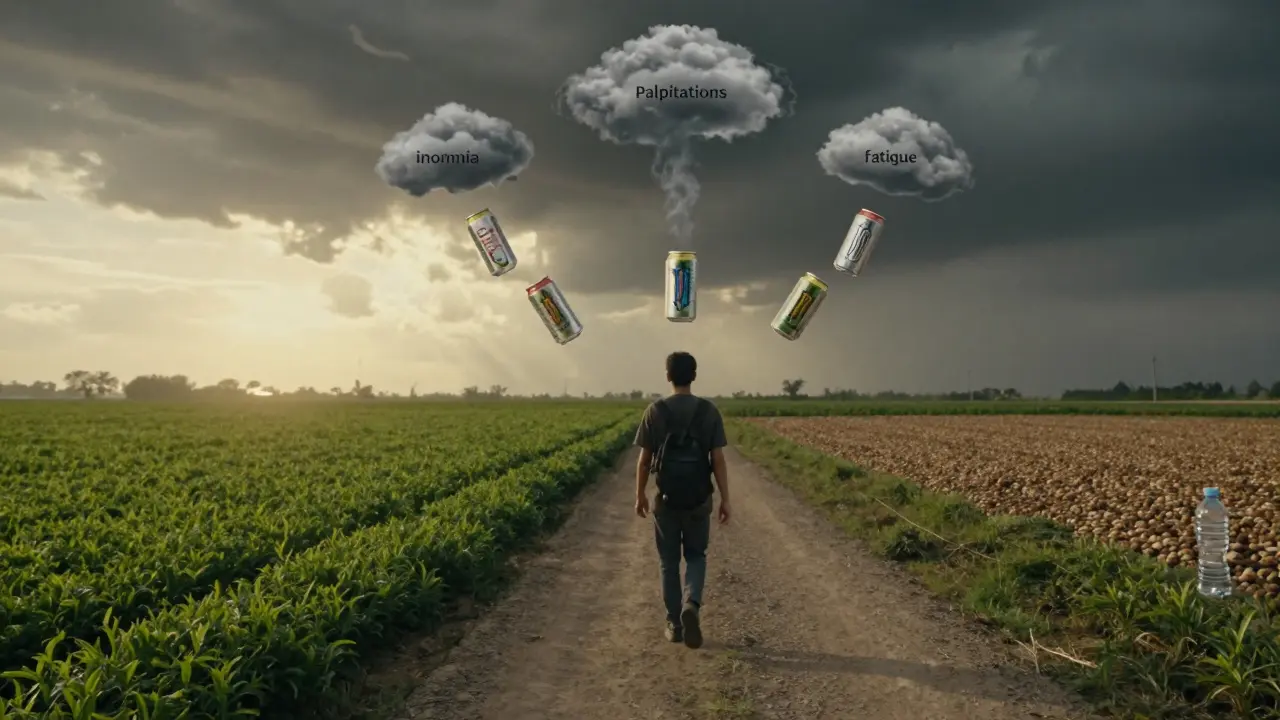
If you notice any of these signs, it’s time to reduce your intake:
- You feel jittery or anxious after drinking one
- You need to drink more to feel the same effect
- You have trouble falling asleep even when you don’t drink after 2 p.m.
- You get headaches when you skip your usual drink
- Your heart races or feels like it’s skipping beats
Quitting cold turkey can cause withdrawal headaches and fatigue for a few days. A better approach: reduce by one drink every three days. Replace each skipped drink with water, herbal tea, or a protein snack. Within two weeks, your body will reset. Your sleep will improve. Your cravings will fade.
Bottom line
Four energy drinks a week isn’t an emergency-but it’s not harmless either. It’s a slow drip of sugar, caffeine, and stimulants that wear down your body over time. You might not feel it now, but your heart, liver, and brain are paying the price.
If you’re drinking energy drinks to get through the day, ask yourself: what’s really draining your energy? Is it lack of sleep? Poor nutrition? Too much screen time? Fix those, and you won’t need the can.
Energy drinks aren’t the enemy. But they’re not a solution either. They’re a shortcut-and shortcuts often lead to detours you didn’t plan for.
Is it okay to drink energy drinks once a week?
Yes, for most healthy adults, one energy drink per week is unlikely to cause harm if you’re not consuming other sources of caffeine or sugar. Stick to brands with less than 100 mg of caffeine and under 20 grams of sugar. Avoid mixing with alcohol or taking it on an empty stomach.
Can energy drinks cause weight gain?
Yes, especially if you drink them regularly. A single can can contain 150-200 calories from sugar. Four cans a week adds up to 600-800 extra calories-enough to gain about 1-2 pounds per month if you don’t burn them off. Even sugar-free versions can increase cravings for sweet foods, leading to overeating.
Do energy drinks affect sleep?
Absolutely. Caffeine has a half-life of 5-6 hours, meaning half of it is still in your system six hours after drinking. If you have an energy drink at 4 p.m., you’re likely still feeling its effects at midnight. This reduces deep sleep, which is critical for recovery, memory, and hormone balance.
Are sugar-free energy drinks healthier?
They’re lower in calories and sugar, but not necessarily healthier. Artificial sweeteners can still trigger insulin responses and alter gut bacteria. Some studies link them to increased appetite and cravings. Plus, they still contain high doses of caffeine and stimulants that can affect your heart and nervous system.
What’s the best way to stop drinking energy drinks?
Gradually reduce your intake. Cut one drink every three days and replace it with water, herbal tea, or a protein-rich snack. Focus on improving sleep, hydration, and meals. Your energy will return naturally once your body isn’t relying on artificial stimulation.

Comments (8)
Bridget Kutsche
8 Jan 2026
Really appreciated this breakdown - I used to knock back two energy drinks on busy workdays and thought I was fine until I started having panic attacks at 3 p.m. Switched to green tea and walking breaks, and my anxiety dropped like a rock. No more crashes, no more jittery hands. Your body doesn’t lie, even when your brain says ‘just one more.’
Jack Gifford
9 Jan 2026
Minor grammar nitpick: ‘sugar-free’ versions aren’t harmless - you missed a hyphen. But seriously, this is one of the clearest, most grounded takes I’ve seen on this topic. The liver-to-fat conversion point? That’s the silent killer nobody talks about. I’m cutting mine to one a week, no questions.
Sarah Meadows
10 Jan 2026
Look, if you’re drinking energy drinks because you’re too lazy to sleep or eat right, that’s on you. America’s getting soft. We used to work 12-hour shifts on coffee and grit. Now people think a can of chemical sludge is a solution. Stop blaming the drink. Fix your lifestyle. Or move to a country where people actually work for a living.
Nathan Pena
10 Jan 2026
The data presented here is statistically sound, yet the conclusion remains under-specified. The 22% increased incidence of palpitations is relative risk, not absolute - the baseline incidence is likely under 5%. Furthermore, the WHO’s 25g sugar limit applies to *added* sugars, which excludes naturally occurring fructose in whole fruits. The conflation of correlation with causation in the fatty liver assertion is methodologically weak. That said, the behavioral implications are valid: habitual reliance on exogenous stimulants indicates poor metabolic self-regulation. Consider this: your body isn’t broken - your habits are.
Mike Marciniak
10 Jan 2026
They’re not just in the drinks. The FDA knows this is a mind control tactic. The sugar and caffeine are just the bait. The real ingredient is the nanotech that tracks your brainwaves and feeds data to Big Pharma so they can sell you antidepressants later. You think your headaches are from withdrawal? No. They’re from the signal trying to escape. Cut the drinks, but also stop using your phone after 8 p.m. They’re synced.
VIRENDER KAUL
12 Jan 2026
One must understand that energy drinks are not beverages but biochemical interventions. The human physiology is not engineered for artificial stimulant overload. The liver metabolizes sugar into triglycerides which accumulate in hepatocytes. This is not a lifestyle choice. This is metabolic sabotage. In India we call it ‘dil se pee lo’ - drink from the heart - but here you drink from the vending machine. The consequences are inevitable. Sleep deprivation, insulin resistance, cardiac arrhythmia. These are not side effects. These are outcomes.
Mbuyiselwa Cindi
13 Jan 2026
Hey I was right there with you - two a week, felt like I needed them to function. Then I started drinking water before my morning coffee and taking a 5-minute stretch break every hour. No magic, just consistency. My energy’s steadier now. And I sleep like a baby. You got this. Small changes, big payoff.
Henry Kelley
14 Jan 2026
Biggest thing for me? Realizing I wasn’t tired because I needed caffeine - I was tired because I was sitting in front of a screen 10 hours a day. Started walking to lunch, even if it was just around the block. No drink, no guilt. Just air and sun. Best upgrade I ever made.