
Why Don't Bodybuilders Eat Bread? The Real Reason Behind Their Carb Choices

Ever seen a bodybuilder at the grocery store and wondered why they walk past the bread aisle like it’s radioactive? It’s not because they hate toast. It’s because bread, as most people know it, doesn’t fit their goals - not because it’s evil, but because it’s often the wrong kind of fuel.
Not All Carbs Are Created Equal
Bodybuilders don’t avoid carbs. In fact, they need them - a lot of them. Carbohydrates are the main source of energy for intense training. Without enough glycogen stored in muscles, you can’t lift heavy, train hard, or recover fast. The issue isn’t carbs. It’s the type of carbs.
Most store-bought bread is made from refined white flour. That means the bran and germ have been stripped away, leaving mostly starch. This starch breaks down quickly in your body, spiking blood sugar and insulin. That spike might feel like energy, but it’s followed by a crash. For someone trying to build lean muscle and stay lean, that rollercoaster is a problem.
Compare that to oats, sweet potatoes, or brown rice - foods bodybuilders actually eat. These are complex carbs. They digest slowly. They keep insulin steady. They provide long-lasting energy without the crash. And they come packed with fiber, vitamins, and minerals that support recovery and gut health.
Why Bread Triggers Fat Storage
Insulin isn’t the enemy. It’s a vital hormone that shuttles nutrients into muscle cells. But when you flood your system with rapid sugar from white bread, your body doesn’t know what to do with all that glucose. If your muscles are already full of glycogen (which they often are after a workout), the excess gets stored as fat.
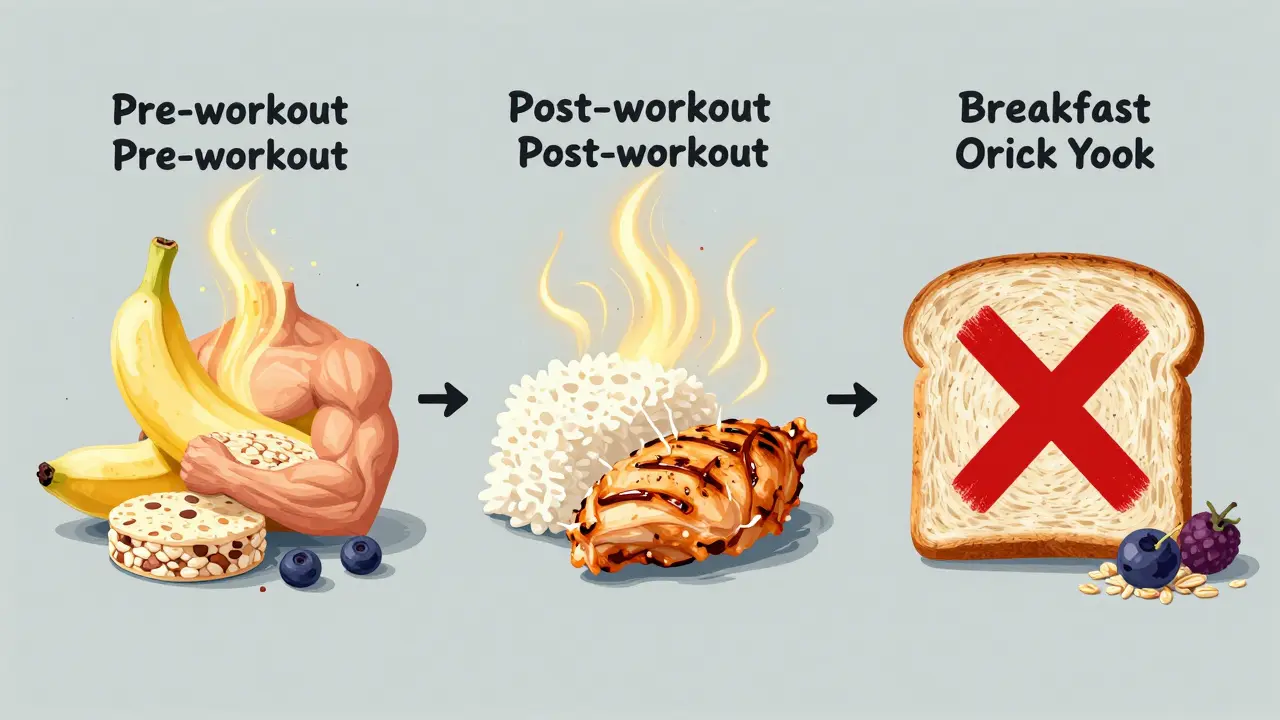
Bodybuilders aren’t trying to avoid insulin. They’re trying to control it. They want insulin to work for them - delivering carbs to muscles, not fat cells. That’s why they time their carbs. They eat them around workouts, when muscles are most receptive. Bread, eaten at breakfast or as a snack, often lands in the wrong window.
One study from the Journal of the International Society of Sports Nutrition found that athletes who consumed complex carbs before and after training improved muscle recovery by 22% compared to those who ate simple carbs. Bread didn’t make the cut.
Calories Are Tight in the Cutting Phase
When bodybuilders get ready for a competition, they enter what’s called a “cutting phase.” Their goal? Lose fat while keeping every ounce of muscle. That means every calorie counts.
A single slice of white bread has about 70-80 calories. Sounds harmless, right? But it’s also low in nutrients. It doesn’t fill you up. You eat two slices, then get hungry again an hour later. Now you’re eating more bread. Or snacks. Or both.
Now think about 70 calories of sweet potato. It’s got fiber, vitamin A, potassium, and water. It takes longer to digest. You feel full longer. You’re not chasing snacks. You’re not binging. That’s why bodybuilders choose foods that give them more bang for every calorie.
During peak prep, some bodybuilders cut bread entirely. Not because it’s bad - but because it’s inefficient. They need foods that deliver maximum nutrition with minimal volume. Bread just doesn’t make the cut.
What Bread Replaces in Their Diet
When bodybuilders skip bread, they’re not leaving a nutritional void. They’re replacing it with better options:
- Oats - slow-digesting, high in fiber, packed with beta-glucan for immune support
- White rice - low in fiber, easy to digest, perfect for post-workout carb loading
- Sweet potatoes - rich in antioxidants, vitamin A, and steady energy
- Bananas - natural sugars, potassium, and quick energy before training
- Quinoa - a complete protein with carbs, great for meal prep
These foods aren’t just “healthier.” They’re strategically chosen. They match the timing, intensity, and goals of a bodybuilder’s training cycle. Bread doesn’t offer that precision.
It’s Not About Bread - It’s About Control
Some bodybuilders do eat bread - especially during bulking phases. But even then, they choose sourdough, rye, or sprouted grain bread. These have lower glycemic indexes. They’re fermented, which improves digestibility. They’re denser, so you eat less to feel full.
It’s not about banning bread. It’s about control. Bodybuilders are meticulous. They track macros. They time meals. They monitor how their body responds. Bread - especially processed, sugary, fluffy white bread - is too unpredictable. Too easy to overeat. Too low in nutritional value.
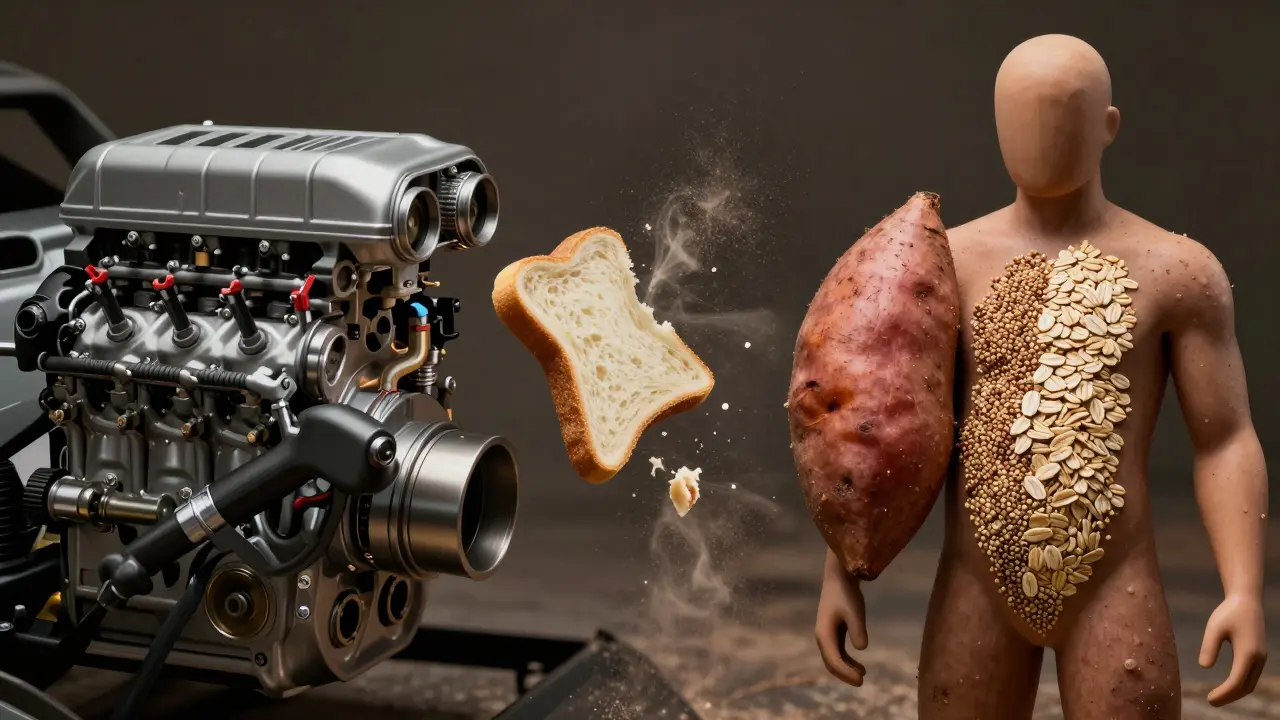
Think of it like this: you wouldn’t put cheap oil in a race car. You wouldn’t use low-grade fuel in a Formula 1 engine. Bodybuilders treat their bodies the same way. They don’t avoid bread because they’re scared of carbs. They avoid it because there are better options.
What Should You Eat Instead?
If you’re training hard and trying to build muscle or lose fat, here’s what to try instead of regular bread:
- For breakfast: Rolled oats with berries and almond butter
- For pre-workout: A banana or a small sweet potato
- For post-workout: White rice or jasmine rice with chicken
- For lunch: Quinoa salad with veggies and grilled fish
- For snacks: Rice cakes (unsweetened) or whole grain wraps (check the label - no added sugar)
The goal isn’t to cut out carbs. It’s to choose carbs that work for your goals. Bread can fit in - if it’s the right kind. But for most people, the bread they reach for automatically isn’t it.
Final Thought: Bread Isn’t the Problem - Context Is
Bodybuilders don’t hate bread. They just don’t need the kind most people eat. If you’re sedentary and eating white bread daily, you’re likely gaining fat. If you’re lifting heavy and eating whole grain sourdough with your post-workout meal? You’re probably fine.
The real takeaway? Food isn’t good or bad. It’s about context - your goals, your activity level, and the timing of when you eat it. Bread can be part of a healthy diet. But for someone chasing muscle definition, it’s rarely the best choice.



Comments (10)
Ronak Khandelwal
1 Mar 2026
I love how this post breaks it down without shaming anyone. 💪 Carbs aren't the enemy - it's the *context*. I used to eat white bread every morning until I switched to oats and realized I wasn't crashing by 11 a.m. My energy stayed steady, my skin cleared up, and I stopped craving sugar. It's not about restriction. It's about listening to your body. You got this, everyone.
Jeff Napier
3 Mar 2026
Lol so bread is evil now? Next they’ll say water causes obesity. This is why people get fat - because they believe this nonsense. White bread is fine if you’re active. I bench 315 and eat toast daily. Your ‘science’ is just fear marketing.
Sibusiso Ernest Masilela
3 Mar 2026
You’re all missing the point. This isn’t about nutrition - it’s about control. The fitness industry profits from making you feel guilty for eating bread. Real athletes eat what they want. I eat sourdough, croissants, and donuts. I’m shredded. You’re just scared of pleasure.
Daniel Kennedy
5 Mar 2026
Jeff, you’re right that activity level matters - but so does quality. I’ve trained athletes for 15 years. The ones who eat refined carbs all day? They crash. They binge. They feel sluggish. The ones who prioritize nutrient-dense carbs? They recover faster, sleep better, and stay consistent. It’s not dogma. It’s physiology. You don’t have to eliminate bread - just upgrade it.
Taylor Hayes
5 Mar 2026
I think the real takeaway here is personalization. I used to be a ‘no carbs after 6’ person until I started training at night. Then I realized white rice after my 10 p.m. session helped me sleep and recover. Context is king. One size doesn’t fit all. Experiment. Track. Adjust. No food is sacred or sinful.
Andrew Nashaat
6 Mar 2026
Wait - you said ‘white bread’ has ‘70–80 calories’? That’s inaccurate. A standard slice of Wonder Bread is 75 calories - not ‘70–80.’ And you say ‘sourdough has a lower glycemic index’ - but did you cite the actual study? Or are you just guessing? Also, ‘quinoa’ isn’t a carb - it’s a pseudo-grain with complete protein. You’re doing a disservice to science by being sloppy.
Gina Grub
6 Mar 2026
This is peak fitness theater. The obsession with ‘glycemic index’ is a cult. You think insulin is the villain? Try telling that to a Type 1 diabetic. Carbs aren’t the problem - the system is. Big Pharma. Big Fitness. Big Bread. You’re all just sheep in Lululemon.
Nathan Jimerson
8 Mar 2026
I’ve been lifting for 8 years. I eat white bread every Sunday morning with peanut butter. I’m lean, strong, and happy. Your ‘science’ doesn’t work for everyone. Trust your body, not the algorithm.
Sandy Pan
9 Mar 2026
I used to think bread was my enemy... until I realized I wasn’t eating it *mindfully*. Now I eat one slice of sourdough with avocado and sea salt - slowly. I savor it. I feel it. I’m not just shoveling carbs. It’s not about the food. It’s about the ritual. The quiet moment before the storm of training. Bread became my anchor. I didn’t change my diet. I changed my relationship with it.
Eric Etienne
10 Mar 2026
I don’t even know why we’re having this conversation. I eat bread. I lift. I’m fine. End of story.