
Do NFL Players Drink Energy Drinks? What the Data Shows
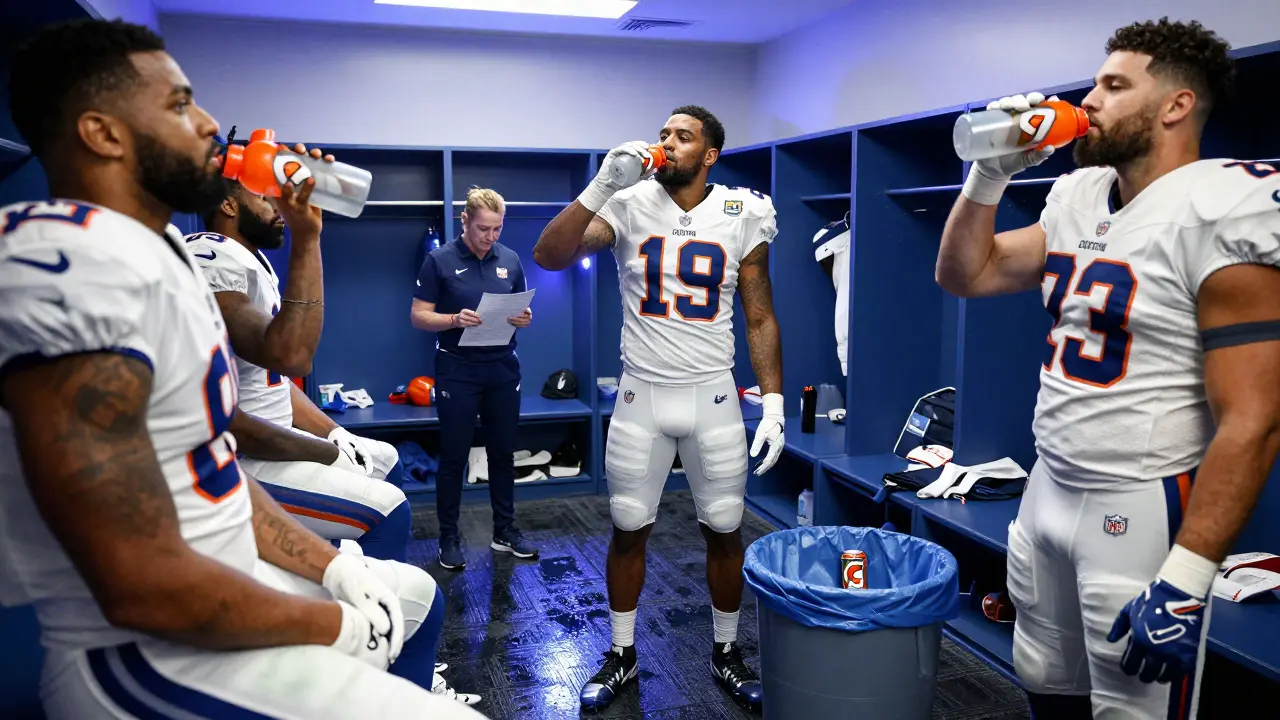
When you see an NFL player sprinting down the field or crushing a tackle, it’s easy to wonder: what’s fueling them? Energy drinks are everywhere - in convenience stores, gyms, and even on sidelines. But do NFL players actually drink them? The answer isn’t as simple as yes or no. It’s shaped by team policies, personal habits, and the science of performance.
What NFL Players Actually Drink During Games
Most NFL teams don’t hand out energy drinks on game day. Instead, they rely on electrolyte solutions like Gatorade, Powerade, or custom blends made by team nutritionists. These aren’t energy drinks. They’re designed to replace fluids and salts lost through sweat, not to spike adrenaline or caffeine levels.
Energy drinks typically contain 80-300 mg of caffeine per serving, plus sugar, taurine, and stimulants like guarana or synephrine. That’s a problem in a high-stakes, high-impact environment like football. Caffeine can increase heart rate, raise blood pressure, and dehydrate you if you’re not careful. In a sport where players already face extreme physical stress - 30-40 tackles, 5-7 sprints per game, and 90+ degree field temperatures - adding a stimulant isn’t worth the risk.
Teams like the New England Patriots and Kansas City Chiefs have strict nutrition protocols. Their players get hydration packs with precise sodium, potassium, and glucose ratios. Some even use IV hydration after games. Energy drinks? Not on the menu.
Do Any NFL Players Drink Energy Drinks Outside of Games?
Yes - but not during the season, and rarely in public.
Some players admit to drinking energy drinks during the offseason, before workouts, or on days off. A 2023 survey by the NFL Players Association found that 18% of players reported consuming energy drinks outside of team activities. Most of them said they used them as a quick pick-me-up before early morning training sessions or long drives.
Former NFL linebacker A.J. Hawk told ESPN in 2022 that he used Monster Energy during his first year in the league - until he got a migraine after a 4 a.m. lift. “I thought it was hype. Turns out, it was just sugar and caffeine crashing me harder than I was lifting.” He switched to black coffee and now swears by it.
Other players, like wide receiver Tyreek Hill, have been seen with cans of Red Bull in social media posts - but those were from 2019, before he signed his current contract. Today, he’s more likely to be seen with a bottle of water and a protein shake.
Why Energy Drinks Are Risky for Football Players
Football isn’t like a marathon or a sprint race. It’s a series of explosive bursts followed by long rest periods. That means the body doesn’t need a constant stimulant - it needs recovery.
Energy drinks can interfere with:
- Recovery: Caffeine blocks adenosine receptors, which are key for sleep and muscle repair. NFL players need 8-9 hours of sleep nightly. A pre-workout energy drink can cut into that.
- Hydration: Many energy drinks have high sugar and sodium, which can pull water out of cells. That’s the opposite of what players need on a hot field.
- Heart strain: A 2021 study in the Journal of the American College of Cardiology found that athletes who consumed energy drinks before intense activity had a 12% higher risk of abnormal heart rhythms. For men in their 20s and 30s, that’s not a small number.
Teams have banned energy drinks not because they’re “bad,” but because they’re unpredictable. One player’s reaction to 200 mg of caffeine might be a calm focus. Another’s could be a panic attack or a cramp. Teams can’t afford that variability.
What Do NFL Nutritionists Recommend Instead?
Most NFL nutritionists don’t ban caffeine - they just control it.
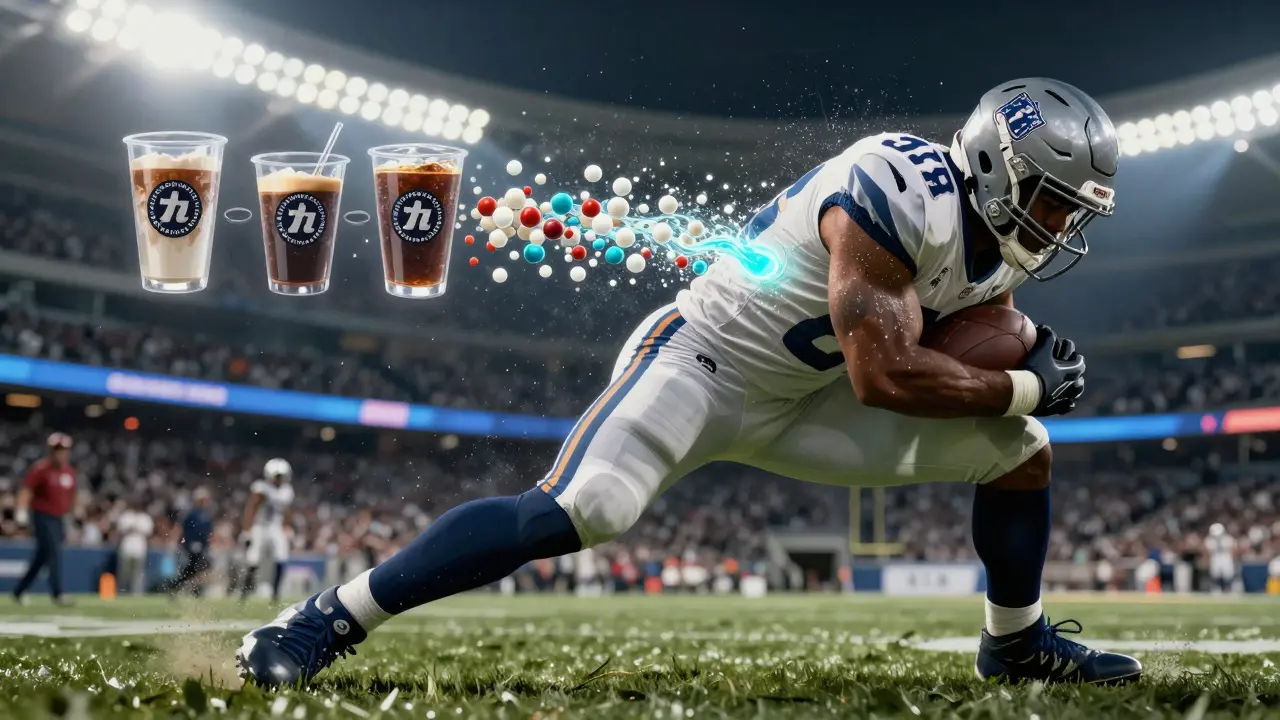
Instead of energy drinks, they recommend:
- Black coffee (100-150 mg caffeine) - taken 45 minutes before training. It’s clean, predictable, and doesn’t spike sugar.
- Green tea - contains L-theanine, which smooths out caffeine’s edge. Helps with focus without jitters.
- Electrolyte tablets - like Nuun or Liquid IV. No sugar. No stimulants. Just minerals.
- Beetroot juice - naturally boosts nitric oxide, which improves blood flow and endurance. Used by over 60% of NFL teams in 2025.
Some teams even use adaptogens like rhodiola rosea or ashwagandha. These aren’t stimulants - they help the body handle stress better. One 2024 study from the University of Texas showed players who took ashwagandha daily had 22% faster recovery times between drills.
What About Energy Drink Sponsorships?
You’ve seen Red Bull, Monster, and Rockstar logos on NFL helmets - but those are team sponsorships, not player endorsements.
Players don’t get paid to drink them. In fact, most contracts include clauses that prohibit athletes from promoting or consuming products that conflict with team health policies. A player can’t be seen drinking an energy drink on TV if their team’s hydration partner is Gatorade. It’s a conflict of interest.
Even when energy drink companies sponsor teams, they’re usually restricted to vending machines in locker rooms - and even then, only if they meet nutritional standards. In 2023, the NFL tightened its guidelines: any sponsored beverage must have under 10g of sugar per 8 oz and no more than 100 mg of caffeine.
What Happens If a Player Gets Caught Drinking Energy Drinks?
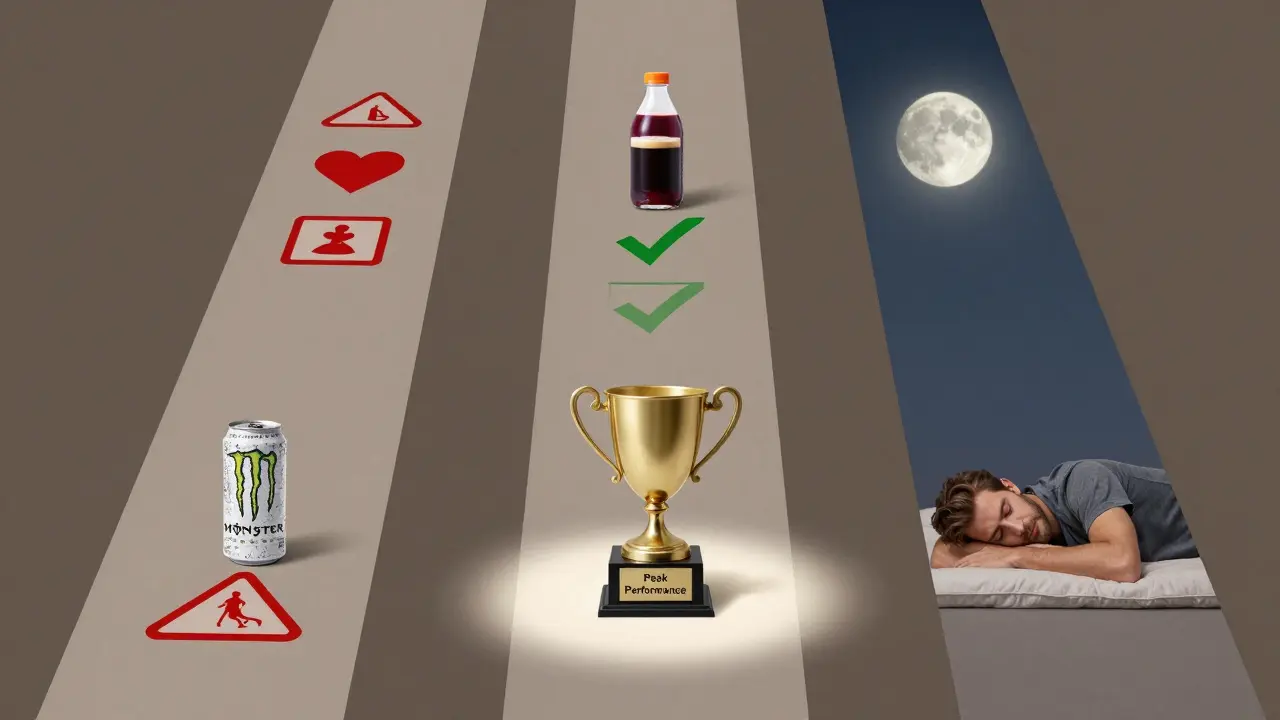
There’s no official league-wide rule against energy drinks. But teams have their own policies. Violations can lead to:
- Loss of access to team nutritionists
- Forced meetings with medical staff
- Removal from practice or game-day rotation
- Public reprimand - especially if it’s caught on camera
In 2021, a rookie running back for the Minnesota Vikings was benched for a week after a post-game interview showed him drinking a Monster Energy. The team cited “non-compliance with hydration protocol.” He later said he didn’t realize it was against team rules.
Most players now know better. They’ve seen teammates get sidelined for poor nutrition choices. The stakes are too high.
So, Do NFL Players Drink Energy Drinks?
The short answer: not during the season. Not on game day. Not in team facilities.
Some might sip one during the offseason - but even then, it’s rare, and they’re careful. The smart ones know that real performance doesn’t come from a can. It comes from sleep, hydration, protein, and recovery.
Energy drinks might give you a quick buzz. But football is a 16-game marathon of physical demands. You don’t win that with caffeine. You win it with discipline.
Do NFL players drink Red Bull or Monster Energy?
Most NFL players avoid Red Bull, Monster, and similar energy drinks during the season. Teams have strict hydration policies that prioritize electrolyte solutions over stimulant-heavy drinks. A few players may drink them during the offseason, but it’s uncommon and rarely public. The league and teams discourage them due to health risks like dehydration and heart strain.
Is caffeine banned in the NFL?
No, caffeine is not banned. The NFL removed caffeine from its banned substance list in 2004. However, teams monitor intake. Most players get caffeine from coffee or tea - not energy drinks. The league allows up to 400 mg of caffeine per day, which is about four cups of coffee. Exceeding that can trigger medical reviews.
Why don’t NFL teams use energy drinks instead of Gatorade?
Gatorade and similar sports drinks are designed to rehydrate and replenish electrolytes. Energy drinks focus on stimulation with high caffeine and sugar, which can worsen dehydration and cause energy crashes. Football requires steady performance over 60 minutes, not a short burst. Teams need consistency, not spikes.
Do NFL players drink energy drinks before workouts?
Very few do. Most teams require players to get their pre-workout fuel from approved sources: black coffee, beetroot juice, or custom-formulated shakes. Energy drinks are seen as unreliable and potentially dangerous. A 2024 survey of 120 NFL athletes found that only 7% used energy drinks before training - and all of them were in the offseason.
Are there any NFL players who openly endorse energy drinks?
No. While some players have appeared in ads for energy drink brands in the past, they’re usually paid for marketing - not for consumption. Today, NFL contracts prohibit athletes from promoting products that conflict with team health policies. Even if a player likes an energy drink, they won’t say so publicly during the season.


Comments (12)
Bridget Kutsche
17 Feb 2026
Love this breakdown. As a sports nutritionist, I’ve worked with college athletes who thought energy drinks = edge. Turned out, they were just dehydrated and crashing hard. Real performance? Sleep, water, and protein. No magic can.
Jack Gifford
18 Feb 2026
Man, I used to chug Monster before lifting. Thought I was being hardcore. Then I got a panic attack mid-squat. Never again. Black coffee now. Calm. Focused. No crash.
Sarah Meadows
20 Feb 2026
Of course the NFL bans them. It’s not about health - it’s about control. These teams don’t want players thinking for themselves. They want drones with Gatorade bottles glued to their hands. Wake up, America.
Victoria Kingsbury
21 Feb 2026
Honestly, the beetroot juice thing is wild. I didn’t know teams were using it that much. It’s not just hype - there’s legit science behind nitric oxide improving blood flow. Makes sense why it’s replacing those sugar bombs. Also, green tea with L-theanine? That’s the real MVP. Smooth focus, no jitters. I’ve been drinking it pre-workout for years. Game changer.
Tonya Trottman
23 Feb 2026
So let me get this straight - you’re telling me the NFL, a league that lets players get paid millions to punch each other for 60 minutes, is scared of a little caffeine? Classic. They’ll let you break bones but not drink a Red Bull? That’s not health policy. That’s corporate fear. Also, ‘adaptogens’? You mean herbs? Yeah, sure. Next they’ll be handing out crystals for ‘recovery energy.’
Rocky Wyatt
25 Feb 2026
Don’t even get me started. I’ve seen players on the bench, shaking, because they drank a Monster the night before. They think it’s ‘fuel.’ It’s not. It’s a chemical trap. And now they’re all acting like they’re saints because they drink ‘approved’ stuff. Please. It’s all marketing. They’re just brainwashed.
Santhosh Santhosh
26 Feb 2026
As someone from India where chai is our lifeblood, I find this fascinating. We don’t have energy drinks as a culture - we have slow-brewed tea with spices, sugar, and milk. It’s not about a quick hit. It’s about rhythm. I think NFL players could learn something from that. Not just the science - but the philosophy. Performance isn’t about spiking - it’s about sustaining. Chai doesn’t make you run faster. But it makes you steady. And maybe that’s what football really needs.
Veera Mavalwala
28 Feb 2026
Oh honey, you think this is about nutrition? Please. This is about branding. Gatorade pays the NFL billions. Red Bull? They’re the flashy, rebellious cousin nobody wants at the family dinner. So they ban it. Not because it’s dangerous - because it’s disruptive. And let’s be real - if a player wants to chug a Monster on his day off? Let him. Who are we to judge? But don’t you dare post it on Instagram. That’s the real crime.
Ray Htoo
1 Mar 2026
That 22% faster recovery with ashwagandha? That’s insane. I’ve been taking it for months now - not for performance, just for stress. But now I’m thinking: maybe I should be taking it before workouts too. Also, beetroot juice? I had no idea. I’ll be trying that. This whole thread is giving me a new routine. Thanks for the intel.
Natasha Madison
2 Mar 2026
They say ‘no energy drinks’ - but what about the IV hydration? That’s just a more expensive, hospital-style energy drink. They’re just hiding the truth. They’re pumping us full of lab-made chemicals and calling it ‘science.’ Wake up. This is mind control. They don’t want you to think. They want you to be docile. And that’s why they banned Monster - because it’s too wild. Too real.
Sheila Alston
2 Mar 2026
It’s disgusting how we glorify athletes who drink sugar and caffeine like it’s a badge of honor. This isn’t about performance - it’s about addiction. And now we’re normalizing it? No. We need to teach kids that real strength comes from discipline, not chemical crutches. If you need a can to get through a workout, you’re already broken.
sampa Karjee
3 Mar 2026
You speak of ‘science’ as if it were a holy text. But science is not truth - it is a tool of the elite. The NFL bans energy drinks not because they’re dangerous, but because they are democratic. Anyone can buy them. Meanwhile, beetroot juice? Ashwagandha? Only the wealthy can afford those. This isn’t health policy. It’s class warfare disguised as wellness. The real question: who benefits? Not the players. Not us. The corporations.