
How Unhealthy Is a Red Bull a Day? The Real Impact on Athletes
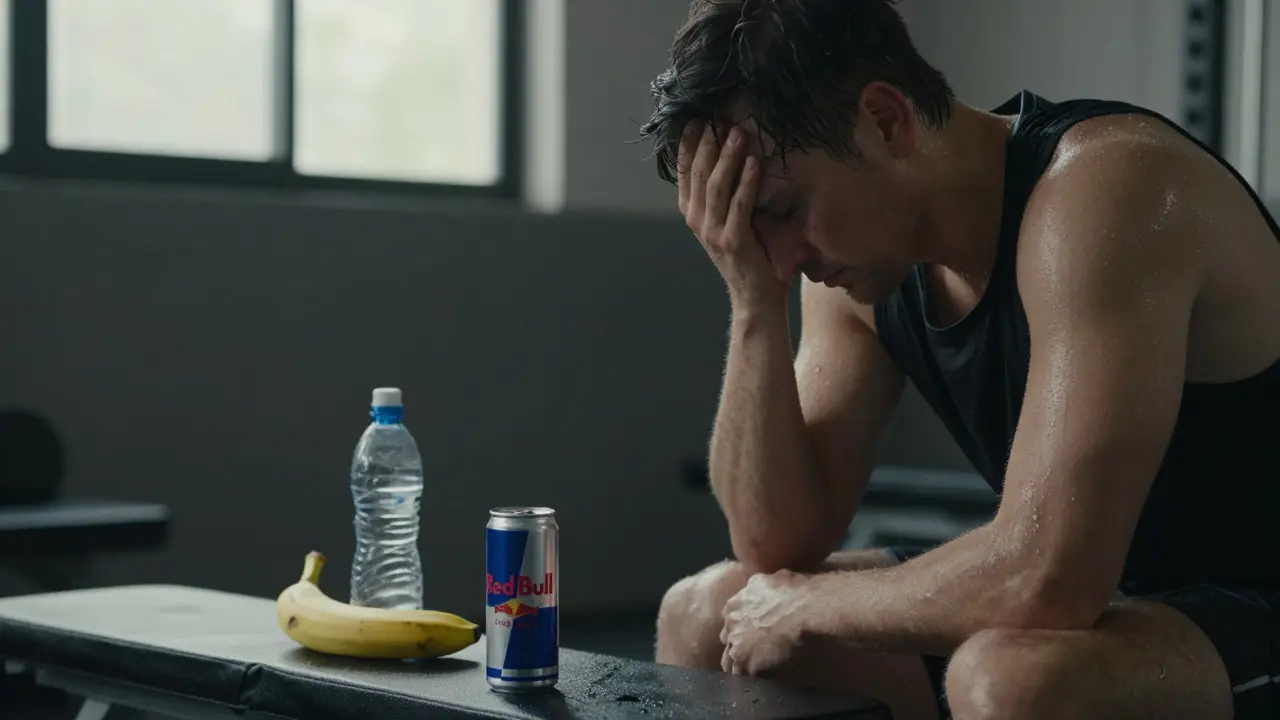
One Red Bull a day sounds harmless-maybe even helpful-if you’re pushing through workouts, late-night training sessions, or early morning practices. But here’s the truth: what feels like a quick boost might be quietly wrecking your recovery, sleep, and long-term performance.
What’s Actually in a Single Red Bull?
A standard 250ml can of Red Bull contains:
- 80mg of caffeine-about the same as a home-brewed cup of coffee
- 27g of sugar-that’s nearly 7 teaspoons, or 108% of the WHO’s recommended daily added sugar limit for a child
- Taurine (1,000mg), B-vitamins, and glucuronolactone-ingredients marketed as performance enhancers, but with no proven ergogenic benefit at these doses
For a 70kg athlete, that’s 0.39mg of caffeine per kilogram of body weight. The European Food Safety Authority says up to 3mg/kg is safe for healthy adults-that’s fine. But sugar? That’s where things go sideways.
Sugar Isn’t Just Empty Calories-It’s a Performance Killer
Many athletes believe sugar = energy. But the body doesn’t store sugar as fuel the way it stores glycogen from whole foods. That 27g of sugar in Red Bull spikes your blood glucose fast, then crashes it within 90 minutes. That crash isn’t just fatigue-it’s impaired focus, shaky hands, and slower reaction times during critical moments in competition.
A 2023 study in the Journal of the International Society of Sports Nutrition tracked 120 collegiate athletes who drank one energy drink daily for four weeks. Those who replaced Red Bull with water and whole-food carbs (bananas, oats, dates) saw a 14% improvement in post-exercise recovery markers and 22% better sleep efficiency. No magic pills. Just real food.
Caffeine: Friend or Foe for Athletes?
Caffeine, at the right dose, can improve endurance, reduce perceived effort, and sharpen mental focus. That’s why elite athletes use it strategically-3-6mg per kg of body weight, 60 minutes before competition. For a 70kg athlete, that’s 210-420mg. One Red Bull? You’re barely scratching the surface.
But drinking one every day? That’s not strategy-it’s dependence. Your body adapts. You need more caffeine to get the same effect. You start needing it just to feel normal. And when you skip it? Headaches, irritability, brain fog. That’s not performance enhancement. That’s withdrawal.
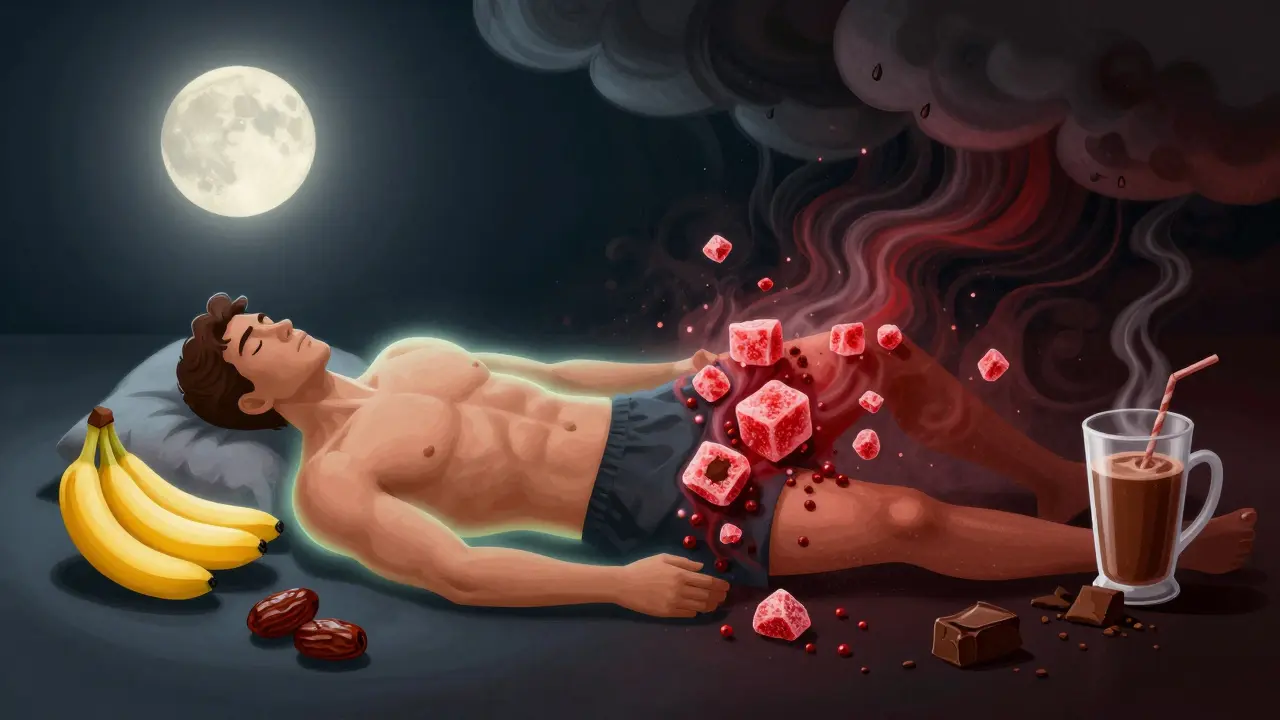
Worse, daily caffeine can disrupt your circadian rhythm. Athletes need deep sleep for muscle repair and hormone balance. A 2024 sleep study from the University of Queensland found that athletes consuming caffeine after 2pm-even just one energy drink-had 37% less slow-wave sleep. That’s the stage where growth hormone peaks and muscles rebuild. You’re training hard, but your recovery is sabotaged.
What About Taurine and B-Vitamins? Do They Help?
Taurine is an amino acid found naturally in meat and fish. Your body makes it. The 1,000mg in Red Bull won’t boost your strength or speed. B-vitamins? You get more from a single boiled egg or a serving of spinach. These ingredients are marketing fluff. They’re not harmful, but they’re not helping either.
Think of them like glitter on a brick wall. Looks flashy. Doesn’t change the structure.
Who’s Most at Risk?
Teens and young adults are the biggest consumers of energy drinks-and the most vulnerable. Their bodies are still developing. Their kidneys, hearts, and nervous systems are more sensitive to stimulants.
In Australia, the National Health and Medical Research Council warns against energy drink consumption for anyone under 18. Why? Because in 2022, there were 147 emergency department visits in Queensland alone linked to energy drink overuse in teens-mostly from heart palpitations, anxiety, and dehydration.
Even adult athletes aren’t immune. A 2023 case report in the British Journal of Sports Medicine described a 24-year-old triathlete who developed atrial fibrillation after drinking two Red Bulls daily for six months. He stopped. His heart rhythm normalized in three weeks.

What Should Athletes Drink Instead?
You don’t need a can of Red Bull to fuel your training. Here’s what works better:
- Before training: Water + a banana or a handful of dates for natural carbs
- During long sessions (>90 mins): Electrolyte solution with 30-60g of glucose per hour-no artificial flavors, no sugar bombs
- After training: Chocolate milk (yes, really)-perfect 3:1 carb-to-protein ratio, naturally
- For focus: Green tea (20-40mg caffeine, plus L-theanine for calm alertness)
Real food, real hydration, real recovery. No chemical cocktail required.
Can You Ever Drink Red Bull as an Athlete?
Yes-but only as a rare exception. Not daily. Not routine.
If you’re racing in a 24-hour endurance event and you’re hitting a wall at hour 18? One Red Bull might give you a mental edge. But that’s not the same as using it every morning to get out of bed.
Ask yourself: Are you drinking it for performance-or because you’re tired from poor sleep, bad nutrition, or overtraining? The drink isn’t fixing the problem. It’s masking it.
The Bottom Line
One Red Bull a day isn’t a dealbreaker for everyone-but for athletes, it’s a bad habit disguised as a performance tool. The sugar crashes your recovery. The caffeine ruins your sleep. The taurine? Irrelevant.
You don’t need energy drinks to be strong, fast, or resilient. You need consistent sleep, balanced meals, and smart hydration. Everything else is noise.
If you’ve been drinking one daily for months, try cutting it out for 14 days. Track your energy, sleep quality, and workout performance. You might be surprised how much better you feel without it.
Is one Red Bull a day safe for athletes?
It’s not toxic, but it’s not beneficial either. The sugar and daily caffeine intake interfere with recovery, sleep, and metabolic health. Athletes who replace it with whole foods and water report better endurance, faster recovery, and improved focus.
Does Red Bull improve athletic performance?
Not meaningfully. The caffeine dose is too low to enhance performance, and the sugar causes energy crashes. Studies show athletes perform better using natural carbs and electrolytes than energy drinks. Any perceived boost is likely psychological.
How much caffeine is too much for athletes?
The safe upper limit is 3-6mg per kg of body weight before competition. Daily intake should stay under 400mg total. One Red Bull (80mg) is fine occasionally, but drinking one daily adds up-especially if you also drink coffee or tea.
Can Red Bull cause heart problems?
Yes, especially with daily use. Case reports link energy drink consumption to arrhythmias, high blood pressure, and even heart attacks in young, otherwise healthy athletes. The combination of caffeine, sugar, and stimulants puts extra strain on the cardiovascular system.
What are better alternatives to Red Bull for athletes?
Water, electrolyte drinks with natural sugars (like coconut water or homemade mixes), bananas, dates, chocolate milk, and green tea. These provide steady energy, hydration, and recovery nutrients without the crash or dependence.
Comments (15)
Jen Becker
29 Dec 2025
I drank one daily for a year. My sleep tanked. My anxiety spiked. I quit. Now I sleep 8 hours. I don't miss it.
Ryan Toporowski
31 Dec 2025
This is so true 😊 I used to chug them before track practice. Then I switched to bananas and coconut water. My times improved and I didn't feel like a zombie after. 🍌💧
Samuel Bennett
1 Jan 2026
Wait. The WHO recommends 25g of added sugar per day for CHILDREN? So you're saying a grown athlete should be held to a kid's limit? That's not science. That's fearmongering. And taurine? It's naturally in meat. You're just mad it's in a can.
Rob D
1 Jan 2026
Look, I get it. You're all about your kale smoothies and your oatmeal. But let me tell you something - when I'm up at 4am prepping for a 50-mile hike and I need to stay awake, Red Bull is the only thing that doesn't make me want to nap on a rock. You think I'm gonna chow down on a banana and hope for the best? Nah. I'll take the chemical cocktail over your hippie carbs any day. This isn't a yoga retreat. It's survival.
Franklin Hooper
2 Jan 2026
The data is clear. Sugar crashes impair neuromuscular coordination. Caffeine tolerance blunts ergogenic effects. Sleep architecture disruption is documented. The alternatives are superior. No further commentary needed.
Jess Ciro
4 Jan 2026
They put fluoride in the water too. They tell you sugar is bad. They say caffeine is fine. But they don't tell you the real reason they want you off Red Bull - because the real energy boost comes from corporate control. They own your sleep. They own your hunger. They own your choices. Drink water. Think for yourself.
saravana kumar
5 Jan 2026
In India, we drink chai. Two teaspoons sugar. Ginger. Cardamom. Boiled for five minutes. No taurine. No glucuronolactone. No marketing. Just warmth. And it works. Why replace tradition with a can?
Tamil selvan
6 Jan 2026
I appreciate the depth of this analysis. The scientific references are well-chosen, and the practical alternatives are both accessible and evidence-based. It is important to recognize that athletic performance is not solely a function of stimulants, but of holistic physiological balance. Thank you for this thoughtful contribution.
Mark Brantner
8 Jan 2026
okay so i tried cutting out red bull for 2 weeks and guess what?? i had more energy?? like actual energy?? not the jitters then crash kinda thing?? wild right?? 🤯
Kate Tran
8 Jan 2026
i used to drink one after gym. then i started drinking green tea. same focus. no headache. no 3pm collapse. weird how simple stuff works better than fancy cans.
amber hopman
9 Jan 2026
I used to think the sugar was fine because I was working out. But after reading this, I tracked my sleep with my Apple Watch. My deep sleep dropped 40% on days I had Red Bull. I switched to electrolyte water and my recovery time improved. It’s not even close.
Jim Sonntag
11 Jan 2026
I’m from the Midwest. We drink coffee. We drink soda. We drink Red Bull. But here’s the thing - if you’re using it to get through your day because you’re exhausted from overtraining or poor sleep, you’re not fixing the problem. You’re just slapping a bandage on a broken leg. I’ve seen too many kids burn out. This is real.
Deepak Sungra
12 Jan 2026
I used to drink two a day. Then my heart started fluttering. Went to the doctor. They said 'stop the energy drinks.' I did. Three weeks later, I felt like I had been sleeping under a rock my whole life. Now I drink water, eat rice, and sleep like a baby. Why did I wait so long?
Samar Omar
14 Jan 2026
The real tragedy here is not the sugar or the caffeine - it’s the cultural surrender to manufactured solutions. We have replaced ancestral wisdom - rest, whole foods, circadian alignment - with a neon can of chemical illusion. The athlete who depends on Red Bull is not an athlete. He is a consumer. And consumers are always, always, always the last to know they’ve been sold a lie. The body does not lie. The body remembers. The body revolts.
chioma okwara
15 Jan 2026
you guys are all so dramatic. i drink red bull and im fine. my body is a machine. you think i need to eat a banana to run? lol. i just need the buzz. and if you dont like it then dont drink it. dont be mad because i do.