
What Is the Oldest Sports Drink? The Original That Started It All
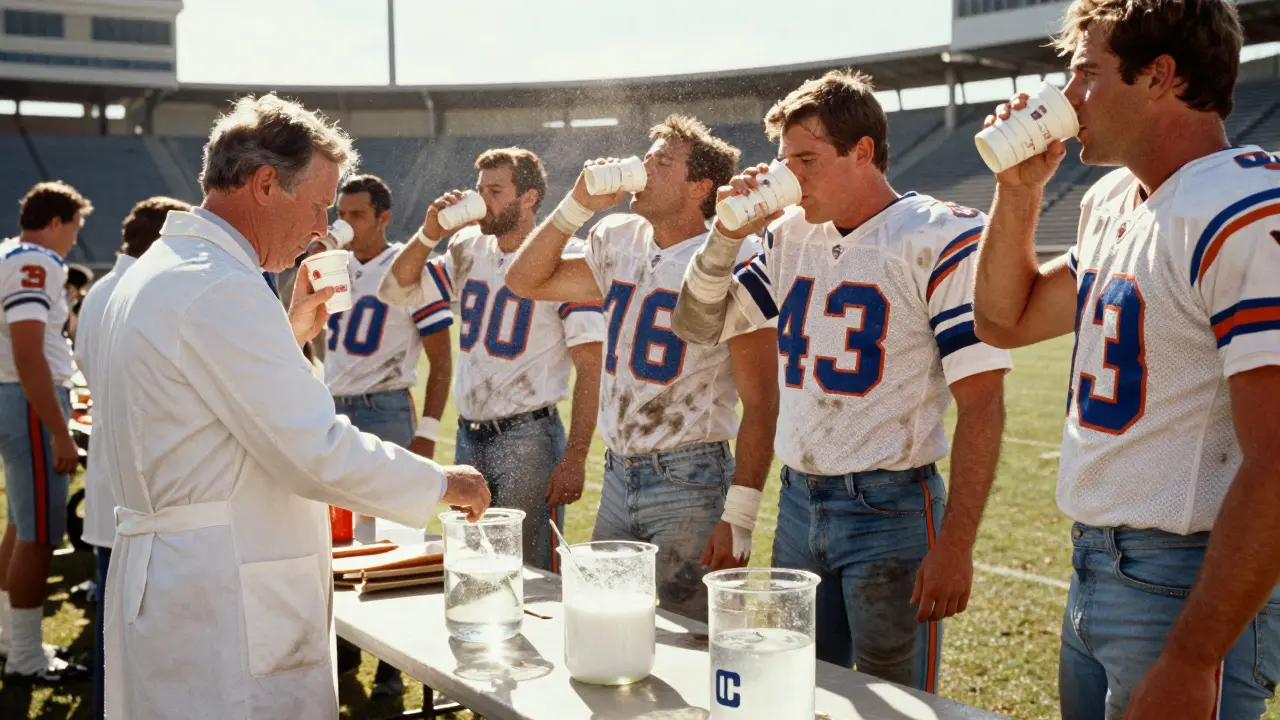
When you grab a bottle of Gatorade after a tough workout, you’re holding onto more than just a sugary sip-you’re holding history. The oldest sports drink still sold today wasn’t invented in a lab by a marketing team. It was born out of necessity, in a sweltering Florida football stadium, by a team of doctors trying to save players from collapsing in the heat.
The Birth of Gatorade
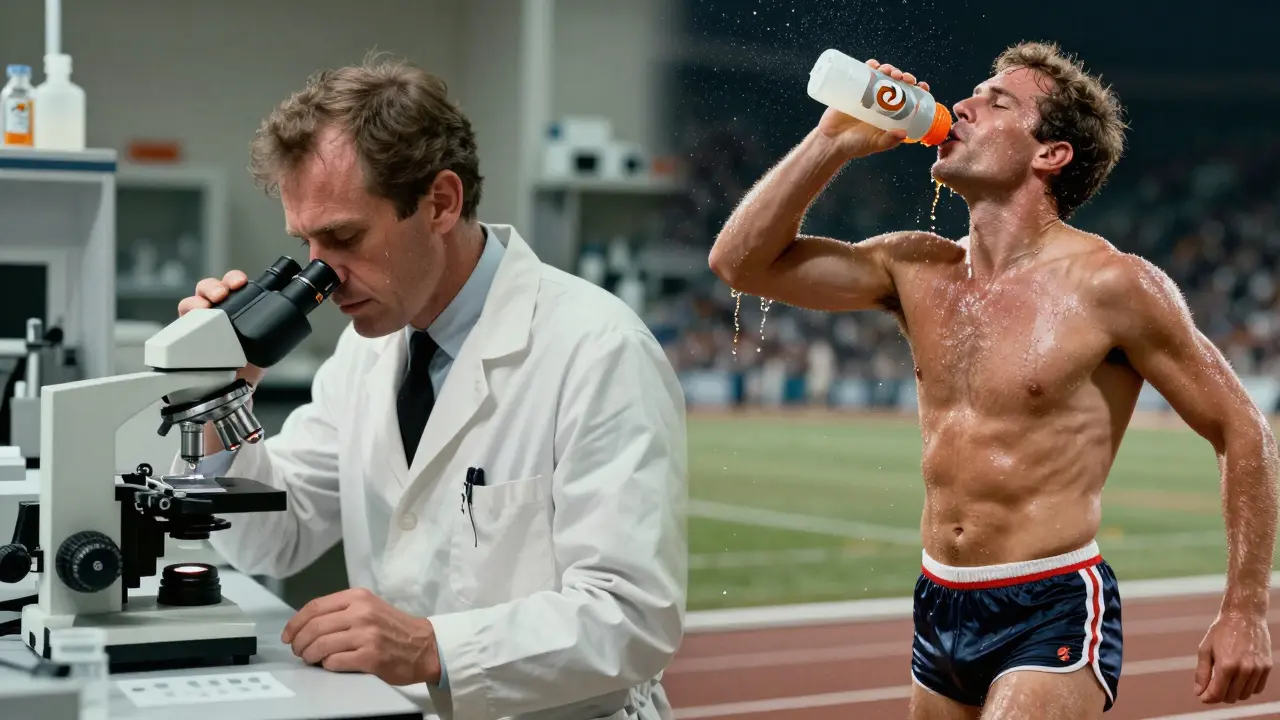
In 1965, the University of Florida Gators football team was struggling. Players were sweating buckets under the Florida sun, cramping up, and fainting during games. No one understood why. The coaches called in Dr. Robert Cade, a kidney specialist at the university’s medical school. Along with a small team of researchers, Cade started testing sweat samples from players. What they found shocked them: athletes were losing far more salt and fluids than anyone realized.
They mixed a drink with water, sugar, sodium, potassium, and phosphate. It wasn’t fancy. No artificial flavors, no fancy packaging. Just a simple solution designed to replace what the body lost. They gave it to the Gators before a game against LSU. The team won 21-7. The players didn’t cramp. They didn’t fade in the fourth quarter. They stayed sharp. The drink worked.
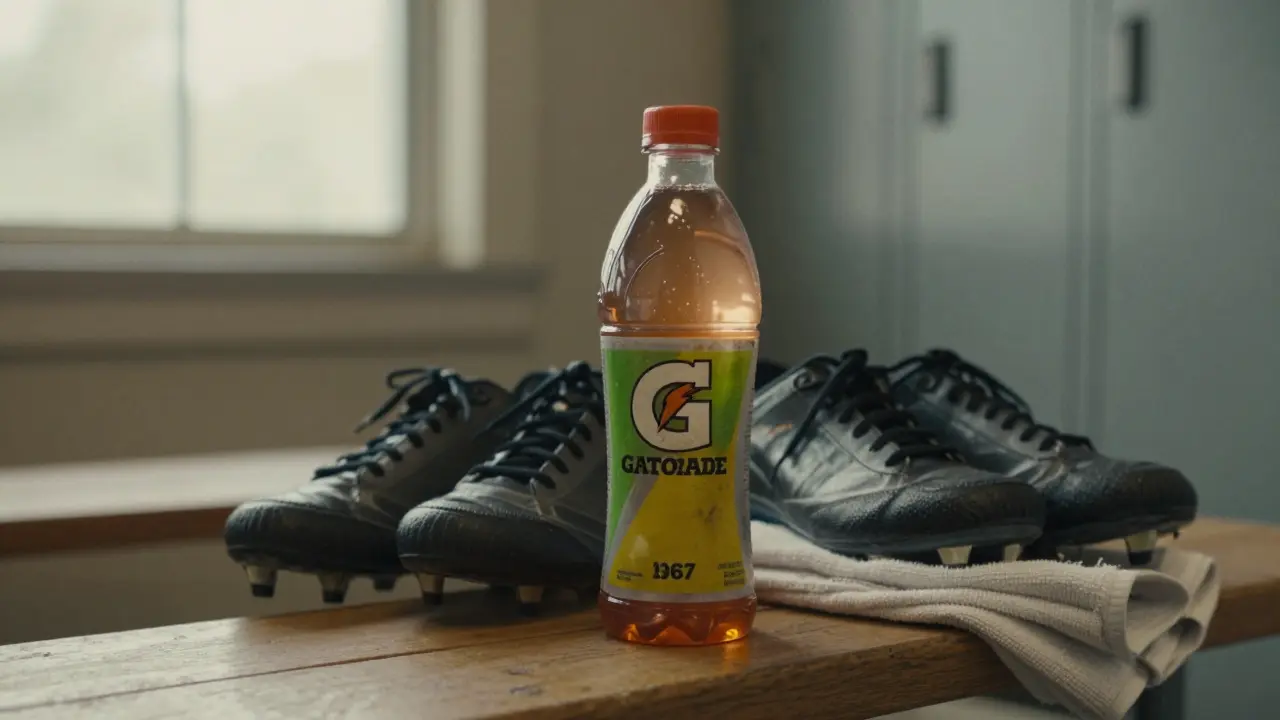
By 1967, it was officially named Gatorade. The name stuck because it was simple, local, and tied to the team that made it famous. Within five years, it was being sold in grocery stores. By 1983, it was a billion-dollar brand. And it still is.
Why Gatorade Was the First
People had been drinking sugary liquids for energy long before 1965. Lemonade, fruit juices, even soda were common. But none of them were designed to replace electrolytes lost through sweat. That’s the key difference.
Before Gatorade, athletes drank water-and that was it. Water doesn’t contain sodium, potassium, or glucose. In long, intense efforts, drinking only water can actually make things worse. It dilutes the salt in your blood, leading to hyponatremia-a dangerous condition where your cells swell. Gatorade was the first drink to solve that problem scientifically.
Other drinks came later. Powerade launched in 1988. Lucozade, often mistaken for the original, was created in 1927-but it was originally a medicinal glucose drink for sick patients, not athletes. It wasn’t marketed as a sports drink until the 1980s. Even then, it didn’t have the same electrolyte balance Gatorade had.
Gatorade wasn’t just the first sports drink. It was the first drink designed around human physiology, not marketing trends.
What Made It Different
Most drinks before Gatorade were either sugary sodas or plain water. Gatorade had three things no one else did:
- Electrolytes-sodium and potassium to help nerves and muscles fire properly
- Carbohydrates-glucose to keep energy levels up during prolonged activity
- Fluid balance-the right ratio of water to solutes to get absorbed faster than plain water
That combination became the gold standard. Even today, sports scientists measure new drinks against Gatorade’s formula. It’s not about taste. It’s about absorption rate, osmolality, and sodium concentration. If a drink doesn’t match those numbers, it doesn’t work as well.
That’s why you’ll still see Gatorade on the sidelines of professional games, college matches, and even high school tournaments. It’s not because of advertising. It’s because it still works better than most alternatives.
The Copycats That Came Later
Once Gatorade proved it worked, companies rushed to copy it. Powerade, Aquafina Fuel, All Sport, and others all tried to replicate the formula. Some added vitamins. Some used artificial sweeteners. Some cut the sugar. But none of them changed the core idea: replace what you lose.
Lucozade is often brought up as a contender for the oldest. It was invented in 1927 by pharmacist William Owen. But it was originally sold as a restorative drink for the sick-think of it as a medical glucose tonic. It wasn’t marketed to athletes until decades later. Even then, its formula didn’t focus on electrolyte replacement until the 1990s.
Similarly, Kool-Aid was popular with kids in the 1950s, and some athletes diluted it with salt. But that was a hack, not a science-backed product. Gatorade was the first drink engineered from the ground up for athletic performance.
How It Changed Sports
Before Gatorade, athletes trained hard but often hit a wall. In hot conditions, performance dropped fast. Coaches didn’t know why. After Gatorade, teams started using hydration strategies. The NFL, NBA, and NCAA adopted it as standard equipment. Now, every team has a hydration plan. Every athlete knows to sip during breaks.
It didn’t just help players. It changed how we think about exercise. People realized that hydration isn’t just about drinking water-it’s about replacing what you lose. That idea led to better training, longer endurance, and safer competition.
Today, you can buy hundreds of sports drinks. Some are organic. Some are low-sugar. Some have added caffeine. But the original formula still holds up. Gatorade’s 1965 recipe-water, sugar, salt, potassium, phosphate-is still the benchmark.
Is It Still the Best?
That depends on what you need. For most people doing an hour of moderate exercise, water is enough. You don’t need extra sugar or salt. But for endurance athletes, team sport players, or anyone sweating heavily in the heat, Gatorade still delivers.
Studies show that drinks with 6-8% carbohydrates and 20-30 mmol/L of sodium are optimal for rehydration during prolonged activity. Gatorade Original fits right in that range. Many newer drinks either have too little sodium or too much sugar. Some even use fructose-heavy sweeteners that slow absorption.
Even in 2026, Gatorade’s original formula remains one of the most scientifically sound options available. It’s not the fanciest. It’s not the healthiest. But for performance in heat and sweat-heavy sports, it’s still the most reliable.
What About the Future?
Gatorade isn’t resting. They’ve launched Gatorade Zero, Gatorade Organic, and even personalized hydration formulas based on sweat tests. But the core idea hasn’t changed. The oldest sports drink is still the one that started with a simple question: What are athletes losing when they sweat?
It’s not about branding. It’s not about celebrity endorsements. It’s about science. And that’s why, 60 years later, Gatorade is still the answer to the question: What is the oldest sports drink?
Was Gatorade the first drink to replace electrolytes?
Yes. Before Gatorade, no drink was scientifically formulated to replace electrolytes lost through sweat. While drinks like Lucozade existed earlier, they were designed for sick patients, not athletes, and didn’t contain the right balance of sodium and potassium for physical exertion.
Can I make a copy of Gatorade at home?
Yes. A simple homemade version uses 1 liter of water, 6 teaspoons of sugar, 1/4 teaspoon of salt, and a splash of orange juice for flavor and potassium. This matches Gatorade’s original electrolyte and sugar concentration. Many endurance athletes still use this recipe.
Why does Gatorade have phosphate in it?
Phosphate helps with energy production in muscles. It’s part of the ATP cycle-the body’s main energy system. The original formula included it because researchers found athletes’ phosphate levels dropped during intense activity. It’s not in most modern sports drinks anymore, but it was key to Gatorade’s early effectiveness.
Is Gatorade healthy for regular use?
Not if you’re not active. A 20-ounce bottle has about 34 grams of sugar-roughly 8 teaspoons. For someone sitting at a desk, that’s unnecessary sugar. But for someone running a marathon, playing a full game of soccer, or working in 90-degree heat, that sugar provides critical fuel. Context matters.
What’s the difference between Gatorade and energy drinks like Red Bull?
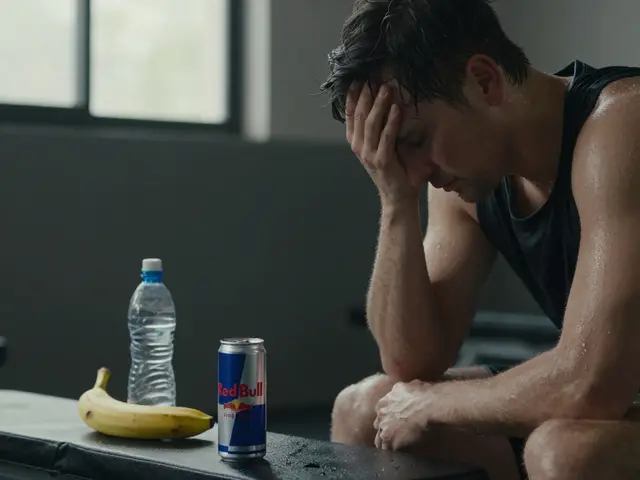
Gatorade replaces fluids and electrolytes lost through sweat. Energy drinks like Red Bull are loaded with caffeine and sugar to stimulate the nervous system. They don’t help with hydration. In fact, caffeine can make you lose more fluid. They’re for alertness, not recovery.
If you’re out there sweating hard, the oldest sports drink still has the best track record. It wasn’t built to trend. It was built to work. And after 60 years, it still does.

Comments (10)
Pamela Watson
3 Feb 2026
OMG I didn't know Gatorade was invented by doctors!! 😱 I thought it was just some marketing magic. My cousin played football in Florida and they gave it to him like it was holy water. Now I get it. 🤯
Jen Kay
4 Feb 2026
How charming that a team of scientists solved a problem no one else thought to quantify. It’s almost poetic-the humble mix of sugar, salt, and science, born not in a boardroom but under a Florida sun. Truly, innovation doesn’t wear a suit.
Michael Thomas
4 Feb 2026
Only in America. Other countries just let their athletes pass out. We fix it with science.
Abert Canada
5 Feb 2026
Man, I remember my dad making that homemade version when I was a kid in Ontario. Water, sugar, pinch of salt, orange juice from concentrate. We’d chug it after mowing the lawn in July. Never knew it was basically Gatorade’s grandpa. Canada’s got our own version of this stuff too-like Powerade’s quiet cousin who never bragged but always showed up.
Xavier Lévesque
6 Feb 2026
So Gatorade’s the original… but let’s be real-most people drink it because it’s cheap, colorful, and tastes like candy. Science? Nah. Marketing. The fact that it still works is just a happy accident.
Thabo mangena
7 Feb 2026
It is truly remarkable how a solution born from necessity in one corner of the world has become a global standard for human performance. The humility of its origins-doctors, athletes, sweat-contrasts beautifully with its commercial triumph. A testament to the universality of physiological truth.
Bill Castanier
8 Feb 2026
Lucozade was never a sports drink. It was medicine. Big difference.
Ronnie Kaye
9 Feb 2026
And yet, here we are in 2026, and Gatorade’s still the gold standard. Funny how the simplest solutions outlive the flashy ones. I’ve tried every fancy electrolyte drink on the market. None of them make me feel like I can actually run another mile. Gatorade? Still got me.
Priyank Panchal
11 Feb 2026
Why do Americans always think they invented everything? In India, we’ve been drinking nimbu pani with salt since the 1940s. Athletes drank it before Gatorade even existed. Science? We didn’t need a lab to know salt + sugar + water = energy.
Ian Maggs
11 Feb 2026
It is, perhaps, the most profound irony of modern performance science: that the most enduring, effective, and widely adopted hydration solution was not engineered for profit, nor optimized for taste, nor even designed with consumer preference in mind-but rather, emerged from a desperate, empirical, almost Aristotelian attempt to answer a single, unadorned question: What is being lost? And how may it be restored? The answer, distilled, was not innovation-but recognition.