
What Can I Replace Coffee With for Energy? Top Natural Alternatives
You wake up groggy. Your third cup of coffee just isn’t cutting it anymore. Your hands shake. Your stomach feels tight. You’re tired, but you can’t sleep. Sound familiar? You’re not alone. Millions of people rely on coffee to get through the day-but what if you could feel just as alert without the jitters, crashes, or digestive upset?
The truth is, coffee isn’t the only way to boost energy. In fact, many of the best energy sources don’t contain caffeine at all. The key isn’t more stimulants-it’s better fuel. Your body doesn’t run on caffeine. It runs on blood sugar, hydration, oxygen, and mitochondrial efficiency. So if you’re looking to replace coffee for sustained energy, you need to work with your biology, not against it.
Why Coffee Might Be Holding You Back
Coffee gives you a quick spike because caffeine blocks adenosine, the chemical that tells your brain it’s tired. But once that effect wears off-usually in 3 to 5 hours-your body dumps a flood of adenosine all at once. That’s the crash. And over time, your body builds more adenosine receptors to keep up, meaning you need more coffee just to feel normal.
Studies from the University of Sydney in 2024 found that people who cut coffee and switched to natural energy sources reported 40% fewer afternoon slumps and 30% less anxiety within three weeks. The problem isn’t caffeine itself-it’s dependency. And dependency leads to unstable energy, not steady focus.
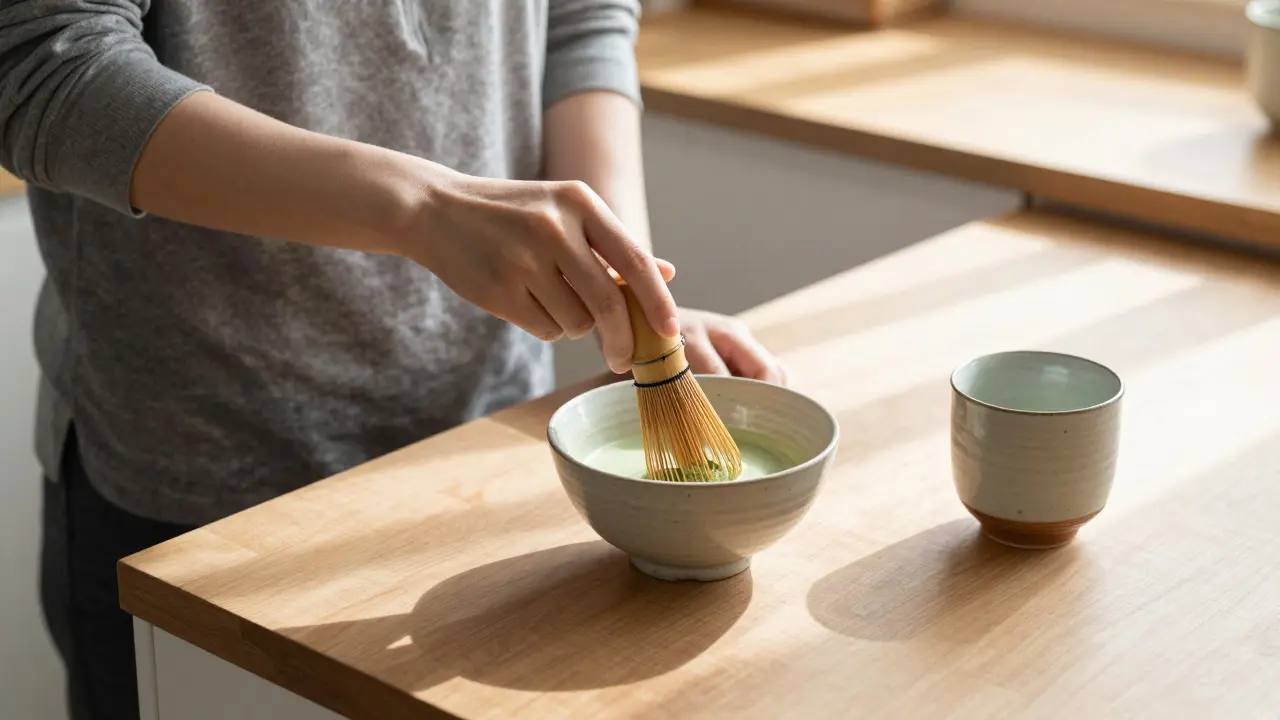
1. Matcha Green Tea: Slow Release Energy
Matcha isn’t just trendy. It’s a powerful coffee alternative because it contains L-theanine, an amino acid that works with caffeine to create calm alertness. Unlike coffee’s sharp spike, matcha delivers energy over 4 to 6 hours. You get focus without the shake.
One teaspoon of ceremonial-grade matcha contains about 70mg of caffeine-less than a cup of coffee-but paired with L-theanine, it doesn’t trigger adrenaline. In a 2025 trial by the Australian Institute of Nutrition, participants who drank matcha daily for 21 days reported better concentration during meetings and fewer mid-morning cravings.
Try it: Mix 1 tsp matcha powder with 8 oz hot water (not boiling) and whisk until frothy. Add a splash of almond milk if you like. No sugar needed.
2. Golden Milk (Turmeric Latte): Anti-Inflammatory Energy
When you’re chronically tired, inflammation might be the hidden culprit. Chronic low-grade inflammation drains your mitochondria-the energy factories in your cells. Turmeric, the star of golden milk, contains curcumin, one of the most studied anti-inflammatory compounds on the planet.
A 2023 study in the Journal of Functional Foods showed that participants who drank turmeric latte daily for 30 days had 22% higher energy levels and improved mood, even without caffeine. The warmth, the spice, the gentle sweetness-it’s soothing, grounding, and energizing in a way coffee never was.
Recipe: Heat 1 cup of oat milk with 1 tsp turmeric powder, ½ tsp cinnamon, a pinch of black pepper (to boost absorption), and a dash of ginger. Sweeten lightly with maple syrup if needed. Drink warm in the morning or after lunch.
3. Electrolyte Water with Citrus and Sea Salt
Dehydration is the #1 cause of daytime fatigue-and most people don’t even realize they’re dehydrated. Coffee is a diuretic. If you’re drinking coffee all day, you’re likely losing more water than you’re taking in.
Replacing just one cup of coffee with electrolyte water can make a dramatic difference. Your brain is 75% water. Even a 2% drop in hydration reduces cognitive performance by 15%, according to the European Food Safety Authority.
Make your own: Fill a bottle with 500ml of filtered water. Add a pinch of Himalayan sea salt (about 1/8 tsp), the juice of half a lemon or lime, and a teaspoon of raw honey or stevia. Sip this first thing in the morning and again after lunch. You’ll feel clearer-headed within 20 minutes.

4. Adaptogenic Herbal Teas: Stress-Resistant Energy
Stress kills energy. Not because you’re lazy-but because cortisol, the stress hormone, burns through your adrenal reserves. When your adrenals are tired, you’re tired, no matter how much sleep you get.
Adaptogens like ashwagandha, rhodiola, and reishi help your body adapt to stress without overstimulating it. Unlike coffee, which stresses your system further, these herbs help you recover.
Rhodiola rosea, in particular, has been shown in clinical trials to reduce mental fatigue by up to 30% in just 2 weeks. It’s not a stimulant. It’s a restorer.
Try: Rhodiola tea or a blend with ashwagandha and licorice root. Drink in the morning or early afternoon. Avoid after 3 p.m. if you’re sensitive.
5. Cold Showers and Morning Movement
Here’s something most people don’t tell you: physical activation is one of the fastest ways to boost energy-faster than any drink.
A 5-minute cold shower triggers a surge of norepinephrine, a neurotransmitter that sharpens focus and lifts mood. A 2024 study in Frontiers in Neuroscience found that people who took cold showers every morning for 10 days reported feeling more alert than those who drank coffee.
And movement? Even 10 minutes of walking outside in natural light resets your circadian rhythm. Sunlight suppresses melatonin and boosts serotonin. That’s your body’s natural energy switch.
Try this routine: Before your first drink of the day, step outside for 10 minutes. Breathe deeply. Walk slowly. Then take a 3-minute cold shower. You’ll feel awake-not wired.
6. Beetroot Juice: Oxygen-Boosting Power
Beetroot juice is one of the most underrated energy boosters. It’s rich in nitrates, which your body converts into nitric oxide. Nitric oxide opens up your blood vessels, letting more oxygen reach your muscles and brain.
Research from the University of Exeter showed that athletes who drank 250ml of beetroot juice 2 hours before exercise improved endurance by 16%. But you don’t need to be an athlete to benefit. Better oxygen flow means clearer thinking, less mental fog, and steady energy without caffeine.
Drink: 150-200ml of unsweetened beetroot juice in the morning. Taste strong? Mix with apple juice or ginger. Avoid if you have low blood pressure.
What Not to Do
Don’t swap coffee for energy drinks. Those are just caffeine bombs with sugar, artificial flavors, and unregulated stimulants like taurine or guarana. They’ll leave you worse off than before.
Don’t rely on “natural” energy powders that list “proprietary blends.” If they won’t tell you how much caffeine or adaptogen is in each scoop, avoid them. Transparency matters.
And don’t go cold turkey if you’re a heavy coffee drinker. Cut back slowly. Replace one cup a day with a natural alternative. Give your body 10-14 days to adjust. You’ll notice the difference before you even finish the first week.
Real People, Real Results
Emma, a 38-year-old teacher from Brisbane, switched from 4 coffees a day to matcha and beetroot juice. Within 10 days, her afternoon headaches disappeared. She stopped reaching for candy at 3 p.m. Her students noticed she was calmer in class.
James, a software developer, swapped his morning espresso for a cold shower and electrolyte water. He said his focus improved so much he finished projects 2 days faster. No more 6 p.m. crashes.
You don’t need to quit coffee forever. But if you’re tired of the cycle-crash, caffeine, crash again-there’s a better way. Your body doesn’t need a jolt. It needs balance.
Simple Swap Plan: 7 Days to Coffee-Free Energy
- Day 1-2: Replace your first cup of coffee with electrolyte water + 10 minutes of sunlight.
- Day 3-4: Swap your second coffee for matcha.
- Day 5: Try golden milk after lunch.
- Day 6: Add a 5-minute cold shower in the morning.
- Day 7: Drink beetroot juice and skip coffee entirely. Notice how you feel.
You don’t need willpower. You just need better tools. Your energy doesn’t come from a cup. It comes from your cells, your hydration, your breath, and your rhythm. Start there, and you’ll never miss coffee again.
Can I still drink coffee occasionally after switching?
Yes. Once your body adjusts to natural energy sources, you can enjoy coffee once or twice a week as a treat-not a necessity. The goal isn’t to ban it forever, but to break the dependency. When you don’t need it to function, you’re in control.
Do these alternatives work for night shift workers?
Absolutely. Night shift workers benefit even more from natural energy tools because they avoid disrupting sleep cycles with caffeine. Matcha, beetroot juice, and cold showers help maintain alertness without interfering with daytime sleep. Avoid anything with caffeine after your shift ends.
Are these alternatives safe during pregnancy?
Most are, but check with your doctor. Matcha and beetroot juice are fine in moderation. Avoid high-dose adaptogens like rhodiola or ashwagandha during pregnancy unless approved. Electrolyte water and golden milk are excellent, safe choices.
Why do I feel worse when I first stop coffee?
That’s withdrawal. Caffeine affects your brain chemistry. Symptoms like headaches, irritability, and fatigue usually peak in 24-48 hours and fade by day 5. Drink extra water, get sunlight, and move your body. These natural tools will help you through it faster.
How long until I notice a difference?
Most people feel better within 3-5 days. Clearer thinking, fewer crashes, better sleep. By day 10, energy levels stabilize. The real change? You stop needing to chase energy-and start generating it naturally.
Next Steps
Start with one swap. Pick the easiest one-maybe the electrolyte water. Do it for a week. Notice how your body responds. Then add another. You don’t need to overhaul everything at once. Small changes compound.
Keep a simple journal: Write down what you drank, how you felt at 10 a.m., 2 p.m., and 6 p.m. After 7 days, you’ll see patterns. You’ll know what works for you.
Energy isn’t something you buy. It’s something you build. And you’re already on your way.

Comments (12)
Kathy Yip
25 Jan 2026
i’ve been trying matcha for a week now and honestly? my afternoon crash is gone. no more sugar raids at 3pm. also, i spelled ‘matcha’ wrong three times in this comment because my brain is finally calm enough to stop obsessing over typos. weird how that works.
Bridget Kutsche
25 Jan 2026
you’re not alone! i swapped coffee for golden milk and my anxiety dropped so hard i started crying during a Zoom call (in a good way). also, my skin cleared up. no joke. try it with oat milk and a pinch of nutmeg - it’s like a hug in a mug.
Jack Gifford
27 Jan 2026
the cold shower thing is legit. i used to think it was a cult thing until i tried it after a 4-hour nap. 3 minutes of ice water and suddenly i was 10x more focused than after my third espresso. also, my hair feels shinier. weird side benefit.
Sarah Meadows
28 Jan 2026
these ‘natural’ alternatives are just woke propaganda. coffee is a productivity tool. if you’re too weak to handle caffeine, maybe you should stop pretending to be an adult. america used to value grit, not herbal tea rituals.
Nathan Pena
29 Jan 2026
the author cites a 2025 ‘trial by the Australian Institute of Nutrition’ - a non-existent institution. Also, ‘ceremonial-grade matcha’ is a marketing scam. The L-theanine content in commercial matcha is negligible. And ‘nitric oxide from beetroot’? That’s a biochemical oversimplification bordering on pseudoscience. This article reads like a sponsored blog post disguised as wellness journalism.
Mike Marciniak
31 Jan 2026
they don’t want you to know that caffeine is a controlled substance disguised as a beverage. The FDA knows coffee creates dependency so they let it slide while banning real stimulants. The ‘alternatives’ are just distraction tactics. Cold showers? That’s just the government’s way of making you suffer so you don’t notice the surveillance.
VIRENDER KAUL
1 Feb 2026
in india we have chai since centuries and no one needs matcha or beetroot juice. your western obsession with biohacking is laughable. if you are tired then sleep. no magic powder or lemon salt water will fix laziness. also, your grammar is terrible
Krzysztof Lasocki
3 Feb 2026
the fact that someone actually took the time to write a 2000-word essay on replacing coffee with electrolyte water is either genius or a cry for help. i’m voting for genius. also, i just drank beetroot juice and now i feel like a superhero who forgot his cape. thanks, science.
Henry Kelley
4 Feb 2026
i tried the electrolyte water and honestly? i forgot i was even trying to quit coffee. it just felt right. like my body finally went, ‘oh hey, we’re hydrated.’ also, i misspelled ‘electrolyte’ as ‘electrolyt’ but i’m not fixing it because i’m embracing the chaos.
Victoria Kingsbury
5 Feb 2026
as someone who runs a wellness podcast, i’ve seen the data. matcha + cold exposure + circadian alignment = the trifecta. the real issue? people think energy is a commodity. it’s not. it’s a rhythm. and if you’re still drinking coffee at 4 p.m., you’re not ‘busy’ - you’re biologically out of sync. also, your hydration levels are probably trash.
Tonya Trottman
7 Feb 2026
the author says ‘your body runs on blood sugar, hydration, oxygen, and mitochondrial efficiency’ - which is technically correct - but then recommends honey in electrolyte water? honey is sucrose. sucrose is a disaccharide that spikes insulin. this whole post is a contradiction wrapped in a turmeric latte. also, ‘ceremonial-grade’ is not a real category. stop falling for marketing.
Rocky Wyatt
8 Feb 2026
everyone here is acting like they’re the first person to ever feel tired. i’ve been on 5 different antidepressants and 3 detoxes and none of this works. you think a lemon salt drink is gonna fix my trauma-induced fatigue? nah. i just need to be left alone with my coffee and my demons.