
Are Energy Drinks Bad for Your Kidneys? Here’s What Really Happens
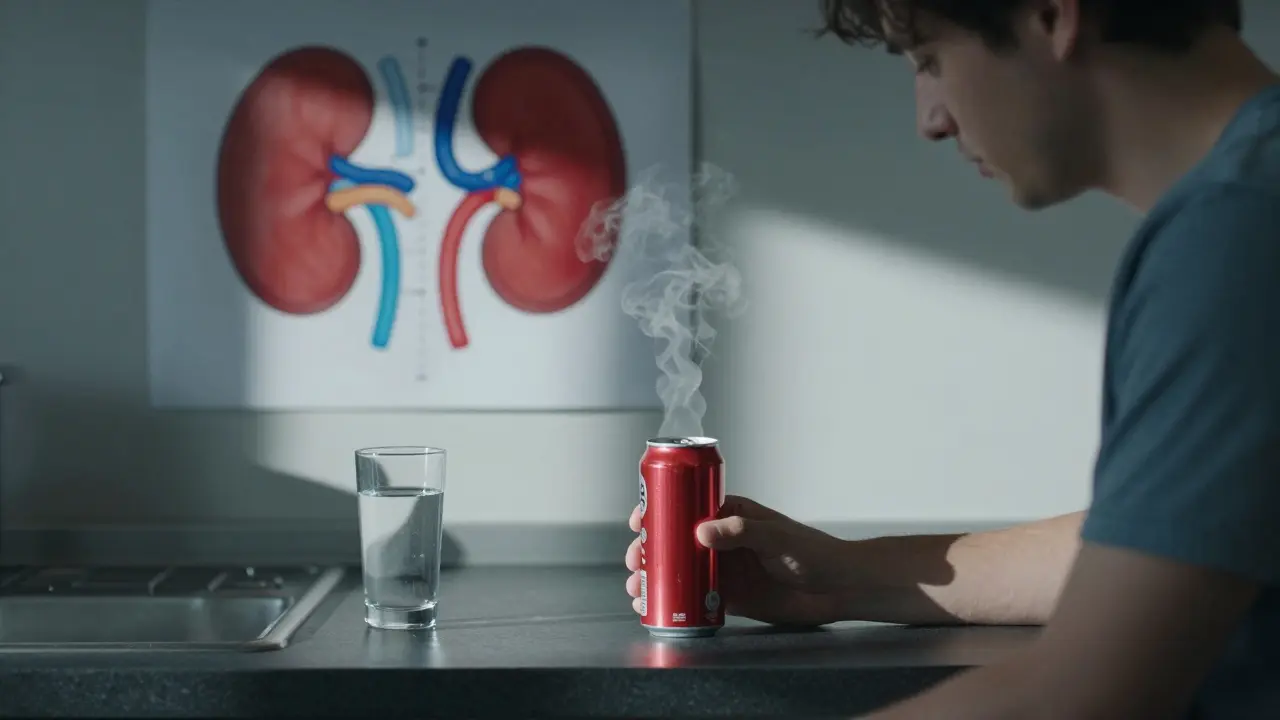
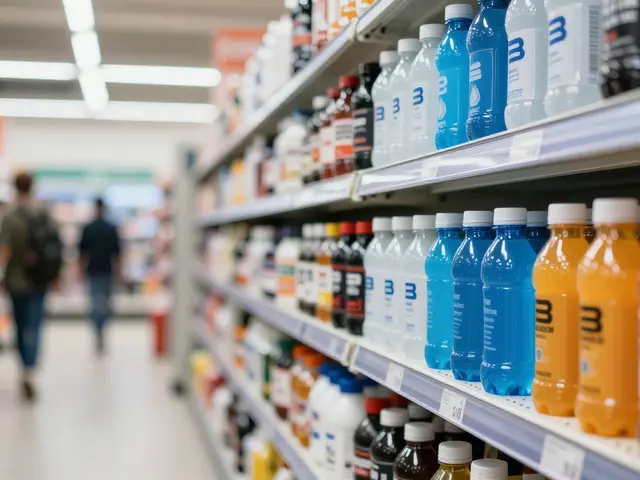
Every morning, millions of people reach for an energy drink to get through the day. They’re convenient, tasty, and promise a quick boost. But if you’re drinking them regularly-especially more than one a day-you might be asking: are energy drinks bad for your kidneys? The answer isn’t simple, but the evidence is growing louder.
What’s actually in energy drinks?
Most energy drinks pack a lot more than just caffeine. A typical 250ml can contains 80-160mg of caffeine, 27-30g of sugar, plus taurine, B-vitamins, guarana, ginseng, and artificial sweeteners in the sugar-free versions. Some brands even add extra caffeine from guarana, which isn’t always listed separately on the label. That means you could be getting 200mg or more of caffeine in one drink-equivalent to two strong cups of coffee.
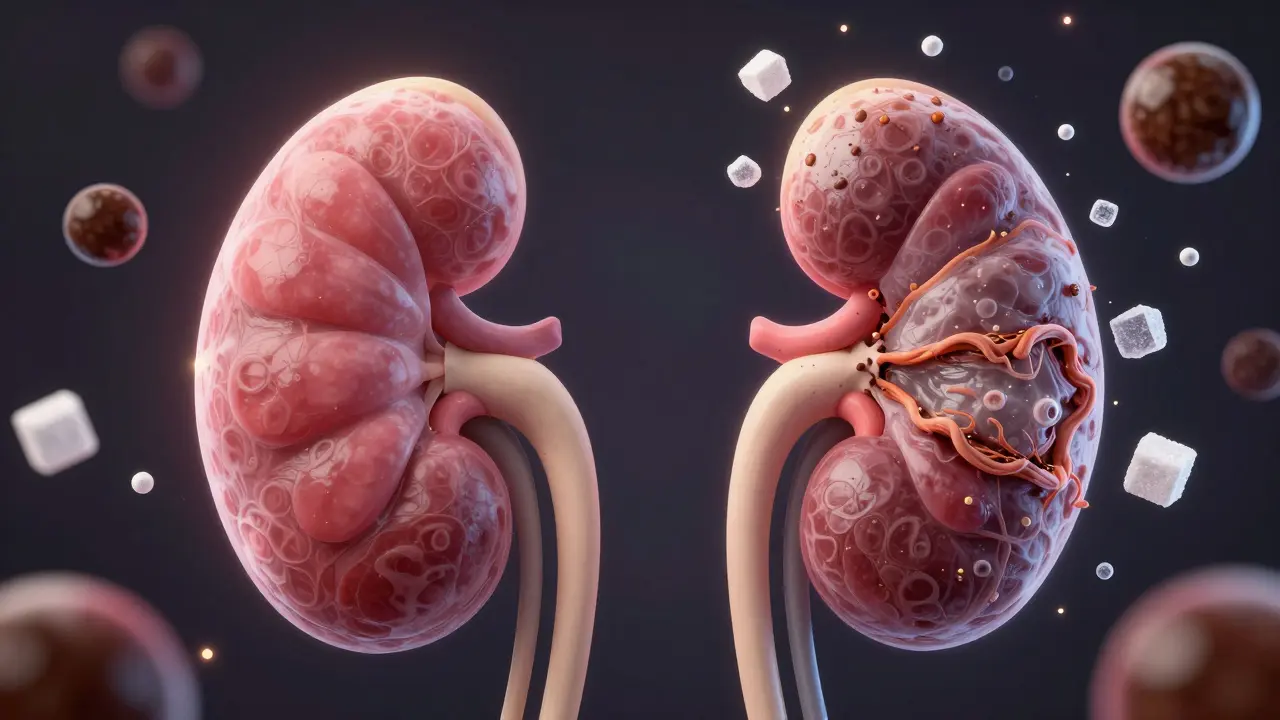
But caffeine isn’t the only concern. High sugar levels spike blood glucose, forcing your kidneys to work harder to filter it out. Over time, that extra workload can wear down kidney function. Sugar-free versions aren’t automatically safer. Artificial sweeteners like sucralose and acesulfame K have been linked in animal studies to changes in gut bacteria, which may indirectly affect kidney health. Human studies are still limited, but the long-term effects aren’t fully understood.
How do kidneys handle energy drinks?
Your kidneys are your body’s filtration system. They balance fluids, remove waste, regulate blood pressure, and control electrolytes like sodium, potassium, and calcium. When you drink an energy drink, your kidneys immediately start processing the caffeine and sugar load.
Caffeine is a diuretic. It tells your kidneys to flush out more water, which can lead to mild dehydration if you’re not drinking enough water. Dehydration makes your kidneys work harder to concentrate urine, increasing the risk of kidney stones. A 2022 study in the Journal of the American Society of Nephrology found that people who drank two or more energy drinks per day had a 32% higher risk of developing kidney stones compared to non-drinkers.
High sodium levels in some energy drinks also raise blood pressure. Chronic high blood pressure is one of the leading causes of kidney disease. And when combined with caffeine’s effect on blood vessels, it puts extra strain on the tiny filtering units in your kidneys-called glomeruli.
Who’s most at risk?
Not everyone who drinks energy drinks will damage their kidneys. But certain groups are far more vulnerable:
- People with existing kidney disease-Even small increases in caffeine or sodium can worsen their condition.
- Teens and young adults-Their kidneys are still developing, and they’re the biggest consumers of energy drinks. A 2023 Australian study found 41% of high school students drank energy drinks weekly.
- People with diabetes or high blood pressure-Energy drinks can spike blood sugar and pressure, accelerating kidney damage.
- Those who mix energy drinks with alcohol or medications-This combination increases toxicity and reduces the kidneys’ ability to clear waste.
One real case from a Brisbane hospital in late 2024 involved a 19-year-old who drank three energy drinks a day for six months. He ended up in the ER with acute kidney injury. His creatinine levels were nearly triple the normal range. He had no prior health issues. Doctors said the energy drinks were the likely trigger.
What does the science say?
There’s no single study that says “energy drinks cause kidney failure.” But multiple lines of evidence point to risk:
- A 2021 meta-analysis in Clinical Kidney Journal reviewed 12 studies and found consistent links between frequent energy drink consumption and elevated biomarkers of kidney stress.
- Research from the University of California found that people who consumed energy drinks daily had a 2.5 times higher chance of developing chronic kidney disease over 10 years compared to those who drank them rarely.
- Animal studies show that chronic exposure to energy drink ingredients leads to inflammation and fibrosis in kidney tissue-changes that are often irreversible.
Even if you don’t feel symptoms, your kidneys could be under silent stress. Kidney disease often shows no signs until it’s advanced. By then, damage is usually permanent.
Is it safe to drink them occasionally?
If you’re healthy, under 40, and drink one energy drink once in a while-say, once a week or less-it’s unlikely to cause harm. The real danger comes from frequency and quantity.
The European Food Safety Authority says up to 400mg of caffeine per day is safe for most adults. That’s about two cans of most energy drinks. But that doesn’t account for sugar, sodium, or other additives. And if you’re also drinking coffee, tea, or soda, you’re likely over the limit without realizing it.
Here’s a simple rule: if you’re drinking energy drinks to replace water, sleep, or a meal, you’re using them wrong. They’re not a health product. They’re a short-term stimulant with long-term risks.

What are safer alternatives?
You don’t need an energy drink to feel alert. Here’s what actually works:
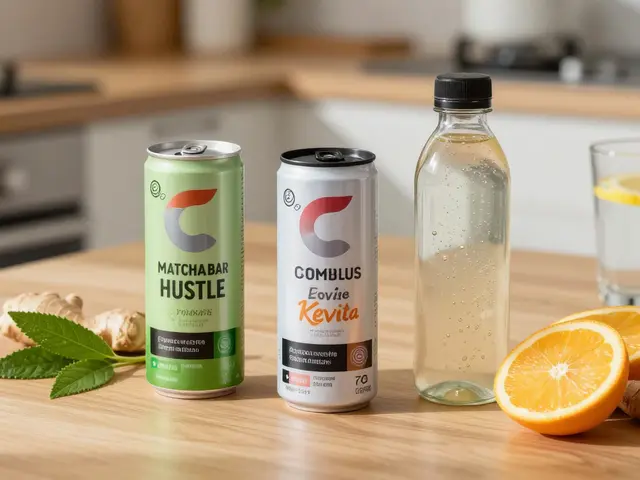
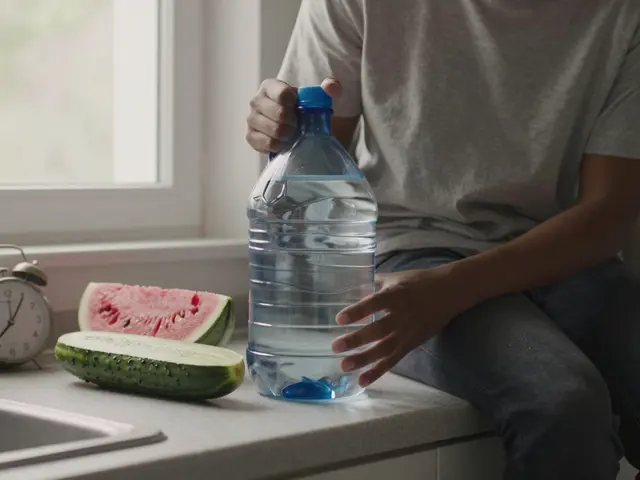
- Water-Dehydration is a top cause of fatigue. Drink a glass before you reach for the can.
- Green tea-Contains moderate caffeine and L-theanine, which smooths out the crash.
- Electrolyte drinks-Choose ones with no sugar or artificial sweeteners. Look for potassium, magnesium, and sodium in natural forms.
- More sleep and movement-Fatigue often comes from poor rest or sitting too long. A 10-minute walk can boost energy more than any drink.
If you need a quick pick-me-up, try a small piece of dark chocolate or a handful of nuts. They give you steady energy without stressing your kidneys.
Signs your kidneys might be struggling
Don’t wait for a medical emergency. Watch for these early warning signs:
- Swelling in ankles, feet, or hands
- Constant fatigue or trouble concentrating
- Frequent urination, especially at night
- Bubbly or foamy urine (could mean protein leakage)
- High blood pressure you can’t control
If you notice any of these and you drink energy drinks regularly, talk to your doctor. A simple blood test for creatinine and eGFR can tell you how well your kidneys are working.
Bottom line: moderation matters
Energy drinks aren’t poison. But they’re not harmless either. For healthy people, an occasional drink won’t wreck your kidneys. But if you’re drinking them daily, or if you have any risk factors like high blood pressure, diabetes, or a family history of kidney disease-you’re playing with fire.
Your kidneys don’t complain until it’s too late. Protect them by treating energy drinks like an occasional treat-not a daily habit. Swap one out for water or tea this week. Your kidneys will thank you in 10 years.
Can energy drinks cause kidney stones?
Yes. The high caffeine content in energy drinks acts as a diuretic, increasing urine production and reducing fluid volume in the body. This raises the concentration of minerals like calcium and oxalate in urine, which can crystallize into kidney stones. A 2022 study found that people who drank two or more energy drinks daily had a 32% higher risk of developing kidney stones than those who didn’t.
Are sugar-free energy drinks better for your kidneys?
They’re better for your blood sugar, but not necessarily for your kidneys. Sugar-free versions still contain high levels of caffeine and artificial sweeteners like sucralose. Some animal studies link these sweeteners to changes in gut bacteria that may increase kidney inflammation. There’s no long-term human data proving they’re safe, so they’re not a guaranteed healthier option.
How many energy drinks are too many for kidney health?
One energy drink a day can start putting stress on your kidneys, especially if you’re also drinking coffee, tea, or soda. Two or more per day significantly increases your risk of kidney damage, high blood pressure, and kidney stones. For most people, limiting intake to one per week or less is the safest approach.
Can kidney damage from energy drinks be reversed?
Mild kidney stress from occasional energy drink use can improve if you stop drinking them and stay hydrated. But if you’ve developed chronic kidney disease or scarring (fibrosis), the damage is usually permanent. Early detection through blood tests is key-once kidney function drops below 60% of normal, recovery becomes unlikely.
Do energy drinks affect kidney function in teens differently?
Yes. Teen kidneys are still developing and are more sensitive to toxins. Energy drinks can raise blood pressure and heart rate more sharply in adolescents than in adults. A 2023 Australian study showed teens who drank energy drinks weekly had higher levels of urinary albumin-a sign of early kidney damage-compared to non-drinkers. Their risk of long-term kidney problems is higher if they continue the habit into adulthood.
If you’re drinking energy drinks regularly and have any concerns about your kidney health, talk to your doctor. A simple blood test can check your kidney function and give you clarity. Better to know now than to wait for symptoms.

Comments (8)
Ryan Toporowski
20 Jan 2026
Been drinking these since college and still kicking 😅 But honestly? I cut down to one a week after my buddy got hospitalized. Kidneys don’t text back till it’s too late. 🫠
Samuel Bennett
21 Jan 2026
So let me get this straight - you’re blaming energy drinks but ignoring that 90% of people who drink them also smoke, eat fast food, and sleep 4 hours? Classic scapegoating. The real killer? Lazy lifestyle. Not the drink.
Rob D
21 Jan 2026
Look, I don’t care what some peer-reviewed paper says - if you’re dumb enough to chug three of these a day, your kidneys are already on life support. These aren’t beverages, they’re liquid ADHD with a side of corporate greed. The FDA’s asleep at the wheel, and you’re the sucker buying it. Wake up, sheeple.
Franklin Hooper
23 Jan 2026
Studies suggest correlation not causation. Also, hydration status is rarely controlled. And the term ‘kidney stress’ is medically vague. The article is alarmist without nuance.
Jess Ciro
24 Jan 2026
They’re putting fluoride in these too you know. And glyphosate. The government wants you sick so they can sell you kidney transplants. That 19-year-old? He was targeted. The system’s rigged.
saravana kumar
25 Jan 2026
Interesting. But in India, we drink chai three times a day - with sugar, caffeine, and milk. No kidney failure. Maybe it’s not the drink, but the quantity and context? Also, who drinks these cold in 40°C heat? Madness.
Tamil selvan
26 Jan 2026
I appreciate the depth of this article. It’s rare to see such a balanced, evidence-based perspective on a topic often clouded by hype. I’ve shared this with my brother who drinks two daily - he’s already switched to green tea. Small changes, big impact. Thank you for the clarity.
Mark Brantner
27 Jan 2026
Wait… so if I drink one a week and nap after? Is that still ‘playing with fire’? 😅 I mean, I’ve got a 10-minute walk, a glass of water, and a chocolate bar waiting in the wings… but the can? It’s my tiny rebellion against the grind. 😎