
Is a gallon of water a day too much? What science says about hydration and energy
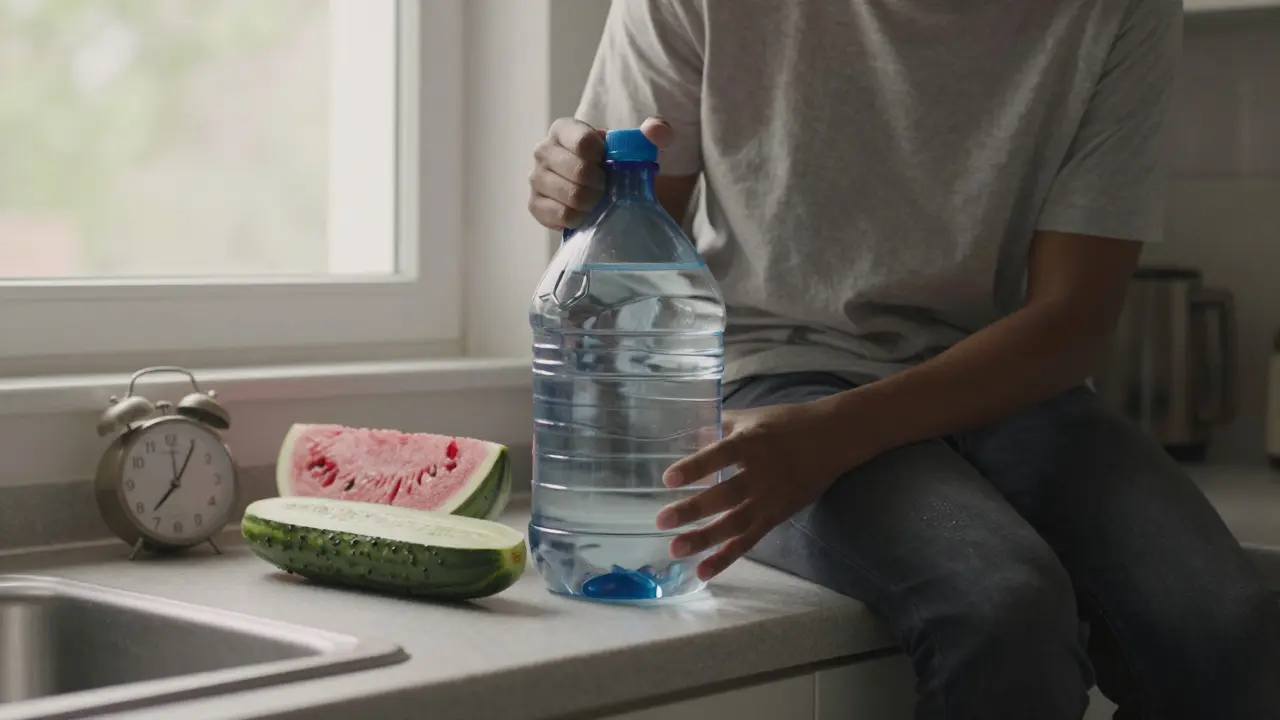
Drinking a gallon of water a day sounds like something a health guru would recommend - clean skin, more energy, better digestion. But is it actually helpful, or just a myth that’s gone too far? If you’ve been told to chug eight cups, then ten, then a full gallon, you’re not alone. Millions of people are trying to out-hydrate their way to wellness. But here’s the truth: water isn’t magic. And more isn’t always better.
How much water do you really need?
The old advice - eight glasses a day - was never based on solid science. It came from a 1945 food recommendation that also mentioned most water comes from food. Nobody remembered that part. Today, the National Academies of Sciences, Engineering, and Medicine says healthy adult men need about 3.7 liters (125 ounces) of total water daily, and women need about 2.7 liters (91 ounces). That includes water from all beverages and food. So if you eat watermelon, cucumbers, soup, or drink coffee, you’re already getting a big chunk of your daily need.
A gallon is 128 ounces. That’s more than the recommended total for men and way over for women. So yes - drinking a full gallon of pure water on top of your food and other drinks? That’s excessive for most people.
What happens when you drink too much water?
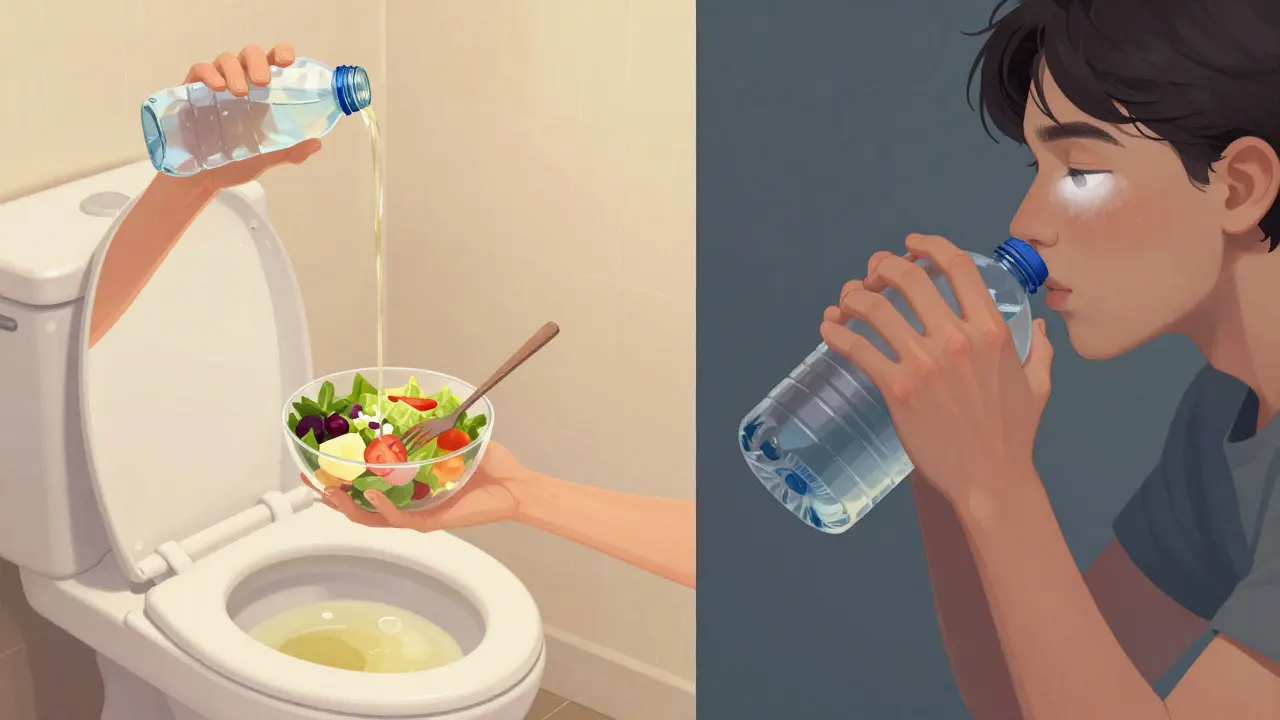
Your kidneys can filter about 0.8 to 1 liter of water per hour. If you chug a gallon over a few hours, you’re flooding the system. Your body doesn’t store extra water - it flushes it out. But here’s the danger: when you dilute your blood too much, sodium levels drop. That’s called hyponatremia. It sounds rare, but it’s not. Marathon runners, military recruits, and even people trying to "detox" with water have ended up in the hospital with it.
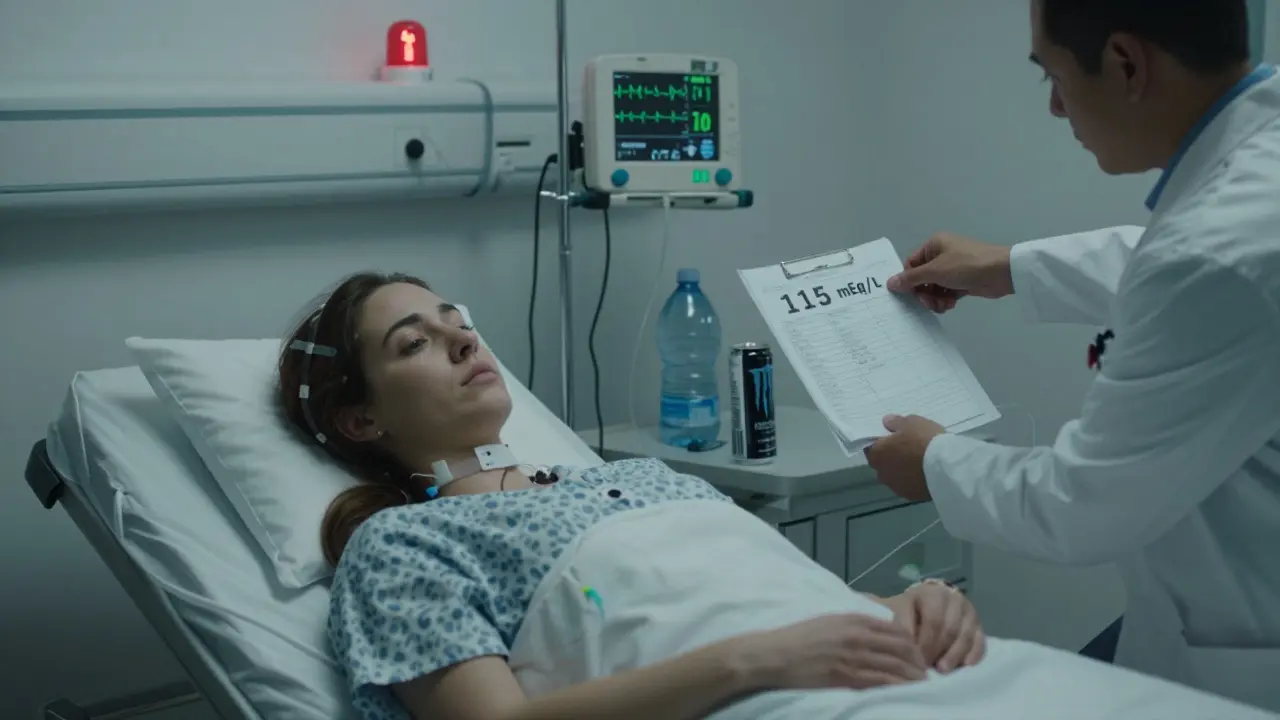
Symptoms include nausea, headaches, confusion, swelling in the hands and feet, and in severe cases, seizures or coma. In 2023, a 32-year-old woman in California died after drinking a gallon of water in under three hours as part of a social media challenge. Her sodium level dropped to 115 mEq/L - normal is 135 to 145. That’s not a typo. That’s life-threatening.
Do energy drinks change the game?
You might be wondering - if I’m drinking a gallon of water a day, maybe I’m doing it because I’m also consuming energy drinks. Maybe I think water balances out the caffeine or sugar. But that’s backwards.
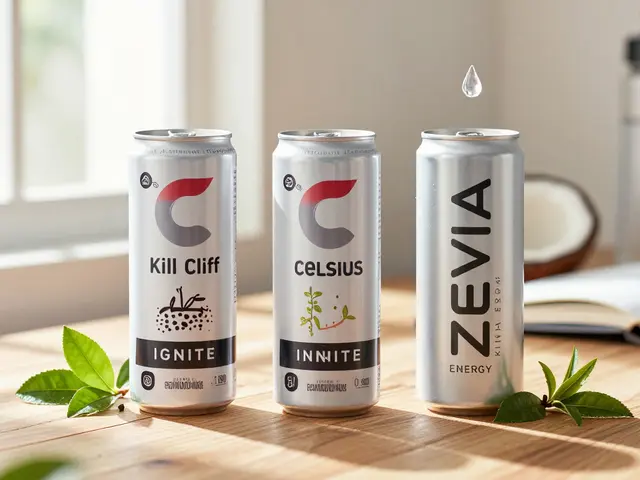
Most energy drinks contain 80-300 mg of caffeine per serving. That’s a diuretic. It makes you pee more. So if you’re chugging water to "counteract" your energy drink, you’re fighting a losing battle. Caffeine doesn’t cancel out water - it just adds stress to your kidneys. And if you’re drinking multiple energy drinks a day, you’re also loading up on sugar or artificial sweeteners. That’s not hydration. That’s a metabolic tax.
Studies from the American Heart Association show that people who regularly consume energy drinks are more likely to have high blood pressure, irregular heart rhythms, and sleep problems. Water won’t fix that. If you’re relying on energy drinks for daily energy, you’re masking a deeper issue - maybe poor sleep, low iron, or chronic stress.
Who actually needs a gallon of water?
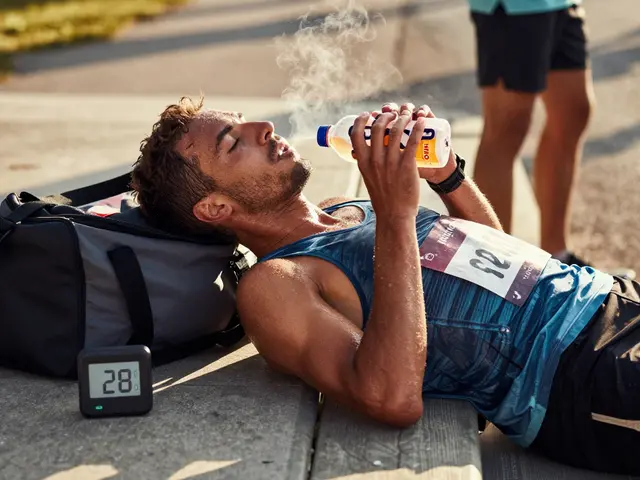
There are exceptions. Athletes training in extreme heat - like marathoners in Dubai or firefighters in 100°F weather - might need more. People with certain medical conditions like kidney stones or urinary tract infections are sometimes advised to increase water intake. But even then, doctors don’t say "a gallon." They say "enough to keep your urine pale yellow."
Most healthy adults don’t need to track ounces. Just listen to your body. Thirst is a reliable signal. If you’re not thirsty, you’re probably fine. If your urine is dark yellow or amber, drink. If it’s clear, you might be overdoing it.
What about "detox" and "cleansing" with water?
The idea that water flushes toxins out of your body sounds smart. But your liver and kidneys do that job 24/7. You don’t need to flood them. In fact, overhydration can strain those organs. There’s zero evidence that drinking a gallon a day removes "toxins" faster than normal hydration. That’s marketing, not medicine.
And if you’re doing this to lose weight? Water doesn’t burn fat. It might help you feel full before meals - but drinking a gallon daily isn’t sustainable. It’s also not necessary. A 2022 study in the Journal of Clinical Endocrinology & Metabolism found that drinking 500 ml (about 17 ounces) of water 30 minutes before meals helped overweight adults lose 2-3 extra pounds over 12 weeks. That’s less than half a gallon a day. And it was just before meals.
Real hydration tips - no gallon needed
- Start your day with a glass of water - it wakes up your metabolism.
- Keep a reusable bottle handy. Sip throughout the day, don’t chug.
- Check your urine color. Pale yellow = good. Clear = maybe too much. Dark yellow = drink more.
- Eat water-rich foods: oranges, grapes, lettuce, yogurt, broth.
- If you’re sweating a lot (exercise, heat), add a pinch of salt to your water. Electrolytes matter.
- Stop drinking water right before bed. It’s not helping your skin - it’s just making you wake up to pee.
Energy drinks and water: a dangerous combo
If you’re drinking energy drinks regularly, you don’t need to drink a gallon of water to "balance" them. You need to cut back on the energy drinks.
Here’s a simple test: skip your energy drink for three days. Replace it with water, herbal tea, or sparkling water with lemon. Notice how you feel. Do you have less jitteriness? Better sleep? More stable energy? That’s your body telling you what it really needs.
Water is essential. But it’s not a cure-all. And drinking a gallon a day? For most people, it’s not helpful - it’s risky.
Is drinking a gallon of water a day dangerous?
Yes, for most people. Drinking a gallon (128 ounces) of water daily can lead to hyponatremia - dangerously low sodium levels. This can cause confusion, seizures, and even death. Healthy adults typically need less than half that amount in total fluids from all sources, including food.
Can water replace energy drinks for energy?
Water doesn’t give you an energy boost like caffeine or sugar, but dehydration causes fatigue. If you’re tired because you’re not drinking enough, water can help. But if you’re relying on energy drinks daily, water won’t fix the root issue - likely poor sleep, stress, or diet. Cutting energy drinks and improving sleep will give you better, longer-lasting energy than any drink.
Do energy drinks make you need more water?
Yes, because most contain caffeine, which is a mild diuretic. That means you’ll pee more. But drinking extra water to compensate doesn’t cancel out the negative effects of sugar, artificial additives, or caffeine overload. It just adds strain on your kidneys. The better solution is to reduce or eliminate energy drinks.
How do I know if I’m drinking too much water?
Clear urine, frequent urination (every hour or less), nausea, headaches, and swelling in hands or feet are signs you’re overhydrated. If you’re not sweating heavily or exercising in extreme heat, you likely don’t need more than 6-8 cups of water from drinks daily - plus what you get from food.
Should I drink water before or after an energy drink?
There’s no benefit to drinking water before or after an energy drink to "neutralize" it. The sugar and caffeine still hit your system. If you’re drinking energy drinks to stay awake or boost energy, you’re masking a deeper issue. Try switching to water or herbal tea for a week and see how you feel. Your body will thank you.
Final takeaway
Water is vital. But a gallon a day? That’s not a health hack - it’s a risk. Your body knows how much it needs. Trust it. Skip the extreme hydration trends. Skip the energy drinks. Just drink when you’re thirsty. Eat your veggies. Sleep well. Move your body. That’s the real formula for lasting energy - not a gallon of water or a can of chemicals.

Comments (13)
kelvin kind
3 Mar 2026
Just drink when you're thirsty. Done.
Denise Young
5 Mar 2026
Look, I get it - the gallon-a-day trend is basically the keto diet of hydration: flashy, emotionally satisfying, and scientifically dubious. We’ve been sold this narrative that water is a panacea, but the body isn’t a washing machine that needs a full cycle every morning. The National Academies’ guidelines exist for a reason - they account for water from food, coffee, even that sad little salad you ate at lunch. When someone tells me they’re drinking a gallon because they "want to detox," I want to hand them a textbook and a spoon. Your liver doesn’t need a pressure washer. It needs sleep, a decent diet, and maybe less Instagram influencer advice. And don’t even get me started on the energy drink + gallon combo. That’s not hydration - that’s a metabolic death spiral with a reusable bottle. You’re not cleansing. You’re just making your kidneys file a restraining order.
Sam Rittenhouse
5 Mar 2026
I used to drink a gallon a day because I thought it would fix my chronic fatigue. It didn’t. What it did was make me wake up three times a night, feel bloated all day, and eventually end up in the ER with a sodium level that looked like a typo. I didn’t know hyponatremia was a thing until they were hooking me up to an IV. Now I sip. I eat watermelon. I sleep. And my energy? Better than ever. No chugging. No gimmicks. Just listening. Your body’s not broken. You’re just overcomplicating it.
Peter Reynolds
6 Mar 2026
I think the key is context if you're working outside in 100 degree heat or running marathons sure you need more but for most people just paying attention to thirst and urine color is enough also food contributes a lot more than people realize
Fred Edwords
8 Mar 2026
It’s worth noting that the "eight glasses a day" myth originated from a misinterpretation of a 1945 Food and Nutrition Board report, which explicitly stated that "most of the water requirement is met by the water content of food." The report did not recommend eight glasses of water - it recommended a total daily intake of approximately 2.5 liters from all sources. The omission of the food component in popular discourse has led to widespread overhydration, particularly among those who are already consuming adequate fluids via beverages and diet. Furthermore, the American Journal of Clinical Nutrition published a meta-analysis in 2021 demonstrating no significant health benefits from excessive water intake in healthy adults - and identified a dose-dependent increase in nocturnal urination, electrolyte imbalance, and renal strain. Therefore, the notion that "more is better" is not merely unsupported - it is empirically contradicted.
Sarah McWhirter
10 Mar 2026
Okay but have you ever considered that the government doesn't want you to know the truth? The FDA and Big Pharma are terrified of people realizing that water is free and doesn't require prescriptions. That's why they push these "recommended daily allowances" - to keep you buying electrolyte powders, smart bottles, and energy drinks that "balance" your hydration. I've been drinking 2 gallons a day for 3 years and my skin glows, my brain is clear, and I haven't had a cold since 2020. Coincidence? I think not. They're lying to you about sodium levels too - low sodium is actually a sign your body is *detoxing* - not failing. The medical establishment doesn't want you to know that water is the real superfood. They want you dependent on pills. Wake up.
Ananya Sharma
11 Mar 2026
Let’s be real - this whole "listen to your body" narrative is just capitalism’s way of offloading responsibility. Who decides what "thirst" is? The same corporations that profit from bottled water, smart hydration trackers, and energy drinks. In India, where I’m from, people have been hydrating properly for centuries without knowing how many milliliters they drank - they drank when they were hot, ate when they were hungry, and rested when they were tired. But now, thanks to Western wellness culture, we’ve turned hydration into a quantifiable, monetizable obsession. A gallon a day? That’s not health - it’s performative self-care for people who have the luxury of time, clean water, and Instagram. Meanwhile, millions of women in rural areas walk kilometers for water and are told they’re "underhydrated" because their urine isn’t clear enough. This isn’t science. It’s colonialism with a reusable bottle.
Ian Cassidy
12 Mar 2026
Hydration isn’t about volume - it’s about balance. Your body doesn’t care if you drank 128 oz. It cares if your sodium, potassium, and osmotic pressure are in range. That’s why athletes sip electrolytes, not just water. And why chugging a gallon after an energy drink is like pouring gasoline on a fire - you’re not fixing the problem, you’re just making the burn wider. The real issue? People think hydration is a number. It’s a signal. Your kidneys are whispering. Are you listening?
Zach Beggs
13 Mar 2026
I tried the gallon thing for a week. Felt fine. But then I realized I was just peeing every 45 minutes. Not worth it. Now I sip. Eat fruit. Sleep. Life’s better.
Antonio Hunter
13 Mar 2026
There’s a quiet dignity in trusting your body’s signals - not because it’s trendy, but because it’s true. I’ve worked with athletes, firefighters, and elderly patients who all needed different hydration strategies. But every single one of them improved when they stopped chasing arbitrary numbers and started paying attention to how they felt. Thirst isn’t weakness - it’s wisdom. Dark urine? Drink. Clear? Pause. Nauseous? Stop. Your body doesn’t need a spreadsheet - it needs presence. And in a world full of noise, that’s the most radical thing you can do.
Paritosh Bhagat
14 Mar 2026
Interesting how people ignore the fact that energy drinks are designed to create dependency. Caffeine spikes, sugar crash, then you feel tired again so you drink more water to "balance" it - but you’re not balancing anything. You’re just feeding a cycle. I’ve seen people drink 2 gallons of water a day while downing 3 energy drinks - and then wonder why they have anxiety. It’s not the water. It’s the poison. And you’re not detoxing - you’re poisoning yourself slower. Cut the energy drinks. Not the water. The drink. The drink. The drink.
Ben De Keersmaecker
15 Mar 2026
As someone who grew up in Belgium where tap water is among the safest in the world, I’ve always found it fascinating how Americans have turned hydration into a performance art. In Europe, we drink when we’re thirsty, eat water-rich foods, and rarely track ounces. We don’t need apps or infographics. We just live. And yet, here we are - turning a biological need into a spiritual quest. The irony? The more we obsess over hydration, the less we actually listen to our bodies. Maybe the real solution isn’t more water - it’s less noise.
Aaron Elliott
15 Mar 2026
While the author presents a compelling argument grounded in empirical data, it is nonetheless insufficiently rigorous in its engagement with the broader literature on fluid homeostasis. For instance, the National Academies' recommendations are population-based averages and do not account for individual variation in renal function, body mass index, or environmental exposure. Furthermore, the assertion that "more is not always better" is tautological - of course, excess is harmful. But this does not preclude the possibility that supra-physiological hydration may confer therapeutic benefits in specific subpopulations - e.g., those with recurrent nephrolithiasis or chronic fatigue syndrome. The omission of such nuance renders the conclusion overly reductive. A more scientifically defensible position would acknowledge both the risks of overhydration and the potential, albeit context-dependent, benefits of elevated fluid intake - not merely dismiss the latter as a "myth."