
What Do NFL Players Eat Before a Game? Real Food Choices That Fuel Performance
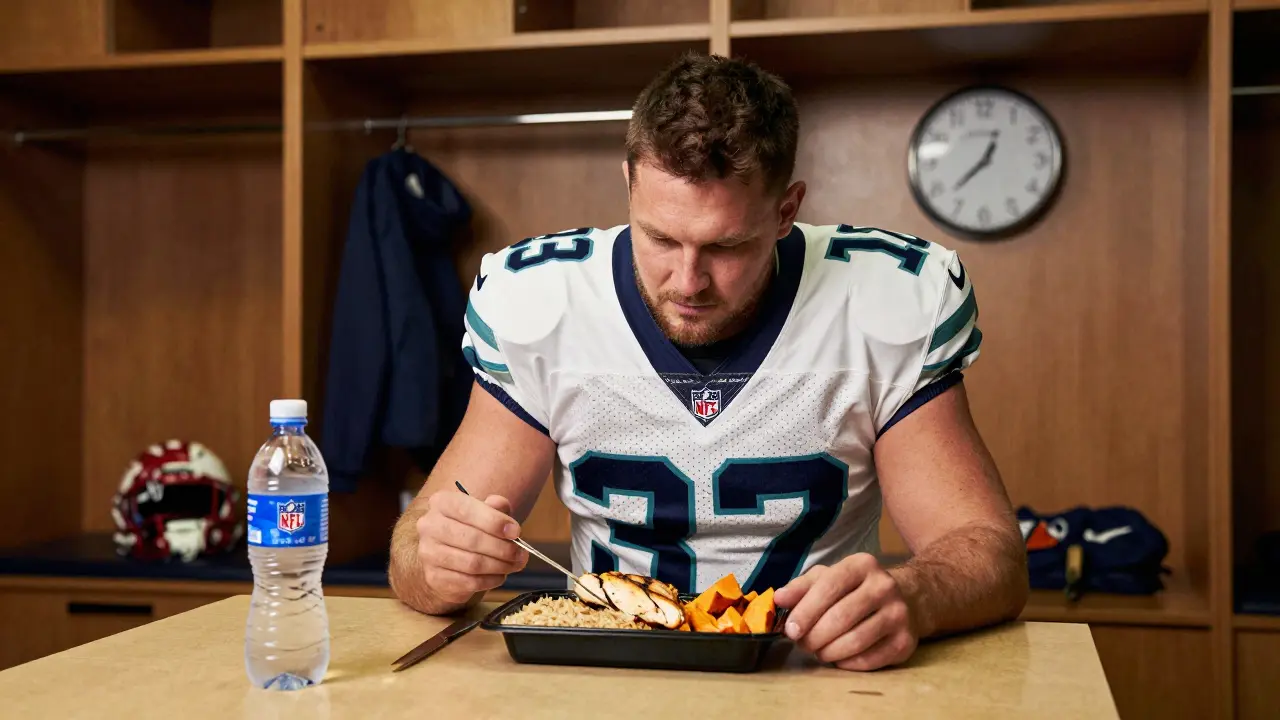
Ever wonder what’s on the plate of an NFL player before they step onto the field? It’s not energy drinks, protein shakes, or carb-loaded pasta bowls from a movie. It’s real food-carefully timed, precisely balanced, and tailored to each player’s body and position. While you might see athletes sipping on sports drinks on the sideline, what they eat hours before kickoff makes all the difference.
Timing Matters More Than What You Eat
NFL players don’t just eat anything before a game. They follow a strict schedule. Most eat their main meal 3 to 4 hours before kickoff. That gives their body enough time to digest and turn food into usable energy. A smaller snack, usually 1 to 2 hours before, tops off their energy stores without weighing them down.
Why not eat right before the game? Because digestion slows blood flow to muscles. If your stomach’s still working hard when you’re sprinting or tackling, you’re fighting yourself. That’s why meals are low in fat and fiber-things that take longer to break down.
What’s Actually on the Plate?
There’s no one-size-fits-all menu, but here’s what you’ll see across locker rooms:
- Lean protein: Grilled chicken breast, turkey, fish (like salmon), or eggs. Protein helps repair muscle during the game, not just after.
- Complex carbs: Brown rice, sweet potatoes, whole grain pasta, oatmeal. These release energy slowly, keeping blood sugar steady through all four quarters.
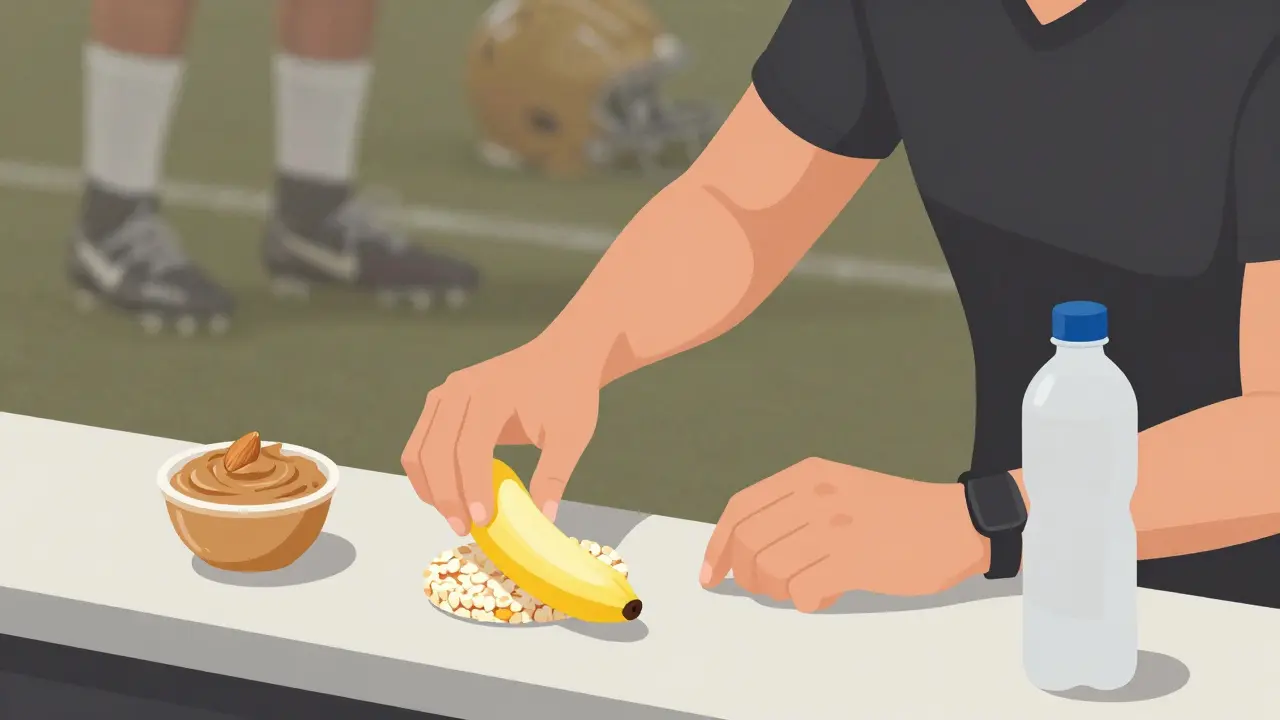
- Simple carbs (for the snack): Bananas, apples, white bread, or rice cakes. These give a quick boost right before the game without causing bloating.
- Hydration: Water is the main drink. Some teams use electrolyte solutions, but sugary sports drinks are avoided before the game-they can cause spikes and crashes.
Quarterbacks and wide receivers, who need quick bursts of speed, often eat lighter meals than linemen. A 320-pound offensive tackle needs more calories than a 190-pound cornerback. So meal plans are personalized.
What They Avoid
Even the best athletes know what to skip:
- Fried food: Burgers, fries, fried chicken-too much fat slows digestion and can cause cramps.
- High-fiber veggies: Broccoli, beans, kale. Great for health, terrible right before a game.
- Sugary snacks: Candy, soda, energy drinks. They spike blood sugar, then crash. That’s the last thing you want when you’re about to run a 40-yard dash.
- Dairy: Milk, cheese, yogurt. Many players are sensitive to lactose, and it can trigger bloating or stomach upset.
One former offensive lineman told me he used to eat pizza before games. He got sick every time. Now he sticks to grilled chicken and rice. Simple, but effective.
Hydration Isn’t About Energy Drinks
Energy drinks? Not before the game. They’re loaded with caffeine and sugar-both can increase heart rate, cause jitters, and lead to dehydration. NFL teams have strict hydration protocols. Players sip water all day. Some get electrolyte tablets or low-sugar electrolyte drinks, but only if they’re sweating heavily in pre-game warm-ups.
Real hydration comes from food, too. Watermelon, cucumbers, oranges, and broth-based soups all contribute. A player might eat a bowl of chicken soup an hour before kickoff-not for the flavor, but because it’s 90% water and easy to digest.
Position-Specific Fueling
Not all players burn energy the same way. A linebacker might need 4,000 calories on game day. A kicker might only need 2,800. Here’s how it breaks down:
- Linemen: Higher calorie needs. More complex carbs and lean protein. Think 1.5 cups of brown rice, 8 oz of grilled chicken, and a sweet potato.
- Quarterbacks & Receivers: Focus on quick-digesting carbs and moderate protein. A banana, two slices of toast with peanut butter, and a hard-boiled egg.
- Defensive backs: Lighter meals. They need agility, not bulk. Oatmeal with berries and a boiled egg works well.
- Kickers & Punters: Minimal carbs, minimal weight. A small apple and a few almonds. Too much food = too much bounce in their step.
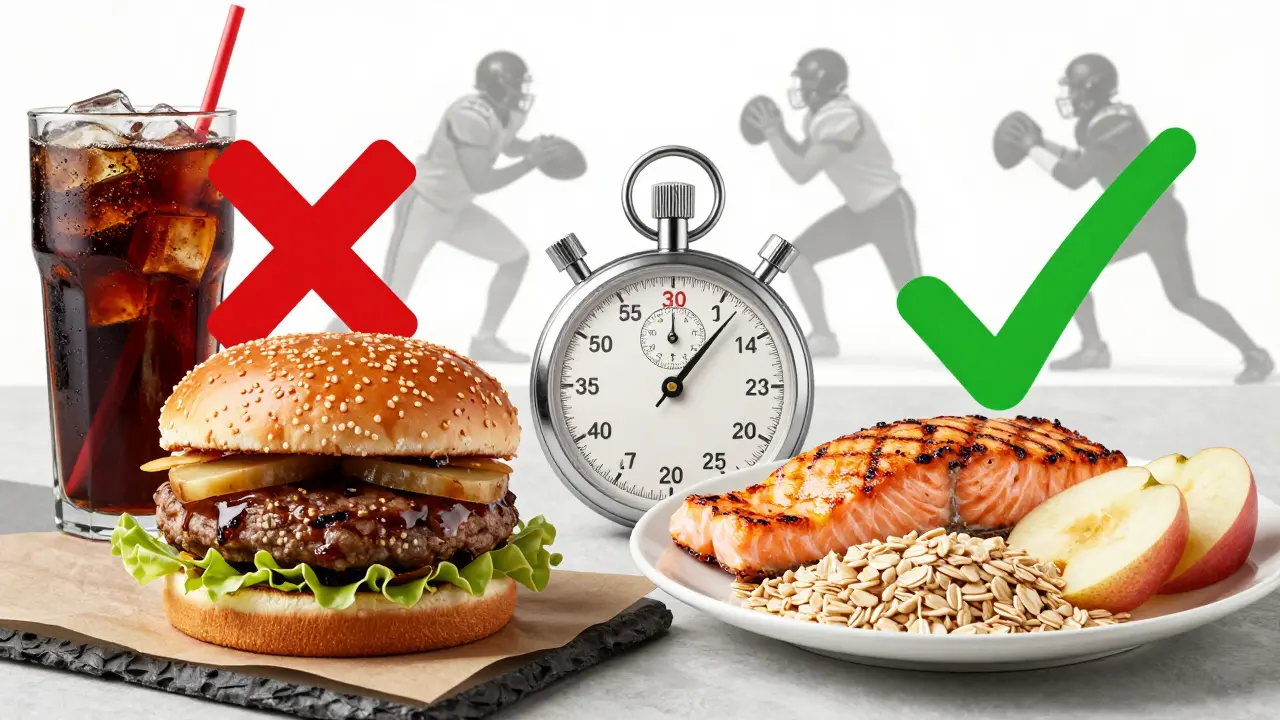
Game Day Snacks: The 60-Minute Rule
One hour before kickoff, players grab a snack. It’s not a meal. It’s a top-up. Common choices:
- Energy bars (low-sugar, high-carb-think KIND bars or Clif Bars)
- Trail mix (nuts and dried fruit, no chocolate)
- Apple slices with almond butter
- White rice cakes with honey
These snacks are chosen because they’re easy to digest, contain no artificial ingredients, and give a clean energy boost. No caffeine. No sugar crashes. Just simple fuel.
Why This Works
When you watch a player sprint 60 yards to make a tackle, you’re seeing the result of hours of planning-not last-minute energy drinks. Their bodies are trained to use stored glycogen-the form of glucose stored in muscles and liver. That glycogen comes from the carbs they ate 24 hours before the game.
What they eat before the game? It’s the final layer. The real work happens in the days leading up. A player might load up on carbs the night before. Then eat a light, balanced meal 3 hours out. Then a tiny snack an hour before.
It’s not magic. It’s science. And it’s repeatable.
What You Can Learn From NFL Players
You don’t need to be a pro athlete to use these principles. If you’re heading to a weekend game, a long hike, or even a tough workout:
- Eat your main meal 3-4 hours before.
- Choose lean protein and complex carbs.
- Avoid greasy, sugary, or fibrous foods.
- Drink water-not energy drinks-before activity.
- Have a light snack 60 minutes before if needed.
Forget the hype. You don’t need a $5 energy drink to perform. You need good food, good timing, and good habits.


Comments (13)
Mbuyiselwa Cindi
4 Mar 2026
I used to think protein shakes were the holy grail until I started coaching high school athletes. Real food? Game changer. My kids went from crashing at halftime to finishing strong. Grilled chicken and sweet potato? Yeah. That’s the stuff.
Also, no more energy bars with 20g of sugar. Just no.
Krzysztof Lasocki
5 Mar 2026
So let me get this straight… you’re telling me NFL players don’t chug Red Bull before a game? Shocking. Next you’ll say they don’t eat pizza before a playoff game. Wait-oh right, they learned that one the hard way. RIP 2015 offensive lineman.
Henry Kelley
6 Mar 2026
I’m a lineman and this is 100% spot on. I used to eat a whole burrito before games. Now? Two eggs, half a sweet potato, and a banana. No more cramps, no more sprinting to the bathroom. Just pure focus. Also, water > Gatorade. Always.
Victoria Kingsbury
8 Mar 2026
Glycogen loading is a legit metabolic strategy, and honestly, most people don’t even understand the difference between complex and simple carbs. The fact that teams are moving away from sugary sports drinks pre-game? That’s a win for sports science. Also, hydration isn’t just H2O-it’s water-rich foods. Cucumber > energy gel.
Tonya Trottman
8 Mar 2026
You say 'avoid dairy' like it's some revelation. Bro, lactose intolerance affects 65% of the global population. And you're surprised a 320-pound guy gets bloated? Also, 'low-sugar Clif Bars'? Those still have 22g of sugar. Please. Try a homemade trail mix. It's not rocket science.
Rocky Wyatt
9 Mar 2026
I’ve seen guys eat a whole pizza before a game and then cry on the sideline because they felt like they were gonna puke. You think you’re tough? You’re just a walking digestive disaster. This article? It’s the truth. Stop being a child and eat like an adult.
Santhosh Santhosh
11 Mar 2026
I’ve been following this for years, and I can tell you from personal experience-timing is everything. I used to eat my main meal at 1 p.m. for a 7 p.m. game and felt sluggish. Then I shifted to 2:30 p.m., and my energy lasted till the 4th quarter. It’s not just what you eat, but when you eat it. The body has circadian rhythms, and football is no exception. Also, the science behind glycogen storage is fascinating. It’s not magic, it’s biochemistry. And yes, a banana an hour before? Perfect. It’s nature’s energy bar.
Veera Mavalwala
13 Mar 2026
Oh honey, you think this is new? My cousin was a college kicker in Chennai, and he used to eat roasted chickpeas and coconut water before games. No carbs? No way. But he also didn’t eat a damn thing after 5 p.m. except a teaspoon of honey on toast. You think the NFL invented this? Nah. This is ancient wisdom wrapped in a lab coat. We’ve known this for centuries. The difference? They got PR teams to call it 'science.'
Ray Htoo
14 Mar 2026
I love how this breaks it down by position. I always assumed everyone ate the same thing. But a kicker needing less food than a linebacker? That makes so much sense. I’m a weekend warrior who plays flag football, and I’ve been eating oatmeal with peanut butter before games for years. No crashes. Just steady energy. I didn’t know I was basically doing NFL prep. Kinda cool.
mani kandan
15 Mar 2026
The precision in nutritional timing reflects a deeper understanding of human physiology. It is not merely about caloric intake but about the metabolic window, glycemic index, and thermic effect of food. The avoidance of high-fiber vegetables pre-game is not arbitrary-it is grounded in gastrointestinal motility studies. This is elite performance optimization, not dietary fad.
Rahul Borole
17 Mar 2026
This is an exemplary model of evidence-based sports nutrition. The adherence to scientific principles over commercial hype is commendable. I would recommend this protocol for all endurance and high-intensity athletes. The position-specific caloric allocation demonstrates a sophisticated grasp of energy expenditure dynamics. A textbook case of applied physiology.
Sheetal Srivastava
18 Mar 2026
I’m surprised you didn’t mention the role of cortisol modulation through pre-game meals. And where’s the data on insulin sensitivity? Honestly, if you’re not tracking blood glucose trends with a continuous monitor, you’re just guessing. And why are you still using 'banana' as a recommendation? That’s a high-glycemic fruit. For a QB? Risky. You need low-glycemic carbs. Like quinoa. Or am I the only one who reads peer-reviewed journals?
Mbuyiselwa Cindi
20 Mar 2026
Lmao @465 I’ve coached 30+ athletes. None of them wear glucose monitors before a game. Bananas work. They’ve got potassium, fiber, and natural sugars that release slow. If you want to overcomplicate it, go ahead. But your athletes will still crash. Real life > lab data.