
Should Athletes Drink Sports Drinks? The Real Science Behind Hydration and Performance
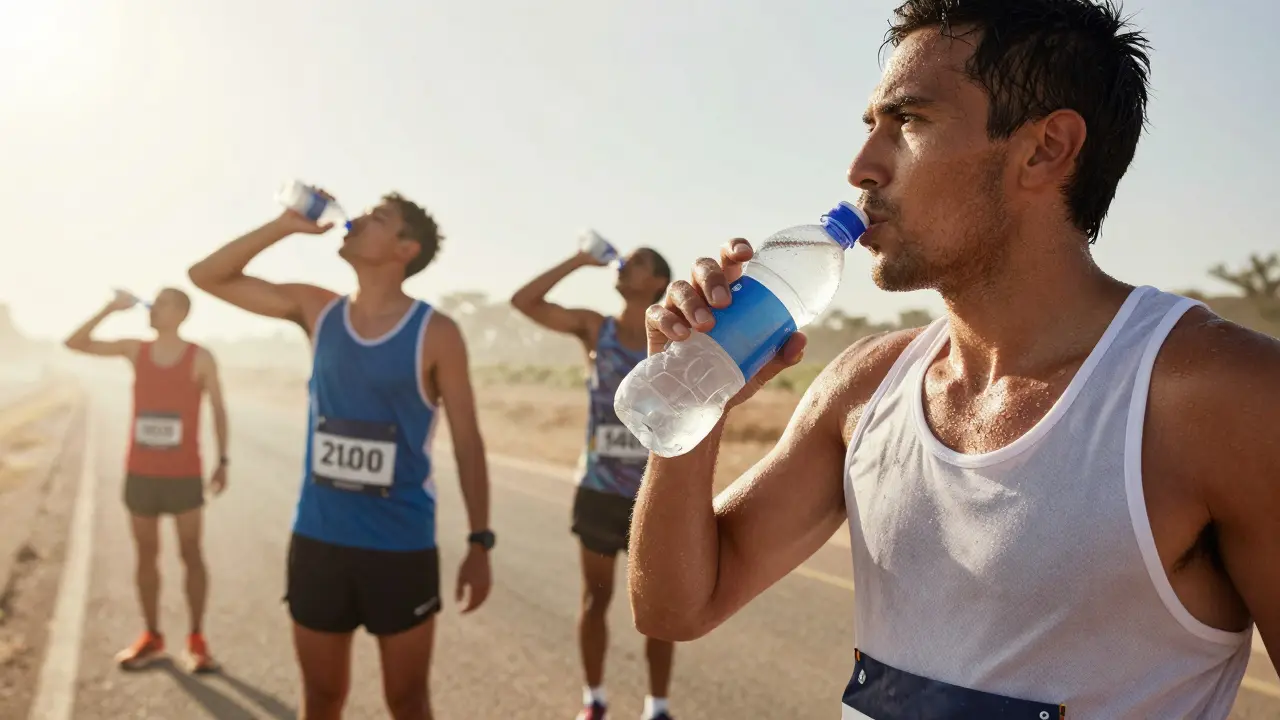
When you’re pushing hard in training or competing under the sun, your body loses more than just sweat. You lose sodium, potassium, magnesium-minerals your muscles and nerves need to keep working. That’s where sports drinks come in. But here’s the truth: sports drinks aren’t magic potions. They’re not always better than water. And for most people, they might even be doing more harm than good.
What’s actually in a sports drink?
Sports drinks aren’t just sugary soda with a fancy label. Most contain three main ingredients: water, carbohydrates (usually in the form of glucose or sucrose), and electrolytes-mostly sodium and potassium. The idea is simple: replace what you lose during intense exercise. Sodium helps your body hold onto water so you don’t dehydrate. Carbs give your muscles quick energy. Electrolytes keep nerve signals firing and muscles contracting properly.
But here’s the catch: not all sports drinks are created equal. Some have as much sugar as a soda-up to 36 grams per bottle. That’s nearly 9 teaspoons. Others are packed with artificial flavors, colors, and preservatives. A 2023 analysis by the Australian Institute of Sport found that 68% of sports drinks on the market had more sugar than recommended for a single hour of moderate activity.
Who actually needs them?
If you’re running a 5K on a cool morning, doing a 45-minute spin class, or lifting weights for an hour, you don’t need a sports drink. Water is enough. Your body can handle that level of exertion without losing enough electrolytes to require replacement.
But if you’re exercising for 90 minutes or longer-especially in heat or humidity-you’re in a different zone. Think marathoners, triathletes, soccer players in full matches, or firefighters in full gear under 35°C. That’s when your glycogen stores start to drop, and your sweat rate spikes. That’s when the sodium and carbs in a sports drink can help delay fatigue and keep your performance steady.
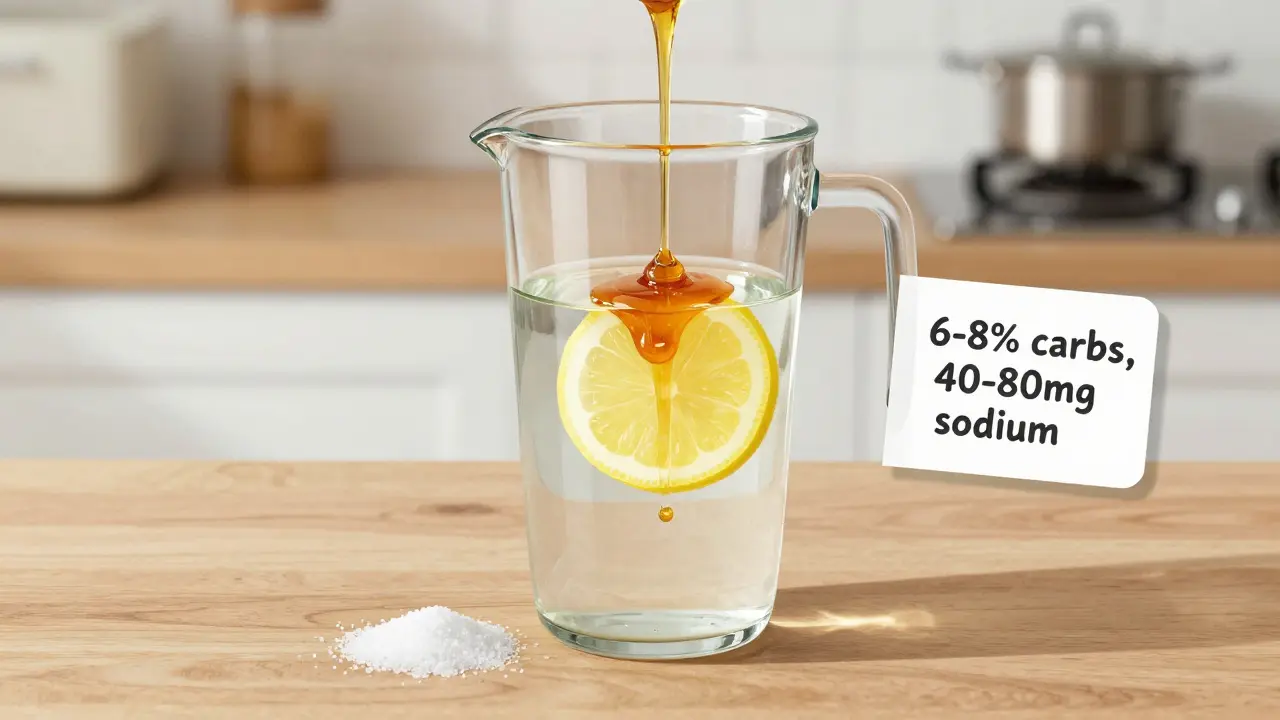
A 2024 study in the Journal of Sports Sciences tracked 120 endurance athletes during a 3-hour race in Brisbane summer conditions. Those who consumed a sports drink with 6-8% carbohydrate and 40-80mg of sodium per 100ml finished 8-12% faster than those who drank only water. The difference? It wasn’t just hydration. It was sustained energy delivery and better fluid retention.
Why water often beats sports drinks
Most recreational athletes aren’t losing enough salt or calories to justify the sugar load. Drinking a sports drink after a light workout is like pouring syrup into your gas tank when you only drove 10 kilometers. You’re adding unnecessary calories-about 140 to 200 per bottle-with zero performance benefit.
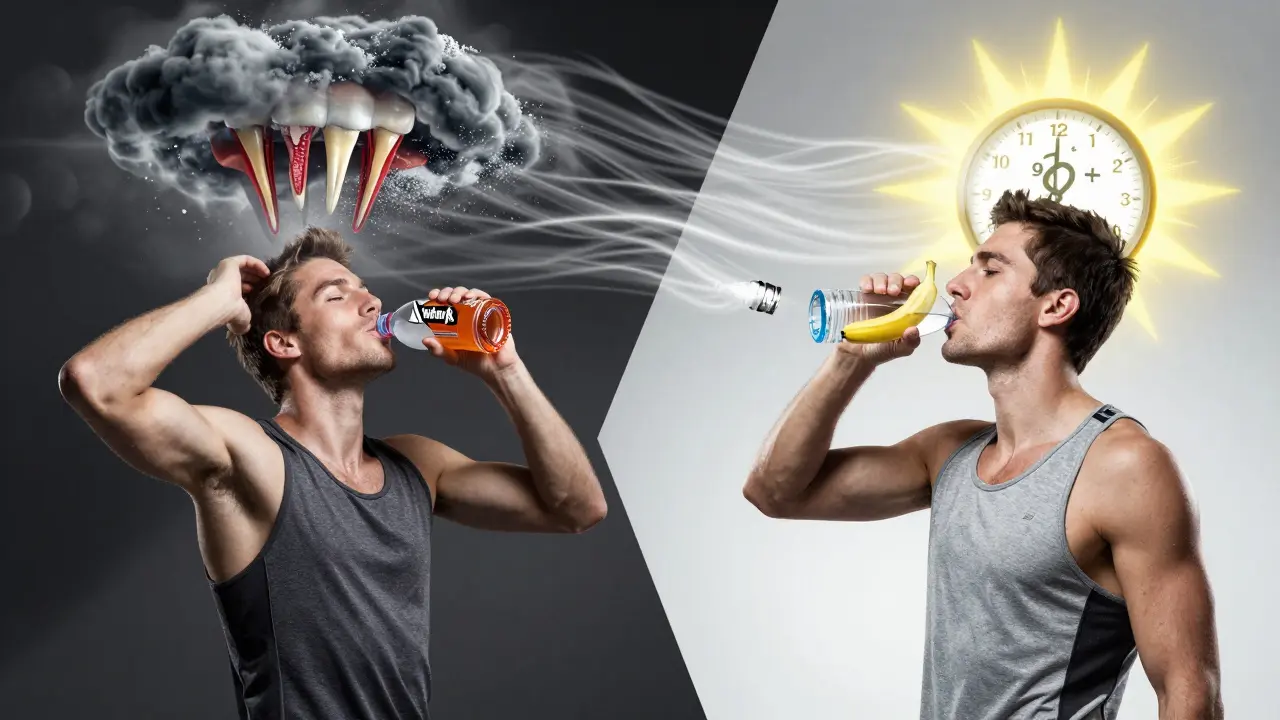
And it’s not just about weight gain. Regularly drinking sugary sports drinks when you don’t need them increases your risk of tooth decay, insulin spikes, and even fatty liver over time. A 2025 survey of Australian school athletes showed that kids who drank sports drinks daily after training were 2.3 times more likely to have dental cavities than those who stuck to water.
Here’s a simple rule: if your workout lasts less than 60 minutes and isn’t in extreme heat, drink water. If you’re sweating heavily for more than 90 minutes, then consider a sports drink. And even then, don’t just chug it-sip it slowly, over time.
What about energy drinks?
Don’t confuse sports drinks with energy drinks. Energy drinks like Red Bull, Monster, or Rockstar are loaded with caffeine, taurine, guarana, and sometimes high doses of B-vitamins. They’re designed to stimulate your nervous system, not replenish fluids or electrolytes.
For athletes, energy drinks are risky. Caffeine can increase heart rate and blood pressure, which isn’t ideal during intense exertion. The American College of Sports Medicine warns against using energy drinks before or during exercise-they can lead to dehydration, irregular heart rhythms, and even heat stroke in extreme cases.
There’s a reason why NCAA and World Anti-Doping Agency have caffeine thresholds. Too much can cross the line into banned territory. And even if it doesn’t, it’s not helping your endurance. It’s just masking fatigue.
DIY sports drink: cheaper, cleaner, better
You don’t need to buy a bottle. You can make your own in under a minute. Mix:
- 500ml of water
- 1/4 teaspoon of salt (about 600mg sodium)
- 2 tablespoons of honey or maple syrup (about 30g carbs)
- A squeeze of lemon or orange juice for flavor and potassium
This gives you the right balance of sodium and carbs-no artificial colors, no high-fructose corn syrup, no mystery additives. It costs less than $0.30 per serving. And it works just as well as the expensive brands.
Many professional teams, including Australia’s national cycling squad, use homemade versions during long training camps. They know the science. They don’t need marketing.
When to avoid sports drinks entirely
Here’s when you should skip them:
- After a short workout (under 60 minutes)
- If you’re trying to lose weight
- If you have diabetes or insulin resistance
- If you’re not sweating heavily
- If you’re drinking them just because they’re ‘healthy’ or ‘for athletes’
And if you’re a parent buying these for your kid’s soccer team? Think again. Kids don’t need extra sugar or sodium unless they’re competing in multi-hour events in extreme heat. Water and a banana afterward are more than enough.
The bottom line
Sports drinks have a real place-for endurance athletes in long, hot, sweaty events. But for the vast majority of people who exercise for health, fitness, or fun? Water is still king. The hype around sports drinks is built on marketing, not science.
You don’t need to spend $4 on a bottle to perform better. You just need to understand your body’s real needs. Sweat a lot? Drink water and add a pinch of salt. Need energy? Eat a banana. Feel tired? Rest. Don’t reach for a sugar-loaded bottle just because it says ‘performance’ on the label.
Real performance comes from smart training, good sleep, and proper fueling-not from what’s in the bottle.
Do sports drinks help with muscle cramps?
Muscle cramps during exercise are usually caused by muscle fatigue, not low electrolytes. While sodium loss can contribute in extreme cases, most cramps happen because your muscles are overworked or dehydrated. Drinking water and stretching helps more than a sports drink. If you’re prone to cramps, focus on conditioning, pacing, and staying hydrated with water throughout the day-not just during your workout.
Are zero-sugar sports drinks better?
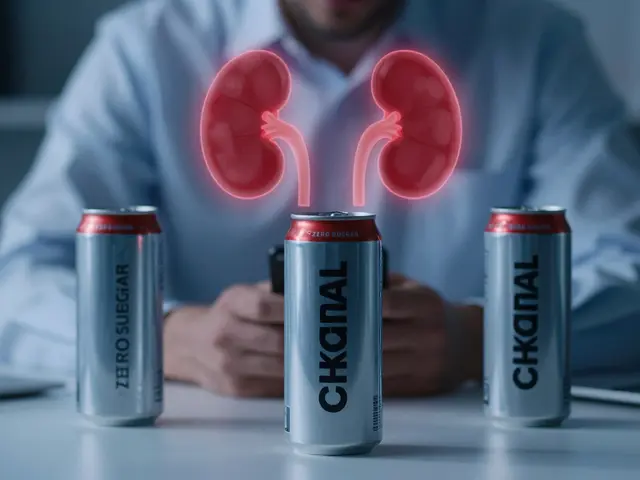
Zero-sugar sports drinks often replace sugar with artificial sweeteners like sucralose or acesulfame K. These don’t provide energy to your muscles, so they’re useless during long endurance events. They may help with hydration if they contain sodium, but they don’t replenish glycogen. For most people, they’re just flavored water with added chemicals. Stick to water or a homemade version with real carbs if you need energy.
Can I drink sports drinks every day?
No, unless you’re training for 2+ hours daily in extreme heat. Daily consumption of sports drinks leads to excess sugar intake, which increases the risk of weight gain, tooth decay, and metabolic issues. Even one bottle a day adds up to 50,000 extra calories a year-that’s over 6kg of body fat. Water is always the safer default.
What’s the best time to drink a sports drink?
Drink it during prolonged activity-not before or after. Sip 150-200ml every 15-20 minutes during exercise lasting over 90 minutes. Drinking it before won’t boost performance. Drinking it after won’t help recovery unless you’re continuing to train. For post-workout recovery, focus on protein and carbs from whole foods like yogurt, fruit, or a sandwich.
Are electrolyte tablets better than drinks?
Electrolyte tablets dissolved in water are a good alternative if you want to control sugar intake. They provide sodium and potassium without the carbs. But if you’re doing long endurance events, you still need carbs for energy. Tablets alone won’t prevent fatigue. The best option? Use tablets for hydration and eat a banana or energy bar for fuel.

Comments (10)
sonny dirgantara
25 Dec 2025
bro i just drink water and eat a banana after gym and i feel fine lol why do people buy those fancy bottles
Jawaharlal Thota
27 Dec 2025
Let me tell you something from the coaching side of things - I’ve seen kids in rural India running 10 kilometers under 40-degree heat with nothing but a water bottle and a pinch of salt in their palm, and they finish stronger than kids sipping Gatorade in air-conditioned gyms. The science here is rock solid: your body doesn’t need sugar to perform, it needs smart hydration and consistent training. Sports drinks are marketed to parents who think they’re doing right by their kids, but honestly? It’s just corporate greed wrapped in athletic branding. I’ve coached over 500 young athletes in the last decade, and not one of them needed a sports drink unless they were in a multi-hour endurance event. Even then, homemade electrolyte mix with honey and lemon worked better than any store-bought bottle. The real issue isn’t hydration - it’s education. Most people don’t know how to read labels. They see ‘electrolytes’ and think ‘health.’ It’s not. It’s sugar, colorants, and a placebo effect. And don’t get me started on zero-sugar versions with artificial sweeteners - those are worse, because they train your brain to crave sweetness without any benefit. Stick to water. Add salt if you’re sweating buckets. Eat real food after. That’s it. No magic potions. No marketing. Just biology.
Lauren Saunders
27 Dec 2025
Oh, how quaint. You’re advocating for ‘water and salt’ like we’re still in the 19th century. The fact that you’re dismissing decades of sports physiology research - and the very real metabolic demands of elite athletes - speaks volumes about your understanding of human performance. Not everyone is running a 10K in rural India. Some of us are competing in 100-mile ultramarathons in Death Valley. And yes, we need carbohydrates and electrolytes. Not because we’re weak, but because our bodies have evolved to utilize them efficiently under extreme duress. Your ‘homemade’ solution? Cute. But it lacks precision. The osmolality, the glucose-fructose ratio, the sodium-potassium balance - none of that is accounted for in honey and lemon. That’s not science. That’s folk medicine with a side of virtue signaling.
Andrew Nashaat
28 Dec 2025
Okay, but let’s be real - if you’re drinking a sports drink after a 30-minute jog, you’re not an athlete, you’re a walking sugar coma waiting to happen. I’ve seen people chug these things like they’re craft beer after lifting weights for 45 minutes. Bro. You didn’t ‘burn calories.’ You just drank a soda with sodium. And now your teeth are rotting, your insulin is screaming, and you’re wondering why you’re tired all the time. Also - zero-sugar versions? Please. Those are just chemical cocktails with a ‘fitness’ sticker. Sucralose is not a nutrient. It’s a lab experiment. And if you think electrolyte tablets are ‘better,’ you’re missing the point - you still need carbs for energy. Tablets don’t fuel you. Food does. Banana. Oatmeal. A piece of toast. Not a powder in a plastic pouch. Stop overcomplicating hydration. Water. Salt. Food. Rest. That’s the whole damn system.
Gina Grub
28 Dec 2025
Let’s not pretend this is about science. It’s about capitalism’s colonization of bodily autonomy. Sports drinks are the new nicotine - packaged as wellness, sold as necessity, normalized through influencer culture. The real tragedy? Parents buy them for their 12-year-olds after soccer practice because they’re told it’s ‘for performance.’ Meanwhile, the kid’s pancreas is on a slow burn, and the dentist is already drafting a treatment plan. The industry doesn’t care about your endurance. They care about your recurring revenue. And the fact that we’ve turned hydration into a branded experience? That’s the real performance failure.
Nathan Jimerson
28 Dec 2025
I’ve been running marathons for 15 years and never bought a single sports drink. Water, salt, and a good night’s sleep - that’s my formula. If you’re tired after a workout, maybe you’re not recovering enough, not because you skipped the bottle. Keep it simple. Your body knows what it needs.
Sandy Pan
30 Dec 2025
There’s something deeply poetic about how we’ve turned the most basic human need - hydration - into a product category with flavor variants, celebrity endorsements, and performance claims. We’ve forgotten that water isn’t just H₂O. It’s life. It’s rhythm. It’s the thing that kept our ancestors alive while they walked across deserts, hunted, and survived without a single electrolyte tablet. The real question isn’t whether sports drinks work - it’s why we’ve become so disconnected from our own biology that we need a label to tell us how to drink. Maybe the performance isn’t in the bottle. Maybe it’s in the humility to trust your body again.
Eric Etienne
31 Dec 2025
Why are we even having this conversation? People drink these things because they’re convenient and taste good. The science? Whatever. If you want to be healthy, don’t drink soda. Don’t drink sports drinks. Drink water. End of story. Stop overthinking everything.
Dylan Rodriquez
2 Jan 2026
What I love about this post is how it doesn’t just give facts - it gives back agency. Too many of us have been sold the idea that we need something external to perform better. But real strength comes from knowing your body, not from what’s in the bottle. Whether you’re a weekend warrior or a pro athlete, the solution isn’t more marketing - it’s more awareness. And for parents? This is a wake-up call. Your kid doesn’t need a branded drink after soccer. They need you to model healthy habits. Water. Fruit. Rest. That’s the real performance fuel. And it’s free.
Amanda Ablan
4 Jan 2026
For anyone still unsure - here’s the easiest rule: if you didn’t sweat through your shirt and your workout was under an hour, stick to water. If you’re out there for 90+ minutes in the heat and you’re feeling lightheaded or crampy, then yes - a properly formulated drink helps. But even then, make your own. It’s cheaper, cleaner, and you know exactly what’s in it. And if you’re buying these for your kids? Just give them water and a banana. No guilt. No hype. Just real care. You’ve got this.