
Why Do Athletes Eat So Much Rice?
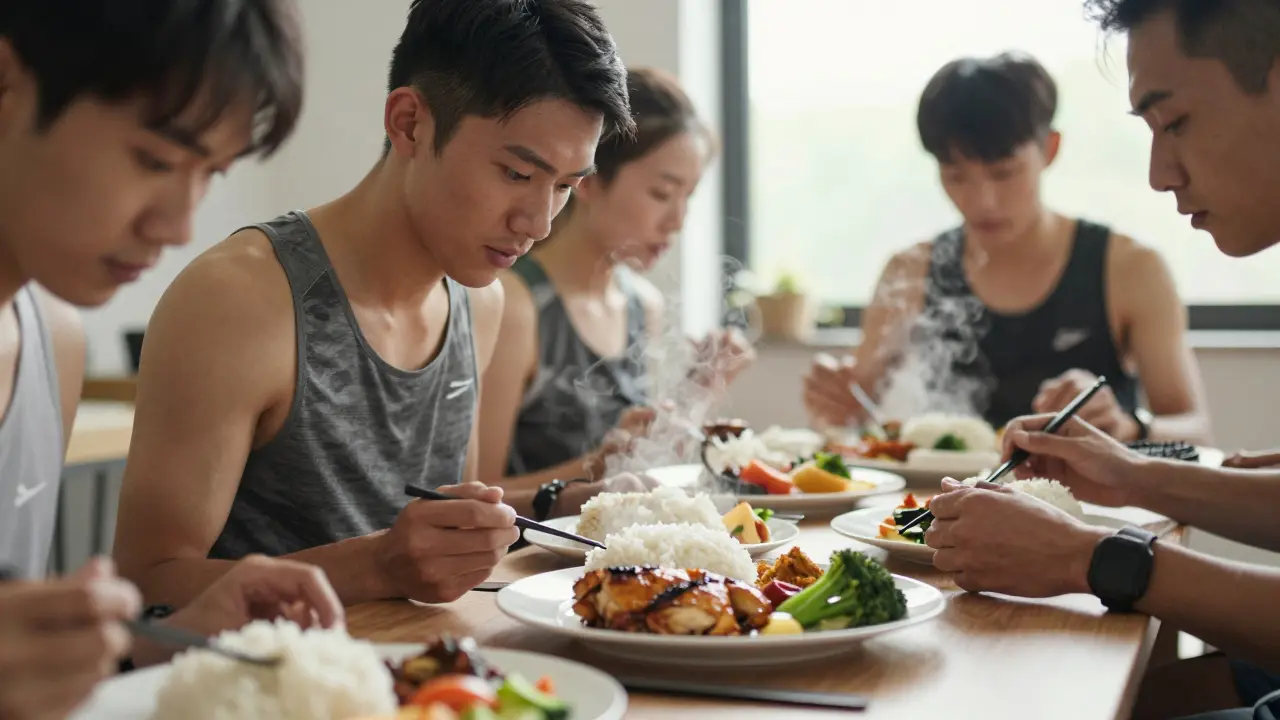
Ever watch an Olympic sprinter or a marathon runner at a team meal and wonder why their plate is almost all white rice? It’s not because they’re on a diet or just like the taste. It’s because rice is one of the most efficient, reliable, and practical ways to fuel high-performance bodies. And it’s not just elite athletes-college players, weekend warriors, and even triathletes swear by it.
Rice is pure, clean energy
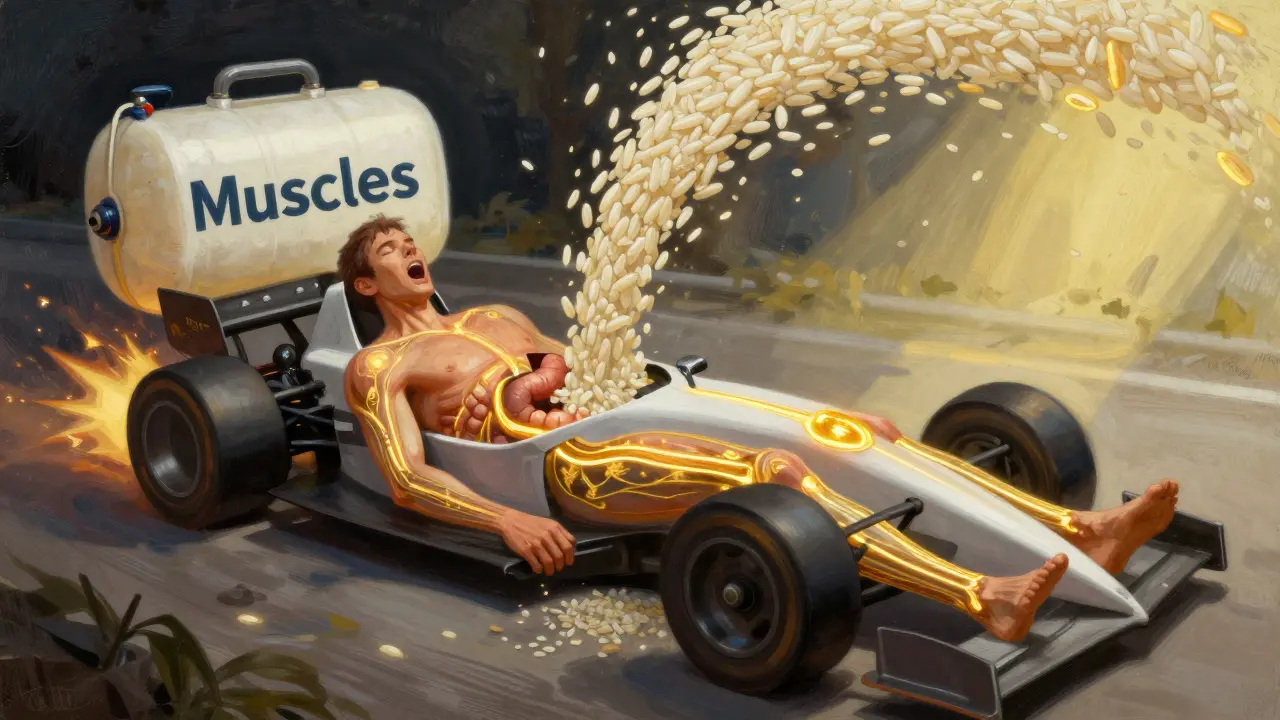
At its core, rice is almost 80% carbohydrates by dry weight. That means a cup of cooked white rice gives you about 45 grams of carbs. No fiber. No fat. Almost no protein. And that’s the point. Athletes don’t need complex digestion before a race or training session-they need fast, predictable energy. Rice breaks down into glucose quickly, gets absorbed into the bloodstream, and goes straight to the muscles to be stored as glycogen. That’s the fuel your body burns during intense activity.
Compare that to a banana-also a good carb source-but it comes with fiber and fructose. Fiber slows digestion. Fructose has to be processed by the liver before it becomes usable energy. Rice? It’s like a direct pipeline to your muscles. No detours. No delays.
It’s gentle on the stomach
Think about what happens when you’re training hard. Your body redirects blood flow away from your digestive system and toward your legs, lungs, and heart. That’s why so many athletes get stomach cramps or nausea during workouts. Eating something heavy, fatty, or high in fiber can make it worse.
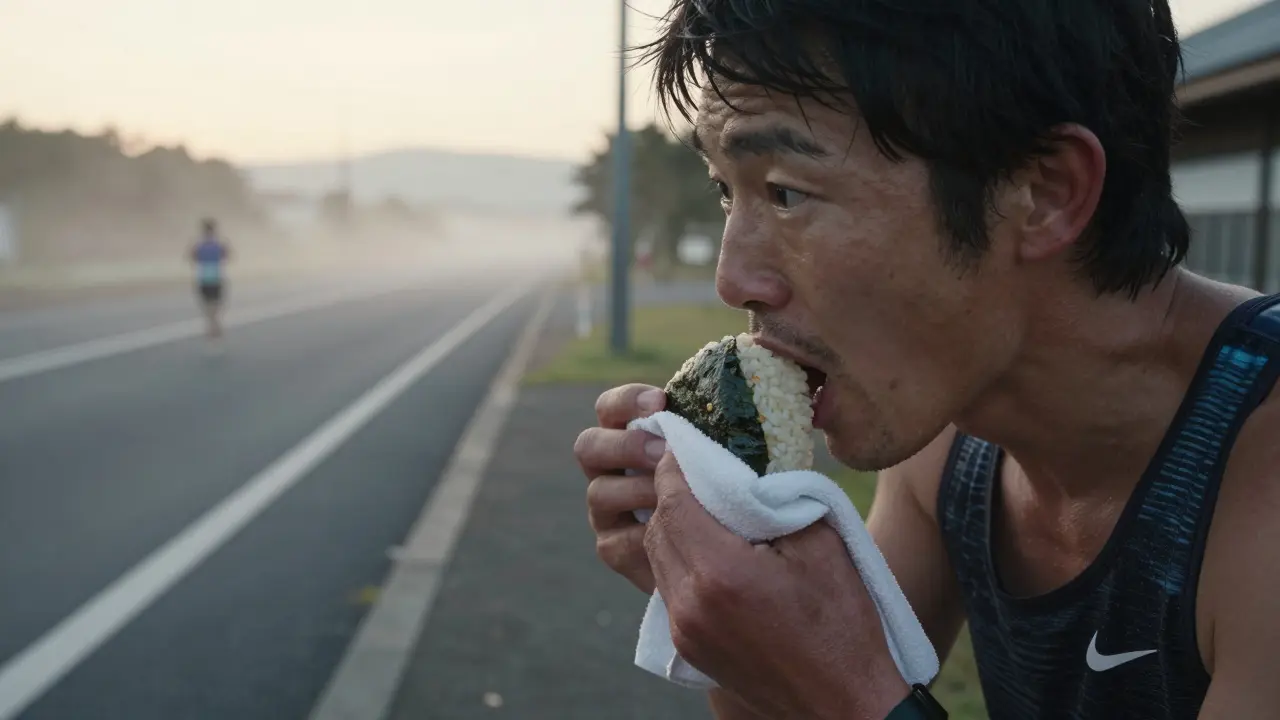
Rice is one of the most easily digestible carbs on the planet. It’s low in FODMAPs, which are short-chain carbs that can trigger bloating and gas. It’s also low in gluten and doesn’t contain the sugars or artificial additives found in energy gels or sports drinks. That’s why you’ll see runners eating rice balls during long-distance events in Japan, or soccer players in Brazil having rice and beans before a match. It’s not tradition-it’s physiology.
It helps with carb loading
Carb loading is a well-documented strategy used by endurance athletes before events like marathons, triathlons, or long cycling races. The goal? Max out your muscle glycogen stores so you don’t hit the wall.
Research from the International Society of Sports Nutrition shows that athletes who carb load with simple carbohydrates like white rice can increase their glycogen stores by up to 20%. That’s the difference between finishing strong and fading in the last 5 kilometers.
Rice is ideal for this because it’s easy to eat in large quantities. You can’t realistically eat 10 energy gels or drink 3 liters of sports drink in a day without feeling sick. But you can eat three or four cups of rice, spread across meals, without any discomfort. It’s filling, affordable, and doesn’t spike blood sugar in a way that causes crashes later.
It’s practical and affordable
Let’s be real: not every athlete has a personal chef or a nutritionist on retainer. Rice costs less than $0.10 per serving in most parts of the world. It stores for years without refrigeration. It cooks in 15 minutes. It pairs with almost anything-chicken, beans, vegetables, eggs. It travels well. You can pack it in a thermos, eat it cold, or reheat it in a hotel microwave.
Compare that to specialized sports foods: energy bars, gels, powders. They’re expensive. They often contain artificial sweeteners, preservatives, and colors. Some even cause gastrointestinal distress. Rice? It’s nature’s original performance fuel. No marketing. No hype. Just results.
It’s not just white rice
White rice gets all the attention, but brown rice has its place too. Brown rice has more fiber, magnesium, and B vitamins. That makes it better for recovery days or off-season training when you’re not trying to maximize glycogen storage but still need steady energy and nutrient support.
Many athletes use a hybrid approach: white rice the day before a big event, brown rice during regular training. Some even mix both-half white, half brown-to balance speed and sustainability. It’s not about being rigid. It’s about matching the food to the demand.
What about rice vs. energy drinks?
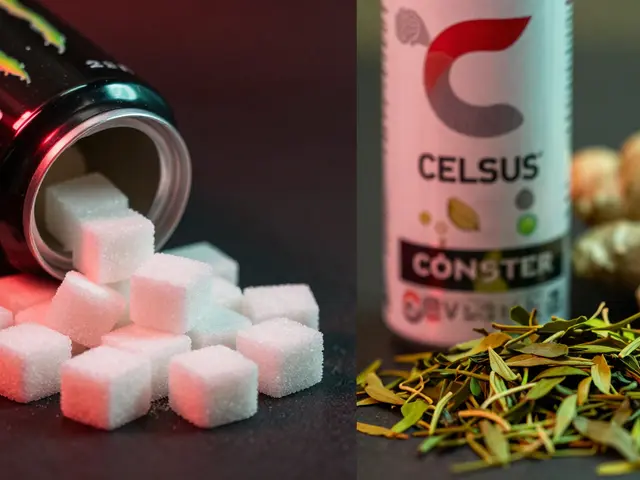
You’re reading this because you’ve probably seen athletes chugging energy drinks before or during workouts. Those drinks are full of sugar, caffeine, and additives. They give you a quick buzz, but they don’t replenish glycogen. They’re for short bursts of alertness, not long-term endurance.
Rice, on the other hand, builds your energy reserves from the ground up. You can’t replace a meal of rice with a can of energy drink and expect to run 26 miles. But you can use an energy drink to get a mental edge during the final stretch-while your body runs on the rice you ate the night before.
Think of it like this: energy drinks are like spark plugs. Rice is the fuel tank.
Real-world examples
Japanese marathoners have eaten rice for generations. In the 2020 Tokyo Olympics, Team Japan’s nutrition plan centered around rice-based meals, even for international athletes. Many foreign runners admitted they felt better after switching to rice instead of pasta or bread.
At the University of Florida, the football team’s pre-game meal for over a decade has been white rice with grilled chicken and steamed vegetables. The head nutritionist says injury rates dropped and recovery times improved after they made rice the carb staple.
Even professional cyclists in the Tour de France-where every gram counts-often eat rice cakes during rest stops. They’re easy to carry, don’t melt in the heat, and deliver carbs without the sugar crash of gels.
How much rice should an athlete eat?
There’s no one-size-fits-all answer, but here’s a simple rule: aim for 6-10 grams of carbohydrates per kilogram of body weight in the 24-48 hours before a big event.
For a 70kg athlete, that’s 420-700 grams of carbs. One cup of cooked white rice has about 45 grams. So that’s roughly 9-15 cups over the course of a day. That sounds like a lot, but spread across three meals and two snacks, it’s totally manageable.
Most athletes don’t eat it all at once. They have rice for breakfast, lunch, and dinner, with small portions in between. Some even sip rice water-a simple broth made by boiling rice and straining it-for extra hydration and carbs without the bulk.
Common mistakes
Not all rice is created equal. Some athletes make these errors:
- Eating brown rice right before a race-it’s too slow-digesting and can cause bloating.
- Adding too much oil or butter-fat slows digestion and defeats the purpose.
- Relying on rice alone-athletes still need protein and electrolytes. Rice is the engine, not the whole car.
- Skipping hydration-rice absorbs water. Drink plenty when eating it.
Bottom line
Athletes eat so much rice because it works. It’s simple, effective, affordable, and proven over decades of competition. It doesn’t promise miracles. It doesn’t come in a flashy package with a celebrity endorsement. It just delivers the energy your body needs, when it needs it.
Energy drinks might give you a jolt. But rice gives you endurance. And in sports, endurance wins.
Is rice better than pasta for athletes?
Rice and pasta are both excellent carb sources, but rice is often preferred because it’s easier on the stomach and less likely to cause bloating. Pasta can be heavier and sometimes contains gluten, which some athletes are sensitive to. Rice also digests faster, making it better for pre-event meals. Pasta might be fine for recovery days or lower-intensity training.
Can I eat rice after a workout?
Yes, absolutely. Eating rice within 30-60 minutes after exercise helps replenish muscle glycogen stores. Pair it with a source of protein-like chicken, eggs, or tofu-to repair muscle tissue. This combo is one of the most effective recovery meals you can make.
Does rice make you gain weight?
Only if you eat more calories than you burn. Athletes eat large amounts of rice because they burn hundreds of calories a day in training. For someone sedentary, the same portion could lead to weight gain. It’s not the rice-it’s the energy balance. Athletes use rice as fuel, not as filler.
Why not just use energy gels or sports drinks?
Energy gels and drinks are great for quick, on-the-go carbs during activity. But they don’t replace meals. They’re expensive, can upset your stomach if overused, and don’t provide the volume of carbs you need for proper carb loading. Rice is the foundation. Gels are the bonus.
Is jasmine rice better than basmati for athletes?
Both are good choices. Jasmine rice has a slightly higher glycemic index, meaning it raises blood sugar a bit faster-ideal right before a workout. Basmati digests a little slower, which can be better for meals later in the day or during recovery. Neither is dramatically better; choose based on what your stomach tolerates.
If you're training hard and want to maximize performance, stop overthinking carbs. Start with rice. Eat it consistently. Pair it with protein and hydration. And let your body do the rest.



Comments (12)
Adrienne Temple
25 Dec 2025
I used to think rice was just boring food until I started training for half-marathons. Now I eat it like it’s my job. 🍚😂 No more stomach crashes during runs. Best decision ever.
Sandy Dog
25 Dec 2025
Okay but imagine if this went viral on TikTok-‘RICE IS THE REAL ENERGY DRINK’-and suddenly every influencer is eating rice balls at the gym? I’d cry. Not because I’m emotional, but because I’d finally have an excuse to eat 10 cups of rice and call it ‘performance nutrition.’ 🥲🍚 #RiceIsLife
Nick Rios
25 Dec 2025
This makes so much sense. I’ve always wondered why my cousin, who runs ultramarathons, never touches energy gels before races. He just eats a big bowl of rice with soy sauce. Turns out, he’s not weird-he’s smart. Simple stuff works best.
Amanda Harkins
27 Dec 2025
It’s funny how we overcomplicate everything. We buy $5 energy bars with 17 ingredients we can’t pronounce, but the original performance fuel was just a grain boiled in water. We’re not evolving-we’re just marketing.
Jeanie Watson
28 Dec 2025
Yeah, rice is fine I guess. But I still like my protein shakes better. At least they come in flavors.
Tom Mikota
30 Dec 2025
Wait-you said ‘rice is almost 80% carbs by dry weight’? That’s… technically true. But you forgot to mention that’s after cooking. Dry rice is like 75% carbs? No. It’s 77.9%. And you didn’t cite the USDA database. I’m disappointed.
Mark Tipton
31 Dec 2025
Let me ask you this: Who funds the rice industry? Who profits from athletes eating rice instead of expensive supplements? Are you aware that the Japanese government subsidizes rice exports? And that the NCAA has quietly partnered with rice conglomerates? This isn’t science-it’s a geopolitical carb conspiracy.
Adithya M
31 Dec 2025
Bro, in India we’ve been doing this for centuries. Rice + dal = power. No fancy gels. No expensive bars. Just real food. You people act like this is new. 😅
Jessica McGirt
1 Jan 2026
Great breakdown. One thing to add: timing matters. Eating rice 3–4 hours before exercise gives optimal glycogen storage without GI distress. And always pair it with electrolytes-especially sodium. Hydration is part of the equation.
Salomi Cummingham
3 Jan 2026
I tried rice before my first triathlon. I thought I’d die from boredom. But then… I didn’t hit the wall. I didn’t cramp. I didn’t feel like I’d swallowed a brick. I just… finished. And I cried. Not from pain. From relief. Rice didn’t just fuel me-it saved me.
Johnathan Rhyne
4 Jan 2026
Okay but pasta is just rice with a side of drama. You’re telling me a noodle made from wheat is ‘heavier’? Bro, it’s literally the same molecule. Just… curled up and wearing a hat. Also, gluten sensitivity? Maybe you’re just allergic to being told what to eat.
Sandy Pan
5 Jan 2026
What if rice isn’t the answer… but the question? We treat food as fuel, but maybe it’s a ritual. The quiet act of eating rice before a race-it’s meditation. It’s grounding. It’s saying: I trust my body. I trust simplicity. Maybe the real performance enhancer isn’t the carb count… it’s the peace.