
What Is a Healthy Source of Caffeine? Real Options Beyond Energy Drinks
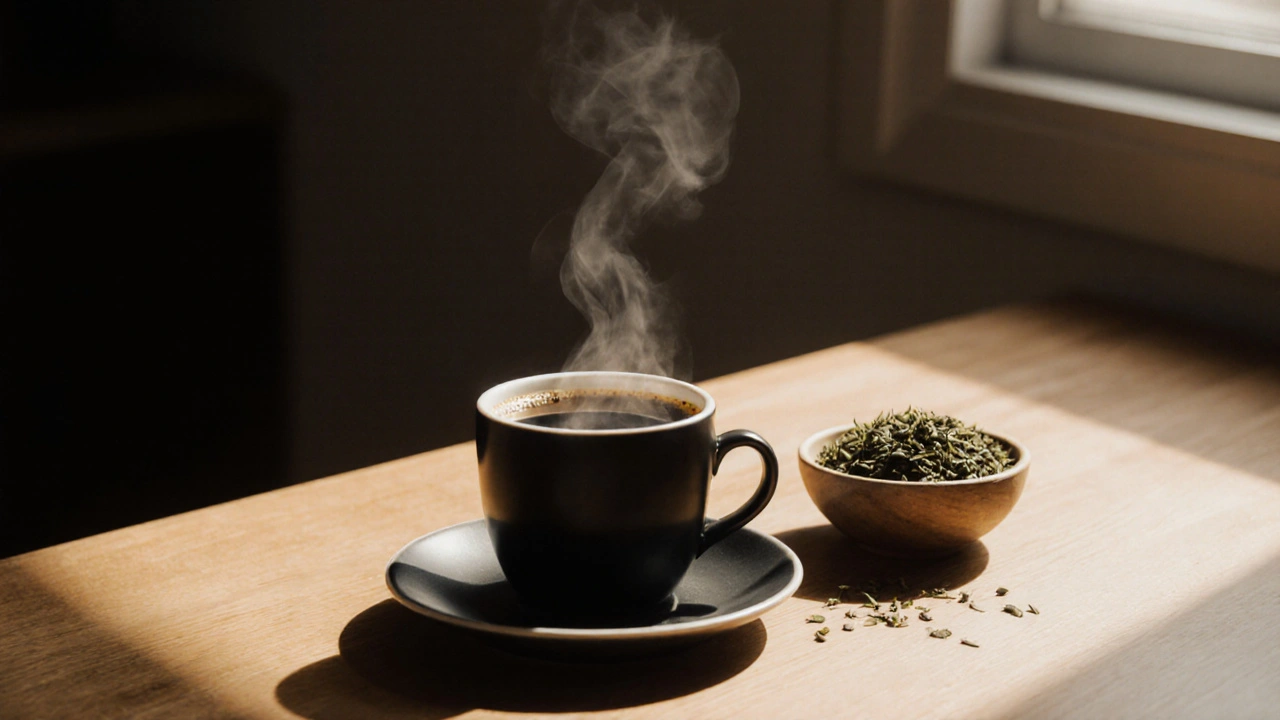
Most people reach for energy drinks when they need a quick boost. But what’s actually in those cans? A lot of sugar, artificial flavors, and unregulated stimulants. If you’re looking for a healthy source of caffeine, you don’t need a flashy can with a neon label. You need something clean, simple, and backed by real biology.
What Makes a Caffeine Source Healthy?
A healthy caffeine source isn’t just about the caffeine content. It’s about what comes with it. Sugar? Check. Artificial sweeteners? Check. Synthetic additives? Double check. Healthy sources deliver caffeine with minimal junk - and ideally, with some extra benefits.
Caffeine itself isn’t the problem. It’s the delivery system. A 2021 study in the Journal of the American College of Nutrition found that people who got their caffeine from coffee or tea had lower rates of metabolic syndrome than those who relied on sugary energy drinks. Why? Because those drinks came with antioxidants, polyphenols, and natural compounds that help your body process the caffeine better.
So what counts as healthy? Three things:
- Low or no added sugar
- No artificial ingredients
- Minimal processing
If your caffeine source checks those boxes, you’re already ahead of 90% of the energy drink market.
Green Tea: The Quiet Winner
Green tea has been used for over 4,000 years in Asia for mental clarity and calm energy. It’s not just about caffeine. A typical cup contains 20-45 mg of caffeine - about half of what’s in a can of soda. But here’s the catch: it also has L-theanine, an amino acid that smooths out the caffeine crash.
Studies from the University of Basel show that L-theanine and caffeine together improve focus, reaction time, and mood without the jitters. That’s why people who drink green tea report feeling alert but not wired. It’s the difference between being jittery and being sharp.
Choose loose-leaf or high-quality bagged tea. Avoid bottled green teas - most are loaded with sugar and contain less than 10% of the caffeine found in brewed tea. Brew it yourself. It takes 3 minutes. Your body will thank you.
Coffee: Not Just a Morning Ritual
Coffee is the most common source of caffeine worldwide. And for good reason. A standard 8-ounce cup has 95 mg of caffeine - enough to kickstart your day without overdoing it. But what makes coffee a healthy choice isn’t just the caffeine. It’s the 1,000+ bioactive compounds inside it.
Chlorogenic acid, trigonelline, and cafestol - these aren’t buzzwords. They’re real antioxidants that reduce inflammation and improve insulin sensitivity. A 2023 meta-analysis in BMJ found that people who drank 3-4 cups of black coffee daily had a 17% lower risk of developing type 2 diabetes.
Here’s how to keep it healthy:
- Drink it black, or with a splash of unsweetened almond milk
- Avoid flavored syrups - one pump can add 20 grams of sugar
- Choose light or medium roast - darker roasts lose more antioxidants
- Use a paper filter if you’re brewing at home - it removes cafestol, which can raise LDL cholesterol
Don’t confuse coffee with coffee drinks. A venti caramel macchiato from a chain store isn’t coffee. It’s a dessert with caffeine.
Matcha: Concentrated Green Tea Power
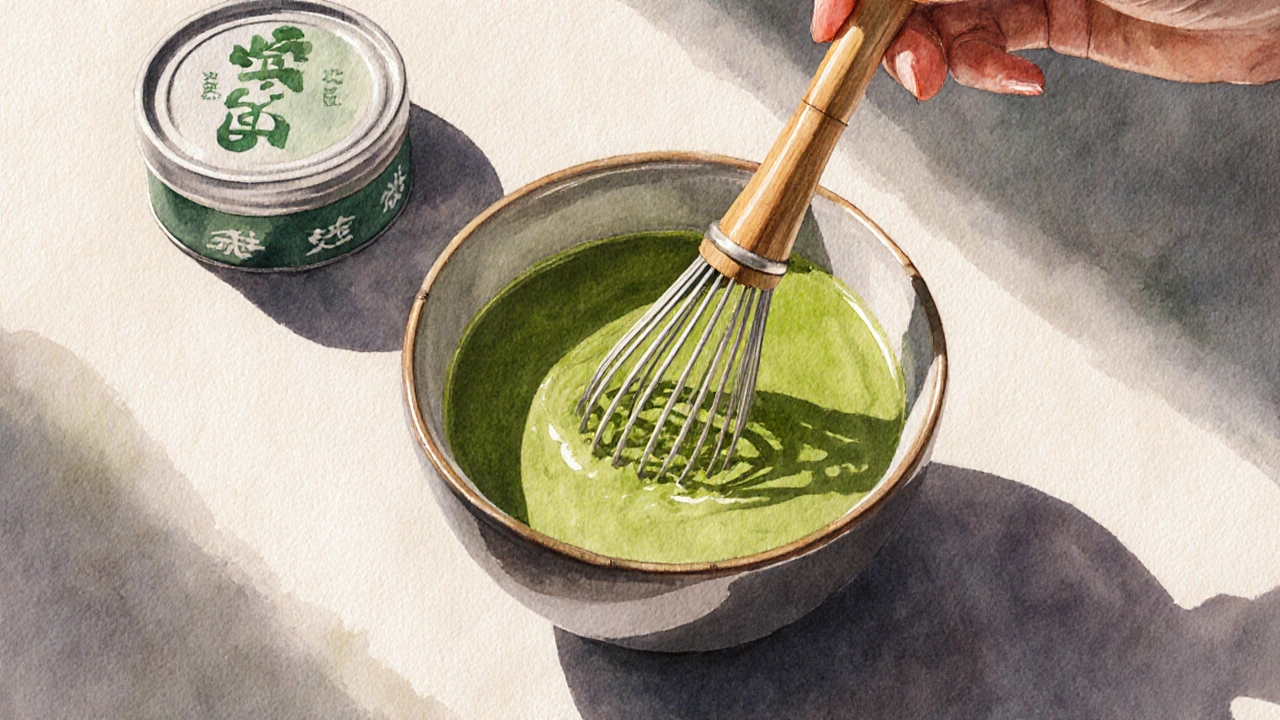
Matcha is powdered green tea. You’re not steeping leaves - you’re consuming the whole leaf. That means you get 3-5 times more antioxidants than regular green tea - and about 70 mg of caffeine per serving.
Unlike coffee, matcha releases caffeine slowly over 4-6 hours. That’s because the caffeine binds to larger molecules in the tea, delaying absorption. The result? Steady energy without spikes or crashes.
Matcha also contains high levels of EGCG, a powerful catechin linked to fat oxidation and brain protection. A 2022 trial in Nutrients showed that participants who took matcha daily for 12 weeks had improved attention and reduced mental fatigue.
Buy ceremonial-grade matcha. It’s brighter green, smoother, and free from fillers. Avoid matcha lattes with added sugar - they defeat the purpose. Mix 1 teaspoon with hot water and whisk with a bamboo frother. That’s it.
Yerba Mate: The South American Secret
Yerba mate is a traditional drink from Argentina, Brazil, and Paraguay. It’s made from the leaves of the Ilex paraguariensis plant. It’s not tea. It’s not coffee. It’s its own thing - with about 85 mg of caffeine per cup.
What sets yerba mate apart is its unique blend of xanthines: caffeine, theobromine, and theophylline. Together, they create a balanced stimulation - more alertness than coffee, less anxiety than energy drinks.
It’s also rich in polyphenols, saponins, and 24 vitamins and minerals. A 2020 study in the Journal of Agricultural and Food Chemistry found yerba mate had higher antioxidant activity than green tea.
Drink it traditionally in a gourd with a metal straw (bombilla), or as a tea bag. Avoid sweetened versions. If you’re new to it, start with half a cup - the flavor is earthy, almost smoky, and takes getting used to.
Guayusa: The Lesser-Known Superleaf
Guayusa is a holly plant native to the Amazon rainforest. Indigenous Kichwa people have brewed it for centuries as a morning drink. It contains about 90 mg of caffeine per cup - similar to coffee - but with zero bitterness.
Unlike coffee, guayusa has no tannins, so it doesn’t stain teeth or upset stomachs. It’s also rich in chlorogenic acid and theobromine, making it a smooth, sustained energy source.
It’s not widely available, but brands like Rasa and Runa sell organic, fair-trade guayusa tea bags. If you’re tired of the same old caffeine sources, this is worth trying. It tastes like a cross between green tea and mild black tea - clean, sweet, and calming.
What About Energy Drinks?
Let’s be blunt: most energy drinks are not healthy. Even the ones labeled “natural” or “low sugar” often contain:
- Artificial sweeteners like sucralose or acesulfame K - linked to gut microbiome disruption
- Added B-vitamins in mega-doses - your body can’t absorb more than it needs
- Herbal extracts like guarana or ginseng - unregulated, variable doses, no proven synergy
- High sodium - up to 300 mg per can, which can raise blood pressure
A 2024 review in Frontiers in Nutrition concluded that energy drinks offer no long-term cognitive or physical benefits over plain caffeine. They’re just caffeine with extra baggage.
There are a few exceptions - like Kill Cliff IGNITE or Celsius, which use natural caffeine from green coffee bean extract and zero artificial sweeteners. But even these are better treated as occasional options, not daily staples.
How Much Caffeine Is Too Much?
The FDA recommends no more than 400 mg of caffeine per day for healthy adults. That’s about 4 cups of coffee, 8 cups of green tea, or 5 cups of yerba mate.
But here’s the thing: tolerance varies. If you’re sensitive, 100 mg can make your heart race. If you’re a regular coffee drinker, you might need 300 mg just to feel awake.
Signs you’re overdoing it:
- Heart palpitations
- Shaky hands
- Insomnia, even if you drink caffeine before noon
- Increased anxiety or irritability
- Dependence - you feel tired without it
If you’re hitting these signs, take a break for 3-5 days. Reset your nervous system. Then come back with cleaner sources.
When to Avoid Caffeine Altogether
Some people should skip caffeine entirely:
- Pregnant women - limit to 200 mg/day (about 1-2 cups of coffee)
- People with anxiety disorders - caffeine can worsen panic attacks
- Those with arrhythmias or high blood pressure - consult your doctor
- Anyone taking stimulant medications - like ADHD drugs
If you’re unsure, try cutting out caffeine for two weeks. Notice how you feel without it. Then reintroduce one healthy source at a time.
Simple Swap: Replace Your Energy Drink
Here’s a real-world example. Sarah, 32, worked in marketing in Brisbane. She drank two energy drinks a day - one at 10 a.m., another at 3 p.m. She felt wired, then crashed. Her sleep got worse. Her stomach hurt. She started getting headaches.
She swapped her 10 a.m. drink for a cup of black coffee. Her 3 p.m. drink for a cup of green tea. Within a week, her crashes disappeared. After two weeks, her sleep improved. She didn’t feel like she needed caffeine to function.
It’s not magic. It’s just removing the junk and keeping the good stuff.
Final Takeaway
A healthy source of caffeine isn’t about the highest dose. It’s about the cleanest delivery. Green tea, coffee, matcha, yerba mate, and guayusa all deliver caffeine with natural compounds that support your body - not fight against it.
You don’t need a can with a label that says ‘extreme energy.’ You need a cup that feels like a pause. A moment of calm focus. That’s what real energy looks like.
Start with one swap this week. Replace your next energy drink with a brewed cup of tea or coffee. See how you feel. Then do it again tomorrow. That’s how healthy habits are built - one clean cup at a time.

Comments (9)
Liam Hesmondhalgh
28 Nov 2025
Green tea? Really? That’s what you’re pushing? I’ll take my Red Bull any day over that grass water. At least it gives me a real kick instead of some hippie zen nonsense.
Patrick Tiernan
30 Nov 2025
coffee is king full stop no cap if you’re drinking matcha or yerba mate you’re just trying to flex on your therapist
Patrick Bass
30 Nov 2025
I’ve been drinking black coffee for years, and I’ve never felt better. No sugar, no nonsense. Just beans and hot water. It’s amazing how simple things work best.
Tyler Springall
1 Dec 2025
It’s not even about caffeine anymore. It’s about the ritual. The quiet moment before the chaos. The steam rising from the cup. The silence you create when you choose to pause instead of consume. You think you’re drinking coffee. You’re really practicing mindfulness disguised as a stimulant.
Colby Havard
2 Dec 2025
While the article presents a compelling argument regarding the deleterious effects of energy drinks, it fails to adequately address the socioeconomic implications of access to high-quality, organic, and ethically sourced caffeinated beverages. The assumption that all individuals can afford ceremonial-grade matcha or fair-trade guayusa is not only naive but also classist. Furthermore, the assertion that ‘clean’ caffeine is superior ignores the fact that many people rely on energy drinks due to shift work, lack of sleep, and systemic labor exploitation-not personal preference.
Amy P
4 Dec 2025
OH MY GOD I JUST REALIZED I’VE BEEN DRINKING SUGAR WATER FOR YEARS AND I’M SO SORRY TO MY LIVER. I switched to black coffee and green tea last week and I haven’t felt this calm since 2019. I’m crying. I’m not even kidding. My anxiety is down, my skin is clearer, and I actually remember what I ate for lunch. Thank you. I’m not okay but I’m better.
Ashley Kuehnel
4 Dec 2025
Y’all are gonna love this: I started swapping my 3pm energy drink for yerba mate in a thermos. First day: tasted like dirt. Second day: still weird. Third day: I was like… wait, I feel awake but not wired?? Now I’m hooked. And no crashes. No jitters. Just steady vibes. Pro tip: get the Rasa brand-it’s smooth as butter. Also, if you’re new to it, start with half a bag. Your taste buds will thank you.
adam smith
5 Dec 2025
It is a well-known fact that caffeine, when consumed in moderation and from natural sources, can provide beneficial effects to the human organism. However, the consumption of processed beverages containing artificial ingredients is not recommended by medical professionals. I personally consume two cups of brewed coffee per day, without sugar or cream, and I have noticed a marked improvement in my cognitive performance.
Mongezi Mkhwanazi
5 Dec 2025
Let me be clear: you are not ‘healthy’ because you drink green tea. You are simply less actively poisoning yourself. The real issue is not the caffeine-it’s the culture of dependency. We have been conditioned to believe that we need a chemical crutch to function, and that’s a symptom of a broken system. The fact that you’re even considering matcha as a ‘solution’ means you’ve already accepted the premise that you’re broken. The answer isn’t a better drink-it’s rest. Sleep. Boundaries. A life that doesn’t require you to chemically survive your own existence. You think you’re optimizing your energy? You’re just trying to outrun burnout. And no amount of L-theanine will fix that.