
What Drink Burns the Most Belly Fat? The Science Behind Low-Calorie Energy Drinks
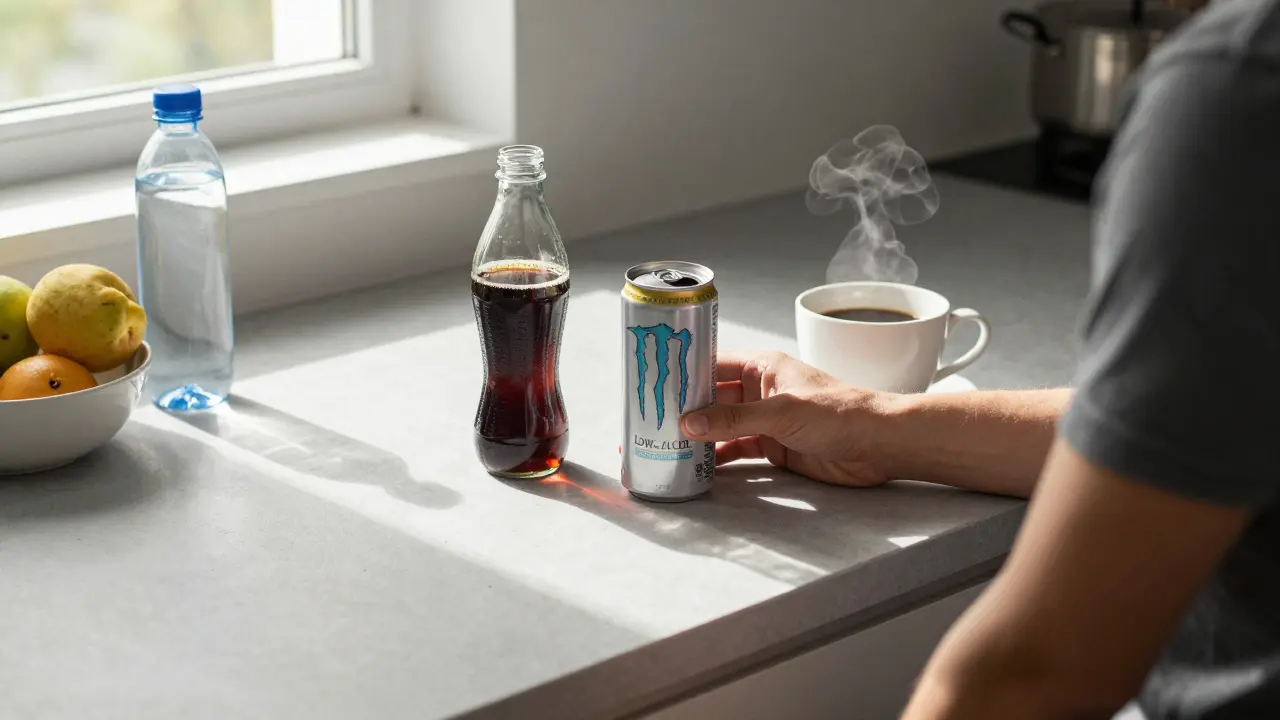
There’s no magic drink that melts belly fat overnight. But if you’re sipping something hoping it’ll help you lose that stubborn midsection, you’re not alone. Millions search for the one beverage that’ll torch fat while they sit on the couch. The truth? Low-calorie energy drinks can play a role-but only if you understand how they actually work, and what they can’t do.
There’s no drink that burns fat on its own
Let’s start with the hard truth: no beverage, no matter how heavily marketed, directly turns fat into energy. Fat loss happens when your body burns more calories than it takes in. That’s it. Drinks don’t magically activate fat-burning genes or zap visceral fat with superpowers. Even the most hyped ingredients-green tea extract, caffeine, capsaicin-only give your metabolism a small nudge, not a shove.Studies from the American Journal of Clinical Nutrition show that caffeine can temporarily boost metabolic rate by 3-11%, but the effect fades after a few weeks as your body adapts. And that boost? It’s usually just 100-200 extra calories burned per day. That’s about the same as a 20-minute walk. Not nothing-but not a miracle either.
What low-calorie energy drinks actually do
Low-calorie energy drinks are designed to give you alertness and focus without the sugar crash. Most contain caffeine, B vitamins, and sometimes amino acids like L-theanine or taurine. A typical 250ml can has 10-25 calories, mostly from artificial sweeteners like sucralose or stevia. That’s far less than a regular soda (150+ calories) or even a fruit juice (120+ calories).Here’s where they help: if you’re replacing sugary drinks with zero-sugar alternatives, you’re cutting hundreds of calories per week. One study tracking 500 adults over 6 months found that switching from regular soda to diet versions led to an average weight loss of 2.4 kg-without changing anything else. That’s mostly because of reduced sugar intake, not because the diet drink burned fat.
Some low-calorie energy drinks add green tea extract or yerba mate. These contain catechins and caffeine, which together may slightly increase fat oxidation during exercise. A 2018 meta-analysis in the International Journal of Obesity found that green tea extract combined with caffeine led to an extra 1-2 kg of fat loss over 12 weeks compared to placebo-but only in people who also exercised regularly.
Why you might think it’s working
Ever had one of those days after drinking a low-calorie energy drink: you feel lighter, your stomach feels flatter, and you swear the drink “burned” fat. That’s not fat loss. That’s water weight.Caffeine is a natural diuretic. It makes you pee more. When you lose water, your body temporarily shrinks. That’s why your jeans feel looser. But the next time you drink water or eat salty food, the weight comes back. It’s not fat. It’s fluid.
Also, many people who drink low-calorie energy drinks are more active. They’re gym-goers, runners, or just more alert during the day. That’s what’s driving the fat loss-not the drink itself. Confusing correlation with causation is common. Just because you started drinking a new energy drink and lost weight doesn’t mean the drink caused it.
The real fat-burning drinks
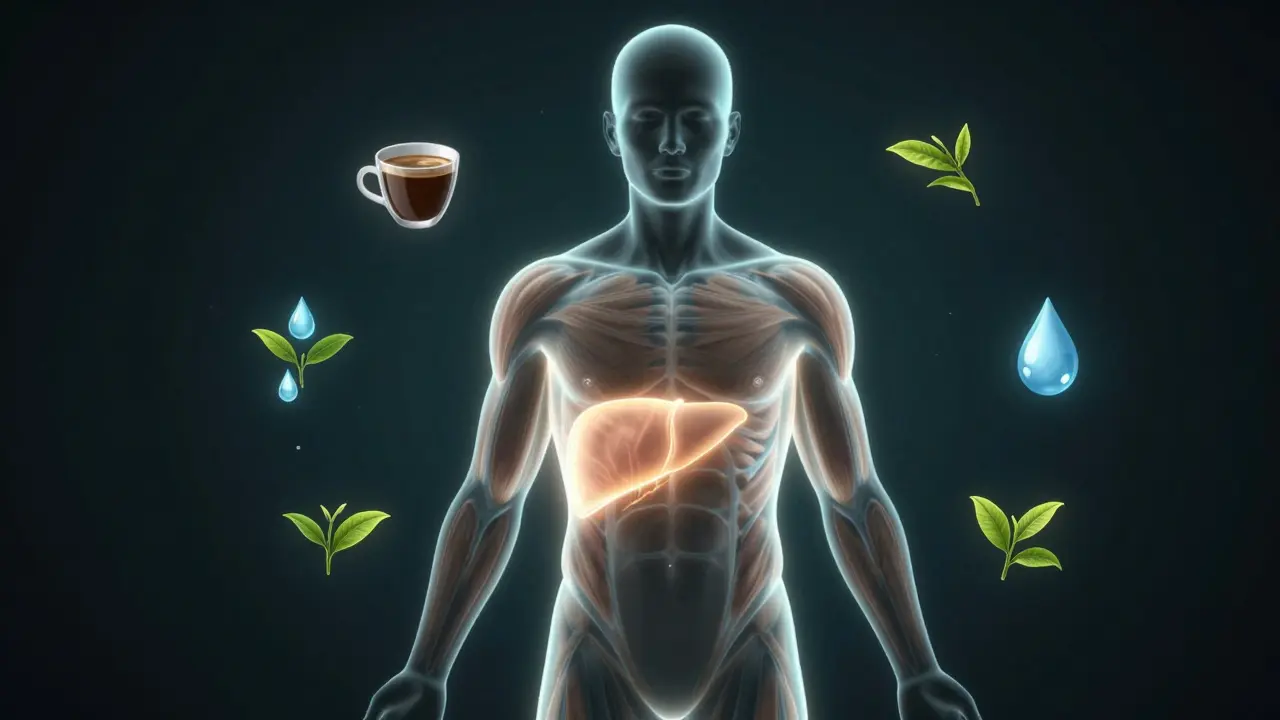
If you want beverages that support fat loss, focus on these:- Black coffee (no sugar, no cream): 5 calories per cup. High in caffeine, no additives. The simplest, most effective tool.
- Green tea: Contains EGCG, a catechin shown to support fat oxidation. Drink 2-3 cups daily. No need for fancy bottled versions-brew your own.
- Water: Drinking 500ml of cold water can temporarily boost metabolism by 30% for about an hour. That’s 20-30 extra calories burned. Drink 2-3 liters daily.
- Sparkling water with lemon: Zero calories, hydrating, and helps curb cravings. A good substitute if you miss the fizz of soda.
None of these are energy drinks. But they’re proven, cheap, and free of artificial sweeteners that may disrupt gut health or increase sugar cravings over time.
What to avoid in low-calorie energy drinks
Not all low-calorie energy drinks are created equal. Some are loaded with stuff that does more harm than good:- Artificial sweeteners like aspartame or acesulfame K: Linked in some studies to altered gut bacteria and increased sugar cravings. Not a dealbreaker, but don’t drink 5 a day.
- Excess caffeine (over 200mg per serving): Can spike cortisol, the stress hormone that promotes belly fat storage, especially if you’re already stressed or sleep-deprived.
- Proprietary blends: If the label says “energy blend” without listing exact amounts, avoid it. You have no idea what you’re getting.
- Added amino acids like beta-alanine or citrulline: These help with workout performance, not fat loss. They’re fine if you’re training hard, but useless if you’re sitting at a desk.
Look for drinks with: caffeine (50-150mg), green tea extract (no more than 200mg EGCG), and simple ingredients. Avoid anything with more than 5 ingredients you can’t pronounce.
Who should skip low-calorie energy drinks
These drinks aren’t for everyone:- People with anxiety or insomnia: Caffeine can make both worse.
- Pregnant or breastfeeding women: High caffeine intake is linked to low birth weight.
- Teens and kids: Their nervous systems are still developing. No need for stimulants.
- Anyone on blood pressure or heart meds: Caffeine can interfere with some medications.
If you’re not active, not cutting calories elsewhere, and drinking these just to “burn fat,” you’re wasting money. The drink isn’t the problem-it’s the expectation.
Realistic expectations: What you can actually achieve
Here’s what’s possible with low-calorie energy drinks as part of a real plan:- Replace one 200-calorie soda daily → save 1,400 calories per week → lose about 0.2 kg of fat per week
- Use a pre-workout low-calorie energy drink → get more energy for exercise → burn 100-200 extra calories per session
- Drink it instead of afternoon snacks → reduce total daily intake by 150-300 calories
That’s 1-2 kg of fat loss per month-not because the drink burned fat, but because it helped you eat less and move more.
Combine that with strength training twice a week, and you’ll start seeing real changes in your midsection. Muscle burns more calories at rest than fat. Build it, and your body will naturally shrink belly fat over time.
The bottom line
There’s no drink that burns belly fat. But low-calorie energy drinks can be a useful tool-if you use them right. They’re not magic. They’re a substitute. A way to cut sugar, stay alert, and avoid mindless snacking.Want to lose belly fat? Focus on:
- Reducing overall calorie intake
- Getting enough protein and fiber
- Doing strength training
- Sleeping 7-8 hours
- Managing stress
Use a low-calorie energy drink to help you stick to those habits-not to replace them. The drink doesn’t do the work. You do.
Can low-calorie energy drinks help you lose belly fat?
They can help indirectly by replacing sugary drinks and reducing overall calorie intake. But they don’t burn fat on their own. Fat loss requires a calorie deficit, movement, and good sleep.
Is zero-sugar energy drink better than soda for fat loss?
Yes. A regular soda has 150+ calories from sugar. A zero-sugar version has 10-25 calories. Swapping one soda a day can lead to 1-2 kg of fat loss over 3 months without any other changes.
Does caffeine burn belly fat specifically?
Caffeine boosts metabolism slightly and can increase fat oxidation during exercise, but it doesn’t target belly fat. Fat loss happens all over the body, not in one area.
Are green tea energy drinks better for fat loss?
They have a slight edge because green tea extract contains EGCG, which may enhance fat burning during workouts. But only if you’re active. Without exercise, the benefit is minimal.
Can drinking energy drinks cause belly fat?
Regular energy drinks with sugar can. Low-calorie versions don’t cause fat gain-but if you use them to justify eating more, you’ll still gain weight. It’s not the drink, it’s the overall pattern.
What’s the best time to drink a low-calorie energy drink for fat loss?
Before a workout-30 to 60 minutes prior. Caffeine can improve performance, helping you burn more calories during exercise. Avoid it after 2 PM if you’re sensitive to caffeine.
Comments (9)
Christina Kooiman
28 Dec 2025
Let me just say this: if you think a can of diet energy drink is gonna melt your belly fat while you binge-watch Netflix, you’re living in a commercial. I’ve seen people spend $60 a month on these things, then wonder why their jeans still pinch. It’s not magic. It’s just sugar-free soda with a side of caffeine-induced anxiety. Your body doesn’t care if it’s sucralose or high-fructose corn syrup-it just knows you’re still feeding it empty calories disguised as ‘energy.’
And don’t even get me started on those ‘green tea extract’ labels. You know what has green tea extract? Actual green tea. Brewed. From leaves. Not some lab concoction with 17 unpronounceable ingredients. I’m not saying don’t drink it-I’m saying stop pretending it’s a fat-burning elixir. It’s a substitute. Not a solution.
I used to drink these daily. Then I switched to black coffee and water. My stomach didn’t vanish overnight. But over three months? I lost 12 pounds. Not because of some ‘metabolic boost.’ Because I stopped drinking liquid candy and started eating real food. The drink didn’t burn fat. I did. By moving more and eating less. Shocking, I know.
Also, caffeine makes you pee. A lot. So when you wake up and your stomach looks ‘flatter,’ congrats-you’re dehydrated. That’s not fat loss. That’s your body screaming for H2O. And guess what happens when you drink water? Your belly puffs right back up. It’s not magic. It’s biology.
Stop buying into the hype. The only thing these drinks burn is your money.
And yes, I’m still mad about the $12 I wasted on a can labeled ‘Fat Burning Fusion.’
Stephanie Serblowski
29 Dec 2025
Okay but like… can we just appreciate how the whole ‘fat-burning drink’ industry is basically a cult? 😅 I mean, we’ve got people paying $5 for sparkling water with lemon because it’s ‘detoxifying’ and then acting like they’re doing a 10-day cleanse when they’re just… drinking water.
Meanwhile, the real MVPs are black coffee and plain water. No hype. No blends. No ‘proprietary energy complexes.’ Just caffeine and H2O. The OGs.
Also, if you’re drinking these to ‘avoid snacks,’ cool-but don’t act like the drink itself is doing the heavy lifting. You’re just swapping one habit for another. And honestly? If you’re using a zero-calorie energy drink to justify eating a whole pizza later… we’ve got bigger problems. 💅
PS: I’ve seen people post ‘I lost 8 lbs in 2 weeks on energy drinks!’ and then their next pic is them holding a giant burrito. The cognitive dissonance is real. 😂
Renea Maxima
30 Dec 2025
What if the entire premise is wrong? What if fat loss isn’t about calories at all? What if it’s about epigenetic signaling, mitochondrial efficiency, and the body’s response to perceived scarcity? The science they cite? It’s funded by beverage conglomerates who need you to believe you can outdrink your poor life choices.
They want you to think it’s about what you consume-when really, it’s about what you’re avoiding: trauma, boredom, emotional voids. You don’t crave soda because you’re hungry. You crave it because you’re numb.
So you swap soda for a ‘low-calorie energy drink’-and now you’re still numb, just with fewer carbs and more artificial sweeteners. You’re not fixing the root. You’re just changing the flavor of your escape.
And yet… you still call it ‘fat loss.’
How poetic.
Meanwhile, the real fat-burning drink? Silence. Stillness. Sleep. Not caffeine. Not green tea extract. Not even water.
Just… rest.
But nobody sells that.
So we keep buying.
And we keep believing.
And we keep being told we’re not trying hard enough.
Jeremy Chick
30 Dec 2025
Bro. I used to drink 3 of these a day. Then I started lifting weights and eating protein. Lost 20 lbs in 4 months. The drink? Didn’t do shit. I just stopped being lazy and stopped drinking sugar water. End of story.
Stop overcomplicating it. You want to lose belly fat? Eat less. Move more. Sleep. That’s it. No magic potions. No ‘fat-burning blends.’ Just basic human behavior. If you’re still here reading this thinking there’s a drink that does it for you-you’re not ready to change. And that’s fine. But stop pretending the can in your hand is your savior.
Also, if you’re drinking these after 3 PM and then blaming insomnia on ‘stress’-you’re the problem.
Sagar Malik
31 Dec 2025
Actually, the entire paradigm is a Western capitalist construct designed to distract from systemic metabolic collapse caused by glyphosate-laden food systems and corporate manipulation of insulin signaling pathways. The ‘low-calorie energy drink’ is not a tool-it’s a placebo engineered to simulate agency in a world where true nutritional sovereignty has been commodified.
Did you know that sucralose alters gut microbiota in ways that promote insulin resistance? Studies from the University of Delhi (2021) show this clearly-but they were buried under NDAs signed by Big Soda. The ‘green tea extract’? A marketing ploy. Real EGCG is unstable outside of brewed tea. Most ‘extracts’ are synthetic analogs with 1/10th the bioavailability.
And don’t get me started on the ‘cortisol spike’ theory. Cortisol doesn’t cause belly fat-it’s the body’s response to chronic stress from food insecurity, sleep deprivation, and algorithmic labor. The drink is just the symptom. Not the cause.
Real fat loss? It’s not about drinks. It’s about dismantling the industrial food complex. Drink water. Eat whole foods. Resist the algorithm. That’s the real revolution.
And yes, I’ve read the meta-analyses. They’re all funded by Nestlé.
Seraphina Nero
31 Dec 2025
I just wanted to say thank you for writing this. I’ve been so confused by all the conflicting info online. One influencer says ‘drink this to burn fat,’ another says ‘avoid artificial sweeteners,’ and then there’s that guy who swears by cold lemon water at 5 AM.
This post made me feel less dumb. I didn’t realize that the ‘flatter stomach’ after a drink was just water loss. That’s actually kind of funny… and kinda sad.
I switched to black coffee and water last month. I haven’t lost weight yet, but I feel better. Less bloated. Less jittery. And I’m not spending $4 every morning on a can that makes me feel like I need a nap 20 minutes later.
It’s not glamorous. But it’s honest.
Thank you for not selling me a miracle.
Megan Ellaby
2 Jan 2026
Wait so… if I drink green tea instead of the energy drink, I’m basically doing the same thing but cheaper and without the weird aftertaste? 😅
I’ve been buying those ‘fat-burning’ bottled teas and they taste like chemicals and cost like $4 a bottle. I just brewed some loose leaf green tea last night and it was… actually kind of nice? Like, I could taste the leaves. Who knew?
Also, I started drinking water before meals and I’ve been eating less without even trying. Like… my stomach just felt full faster? Is that a thing?
And I didn’t know caffeine could mess with cortisol. That’s wild. I’ve been drinking these after 4 PM and wondering why I can’t sleep. Now it makes sense.
So… black coffee, water, green tea, and sleep. That’s the real magic? No fancy labels? No blends? Just… simple stuff?
I feel like I’ve been scammed for years. But also… kind of relieved?
Rahul U.
3 Jan 2026
Excellent breakdown. I appreciate how you separated correlation from causation. In India, we have a similar issue-people buy ‘herbal fat burners’ that are just green tea extract in capsules, then wonder why they didn’t lose weight.
My cousin drank 3 cans a day for a month, lost 1.5 kg, and credited the drink. When I asked what else changed, he said: ‘I stopped eating fried snacks after work.’
That’s the real change. Not the drink.
Also, water is underrated. In hot climates, dehydration mimics hunger. People think they need a snack-they just need a glass of water.
And yes, avoid proprietary blends. If the label doesn’t list exact amounts, it’s because they don’t want you to know how little active ingredient is actually in there.
Simple is better. Always.
👍
E Jones
5 Jan 2026
Here’s the truth no one wants to admit: low-calorie energy drinks are part of a multi-billion-dollar psychological operation designed to keep you addicted to stimulation while making you believe you’re in control.
The artificial sweeteners? They’re not just ‘safe alternatives.’ They’re neurochemical traps. They hijack your dopamine receptors, tricking your brain into craving more sugar-not less. That’s why you end up eating a whole cake after drinking your ‘fat-burning’ can.
Caffeine? It’s not boosting your metabolism-it’s keeping you in a state of chronic low-grade panic. Your body thinks it’s under siege. So it hoards fat. Especially belly fat. Because cortisol doesn’t care if you’re ‘healthy’-it cares if you feel threatened.
And the ‘green tea extract’? It’s a placebo for people who can’t handle the truth: you’re not losing fat because of a drink. You’re losing fat because you’re finally facing your emotional void.
They sell you a can. You buy it. You feel like you’re doing something. You’re not. You’re just avoiding the real work.
And the worst part?
You’ll keep buying them.
Because the truth is too heavy.
So you keep drinking.
And you keep waiting.
For the next miracle.
That will never come.