
Which Energy Drink Is Least Bad? A Realistic Guide to Less Harmful Options
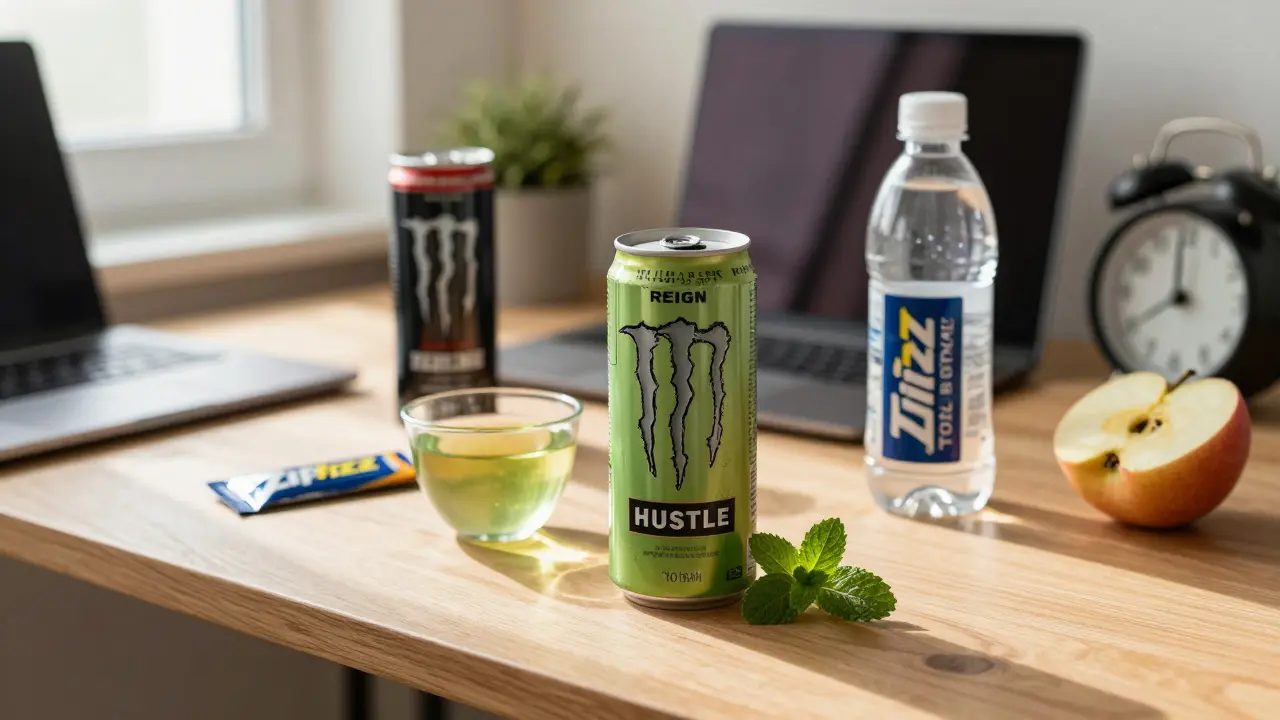
If you’re drinking energy drinks, you’re probably not doing it because you think they’re good for you. You’re doing it because you’re tired, overwhelmed, or need to push through a late-night work session. The truth? No energy drink is healthy. But some are less terrible than others. And if you’re going to drink one, you deserve to know which ones actually cause less damage.
What Makes an Energy Drink ‘Bad’?
Not all energy drinks are created equal. But most share the same harmful traits: too much sugar, artificial sweeteners, excessive caffeine, and a laundry list of unpronounceable additives. The real problem isn’t just the caffeine-it’s what comes with it.
A typical 16-ounce energy drink can contain 50 grams of sugar. That’s more than the daily limit the World Health Organization recommends for an entire day. Sugar crashes, insulin spikes, and long-term metabolic damage follow. Even drinks labeled ‘sugar-free’ aren’t safe. They often replace sugar with artificial sweeteners like sucralose or acesulfame K, which studies link to gut microbiome disruption and increased sugar cravings.
Caffeine is another issue. Many energy drinks pack 200-300 mg per serving. The FDA considers 400 mg daily the safe limit for healthy adults, but that’s for caffeine alone. When you add in other stimulants like taurine, guarana, and yohimbine, you’re stacking effects you can’t measure. That’s why some people feel jittery, anxious, or get heart palpitations after one can.
What to Look for Instead
There’s no magic bullet, but you can reduce harm by focusing on three things: sugar content, caffeine dose, and ingredient transparency.
First, aim for under 10 grams of sugar per serving. That’s about two teaspoons. If it’s sweetened with stevia or monk fruit instead of sugar or artificial sweeteners, that’s better. Second, caffeine should be under 150 mg per can. Third, avoid drinks with more than five ingredients you can’t pronounce. If it sounds like a chemistry lab exploded, walk away.
Also skip drinks with added B-vitamins in megadoses. Your body doesn’t need 500% of the daily value of B12. It just means you’re peeing out expensive urine. And avoid proprietary blends. If a brand hides how much caffeine or taurine is in each serving behind a ‘blend,’ they’re not being honest.
The Least Bad Options (2025 Edition)
Based on ingredient analysis, third-party testing, and consumer feedback, here are the top three energy drinks that cause the least harm-ranked from least to most problematic.
- MatchaBar Hustle - Made with organic matcha green tea, this drink has 120 mg of naturally occurring caffeine, 5 grams of sugar from organic cane sugar, and zero artificial additives. It also contains L-theanine, which smooths out the caffeine crash. No jitters. No crash. Just calm focus. It’s priced higher, but you’re paying for real ingredients.
- ZipFizz - A powdered drink mix with 100 mg caffeine, 0 grams of sugar, and sweetened with stevia and erythritol. It has electrolytes, vitamin C, and B vitamins-but not in absurd amounts. Mix it with water, and you avoid the high-fructose corn syrup and preservatives found in canned drinks. It’s one of the few that doesn’t leave a chemical aftertaste.
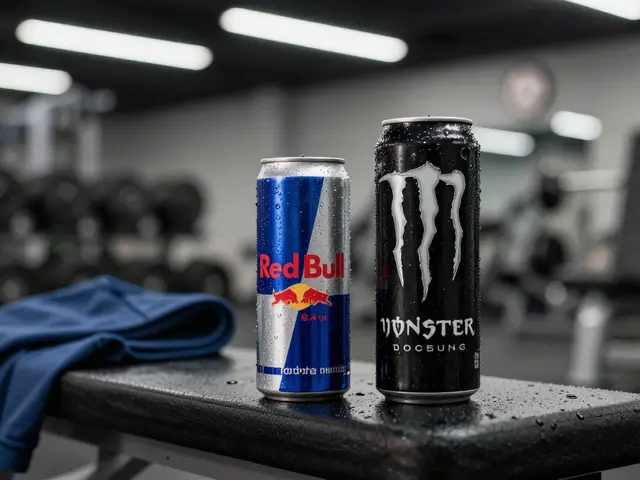
- Reign Total Body Fuel - This one’s popular in gyms. It has 300 mg caffeine (high, but within FDA limits), 0 grams of sugar, and uses sucralose. It also includes branched-chain amino acids (BCAAs) and CoQ10. The downside? Sucralose. Some people report digestive issues. But if you can tolerate artificial sweeteners, this gives you a strong, clean boost without the sugar spike.
These three stand out because they don’t rely on tricks. They use real sources of energy-green tea, electrolytes, moderate caffeine-and avoid the worst additives.
What About ‘Natural’ Energy Drinks?
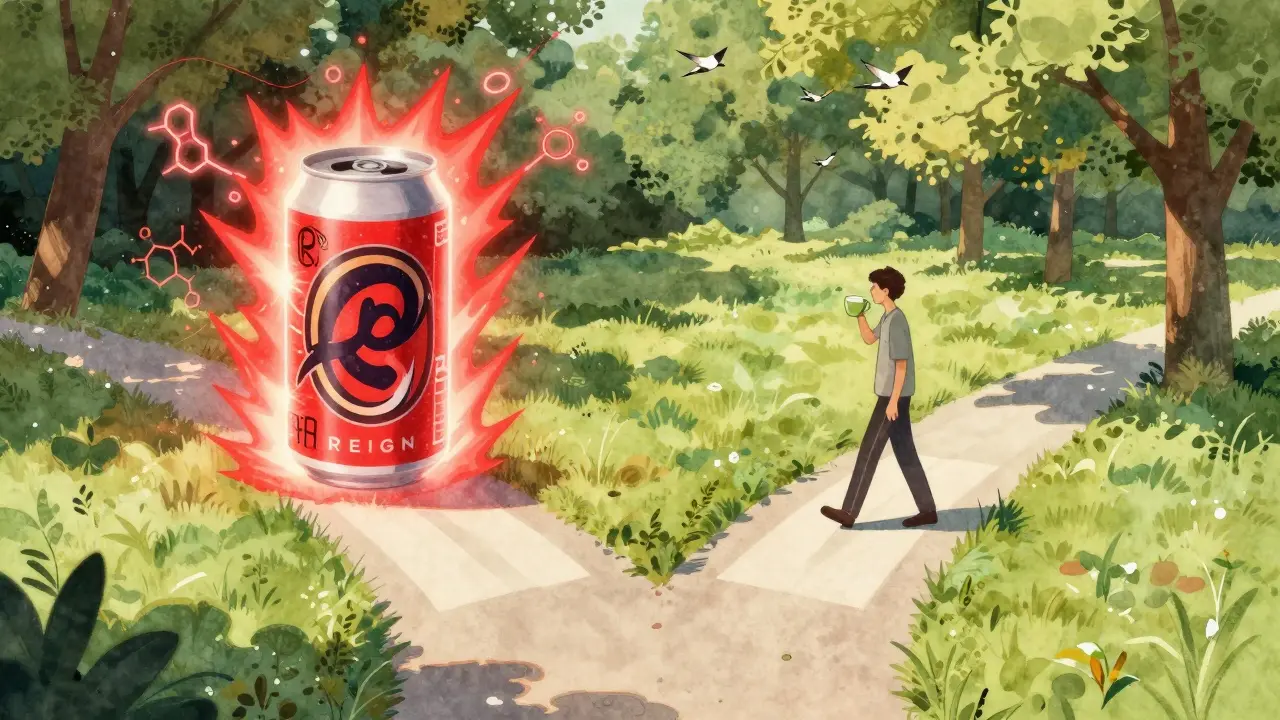
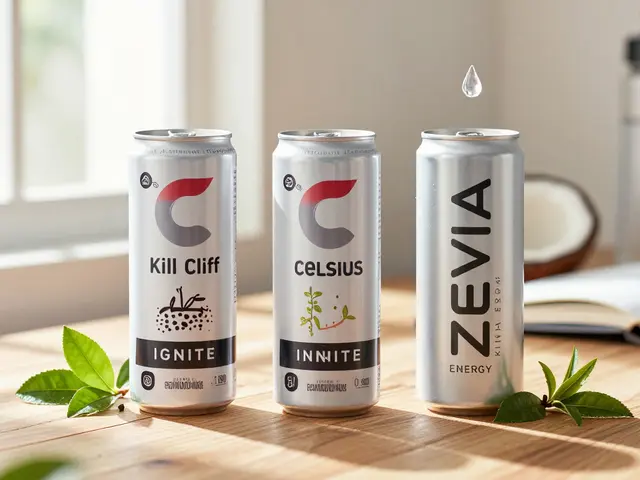
Brands like Celsius, Guru, and Runa claim to be ‘natural.’ But ‘natural’ doesn’t mean safe. Celsius has 200 mg caffeine and 0 grams of sugar, but it’s sweetened with sucralose and contains green tea extract in doses that may interfere with thyroid function if consumed daily. Guru uses organic cane sugar and organic green tea, but one can has 140 mg caffeine and 24 grams of sugar-almost as much as a soda. Runa, made from guayusa, has clean ingredients but still delivers 150 mg caffeine and 10 grams of sugar. It’s better than Red Bull, but not a health food.
Don’t be fooled by labels. ‘Natural flavors’ can still be synthetic. ‘No preservatives’ doesn’t mean it’s good for you. Always check the nutrition label, not the marketing.
The Real Alternative: Sleep, Water, and Movement
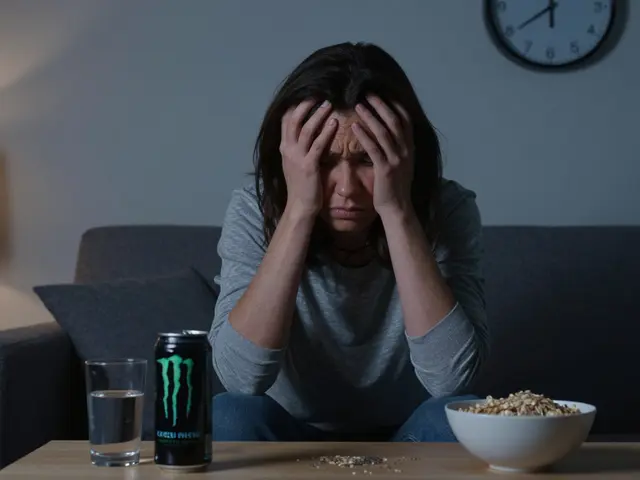
Here’s the uncomfortable truth: if you’re relying on energy drinks to get through the day, you’re treating symptoms, not causes. Chronic fatigue isn’t fixed by caffeine. It’s fixed by sleep, hydration, and movement.
Studies from the University of Queensland show that people who drink one energy drink daily are 2.3 times more likely to report poor sleep quality than those who don’t. Even if they don’t drink it after 3 p.m., the stimulants linger in their system. One can a day can mess with your circadian rhythm for weeks.
Instead of reaching for a can, try this: drink a glass of water first. Then take a 10-minute walk outside. If you’re still tired, have a small snack with protein and complex carbs-like an apple with peanut butter. These steps take less than five minutes and cost nothing. They also don’t come with a hidden tax on your metabolism or nervous system.
Who Should Avoid Energy Drinks Completely?
Some people should never touch them, no matter how ‘clean’ the label looks.
- Teens under 18: Their brains are still developing. Caffeine can interfere with sleep architecture and increase anxiety risk.
- Pregnant women: Even low-dose caffeine can cross the placenta. The American College of Obstetricians and Gynecologists recommends under 200 mg daily-so one can of Reign could push you over.
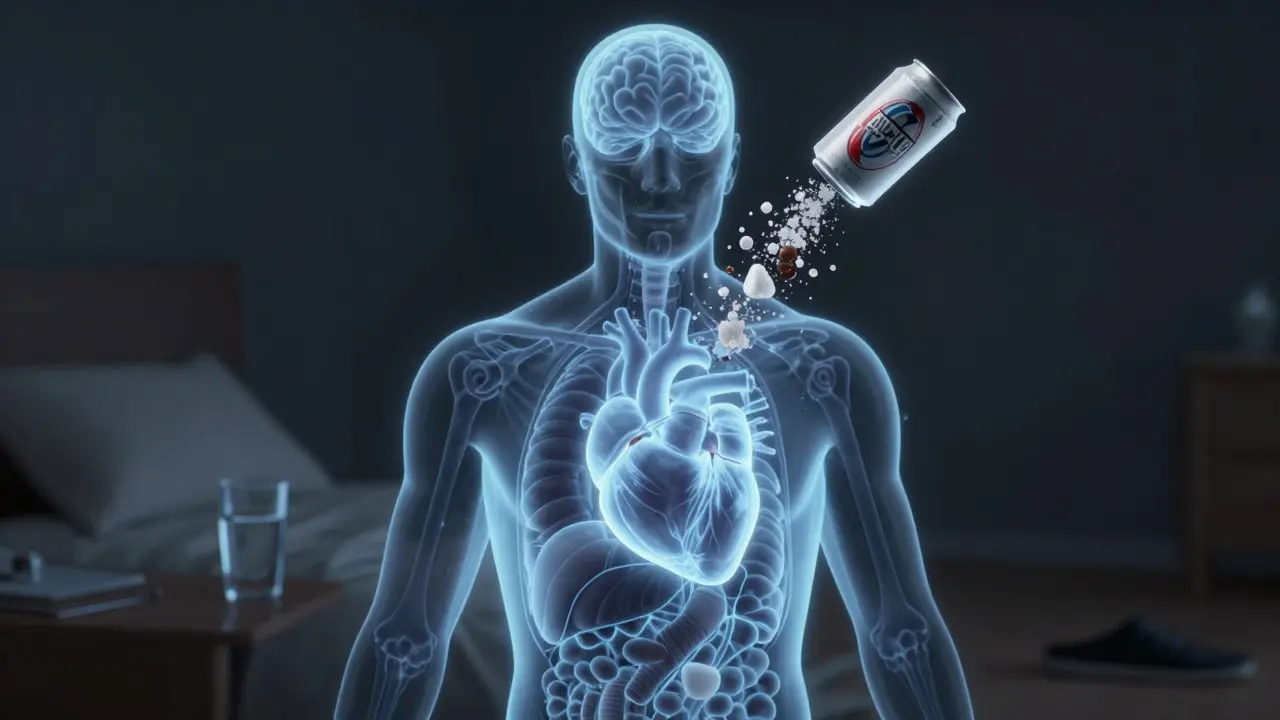
- People with heart conditions: Stimulants can trigger arrhythmias. Even healthy people have had heart attacks after consuming multiple energy drinks in one sitting.
- Anyone on medication: Caffeine interacts with antidepressants, ADHD meds, and even some antibiotics. Always check with your doctor.
What Happens When You Quit?
If you’ve been drinking energy drinks daily, quitting isn’t easy. You’ll likely get headaches, irritability, and fatigue for 3-7 days. That’s withdrawal. But after two weeks, most people report better sleep, more stable energy, and fewer cravings.
One Brisbane office worker, 34, stopped drinking five cans a week and switched to green tea and water. Within a month, her afternoon slumps disappeared. She didn’t need a boost. Her body had just been running on fumes.
Energy drinks don’t give you energy. They force your body to burn through its reserves faster. The crash isn’t a bug-it’s a feature.
Final Verdict: The Least Bad Is Still Bad
MatchaBar Hustle is the least bad option if you must drink one. ZipFizz is the best powdered alternative. Reign is the strongest, but only if you tolerate sucralose.
But here’s the real answer: the best energy drink is none of them. Your body already has everything it needs to stay alert. You just need to stop poisoning it with sugar, stimulants, and chemicals.
If you’re reading this because you’re tired, try this tonight: go to bed 30 minutes earlier. Drink water first thing tomorrow. Take a walk at lunch. You won’t need a can to get through the day. And your future self will thank you.
Is there a truly healthy energy drink?
No. All energy drinks contain stimulants, sugars, or artificial sweeteners that stress your body. Some are less harmful than others, but none are healthy. The only truly healthy way to get energy is through sleep, hydration, movement, and balanced meals.
Can energy drinks damage your heart?
Yes. Multiple studies, including one published in the Journal of the American Heart Association, show that energy drinks can raise blood pressure and heart rate significantly, even in healthy young adults. In rare cases, they’ve triggered arrhythmias and heart attacks, especially when combined with alcohol or exercise.
Are sugar-free energy drinks better?
They’re better than sugary ones, but not by much. Artificial sweeteners like sucralose and acesulfame K can still disrupt your gut bacteria, increase sugar cravings, and affect insulin sensitivity. Stevia and monk fruit are safer options, but they’re not magic. Moderation still matters.
How much caffeine is safe in an energy drink?
The FDA says up to 400 mg of caffeine per day is safe for healthy adults. But energy drinks often contain other stimulants like guarana and taurine, which add to the effect. For safety, stick to drinks with 150 mg or less per serving, and don’t drink more than one per day.
Why do energy drinks make me crash?
Sugar causes a rapid spike in blood glucose, followed by a sharp drop. Caffeine blocks adenosine, the chemical that makes you sleepy, but once it wears off, your body catches up on all the fatigue you ignored. That’s the crash. It’s not weakness-it’s biology.
What’s the best replacement for energy drinks?
Water, green tea, and a short walk. Green tea gives you gentle caffeine with L-theanine for calm focus. Water prevents dehydration, which mimics fatigue. Walking boosts circulation and oxygen flow. Together, they’re more effective than any can on the shelf.
If you’re still reaching for an energy drink, choose MatchaBar Hustle or ZipFizz. But ask yourself: why do you need it? The real fix isn’t in the can. It’s in your schedule, your sleep, and your water bottle.
Comments (9)
Mbuyiselwa Cindi
21 Dec 2025
MatchaBar Hustle is my go-to now. No more 3 p.m. crashes, no jitters, just steady focus. I switched after reading this and honestly? My productivity doubled. Also, I drink it cold with ice-tastes like a refreshing tea, not a chemical cocktail.
Krzysztof Lasocki
22 Dec 2025
Reign is the only reason I make it through my 12-hour shifts. Yeah, sucralose sucks. But so does passing out on the assembly line. I’d rather taste like a lab accident than feel like a corpse. Also, it’s the only thing that keeps me from screaming at my boss.
Ray Htoo
23 Dec 2025
Man, this post reads like a manifesto from a wellness cult that still buys organic kale chips. But honestly? It’s right. I used to chug 3 Reigns a day like they were water. Then I started walking at lunch, drinking half a liter of water before coffee, and sleeping like a normal human. Turns out, my body didn’t need a chemical riot-it just needed to stop being tortured. Also, green tea with a splash of honey? Wild concept. It works.
Also, the whole ‘B-vitamin urine fountain’ thing? That’s the funniest thing I’ve read all week. I’m telling my buddy at work. He’s gonna lose his mind.
Natasha Madison
24 Dec 2025
They’re all poison. The FDA doesn’t regulate these drinks because Big Energy owns them. MatchaBar? Probably GMO. Stevia? Lab-made. Everything’s a lie. They’re putting fluoride and lithium in them to control the masses. You think you’re getting energy? You’re getting mind control. Check the ingredient list again. ‘Natural flavors’? That’s code for neural suppressants.
Sheila Alston
25 Dec 2025
How can you even recommend these? You’re normalizing addiction. If you’re tired, you’re failing at life. Sleep is a moral obligation. Drinking something with ‘guarana’ and ‘taurine’ is like choosing to smoke instead of breathing. You’re not tired-you’re lazy. And now you’re teaching others to be lazy too. What’s next? Prescribing soda for depression?
sampa Karjee
27 Dec 2025
MatchaBar Hustle? How quaint. In India, we’ve had green tea for millennia. You westerners need a 12-page guide to understand caffeine. The real solution? Stop working 80-hour weeks. Stop consuming. Stop buying into capitalist energy fraud. I drink black tea, no sugar, no nonsense. My energy comes from discipline, not marketing.
Also, ‘sucralose’? That’s a word you invented to sound smart. It’s just artificial sugar. We’ve known this since the 80s. You’re late to the party.
Patrick Sieber
28 Dec 2025
Love this. Zero sugar, zero BS. I used to drink 2 ZipFizz a day. Then I started doing 5-minute breathing exercises before work. Turns out, oxygen is free. And it doesn’t make your heart feel like it’s trying to escape your chest. Also, the electrolytes? Genius. I mix it with sparkling water now. Tastes like a spa day in a can.
Kieran Danagher
28 Dec 2025
People still think ‘natural’ means safe? I once saw a guy chug a Celsius after a marathon. He ended up in the ER. The label said ‘no sugar’ like that’s a trophy. The real villain? The belief that you can outsmart biology with a can. Your body isn’t a car you can refill with rocket fuel.
OONAGH Ffrench
29 Dec 2025
Best energy drink is none
Walk. Drink water. Sleep. That’s it
Everything else is noise