
Can You Still Gain Weight from 0 Calorie Drinks?
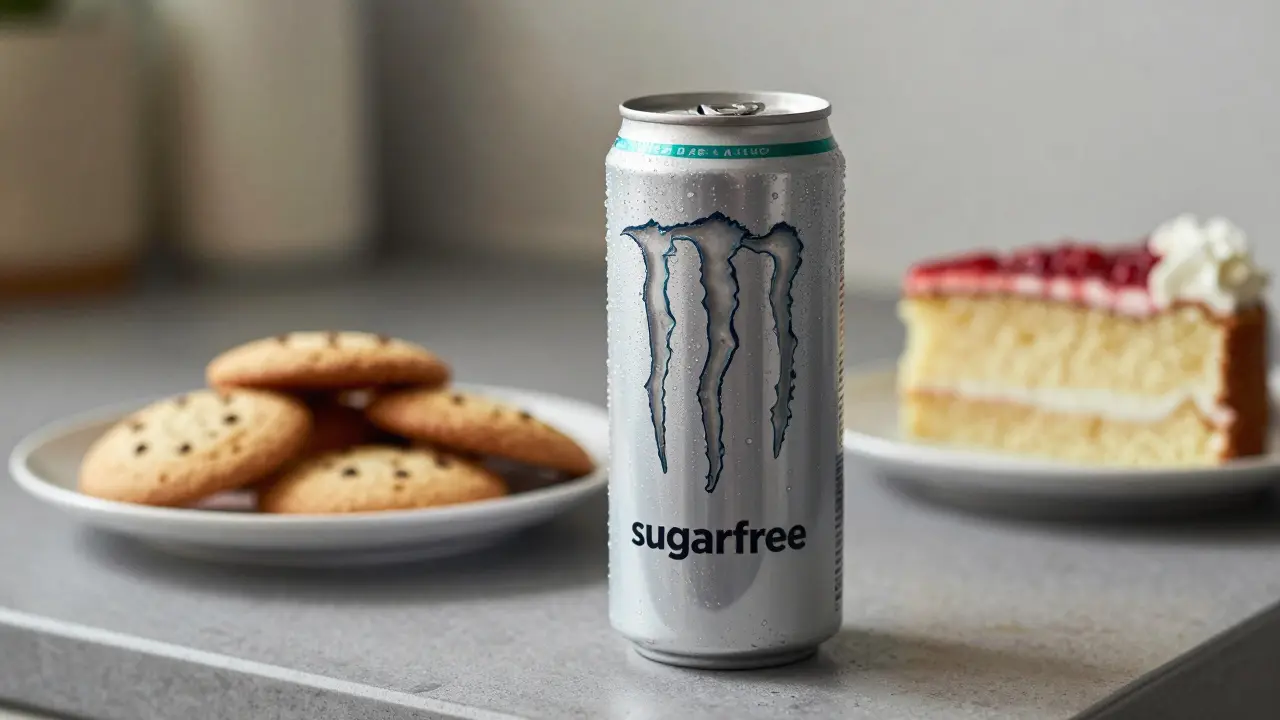
You grab a sugar-free energy drink thinking you’re doing the right thing. Zero calories. No sugar. No guilt. But then you notice the scale hasn’t moved-or worse, it’s gone up. Is it possible that a drink with literally no calories could still make you gain weight? The answer isn’t as simple as yes or no. It’s messier, and it’s happening to more people than you think.
Calories Aren’t the Whole Story
For decades, we’ve been told that weight gain is just about calories in versus calories out. That’s true in theory. But your body doesn’t operate like a simple calculator. What you drink can change how your body stores fat, how hungry you feel, and even how your hormones behave-all without adding a single calorie.
Low-calorie energy drinks often use artificial sweeteners like aspartame, sucralose, or acesulfame-K. These chemicals are designed to trick your taste buds into thinking they’re getting sugar. But here’s the catch: your body doesn’t just taste sweetness. It expects energy to follow. When it doesn’t get it, your brain gets confused. That confusion can trigger cravings for real sugar later in the day. A 2023 study from the University of Queensland tracked 1,200 adults who drank diet soda daily. Those who drank it regularly were 30% more likely to crave and consume high-sugar snacks within the next 24 hours.
How Artificial Sweeteners Affect Your Gut
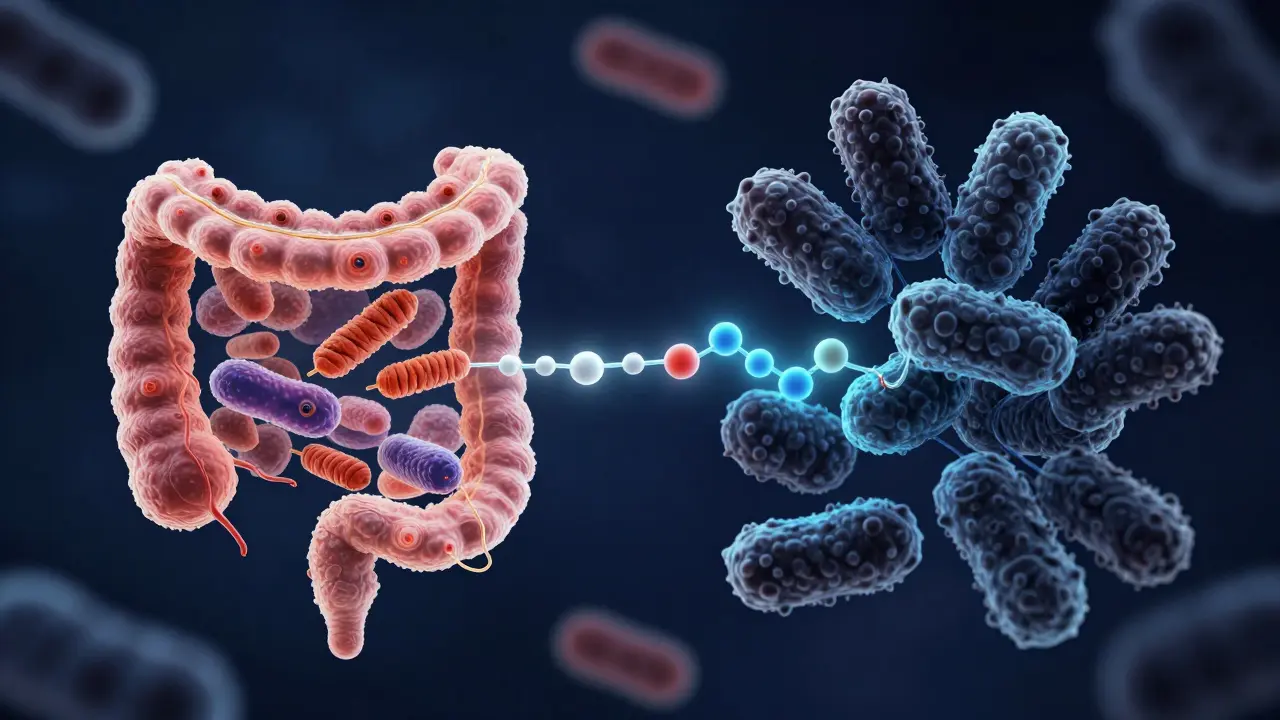
Your gut bacteria aren’t just passive passengers. They play a major role in how your body processes food, stores fat, and regulates insulin. Studies have shown that artificial sweeteners can alter the balance of these microbes. In one controlled trial, researchers gave mice either water or water with sucralose. After just two weeks, the mice fed sucralose developed glucose intolerance-a sign that their bodies were struggling to manage blood sugar, even though they weren’t eating any sugar.
Humans react the same way. A 2024 meta-analysis of 11 human studies found that regular consumption of non-nutritive sweeteners led to measurable changes in gut microbiota linked to increased fat storage. It’s not that the drink itself adds fat. It’s that your body starts behaving as if it’s in a state of metabolic confusion. And that confusion can lead to weight gain over time.
Insulin Spikes Without Sugar
You might think, “If there’s no sugar, there’s no insulin spike.” But that’s not always true. Some artificial sweeteners can trigger a small insulin release just by activating sweet taste receptors in your mouth and gut. Insulin’s job is to store energy. When it’s released-even a little-and there’s no glucose to store, your body may start pulling energy from other sources, like fat. But here’s the twist: chronic low-level insulin spikes can make your cells less sensitive to insulin over time. That’s called insulin resistance. And insulin resistance is one of the biggest drivers of belly fat and weight gain.
Think of it like this: your body keeps pressing the gas pedal, but the engine isn’t running. Eventually, the system starts misfiring. That’s what’s happening in your metabolism when you drink zero-calorie energy drinks daily.
Behavioral Triggers: The License to Indulge
There’s another layer here-psychological. When you choose a “zero-calorie” drink, you often feel like you’ve earned the right to eat something else. This is called the “health halo” effect. You think, “I had a diet soda, so I can have that slice of cake.” Or, “I saved 150 calories today, so I’ll grab a big burger for lunch.”
A 2022 experiment at the University of Toronto gave participants either a regular soda or a diet soda with the same meal. Those who drank the diet soda ended up eating 18% more calories from snacks afterward. Their brains interpreted the diet drink as a “calorie credit,” so they spent it on other foods. It’s not the drink that’s making you fat. It’s the mindset it creates.
What About Caffeine and Appetite?
Most low-calorie energy drinks are packed with caffeine. A typical can has 80-150 mg-about the same as a strong cup of coffee. Caffeine can suppress appetite in the short term. But for many people, that effect wears off quickly. Then comes the crash. And with the crash? Hunger. Intense hunger. Often for carbs. That’s why people who rely on energy drinks for focus or energy end up bingeing on chips, cookies, or pastries by mid-afternoon.
Also, caffeine disrupts sleep. Poor sleep throws off two key hormones: ghrelin (which makes you hungry) and leptin (which tells you you’re full). One night of bad sleep can increase ghrelin by 28% and drop leptin by 18%. That’s a recipe for overeating the next day. And if you’re drinking energy drinks late in the day to stay awake, you’re setting yourself up for this cycle.
Real People, Real Results
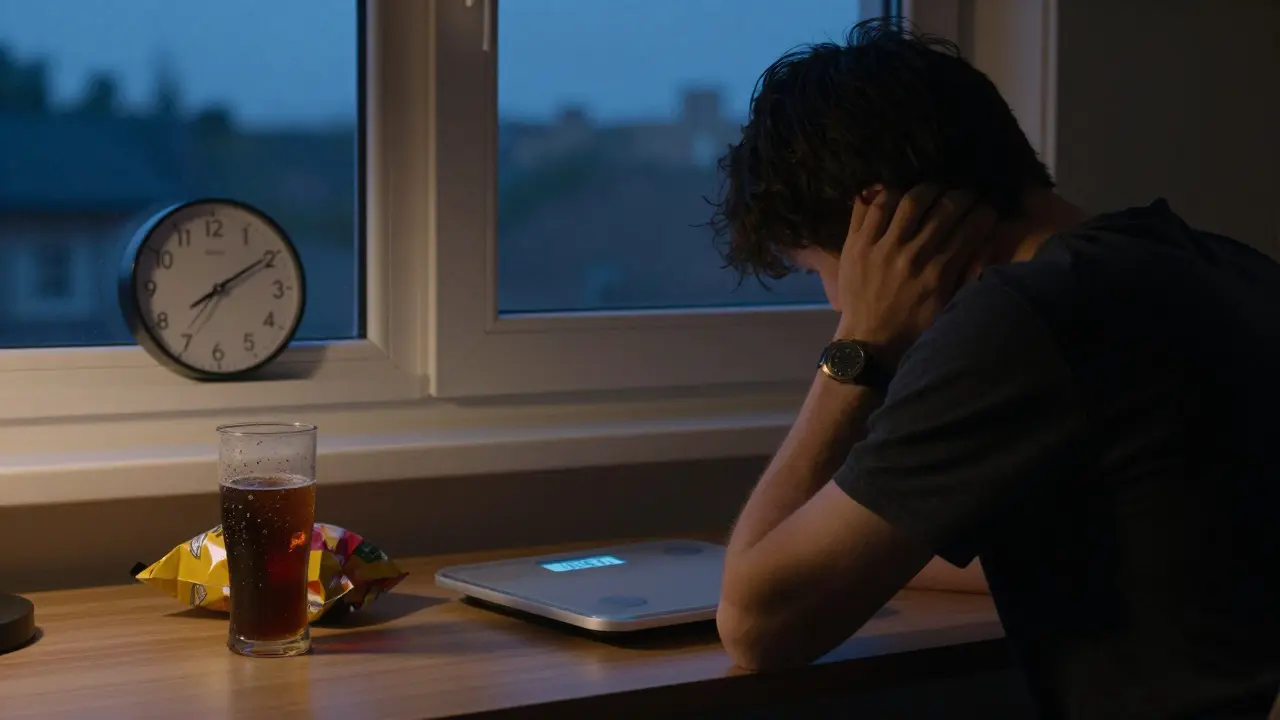
Take Sarah, 34, from Brisbane. She switched from regular soda to zero-calorie energy drinks to lose weight. She drank two a day for six months. She lost 2 kg at first. Then she stopped losing. Then she gained back 4 kg. She didn’t change her diet. She didn’t stop exercising. But she started noticing she was snacking more after her afternoon drink. When she cut out the diet drinks and replaced them with sparkling water and lime, her cravings dropped. Within three weeks, she lost the extra weight without trying.
Or James, 41, who drank sugar-free energy drinks to power through long workdays. He thought he was being healthy. But his waistline kept growing. He got tested and found he had early insulin resistance. His doctor asked him to stop all artificial sweeteners for a month. He did. His fasting insulin levels dropped by 30% in 30 days. He didn’t change his food intake. Just the drinks.
What Should You Drink Instead?
You don’t need to give up energy drinks entirely. But you need to be smarter about them. Here’s what works better:
- Sparkling water with lemon or lime-no sweeteners, no calories, no tricks.
- Black coffee or green tea-natural caffeine, no additives, and studies show they can actually boost metabolism.
- Electrolyte water with no sugar-if you’re active, you need sodium and potassium. Skip the sweeteners and get them from brands that use minerals only.
- Herbal teas-peppermint, ginger, or hibiscus tea can give you a refreshing boost without chemicals.
If you absolutely need the energy drink buzz, look for ones that use stevia or monk fruit in very small amounts-and check the ingredient list. If it’s longer than five items, walk away.
The Bottom Line
Zero-calorie drinks don’t add calories. But they can still make you gain weight. Not because of what’s in the can-but because of what happens in your body and brain after you drink it. Your gut changes. Your cravings shift. Your hormones get mixed up. Your behavior follows.
If you’ve been drinking these daily and you’re stuck on a weight plateau-or worse, gaining-try cutting them out for 30 days. Replace them with plain water, tea, or sparkling water. Track your hunger, your cravings, and your energy levels. Most people find they feel better, eat less, and lose weight-not because they ate less food, but because their body finally stopped being tricked.
Weight gain isn’t always about what you eat. Sometimes, it’s about what you drink-and how your body reacts to the lies it’s been told.
Can zero-calorie drinks cause belly fat?
Yes, indirectly. While they don’t contain fat or sugar, artificial sweeteners in these drinks can disrupt gut bacteria, trigger insulin spikes, and increase cravings for high-calorie foods-all of which contribute to belly fat over time. Studies show people who drink diet sodas regularly have higher waist-to-hip ratios than those who drink water.
Do artificial sweeteners slow down metabolism?
They don’t directly slow metabolism, but they can make your body less efficient at burning fat. By confusing insulin signaling and altering gut microbes, artificial sweeteners can reduce your body’s ability to use energy properly. This leads to fat storage instead of fat burning, even if you’re not eating extra calories.
Is stevia better than aspartame in energy drinks?
Stevia is generally considered safer than aspartame because it’s plant-based and doesn’t break down into potentially harmful byproducts. However, even stevia can trigger insulin responses in some people. The key isn’t just the type of sweetener-it’s how often you use it. Less is better. If you can avoid sweeteners altogether, that’s the best option.
Can I still drink diet energy drinks if I work out?
If you’re working out hard and need a quick boost, an occasional diet energy drink won’t ruin your progress. But if you’re drinking them daily, they’re likely working against you. The caffeine might help temporarily, but the sweeteners can increase hunger afterward and interfere with recovery. Better alternatives: black coffee before a workout, then water or electrolyte drink after.
Why do I feel hungrier after drinking a zero-calorie energy drink?
Your brain expects sugar when it tastes sweetness. When no calories follow, your body releases hunger hormones like ghrelin to make up for the missing energy. This is a biological mismatch. The more often this happens, the more your body learns to expect food after sweetness-and you end up craving snacks.
Will quitting zero-calorie drinks help me lose weight?
Many people do lose weight after quitting-without changing anything else. That’s because they stop triggering insulin spikes, reduce cravings, and break the cycle of “I earned this” eating. One 2023 trial found that people who replaced diet drinks with water lost an average of 2.5 kg over 12 weeks, even without dieting.

Comments (11)
Ronak Khandelwal
24 Jan 2026
Okay but like… have y’all ever noticed how your brain goes full dopamine roulette after a diet soda? 🤯 Sweet taste → brain screams ‘Sugar incoming!’ → nothing comes → brain gets mad → starts begging for cookies. It’s not magic, it’s biology. I switched to lime sparkling water and my 4pm snack attacks just… vanished. No willpower needed. Just peace. 🌿
Jeff Napier
26 Jan 2026
Zero calories? Sure. But you’re telling me the government didn’t approve these sweeteners to make us fat so we buy more meds? 🤔 Big Pharma loves insulin resistance. They don’t want you healthy. They want you dependent. Read the patents. Read the funding. This isn’t science. It’s a business model wrapped in a lab coat.
Sibusiso Ernest Masilela
27 Jan 2026
Of course it makes you gain weight. You’re drinking chemical sludge like it’s holy water. People who drink diet soda are just sugar addicts in denial. You think you’re being smart? You’re just a lab rat with a can. Your gut microbiome is screaming for mercy. And yet… you keep pouring poison into it. Pathetic.
Daniel Kennedy
28 Jan 2026
Let me break this down simply: artificial sweeteners don’t add calories, but they hijack your body’s reward system. Think of it like a car alarm going off for no reason - eventually, your brain stops trusting it. Same with sweetness. Your body expects fuel. When it doesn’t get it, it starts hoarding fat ‘just in case.’ It’s not your fault. It’s evolutionary. But you can retrain it. Try 30 days of plain water. You’ll be shocked how much lighter you feel - mentally and physically.
Sanjay Mittal
30 Jan 2026
Just checked the 2024 meta-analysis they cited - it’s solid. Gut dysbiosis from sucralose is well-documented. Also, insulin response to sweeteners varies by individual. Some people spike, some don’t. But if you’re gaining weight despite no change in diet, it’s worth eliminating them. I did. Lost 3kg in 3 weeks. No magic. Just stopped tricking my body.
Mike Zhong
31 Jan 2026
If you believe calories in, calories out is a myth, then you’re rejecting thermodynamics. The body isn’t a black box. It’s physics. If you’re gaining weight on zero calories, you’re either lying, misremembering your intake, or your metabolism is broken from something else - sleep, stress, meds. Don’t blame the sweetener. Blame the lack of accountability.
Jamie Roman
2 Feb 2026
I used to drink three diet energy drinks a day. I thought I was being healthy. Then I started having these insane sugar cravings at 3pm - like, I’d stare at the vending machine like it was a shrine. I’d tell myself ‘I already had my diet drink, I earned this.’ But I didn’t earn it. I was tricked. When I swapped them for black coffee and sparkling water, the cravings didn’t just fade - they disappeared. And my sleep improved. And I stopped feeling like I was on a sugar rollercoaster. It’s not about willpower. It’s about resetting your body’s expectations. You don’t need to be perfect. Just try it for 14 days. See what happens.
Salomi Cummingham
2 Feb 2026
Oh my god. I’m crying. I’m not even kidding. I drank diet energy drinks for 8 years. I thought I was doing everything right. I exercised. I ate clean. I tracked calories. And still… my belly just kept growing. I felt like a failure. Then I read this. I cut them out. No fanfare. No detox. Just… stopped. Three weeks later, my jeans fit. Not because I ate less. But because my body finally stopped thinking it was in famine mode. I didn’t lose weight. I got my body back. And I’m not letting it get tricked again. 🫂
Johnathan Rhyne
4 Feb 2026
Let’s be real - ‘zero-calorie’ is a marketing lie. It’s like saying ‘diet’ means ‘not really a diet.’ You’re not fooling anyone, least of all your pancreas. And if you think stevia’s the golden child? Nah. It’s still a sweetener. Still triggers insulin. Still messes with your head. The real answer? Drink water. Or tea. Or coffee. Or literally anything that doesn’t pretend to be sugar while being its ghost. Stop buying the hype. Your gut will thank you.
Jawaharlal Thota
4 Feb 2026
I’ve been coaching people on nutrition for 12 years. The #1 mistake? Thinking ‘no sugar’ means ‘no problem.’ It doesn’t. Artificial sweeteners are like emotional manipulators - they promise satisfaction but deliver nothing. And your body knows it. That’s why people who drink diet soda often end up eating more overall. It’s not the drink. It’s the psychological loop it creates. Cut them out. Replace them with plain water and lemon. You’ll be amazed how your cravings reset. I’ve seen it a hundred times. It’s not magic. It’s biology. And it works.
Lauren Saunders
4 Feb 2026
Wow. So now we’re blaming artificial sweeteners for everything? Next you’ll say sunlight causes obesity. Look - if you’re gaining weight, track your food. Not your drinks. I’ve had patients drink diet soda and lose weight. Others drink water and gain. It’s not the beverage. It’s the total energy balance. Don’t fall for the ‘metabolic confusion’ fairy tale. It’s pseudoscience dressed up with fancy studies. If you want to lose weight, eat less. Move more. Stop looking for villains in your soda can.