
What Is the Most Unhealthy Energy Drink?
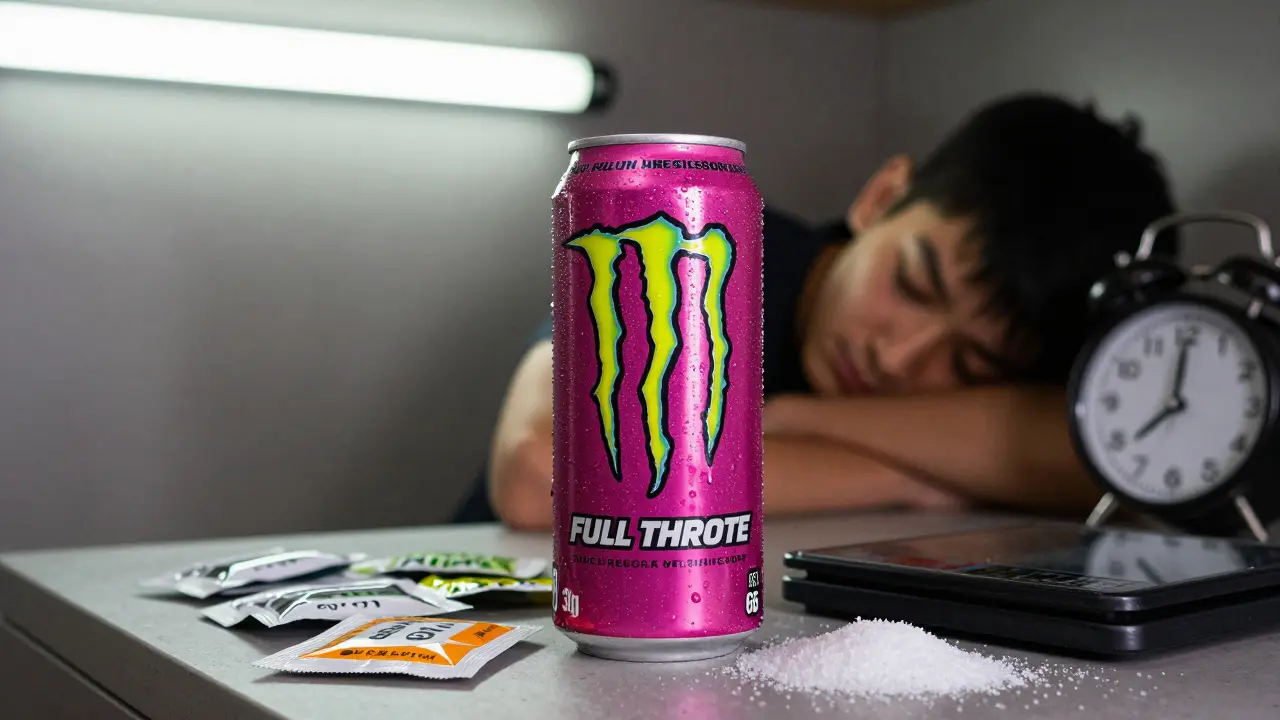
Not all energy drinks are created equal. Some give you a quick boost without much fallout. Others? They’re basically sugar bombs with a side of chemical cocktail. If you’re wondering which energy drink deserves the title of unhealthiest energy drink, the answer isn’t just about caffeine. It’s about what’s hidden in the bottle - and how much of it.
The sugar problem
Most energy drinks load up on sugar. One can of Rockstar Energy Drink contains 62 grams of sugar. That’s more than 15 teaspoons. The American Heart Association recommends no more than 36 grams of added sugar per day for men and 25 grams for women. One drink. That’s it. You’ve blown past your daily limit before lunch.
High-fructose corn syrup is the usual culprit. It spikes blood sugar fast, crashes you harder, and over time, it’s linked to fatty liver disease, insulin resistance, and weight gain. A 2023 study from the University of Sydney tracked regular energy drink consumers over two years. Those who drank two or more cans a week had a 37% higher risk of developing metabolic syndrome compared to non-drinkers.
Artificial junk you don’t need
Let’s talk about the ingredients list. Some energy drinks have more chemicals than your phone’s software update. Red Bull’s original formula includes taurine, glucuronolactone, and B-vitamins - all fine on paper. But look deeper. Many brands add artificial sweeteners like sucralose and acesulfame potassium. These aren’t harmless. A 2024 meta-analysis in the Journal of Nutritional Biochemistry found that daily consumption of these sweeteners altered gut bacteria in ways that reduced insulin sensitivity.
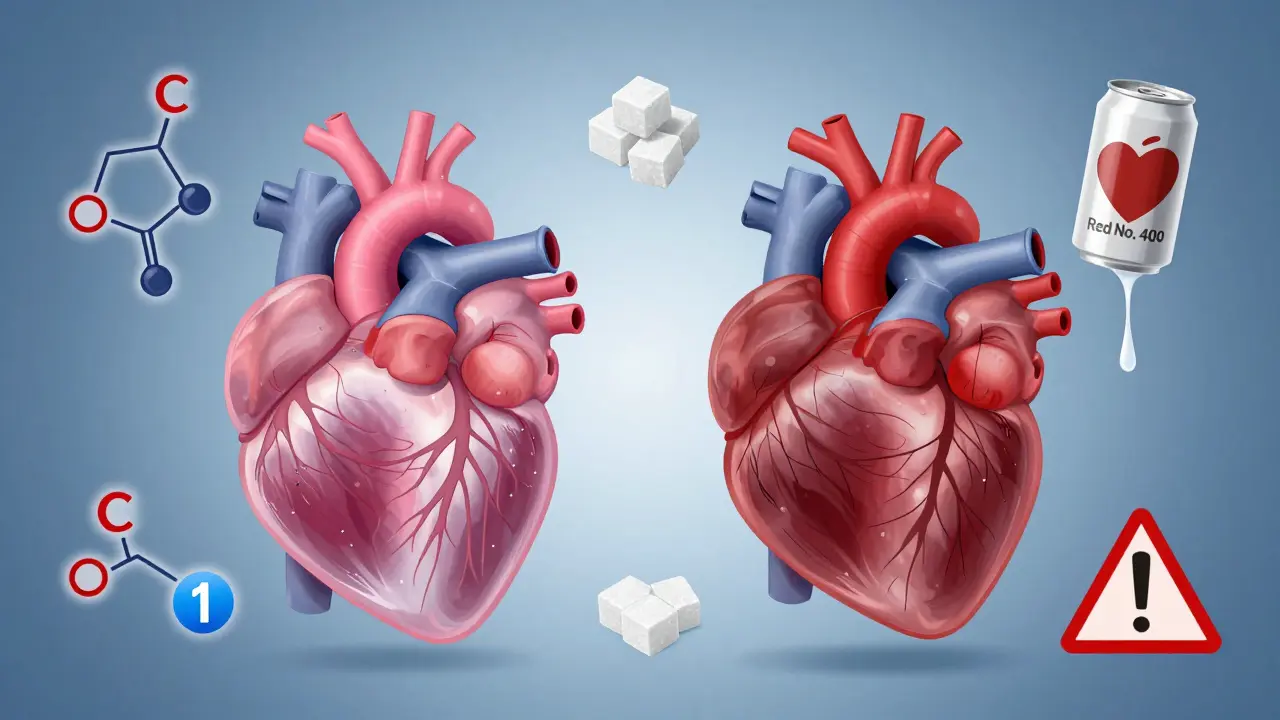
Then there’s the color. Bright neon blue or green? That’s usually synthetic dye - FD&C Blue No. 1 or Red No. 40. These dyes have been linked to hyperactivity in children and are banned in several European countries. They’re not illegal in the U.S. or Australia, but they’re not necessary either.
The caffeine trap
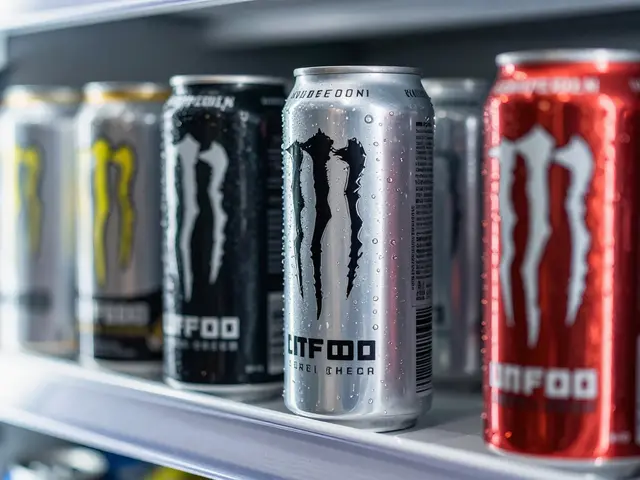
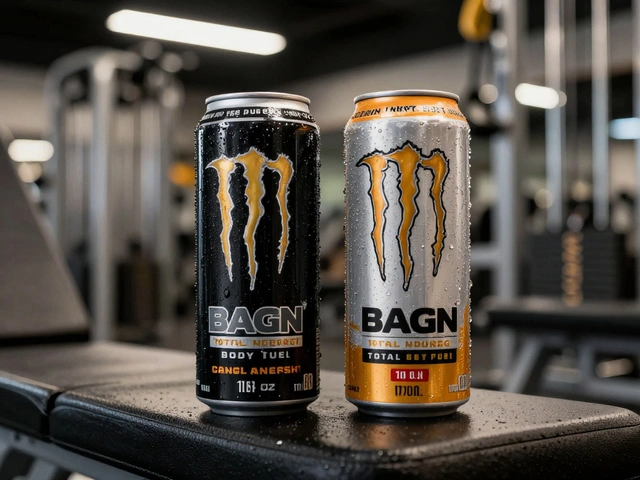
Caffeine isn’t the villain here - it’s the amount and how it’s delivered. Monster Energy’s original can packs 160 mg of caffeine. That’s fine if you’re a regular coffee drinker. But some energy drinks go way beyond. Full Throttle and Bang Energy clock in at 300 mg per can. That’s more than three cups of strong coffee. And unlike coffee, these drinks don’t come with antioxidants or fiber. Just caffeine, sugar, and a bunch of unregulated stimulants.
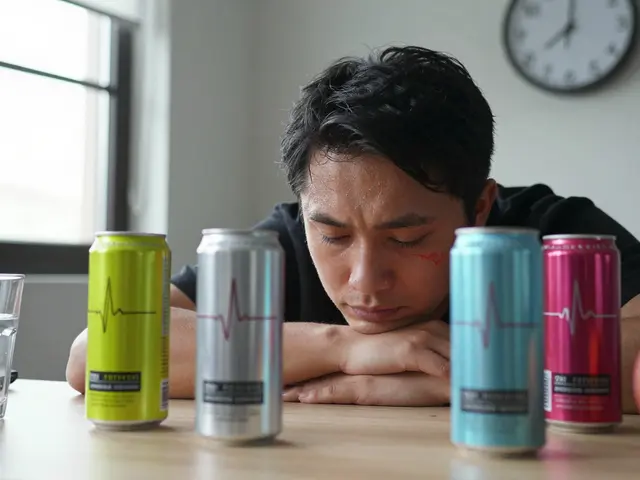
What’s worse? Many people don’t realize they’re doubling up. They drink an energy drink in the morning, then grab a coffee at noon. By 3 p.m., they’re hitting 500+ mg of caffeine. The FDA says 400 mg is the safe daily limit for healthy adults. Exceed that regularly, and you risk heart palpitations, anxiety, sleep disruption, and even high blood pressure.
The worst offender: Full Throttle
When you stack up the ingredients, one drink stands out as the most unhealthy energy drink on the market: Full Throttle.
Here’s what’s in one 16 oz can:
- 210 calories
- 66 grams of sugar (16.5 teaspoons)
- 300 mg caffeine
- Artificial flavors and colors (FD&C Red No. 40, Blue No. 1)
- Glucuronolactone (no proven benefit, just filler)
- Added B-vitamins (overdosed, excreted unused)
It’s not just high in sugar. It’s high in sugar and high in caffeine and full of unneeded chemicals. No fiber. No protein. No hydration. Just a fast, fake energy spike followed by a crash that leaves you hungrier and more tired than before.
Compare that to a drink like MatchaBar Hustle - which has 100 mg caffeine, 5 grams of sugar from organic honey, and real matcha powder. Or even Red Bull Sugarfree, which swaps sugar for sucralose but keeps caffeine low and adds no dyes. Full Throttle has none of the redeeming qualities.
Who’s most at risk?
Teens and young adults are the biggest consumers. A 2025 survey by the Australian Institute of Health and Welfare found that 43% of 15- to 19-year-olds drink energy drinks weekly. That’s alarming. Their bodies are still developing. Their brains are sensitive to dopamine surges. Regular use can rewire reward pathways, making natural energy - like sleep, movement, and food - feel less satisfying.
People with heart conditions, anxiety disorders, or sleep problems should avoid energy drinks entirely. Even one can can trigger panic attacks or arrhythmias. Pregnant women? The American College of Obstetricians and Gynecologists advises against them. Caffeine crosses the placenta. Sugar spikes can affect fetal development.
What should you drink instead?
You don’t need an energy drink to feel alert. Here’s what works better:
- Water with a pinch of sea salt and lemon - hydrates and balances electrolytes
- Green tea - 30-50 mg caffeine, L-theanine for calm focus, antioxidants
- Black coffee - no sugar, no dyes, just pure caffeine and polyphenols
- Sparkling water with a splash of 100% fruit juice - fizzy, sweet, but under 10 grams of sugar
- A 10-minute walk outside - boosts energy naturally by increasing oxygen flow
Real energy doesn’t come from a can. It comes from sleep, movement, and food that nourishes your body - not just tricks your brain.
How to spot the worst energy drinks
Next time you’re in the aisle, check the label. Here’s what to avoid:
- Sugar over 40 grams per can
- Caffeine over 250 mg per serving
- Artificial colors (FD&C #40, #5, #6, Blue #1)
- Unfamiliar ingredients like “proprietary blends” with no amounts listed
- More than two stimulants you can’t name (e.g., yohimbine, synephrine)
If you can’t pronounce half the list - skip it.
Final verdict
The most unhealthy energy drink isn’t just bad because it’s sugary. It’s bad because it’s designed to fool you into thinking you’re getting energy when you’re really just being chemically prodded. Full Throttle leads the pack - but it’s not alone. Brands like Monster, Rockstar, and Bang follow close behind.
Energy drinks aren’t a quick fix. They’re a long-term gamble. And the odds? They’re not in your favor.
Is there a safe energy drink?
There’s no truly "safe" energy drink, but some are less harmful. Look for options under 100 mg caffeine, under 10 grams of sugar, with no artificial colors or sweeteners. Brands like MatchaBar Hustle, Zevia Energy, or even a can of unsweetened black coffee with a splash of milk are better choices. Still, real energy comes from sleep, hydration, and whole foods - not cans.
Can energy drinks damage your heart?
Yes. A 2024 study in the Journal of the American Heart Association found that young adults who drank two or more energy drinks a week had a 23% higher risk of irregular heart rhythms. The combination of high caffeine, sugar, and stimulants can raise blood pressure and stress the heart muscle. People with existing heart conditions should avoid them completely.
Why do energy drinks make you crash?
The crash happens because of sugar and caffeine. Sugar spikes your blood glucose, triggering a rush of insulin. That insulin then drops your blood sugar too low, leaving you tired, irritable, and hungry. Caffeine blocks adenosine (the chemical that makes you sleepy), but once it wears off, adenosine floods your system. The result? A double whammy of fatigue.
Are sugar-free energy drinks better?
They’re better than sugary ones, but not by much. Sugar-free drinks often use artificial sweeteners like sucralose or aspartame, which can still disrupt gut bacteria and insulin response. Some also contain high caffeine levels or unregulated stimulants. They’re less harmful than sugar bombs, but they’re still not a healthy habit.
How much caffeine is too much?
The FDA recommends no more than 400 mg of caffeine per day for healthy adults. That’s about four cups of coffee. But energy drinks often pack 160-300 mg per can - and people drink more than one. Teens should stay under 100 mg. Pregnant women should stay under 200 mg. Exceeding these limits can lead to anxiety, insomnia, rapid heartbeat, and even hospital visits.
Comments (8)
Renea Maxima
20 Feb 2026
I get that everyone's scared of sugar and caffeine, but have you ever tried drinking a can of Full Throttle after a 12-hour shift? I'm not saying it's healthy, but sometimes your body doesn't care about science-it just needs to stay awake. Also, matcha? Cute. I need a punch, not a zen garden in a can. 😅
David Smith
20 Feb 2026
Full Throttle is the worst? Really? What about the ones with yohimbine and DMAA that got banned? You're acting like this is the first time someone's tried to sell poison as energy. People are dumb, not evil. And yes, I'm one of them. I drink it. I know it's bad. I do it anyway. Wake me up when the FDA starts regulating flavorings.
Lissa Veldhuis
21 Feb 2026
Let’s be real here-Full Throttle is basically a sugar-coated heart attack in a can with a neon tattoo and zero chill. 66 grams of sugar? That’s not a drink, that’s a dessert someone forgot to bake. And don’t get me started on Blue No. 1-what kind of chemist looks at that and says ‘this looks delicious’? I’ve seen toddlers with better nutritional sense. And you wonder why kids are hyper? It’s not the toys, it’s the can. 🤦♀️
Michael Jones
23 Feb 2026
Energy drinks aren’t the problem-our culture is. We’ve turned exhaustion into a badge of honor. We don’t rest, we don’t sleep, we don’t eat real food-we just shove chemicals into our veins and call it productivity. Full Throttle is just the symptom. The disease is burnout. You can’t fix this with better labels. You need to fix the grind mentality. Stop glorifying 3 a.m. work sessions. Sleep is not optional. Period.
Buddy Faith
23 Feb 2026
I just drink sugar-free Bang and call it a day. No crash. No guilt. Just vibes. If it works and doesn’t kill me, why overthink it?
Sandi Johnson
24 Feb 2026
So you're telling me the real villain here is... capitalism? Because someone had to invent a drink that makes you feel like you're on a rocket ship for 45 minutes. And then we all bought it. Because we're all just trying to survive Monday. 🤷♂️
Scott Perlman
25 Feb 2026
I used to drink Full Throttle every day. Then I switched to green tea and started walking 20 minutes a day. I have more energy now. Not the fake kind. The kind that doesn’t make you feel like you need a nap after a nap. Life hack: sleep more. It’s free.
Eva Monhaut
27 Feb 2026
The real tragedy isn't Full Throttle-it's that we’ve normalized this. We treat our bodies like disposable machines. You wouldn't put diesel in a hybrid. Why are we putting sugar, dyes, and stimulants into a system that evolved to thrive on whole foods, sunlight, and rest? We’re not lazy. We’re just out of touch. The solution isn’t a better energy drink. It’s a return to basic human rhythm. Breathe. Move. Sleep. Repeat. 🌿