
Why Coffee Is a Healthier Energy Choice Than Energy Drinks
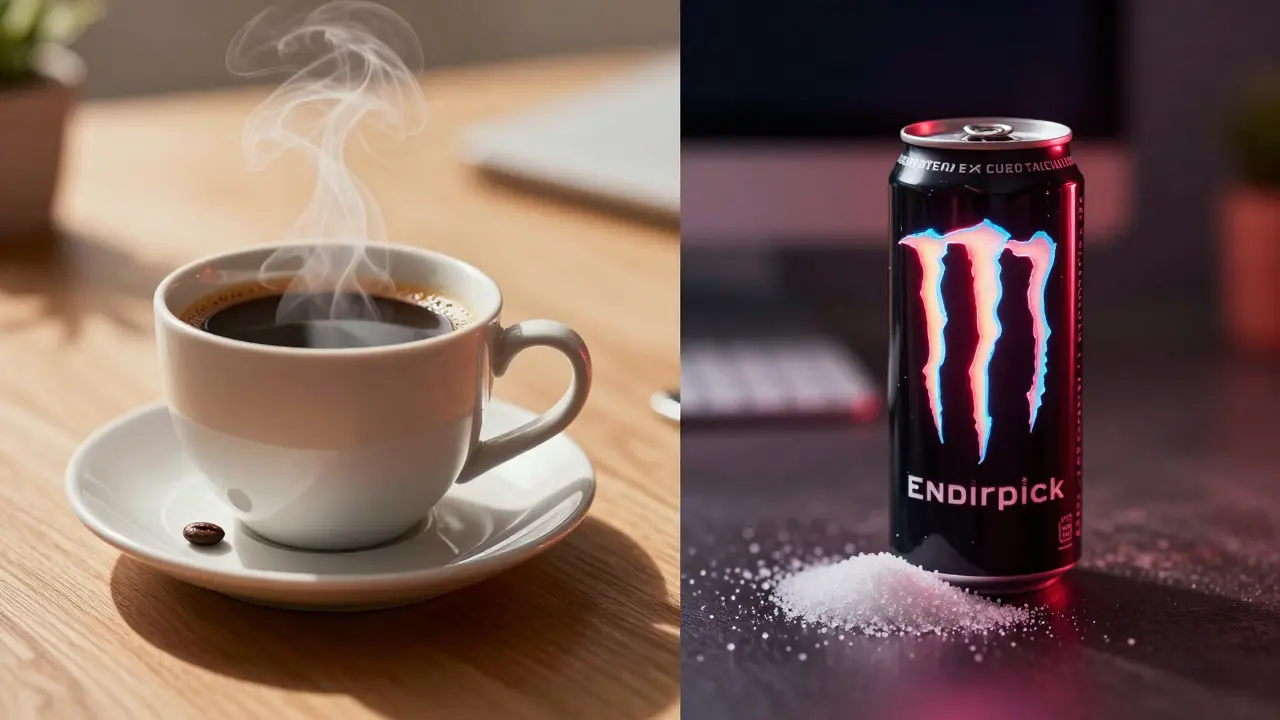
Ever feel like you’re running on fumes by mid-afternoon? You grab an energy drink because it promises a quick jolt-only to crash an hour later, heart racing, stomach queasy, and brain fog thicker than ever. Meanwhile, someone nearby sips coffee and stays sharp without the shakey hands or the crash. It’s not magic. It’s science.
Coffee gives you steady energy, not a spike and crash
Energy drinks load up on sugar and synthetic caffeine to create a fast, furious burst. A typical 16-ounce energy drink has 50-80 grams of sugar-that’s 12-20 teaspoons. Your blood sugar spikes, insulin rushes in, and within 60-90 minutes, you’re dragging again. Coffee? A standard 8-ounce cup has zero sugar and about 95 milligrams of caffeine. That’s enough to sharpen focus without triggering a sugar rollercoaster.
Studies from the Journal of Agricultural and Food Chemistry show that coffee’s caffeine is absorbed more slowly than the caffeine in energy drinks. Why? Because coffee contains natural compounds like chlorogenic acid that slow caffeine release. That means your energy lasts 3-5 hours, not 1-2. No crash. No jittery hands. Just steady alertness.
Energy drinks are packed with unneeded chemicals
Look at the ingredient list on your favorite energy drink. Taurine? B-vitamins? guarana? L-carnitine? Many of these are added in amounts that serve no real purpose for energy. They’re marketing tricks. Guarana, for example, is just another source of caffeine-so you’re getting double-dosed without knowing it.
And then there’s the artificial stuff: preservatives like sodium benzoate, artificial colors like Red 40, and synthetic sweeteners like sucralose. These aren’t harmless. A 2023 review in Nutrients linked high intake of artificial sweeteners to changes in gut bacteria and increased cravings for sugary foods. Sodium benzoate has been tied to inflammation in sensitive individuals. Coffee? Just beans and water. Maybe a splash of milk. That’s it.
Coffee supports long-term health. Energy drinks don’t.
Drinking coffee regularly isn’t just about staying awake. It’s linked to real health benefits. People who drink 3-4 cups a day have a 15-20% lower risk of developing type 2 diabetes, according to the European Journal of Epidemiology. Coffee drinkers also show lower rates of Parkinson’s, liver disease, and even depression.
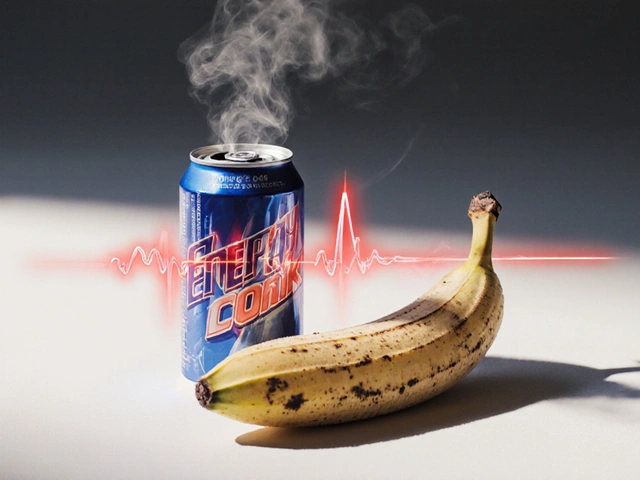
Meanwhile, energy drinks are linked to health risks. The American Heart Association warns that regular consumption can raise blood pressure and increase heart rhythm problems, especially in young people. In 2024, U.S. emergency rooms saw over 20,000 visits tied to energy drink use-mostly from teens and young adults mixing them with alcohol or working out while drinking them.
One 2025 study from the University of California tracked 1,200 young adults over two years. Those who drank energy drinks daily were 3 times more likely to report anxiety, insomnia, and heart palpitations than those who stuck to coffee or water.
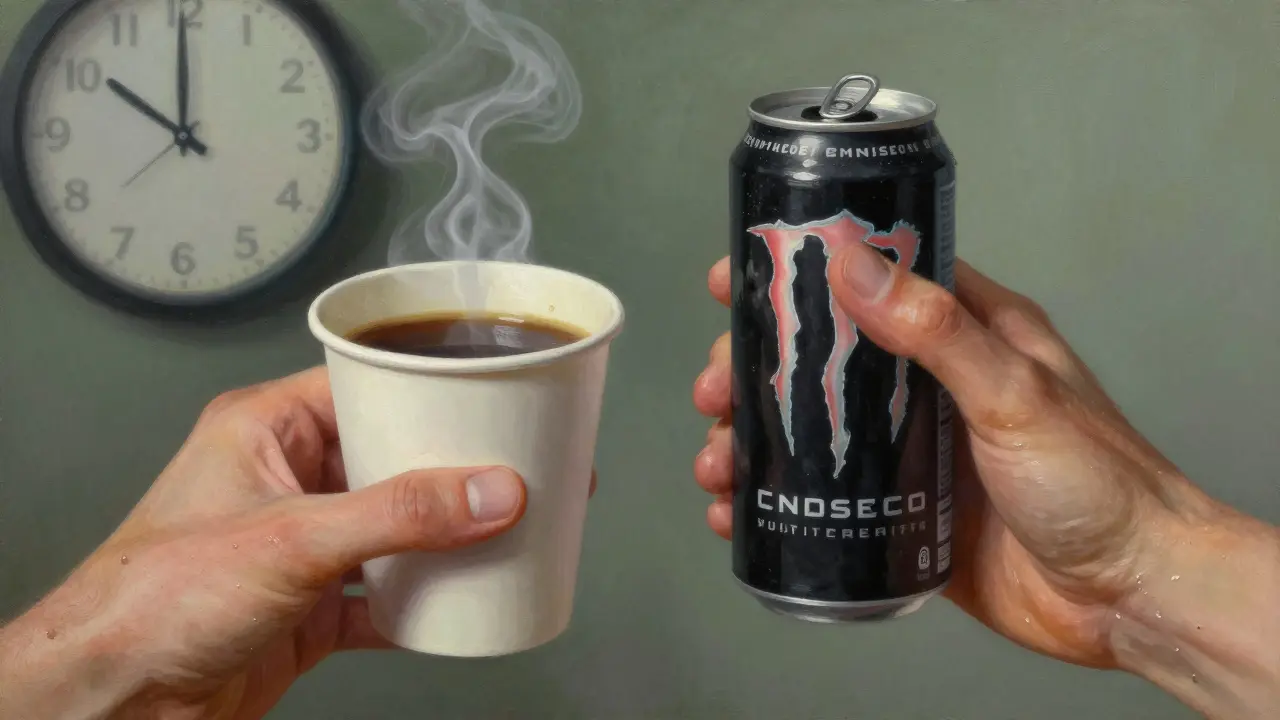
You get antioxidants from coffee. Energy drinks give you none.
Coffee is one of the richest sources of antioxidants in the modern diet. A single cup delivers more antioxidants than most fruits and vegetables combined. These compounds-like polyphenols and melanoidins-fight inflammation and protect your cells from damage.
Energy drinks? They’re stripped of natural antioxidants. Even the ones labeled “natural” or “organic” use processed ingredients that lose their antioxidant power during manufacturing. You’re not getting protection-you’re getting empty calories with a caffeine kick.
Cost, convenience, and control matter
How much do you spend on energy drinks each month? If you’re buying two a day at $3 each, that’s $180 a month. A bag of ground coffee costs $15 and makes 50-60 cups. That’s 30 cents per cup. You save money and reduce waste.
And control? With coffee, you choose the strength, the brew method, the temperature. You can make it black, add a splash of oat milk, or brew it cold. With energy drinks, you’re stuck with whatever’s in the can. No customization. No transparency. Just a label that says “200mg caffeine” but doesn’t tell you how much is from guarana, how much from synthetic caffeine, or what else is hiding in there.
What about decaf coffee?
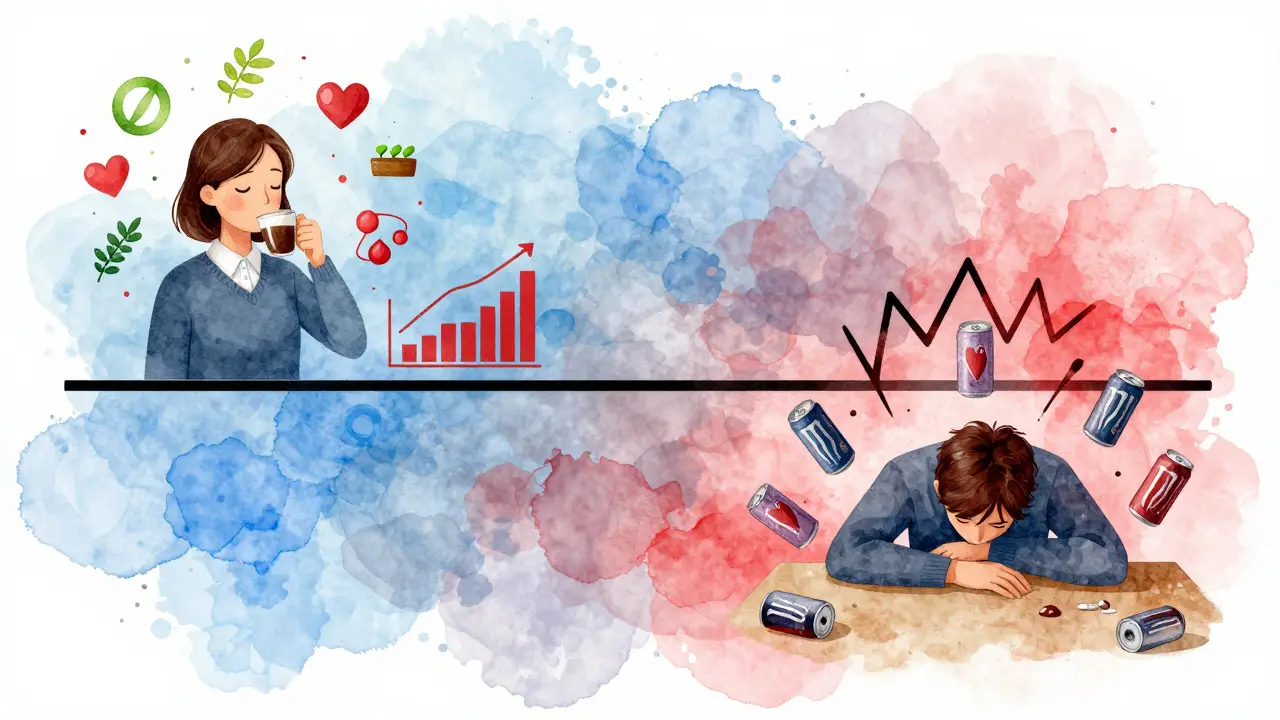
If you’re sensitive to caffeine, decaf coffee still gives you the antioxidant benefits and the ritual-without the jitters. Decaf coffee has 2-5 milligrams of caffeine per cup, which is barely enough to trigger a response in most people. You still get the flavor, the warmth, the routine. And you avoid the sugar and chemicals entirely.
When might an energy drink make sense?
There are rare cases-like an all-night study session, a 3 a.m. shift, or a grueling endurance event-where a quick, controlled caffeine boost helps. But even then, a strong cup of black coffee or a caffeine pill with water is safer. Energy drinks are overkill. They’re designed for people who don’t know how to manage their energy. Not for those who want to feel good, stay healthy, and perform well.
The bottom line
Coffee isn’t just a drink. It’s a tool for sustainable energy, mental clarity, and long-term health. Energy drinks are a shortcut that costs more, delivers less, and leaves you worse off over time.
You don’t need a chemical cocktail to stay awake. You just need a good cup of coffee-and the patience to let it work.
Is coffee really better than energy drinks for focus?
Yes. Coffee delivers caffeine in a natural, slow-release form that supports steady focus without the spikes and crashes that come from sugar-heavy energy drinks. Studies show coffee improves attention and reaction time over several hours, while energy drinks often lead to mental fatigue shortly after consumption.
Can energy drinks damage your heart?
Yes, especially with regular use. Energy drinks can raise blood pressure, increase heart rate, and trigger irregular heart rhythms. A 2024 study in the Journal of the American Heart Association found that young adults who consumed energy drinks daily had a 30% higher risk of arrhythmias compared to non-users. The combination of high caffeine, sugar, and stimulants like taurine puts extra strain on the cardiovascular system.
Does coffee cause dehydration?
No. While caffeine is a mild diuretic, the water content in coffee more than offsets any fluid loss. Research from the University of Connecticut shows that moderate coffee consumption (up to 4 cups per day) contributes to daily hydration just like water. You’d need to drink far more than that to risk dehydration.
Are there healthy energy drinks on the market?
Some brands market themselves as “healthy,” but most still contain added sugars, artificial flavors, or unregulated stimulants. Even “natural” energy drinks often have 20-30 grams of sugar per serving. The only truly healthy option is one with no sugar, no artificial ingredients, and no more than 100mg of caffeine-like unsweetened green tea or black coffee. Most energy drinks, even the “clean” ones, still fall short.
How much coffee is too much?
For most healthy adults, up to 400mg of caffeine per day-about 4 cups of brewed coffee-is considered safe. Beyond that, you might experience anxiety, insomnia, or digestive issues. Pregnant women, people with heart conditions, or those sensitive to caffeine should limit intake to 200mg or less. The key is listening to your body, not chasing the highest caffeine count.

Comments (14)
kelvin kind
17 Jan 2026
Just drank black coffee this morning. Still awake at 3 p.m. No crash. No jitters. Just chill.
Peter Reynolds
19 Jan 2026
i get why people like energy drinks though. they taste better and feel like a treat. but yeah coffee wins in the long run. no debate.
Ian Cassidy
21 Jan 2026
the slow-release caffeine from chlorogenic acid in coffee is a game changer. energy drinks hit you with a bolus of synthetic caffeine that overwhelms the adenosine receptors. you get a false high then a brutal rebound. coffee is bioavailable, natural, and metabolized cleanly.
Sam Rittenhouse
21 Jan 2026
I remember when I was 19 and thought Red Bull was my best friend. Then I turned 28, started having heart palpitations after one can, and switched to drip coffee. My anxiety dropped. My sleep improved. My wallet thanked me. It’s not even close.
And don’t get me started on the artificial colors. Red 40? That’s not a flavor. That’s a warning label.
Sarah McWhirter
22 Jan 2026
you know what’s really scary? the fact that energy drink companies sponsor college sports teams and target teens with flashy cans. they’re not selling energy-they’re selling addiction disguised as performance. the FDA doesn’t regulate these like drugs because they’re ‘beverages.’ that’s a loophole designed by lobbyists who own shares in Monster.
and don’t even get me started on the ‘natural’ ones. if it’s in a can and says ‘energy,’ it’s still poison with a smiley face.
Ananya Sharma
24 Jan 2026
you all sound like you’ve been brainwashed by the coffee industrial complex. what about yerba mate? green tea? matcha? even ginseng or rhodiola? coffee is just one option among many. and let’s not pretend it’s ‘pure’-the roasting process creates acrylamide, a known carcinogen. and don’t forget the mold toxins in low-grade beans. you think you’re being healthy but you’re just choosing a different kind of poison.
also, who says you need to ‘stay sharp’ all day? maybe your body is telling you to rest. maybe the real problem isn’t the energy drink-it’s the 12-hour workdays, the toxic productivity culture, and the societal pressure to be ‘always on.’ coffee just lets you keep pretending you’re fine when you’re burning out.
Chris Heffron
25 Jan 2026
you’re all forgetting one thing: hydration. coffee is 98% water. energy drinks? mostly sugar water with a side of chemicals. i’ve been drinking 3 cups a day for 15 years. my kidney function is fine. my BP is normal. my doctor says i’m a poster child for moderate caffeine. just sayin’.
Adrienne Temple
26 Jan 2026
decaf coffee changed my life. i used to get panic attacks after even one energy drink. now i sip decaf in the afternoon, add a dash of cinnamon, and just… breathe. it’s not about the caffeine for me-it’s the ritual. the smell. the warmth. the quiet moment before the chaos begins.
also, coffee tastes better than syrupy neon sludge. just saying.
Sandy Dog
27 Jan 2026
okay but what if you’re a single mom working two jobs and you have 17 minutes between diaper changes and school drop-offs? you don’t have time to grind beans. you don’t have a French press. you have a gas station and a $2 energy drink that says ‘180mg caffeine’ and you’re just trying to get through the day without crying in the cereal aisle.
so yeah, coffee is ‘better.’ but life isn’t a blog post. sometimes you just need the can.
and if you’re judging me for it? you’ve never had a 3 a.m. nightmare with a screaming toddler and zero sleep. just sayin’.
Nick Rios
28 Jan 2026
the fact that people defend energy drinks like they’re a lifestyle choice instead of a sugar-and-caffeine bomb is wild. i’ve seen coworkers crash so hard after one they had to lie down for an hour. coffee doesn’t do that. it just… works. quietly. reliably.
also, i like that coffee smells like earth, not like a chemical factory exploded.
Amanda Harkins
30 Jan 2026
it’s funny how we treat coffee like it’s sacred and energy drinks like they’re evil. but both are just stimulants. the difference is marketing and price. if energy drinks were sold in ceramic mugs with ‘organic’ stamped on them, people would be lining up. it’s not about health-it’s about perception.
Jeanie Watson
1 Feb 2026
eh. i drink both. sometimes i need the sugar. sometimes i need the calm. who cares? life’s too short to be a caffeine purist.
Jessica McGirt
1 Feb 2026
the science is clear: coffee’s polyphenols reduce oxidative stress, improve endothelial function, and modulate glucose metabolism. energy drinks provide no such benefits. their ingredient lists are intentionally opaque to avoid FDA scrutiny. choosing coffee isn’t a lifestyle-it’s a scientifically supported health decision. and if you’re still drinking energy drinks daily, please talk to your doctor.
Zach Beggs
2 Feb 2026
my dad drinks 6 cups of coffee a day. he’s 72. still hikes. still remembers everyone’s birthday. never had a heart issue. i’m gonna follow his lead. no energy drinks for me.