
How to Get Caffeine Out of Your System ASAP
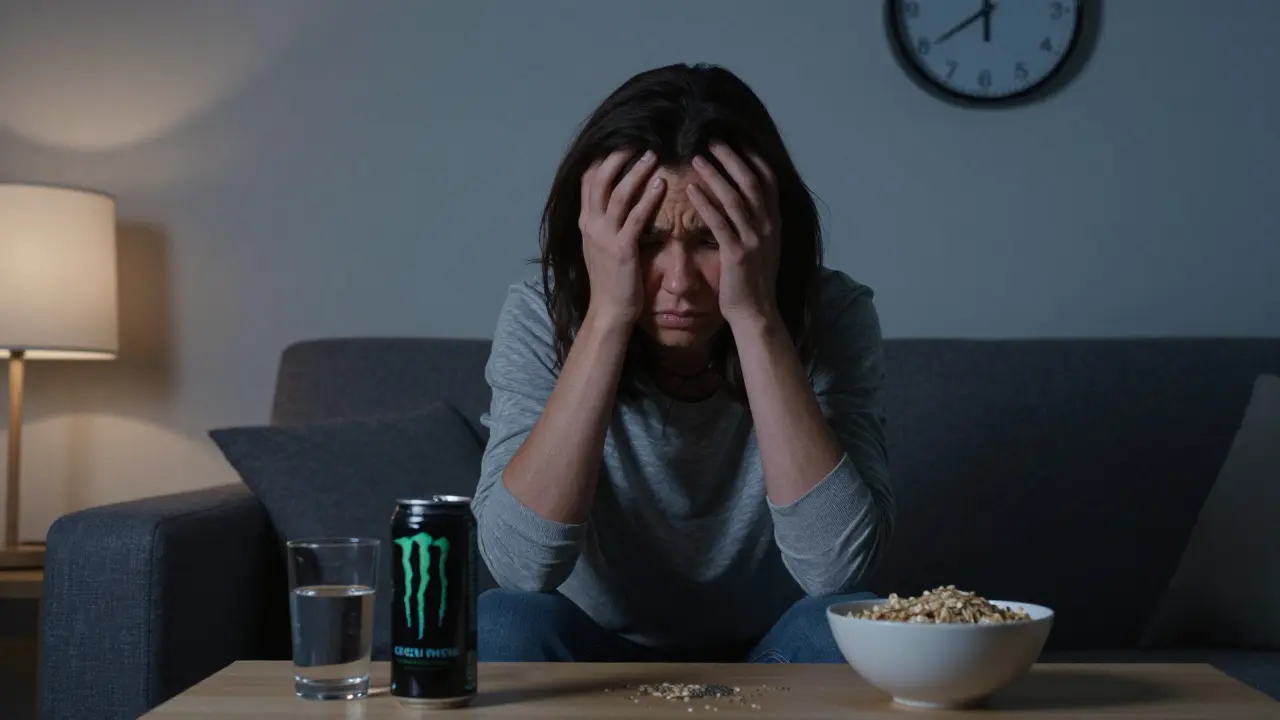
Ever downed an energy drink before a big meeting, only to feel jittery, heart racing, and wide awake at 11 p.m.? You’re not alone. Caffeine hits fast, but it doesn’t leave fast. Most people don’t realize it can take 10 hours or more for half the caffeine in your system to break down. If you’ve had too much - maybe from three energy drinks in one day - you want it gone, and you want it gone now.
How caffeine works in your body
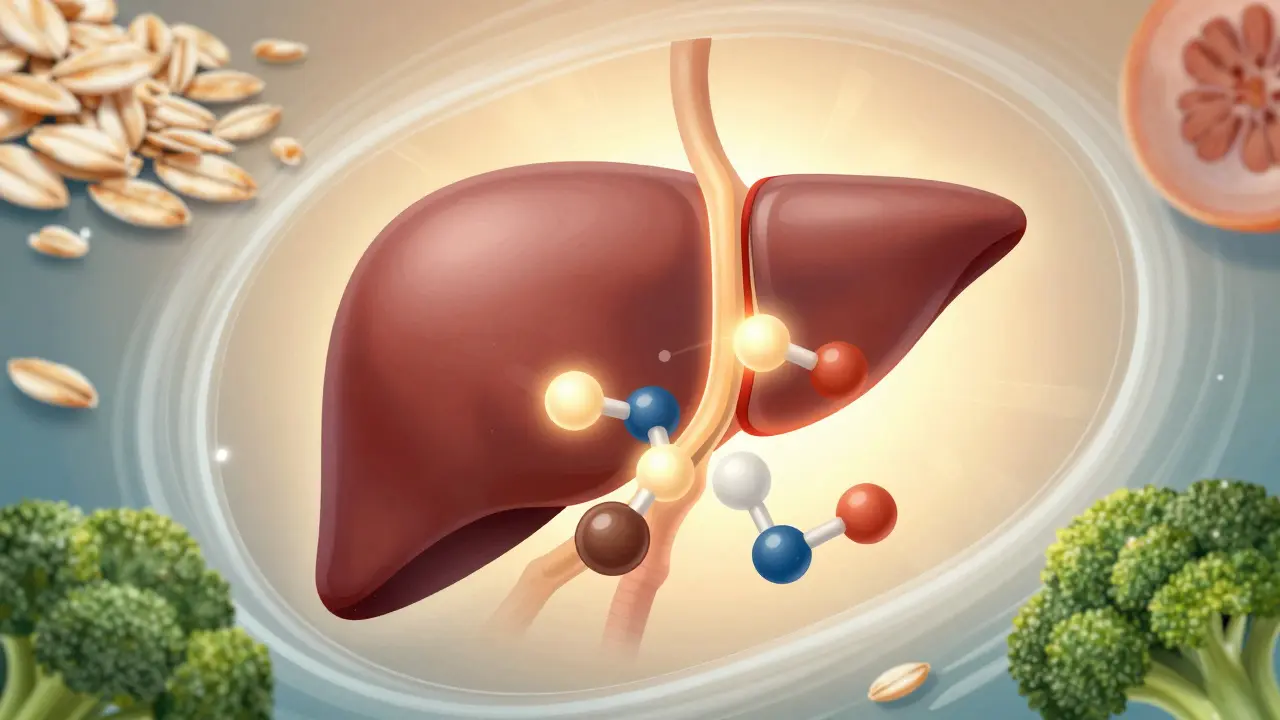
Caffeine is a stimulant that blocks adenosine, a chemical in your brain that tells you it’s time to rest. When adenosine can’t bind to its receptors, you feel alert. But your body doesn’t just stop there. It treats caffeine like a foreign invader. Your liver starts breaking it down using enzymes, mainly CYP1A2. This process turns caffeine into three main metabolites: paraxanthine, theobromine, and theophylline. Each of these still has mild stimulant effects, which is why the crash doesn’t hit right away.
On average, it takes 30 to 60 minutes for caffeine to peak in your bloodstream. But the half-life? That’s the real issue. Half the caffeine is gone in about 5 hours for most people. But for some - especially those with certain genes, liver conditions, or who are pregnant - it can linger for over 10 hours. If you’re trying to sleep tonight, that’s a problem.
What doesn’t work
There are a lot of myths out there. Let’s clear them up fast.
- Drinking water won’t flush caffeine out. Caffeine isn’t stored in your kidneys like salt. It’s metabolized in your liver. Water helps you stay hydrated, which is good - but it won’t speed up breakdown.
- Exercise won’t remove it. Sweating doesn’t eliminate caffeine. You might feel more alert from movement, but your body still has to process it the same way.
- Black coffee won’t cancel it out. Adding more caffeine to counteract caffeine? That’s like pouring gasoline on a fire.
- Detox teas and supplements? Most are useless. No supplement has been proven in clinical trials to accelerate caffeine metabolism in healthy people.
What actually helps - science-backed ways
There’s no magic button. But you can nudge your body along. Here’s what works:
1. Hydrate - but smart
Yes, water won’t flush caffeine out. But dehydration makes symptoms worse. If you’re jittery or have a headache, you might be dehydrated. Caffeine is a mild diuretic, so you’re losing fluids. Drink 200-300 mL of water every hour. Not gulps. Sips. This helps your kidneys filter waste better and keeps your blood pressure stable. Avoid sugary drinks - they spike insulin, which can make anxiety feel worse.
2. Eat fiber-rich foods
Here’s a lesser-known fact: caffeine binds to bile acids in your gut. If you have fiber in your system, it grabs those bile acids and helps push them out through bowel movements. That means a bit of caffeine gets excreted before it’s even fully absorbed. Think oats, lentils, apples, chia seeds, or broccoli. A bowl of oatmeal with a banana right now? Better than another energy drink.
3. Get moving - gently
Strenuous exercise? Skip it. But light movement - a 15-minute walk, stretching, or yoga - helps your circulation. Better circulation means your liver gets more oxygen, and that helps it process caffeine a little faster. Don’t run. Don’t lift weights. Just move. A 2023 study in the Journal of Clinical Sleep Medicine showed that light activity after caffeine intake reduced perceived jitteriness by 27% in participants.
4. Try a warm bath or sauna
Heat helps. A 2022 study from the University of Queensland found that mild heat exposure (like a 30-minute warm bath at 38°C) increased blood flow to the liver by 18%. That’s not a huge boost, but in combination with hydration and fiber, it adds up. If you have access to a sauna, 15 minutes at 60-70°C is fine - just don’t stay longer than 20 minutes. Stay hydrated.
5. Sleep - even if you can’t
This is the most powerful tool you have. Your liver works hardest while you sleep. Even if you’re wired, lying down in a dark room lowers cortisol and lets your body focus on detox. Use a sleep mask, earplugs, and keep the room cool. You don’t need to fall asleep right away. Resting reduces stress hormones, which makes the jitters feel less intense. Think of it as hitting pause on your nervous system.
What to avoid
- Alcohol. It stresses your liver. Caffeine and alcohol together? That’s a double hit on your detox system.
- Energy drinks with more caffeine. No. Just no.
- Over-the-counter “caffeine blockers.” They don’t exist. Products claiming to block or neutralize caffeine are not FDA-approved and often contain untested herbs.
- Panic. The more you stress about being wired, the worse you feel. Anxiety amplifies caffeine’s effects. Breathe. Slow down.

How long will it take?
Here’s a realistic timeline based on a typical 200 mg caffeine dose (about two energy drinks):
- 0-1 hour: Peak effects. Heart racing, hands shaky.
- 1-3 hours: Start to plateau. You’re still wired, but not getting worse.
- 4-6 hours: First drop. You might feel a little calmer. Energy fades.
- 8-10 hours: Half gone. Most people feel normal by now.
- 12-14 hours: Almost gone. Only trace amounts left.
Some people - especially those with slow CYP1A2 genes - may feel effects for up to 20 hours. If you’re pregnant, on birth control, or have liver disease, your timeline could be longer.
Prevention is better than cure
Once caffeine’s in, you’re mostly at the mercy of your biology. So here’s how to avoid this mess next time:
- Stick to one energy drink per day - max.
- Check labels. Some drinks have 200 mg per can. Others have 300 mg. Know what you’re drinking.
- Don’t mix with alcohol or pre-workout powders.
- Switch to green tea or matcha in the afternoon. They have L-theanine, which smooths out caffeine’s sharp edges.
- Track your intake. Use a simple app or even a notebook. You’ll be shocked how fast it adds up.
If you’re regularly relying on energy drinks to get through the day, it’s not just about caffeine. It’s about sleep, stress, and diet. Fix those, and you won’t need the boost.
Can I speed up caffeine metabolism with supplements?
No. There are no supplements proven to speed up caffeine breakdown in healthy adults. Products claiming to do so often contain unregulated herbs or stimulants that could make things worse. Your liver handles caffeine naturally - all you can do is support it with hydration, food, and rest.
Does caffeine stay in your system longer if you’re overweight?
Not directly. But people with higher body fat often have slower metabolism overall, which can slightly extend caffeine’s half-life. More importantly, many overweight individuals have underlying insulin resistance or fatty liver, which can slow down liver function. That’s the real factor - not weight itself.
Can I drink coffee after an energy drink to balance it out?
No. Adding more caffeine just makes the problem worse. You’re not balancing anything - you’re stacking doses. If you’re already jittery, caffeine will make you more anxious, not less. Stick to water, food, and rest.
Is it dangerous to have too much caffeine?
Yes, in extreme cases. The FDA says 400 mg per day is safe for most adults. But if you consume 1,000 mg or more in a short time, you risk heart palpitations, high blood pressure, seizures, or even hospitalization. If you’ve had more than five energy drinks in a day and feel chest pain or trouble breathing, seek medical help immediately.
Why do I still feel caffeine effects the next day?
You’re probably not sleeping well. Caffeine can disrupt deep sleep even after it’s mostly metabolized. If you had a high dose at 4 p.m., your sleep quality at night might still be poor, leaving you feeling wired the next morning. That’s not caffeine still in your system - it’s sleep debt.



Comments (10)
Jeremy Chick
12 Mar 2026
Bro. I had three energy drinks before a presentation last week. Felt like my heart was trying to escape my chest. Didn’t do anything. Just sat there. Breathed. Ate a banana. Took a nap. Woke up 12 hours later like nothing happened. Your body’s not a broken machine. It’s a goddamn ninja. Just let it work.
Christina Kooiman
12 Mar 2026
Let me just say, as someone who once spent three hours Googling ‘how to flush caffeine out’ while sipping chamomile tea and staring at the ceiling-hydration is not a magic bullet, but it’s the only thing that doesn’t actively make things worse. Water doesn’t ‘flush’ caffeine, yes, but dehydration makes your jittery brain scream like a toddler who missed naptime. Sipping slowly? Yes. Chugging Gatorade? No. You’re not a desert nomad, you’re a human with kidneys. Use them.
Also, fiber? Mind blown. I never knew oatmeal was a caffeine sponge. I ate a bowl with chia seeds after my 4 p.m. disaster and actually felt human by midnight. Not cured. But human. That’s the win.
And please, for the love of all that is holy, stop adding more caffeine. You’re not balancing a scale. You’re lighting a bonfire in a paper house.
Also, the ‘sleep even if you can’t’ advice? That’s the most profound thing I’ve read all year. You don’t have to sleep. You just have to lie still. Your liver doesn’t care if you’re conscious. It just wants quiet. And darkness. And maybe a cool room. And no notifications. Just… stillness.
Stephanie Serblowski
14 Mar 2026
OMG YES. I was literally just thinking this morning: caffeine is the modern-day demon we all worship but refuse to exorcise. 🙃
People think they’re ‘managing’ their energy with drinks, but it’s just a pyramid scheme where your liver is the last person in line. And guess what? Your liver doesn’t get a bonus. It just gets tired. And then it quits. And then you’re crying at 2 a.m. because your cat stared at you wrong.
Also-warm bath? YES. I tried it. Felt like a human potato. But my heart stopped trying to do backflips. So… win? 🥔💧
PS: No, you can’t ‘outsmart’ biology with supplements. That’s like trying to fix a Tesla with duct tape. It’s not magic. It’s metabolism. Let it breathe.
Renea Maxima
15 Mar 2026
What if… caffeine isn’t the problem? What if it’s the system? The 9-to-5. The sleep deprivation. The constant pressure to perform. We’re not detoxing caffeine-we’re detoxing capitalism. The energy drink is just the symptom. The real poison is the expectation that we should be productive 24/7. So yes, eat oats. Take a bath. But what are we really healing from?
Also, the liver doesn’t care about your schedule. It’s not a vending machine. It’s an ancient organ that’s been processing toxins since before humans had words. Maybe we should stop trying to ‘optimize’ it… and start listening.
David Smith
17 Mar 2026
Ugh. This whole article reads like a BuzzFeed listicle written by someone who thinks ‘bile acids’ is a personality trait. You don’t need a 2000-word essay to say ‘drink water and sleep.’ That’s not science. That’s common sense. And now I have to read about chia seeds like they’re a miracle drug from Atlantis.
Also, ‘light movement’? You mean walking? Yeah. That’s not science. That’s just… being alive. Stop selling snake oil under the guise of ‘research.’
Lissa Veldhuis
18 Mar 2026
you think you're so smart with your 'fiber binds bile acids' nonsense but i've been doing this since 2012 and let me tell you nothing works unless you just stop drinking the damn stuff in the first place i had a client who drank 5 energy drinks a day and thought he could 'manage' it with yoga and oatmeal like he was some zen monk who accidentally became a caffeine cultist
he died of arrhythmia last year
so yeah. no. stop. just stop.
Michael Jones
20 Mar 2026
Here’s the truth nobody talks about: caffeine doesn’t keep you awake. Fear does. The fear of falling behind. The fear of not being enough. The fear that if you stop moving, you’ll disappear.
So you reach for another drink. Another hit. Another fix.
But your body? It’s not asking for more energy. It’s asking for rest. For safety. For quiet.
Water. Fiber. A walk. A bath. Sleep. These aren’t hacks. They’re acts of rebellion. Against a world that tells you to burn out to prove you’re alive.
You’re not detoxing caffeine. You’re reclaiming your humanity.
allison berroteran
21 Mar 2026
I really appreciate how this post breaks down the science without being overwhelming. I’ve been experimenting with the fiber + hydration combo after my afternoon coffee, and honestly? It’s made a noticeable difference in my evening calmness. Not because it ‘flushes’ anything, but because it helps my body stay balanced. I think a lot of us are looking for quick fixes, but the real solution is just… consistency. Small things, done regularly. Oatmeal. A walk. Turning off screens. It’s not glamorous, but it works.
Also, the part about sleep debt being mistaken for lingering caffeine? That hit me. I used to blame caffeine for my grogginess the next day. Turns out, I was just sleeping like a corpse after a 4 p.m. espresso.
Gabby Love
22 Mar 2026
Minor correction: the half-life isn’t always 5 hours. For slow metabolizers (CYP1A2*1F allele carriers), it’s closer to 8–10 hours. Genetics matter. Also, birth control? Doubles half-life. Pregnancy? Triple. So if you’re a woman on the pill or expecting, ‘5 hours’ is dangerously misleading.
And yes-fiber helps. Soluble fiber binds to conjugated caffeine metabolites in bile, promoting fecal excretion. It’s not a myth. It’s biochemistry. I work in nutrition. I’ve seen the data. Oatmeal is legit.
Sagar Malik
24 Mar 2026
you know what they dont tell you... the real reason caffeine lingers is because the government is secretly using it to monitor our nervous systems... they put microchips in the coffee beans... and the liver? its not breaking it down... its transmitting data... that's why supplements dont work... they cant hack the signal... its not science... its surveillance
also... i think the sun is made of lies