
What Is the Unhealthiest Drink Ever? The Shocking Truth About Energy Drinks
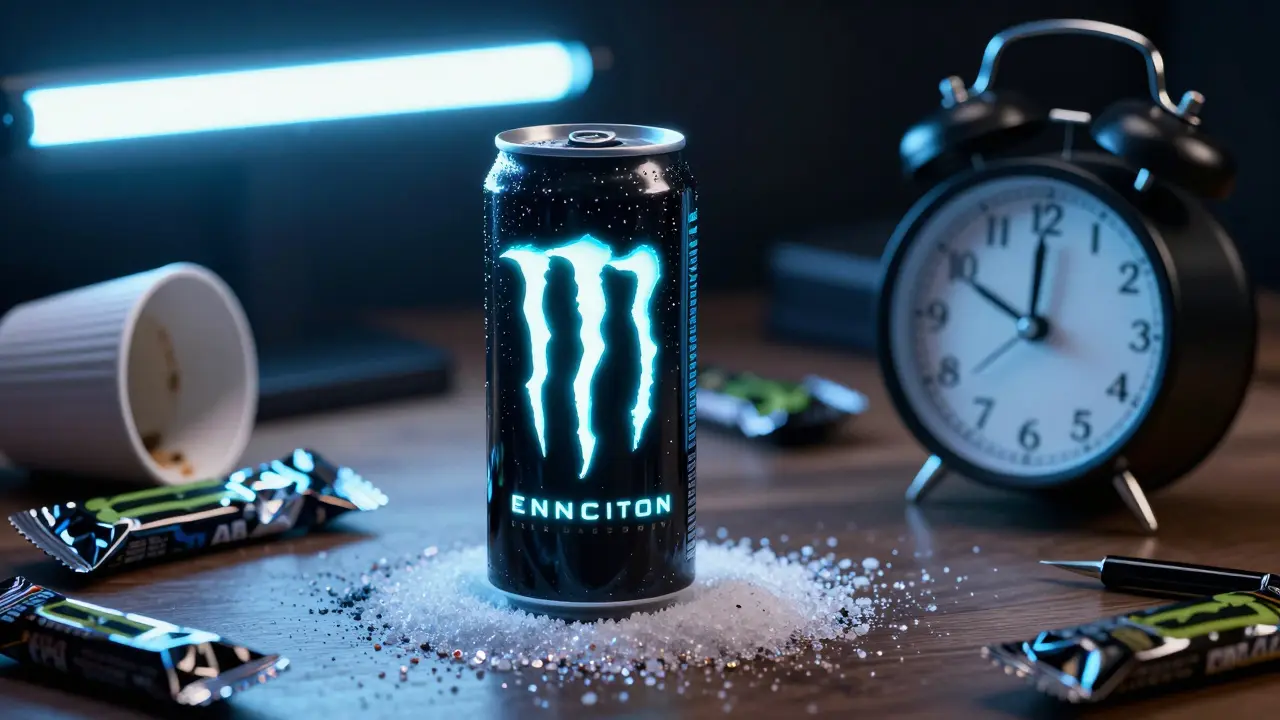
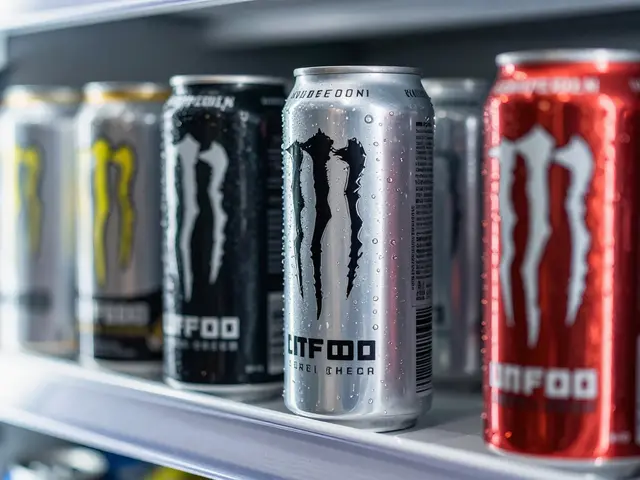
There’s a drink out there that’s worse than soda, worse than fruit juice, and even worse than alcohol when it comes to long-term damage. It’s not some obscure cocktail or sugary smoothie. It’s the standard energy drink you grab on the way to work, before a late-night study session, or after a workout. And no, it’s not just the caffeine. The real problem is what’s hiding in plain sight.
The Sugar Bomb No One Talks About
One can of the most popular energy drink contains 54 grams of sugar. That’s more than 13 teaspoons. The World Health Organization recommends no more than 25 grams of added sugar per day for adults. One drink. That’s more than double your daily limit. And it’s not even the most sugary one on the market.
Some brands push past 60 grams per can. That’s the same amount of sugar as four glazed donuts. Your body doesn’t process this kind of sugar spike like it does natural fruit sugar. It floods your bloodstream all at once. Your pancreas scrambles to pump out insulin. Your liver turns the excess into fat. Over time, this cycle leads to insulin resistance, fatty liver disease, and type 2 diabetes.
And here’s the trick: many people think they’re being smart by choosing the ‘zero sugar’ version. But that’s just swapping one problem for another.
Artificial Sweeteners: The Silent Saboteur
Drinks labeled ‘sugar-free’ or ‘diet’ often replace sugar with aspartame, sucralose, or acesulfame potassium. These chemicals are approved by regulators, but that doesn’t mean they’re safe for daily use. A 2023 study from the University of Sydney tracked over 10,000 people over five years. Those who drank one or more artificially sweetened energy drinks per day had a 30% higher risk of developing metabolic syndrome - a cluster of conditions including high blood pressure, belly fat, and abnormal cholesterol.
Why? These sweeteners confuse your brain. They trigger insulin release without any real sugar to go with it. Your body expects energy. When it doesn’t come, it starts craving more. You end up eating more throughout the day. Studies show people who drink diet energy drinks tend to snack more on junk food than those who drink water.
Caffeine Overload: More Than Just Jitters
Most energy drinks pack 160 to 200 milligrams of caffeine per can. That’s more than two cups of coffee. But here’s the catch: coffee comes with antioxidants and is usually consumed slowly. Energy drinks are chugged. You get a massive caffeine dump in under five minutes.
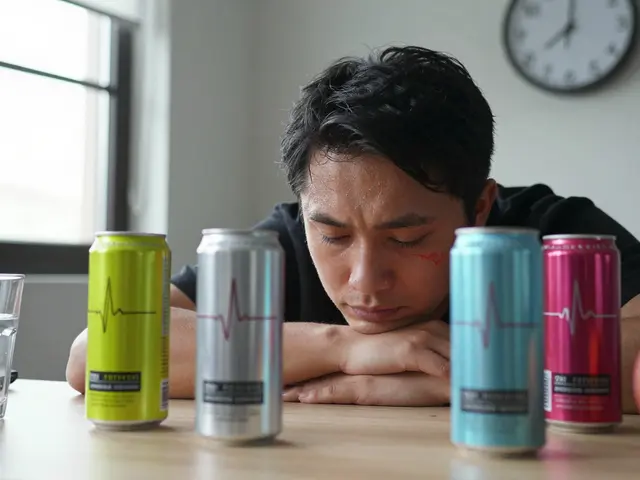
That sudden spike can cause heart palpitations, high blood pressure, and in rare cases, cardiac arrest - especially in young people with undiagnosed heart conditions. Between 2018 and 2024, the U.S. Poison Control Center logged over 3,000 emergency calls linked to energy drink consumption in teens and young adults. Many of those cases involved people mixing energy drinks with alcohol or taking stimulant medications.
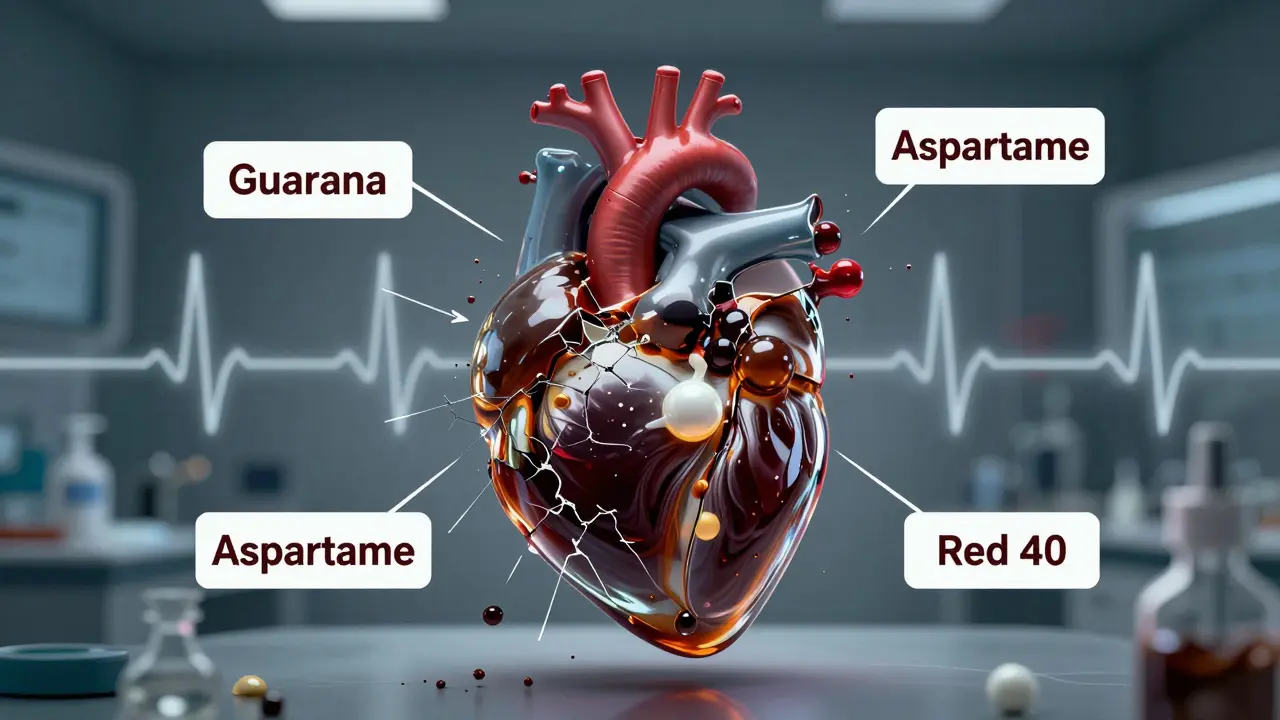
And caffeine isn’t the only stimulant. Many energy drinks include guarana, taurine, and yerba mate - all of which have their own effects on the nervous system. No one’s required to list the total stimulant content. So you’re flying blind.
The Hidden Ingredients You Won’t Find on the Label
Energy drinks are a chemical cocktail. They’re loaded with additives most people have never heard of - and definitely didn’t sign up for.
- Inositol - a sugar alcohol that can cause digestive upset in high doses.
- Glucuronolactone - a synthetic compound with no proven benefit and unknown long-term effects.
- Colorings like Red 40 and Blue 1 - linked to hyperactivity in children and banned in some European countries.
- Preservatives like sodium benzoate - can react with vitamin C to form benzene, a known carcinogen.
These aren’t natural extracts. They’re lab-made chemicals added to extend shelf life, enhance flavor, or make the drink look more appealing. And because they’re classified as ‘flavoring agents,’ manufacturers aren’t required to list exact amounts.
Who’s Really Drinking These?
It’s not just teenagers and gamers. A 2024 survey from the Australian Institute of Health and Welfare found that 37% of Australians aged 18-24 drink energy drinks at least once a week. One in five college students reports using them to stay awake for exams. Nurses working double shifts, truck drivers, and shift workers rely on them just to get through the day.
But the damage isn’t just physical. Energy drinks mess with your sleep cycle. The caffeine and sugar delay melatonin production. Even if you fall asleep, your deep sleep is reduced. That means you’re not recovering. You’re running on fumes. And over time, that leads to chronic fatigue, brain fog, and anxiety.
What Happens When You Quit?
People who stop drinking energy drinks for just four weeks report dramatic changes. In a small clinical trial in Brisbane, 42 participants who cut out energy drinks for 30 days saw:
- 40% reduction in daily headaches
- 32% improvement in sleep quality
- 28% drop in sugar cravings
- 15% decrease in resting heart rate
One participant, a 22-year-old university student, said: ‘I didn’t realize how much I was relying on them until I couldn’t focus without one. After a week off, I started sleeping through the night. My mood stabilized. I didn’t need the buzz anymore.’
What Should You Drink Instead?
You don’t need a chemical cocktail to stay alert. Here’s what works better:
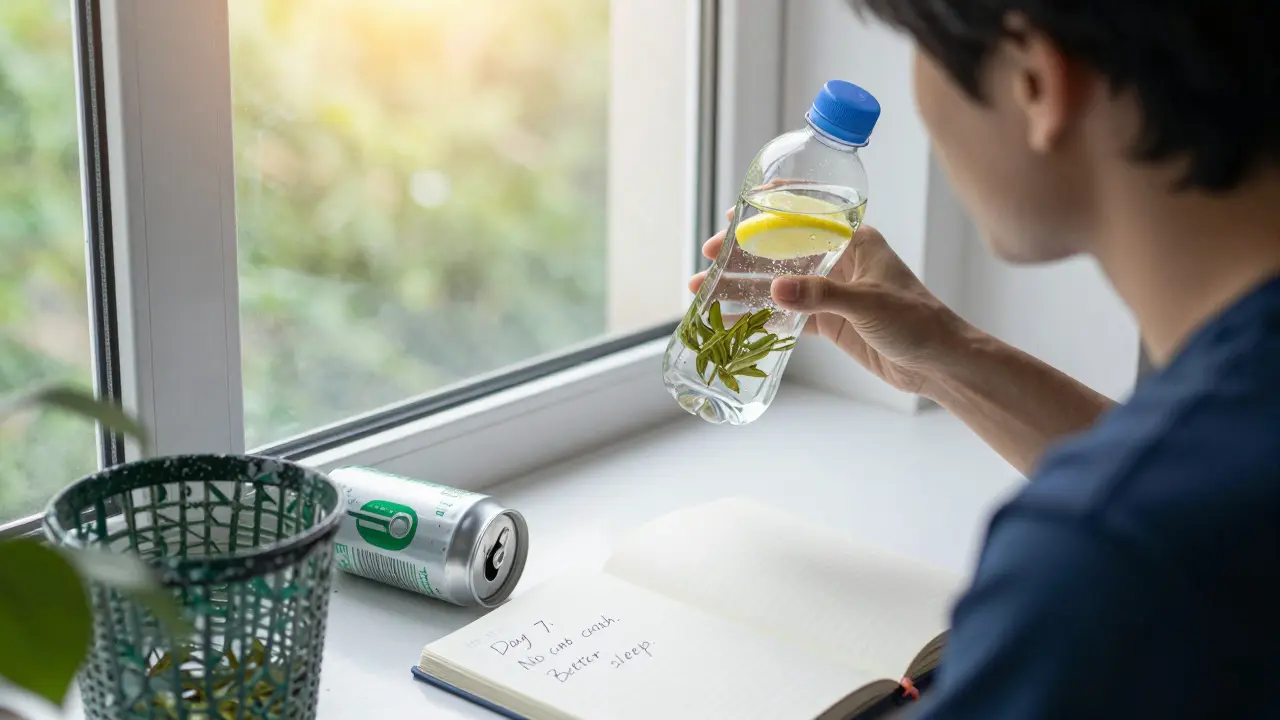
- Water with lemon - hydrates, boosts metabolism, and gives a subtle flavor without sugar.
- Green tea - has moderate caffeine and L-theanine, which calms your nerves while keeping you focused.
- Sparkling water with a splash of fruit juice - fizzy, refreshing, and under 10 grams of sugar.
- Electrolyte drinks without sugar - for after workouts, choose ones with just sodium, potassium, and magnesium.
And if you need a quick pick-me-up? Take a 10-minute walk. Get some sunlight. Breathe deeply. Movement and natural light reset your brain better than any drink ever could.
The Bottom Line
The unhealthiest drink ever isn’t just the one with the most sugar or caffeine. It’s the one that tricks you into thinking it’s helping you - when it’s actually wearing you down. Every sip is a short-term fix with long-term costs: weight gain, heart strain, sleep loss, and mental fatigue.
There’s no magic bullet. No ‘safe’ energy drink. The only truly healthy option is to stop drinking them altogether. Your body will thank you - not in a year, not in six months, but in the next 48 hours. You’ll sleep better. You’ll think clearer. You won’t feel like you’re constantly running on empty.
It’s not about willpower. It’s about awareness. Once you see what’s really in that can, you won’t want it anymore.
Is there any energy drink that’s actually healthy?
No. Even drinks marketed as ‘natural’ or ‘organic’ still contain high levels of caffeine, sugar, or artificial sweeteners. Some may use stevia instead of aspartame, but they still deliver the same sugar spike or metabolic confusion. The only truly healthy choice is to avoid them entirely.
Can energy drinks cause heart problems?
Yes. Multiple studies, including one published in the Journal of the American Heart Association in 2024, show that energy drinks can raise blood pressure and heart rate to dangerous levels - especially when consumed quickly or in large amounts. Young adults with undiagnosed heart conditions are at highest risk. Emergency rooms report spikes in cases after holidays and exam seasons.
Why do energy drinks make me crash later?
The sugar and caffeine give you a quick surge, but your body responds by releasing insulin and then a flood of stress hormones. Once those wear off, your blood sugar drops sharply. That’s the crash - fatigue, irritability, headaches, and brain fog. It’s not just tiredness. It’s your body’s reaction to a chemical rollercoaster.
Are energy drinks worse than soda?
Yes, in most cases. Energy drinks typically have more sugar, more caffeine, and more unregulated additives than regular soda. They’re also consumed faster and more frequently. A 2022 analysis found that energy drink users consumed 2.5 times more added sugar per day than soda drinkers.
Can kids drink energy drinks?
No. Health organizations including the American Academy of Pediatrics and the World Health Organization strongly advise against energy drinks for children and adolescents. Their bodies are still developing, and the stimulants can interfere with brain development, sleep patterns, and heart function. Many countries ban sales to minors.
What to Do Next
If you’re drinking energy drinks regularly, start by tracking how many you consume each week. Then pick one day to skip. Replace it with water or green tea. Notice how you feel. Do you have more energy? Less anxiety? Better sleep? That’s your body telling you what it really needs.
You don’t need to quit cold turkey. Just stop letting it become a habit. Once you break the cycle, you’ll realize you never needed it in the first place.

Comments (9)
Christina Kooiman
20 Dec 2025
Okay so I just finished reading this and I need to sit down because my blood pressure is already through the roof. One can of energy drink has MORE SUGAR THAN FOUR GLAZED DONUTS?! And we’re just supposed to shrug and keep buying them like they’re snacks? I mean, I get it-college students are desperate, shift workers are exhausted, but this isn’t just bad-it’s a slow-motion suicide pact disguised as a productivity hack. Your pancreas isn’t a superhero. It doesn’t get a cape. It just gets worn out. And then one day you wake up with diabetes and you’re like, ‘Wait, wasn’t I just trying to stay awake for a Zoom call?’
And don’t even get me started on the ‘zero sugar’ crap. Aspartame? Sucralose? These aren’t sweeteners-they’re chemical ghosts haunting your metabolism. Your brain thinks it’s getting sugar, so it releases insulin. Then it’s like, ‘Where’s the party?’ and starts screaming for snacks. That’s why you end up eating an entire bag of chips after your ‘diet’ drink. It’s not willpower. It’s biochemistry betrayal.
And the additives? Glucuronolactone? Inositol? Who even names this stuff? It sounds like a rejected Harry Potter spell. And sodium benzoate reacting with vitamin C to make BENZENE? That’s not a side effect-that’s a war crime. I’m not even mad. I’m just disappointed. We’ve been sold a lie for decades and now our bodies are the landfill.
I stopped drinking them six months ago. My headaches vanished. My anxiety dropped. I started sleeping like a human again. And guess what? I didn’t die. I didn’t collapse. I just… felt normal. Like, for the first time in years. And honestly? That’s the real energy boost. Not some neon-colored poison in a can.
Someone needs to put a warning label on these like cigarettes. ‘WARNING: This drink will make you feel alive for 20 minutes. Then it will steal your sleep, your focus, your liver, and your dignity.’
Stephanie Serblowski
20 Dec 2025
Yasss queen 🌟 I’ve been screaming this from the rooftops since 2019. Energy drinks are the new cigarette-except the companies are still laughing all the way to the bank while our kids are crashing in ERs. I work in pediatrics, and last month, a 14-year-old came in with tachycardia after chugging two Monster Energy drinks before a soccer game. No pre-existing conditions. Just pure, unregulated, sugar-and-stimulant chaos.
And the ‘natural’ ones? Please. ‘Organic cane sugar’ doesn’t make it okay. It just makes it *fancy* poison. The real villain here is the marketing. ‘Fuel your grind!’ ‘Unlock your potential!’ Bro. You’re not a Tesla. You’re a human. You need sleep. You need water. You need to breathe.
Green tea with lemon? Yes. Sparkling water with a splash of cranberry? Yes. Walking outside for 10 minutes? ABSOLUTELY. Your body isn’t a battery that needs a boost-it’s a symphony. And energy drinks? They’re the guy with the airhorn in the middle of a Mozart concert.
Also, if you’re drinking these to ‘get through the day,’ maybe it’s time to ask why your day is so draining. Just saying. 💆♀️✨
Renea Maxima
21 Dec 2025
What if… the real problem isn’t the drink? What if it’s the system that made us believe we need it? We live in a world that glorifies burnout. We’re told to hustle, to grind, to ‘do more with less.’ So we reach for the can. Not because we’re weak-but because the system is broken. The energy drink isn’t the enemy. The 80-hour workweek, the 3 a.m. deadlines, the 12-hour shifts with no breaks-that’s the enemy.
And the fact that we blame the drink instead of the structure? That’s the real tragedy. We’re not addicted to sugar. We’re addicted to survival in a world that refuses to let us rest.
So yes, quit the drinks. But also… quit the grind. Or at least, ask why you’re being asked to grind in the first place.
…and if you’re still drinking them? I get it. I’m not here to judge. I’m just here to say: you’re not alone. 🌑
Jeremy Chick
22 Dec 2025
Bro. I used to chug two Monster’s a day before my shifts. Thought I was a beast. Turns out I was just a walking panic attack with a caffeine addiction. Last year I had a panic attack in the grocery store after drinking one. Felt like my heart was trying to escape through my ribs. I didn’t even know that was possible.
Quit cold turkey. First week? Felt like death. Second week? Still tired. Third week? I started noticing colors. Like, actual colors. The sky was blue. Trees were green. I didn’t realize I’d been living in a gray haze for years.
Now I drink water. Sometimes tea. And I nap. Like, actual naps. And guess what? I’m more productive. I don’t crash. I don’t crave sugar. I don’t feel like I’m being eaten alive from the inside.
Stop lying to yourself. You don’t need it. You just think you do. And if you’re still drinking them? You’re not tough. You’re just brainwashed.
And yeah, I said it. You’re welcome.
Sagar Malik
22 Dec 2025
Actually, the real issue is the globalist pharmaceutical-agricultural complex that weaponizes sugar and artificial sweeteners to create dependency. The WHO? They’re funded by Big Pharma. The FDA? Captured. The 2023 study? Sponsored by Coca-Cola’s R&D division. You think they want you to quit? No. They want you to keep buying-just switch from sugar to aspartame so they can patent the next ‘miracle’ detox tea.
And glucuronolactone? It’s not just synthetic-it’s a metabolite of the pentose phosphate pathway. Which means your body naturally produces it. But in energy drinks? It’s concentrated. And when combined with caffeine and yerba mate? It’s a neurochemical Trojan horse. They’re not just selling drinks. They’re selling a new metabolic paradigm. One where your body is no longer in charge.
And don’t get me started on Red 40. It’s banned in Norway because it’s linked to ADHD. But here? We call it ‘taste.’
Wake up. They’re not selling you a drink. They’re selling you a new version of yourself. One that’s always tired. Always craving. Always buying.
…and yes, I’ve read the studies. All of them. Including the ones they don’t want you to see.
Seraphina Nero
24 Dec 2025
I just wanted to say thank you for writing this. I’ve been drinking these for years and didn’t realize how much they were messing with me. I thought my anxiety and bad sleep were just ‘me.’ Turns out, it was the drinks. I quit last month and honestly? I cried the first day I didn’t have one. But then… I slept for 8 hours straight. And I didn’t wake up with a headache.
It’s not easy. But it’s worth it. You’re not weak for needing them. You’re just human. And your body deserves better.
Also-green tea with lemon? Best. Decision. Ever.
Megan Ellaby
25 Dec 2025
OMG I JUST REALIZED I’VE BEEN DRINKING THESE SINCE HIGH SCHOOL. I’M 28 NOW. I’VE HAD HEADACHES SINCE I WAS 16. I THOUGHT IT WAS JUST STRESS. WAIT. WAS IT THE MONSTERS??
Also-can we talk about how the ‘zero sugar’ ones taste like chemical bubblegum? I used to think it was ‘cool’ to drink them. Now I feel like I was tricked by a cartoon fox in a can.
I’m switching to sparkling water with lime. And I’m gonna try walking during lunch. I’m scared. But also… kinda excited?
Thank you for this. I needed to hear it.
Rahul U.
26 Dec 2025
Very well-researched and balanced piece. I appreciate the focus on real data over fear-mongering. As someone from India, I’ve seen energy drinks become a status symbol among college students here-often marketed as ‘for achievers.’ The cultural shift needed is massive.
But I also want to highlight one thing: hydration. Many people drink these because they’re dehydrated and mistake thirst for fatigue. Water with electrolytes (no sugar) is the real first step. Green tea is excellent too-L-theanine is nature’s chill pill.
And yes, movement > caffeine. A 10-minute walk in sunlight resets your circadian rhythm better than any stimulant. Science-backed. Simple. Free.
Thank you for the clarity. 🙏
E Jones
28 Dec 2025
Let me tell you what they don’t want you to know. The energy drink industry is run by the same people who brought you Big Tobacco, Big Sugar, and Big Pharma. They’re not selling you a drink. They’re selling you a slow, silent, corporate-controlled apocalypse. Every can is a tiny bullet fired into your nervous system. The sugar? A trap. The sweeteners? A mind hack. The caffeine? A leash. And the additives? They’re not just chemicals-they’re nano-robots disguised as flavoring agents. Yes, I said it.
They’re testing these on young people because their blood-brain barrier isn’t fully formed. That’s why teens are the primary market. They’re programming you to be dependent. To be tired. To be always needing more. And when you finally wake up? You’ll realize you’ve been living in a simulation where your energy comes from a can-and your soul comes from a corporate sponsor.
And the ‘quit for 30 days’ study? That’s just the tip of the iceberg. What they didn’t tell you is that after 60 days, cortisol levels drop to baseline. Your amygdala stops screaming. Your mitochondria start healing. Your liver stops screaming for mercy.
They don’t want you to know this. Because if you did? The whole empire collapses.
Drink water. Walk. Sleep. And if you still buy these? You’re not a consumer.
You’re a test subject.
And I’m watching.
…from the shadows.
…with my infrared goggles.
…and my tinfoil hat.
…and my 12 cups of herbal tea.
…because I’m awake now.
…and you’re next.