
What Damages the Kidneys the Most? The Hidden Risk in Energy Drinks
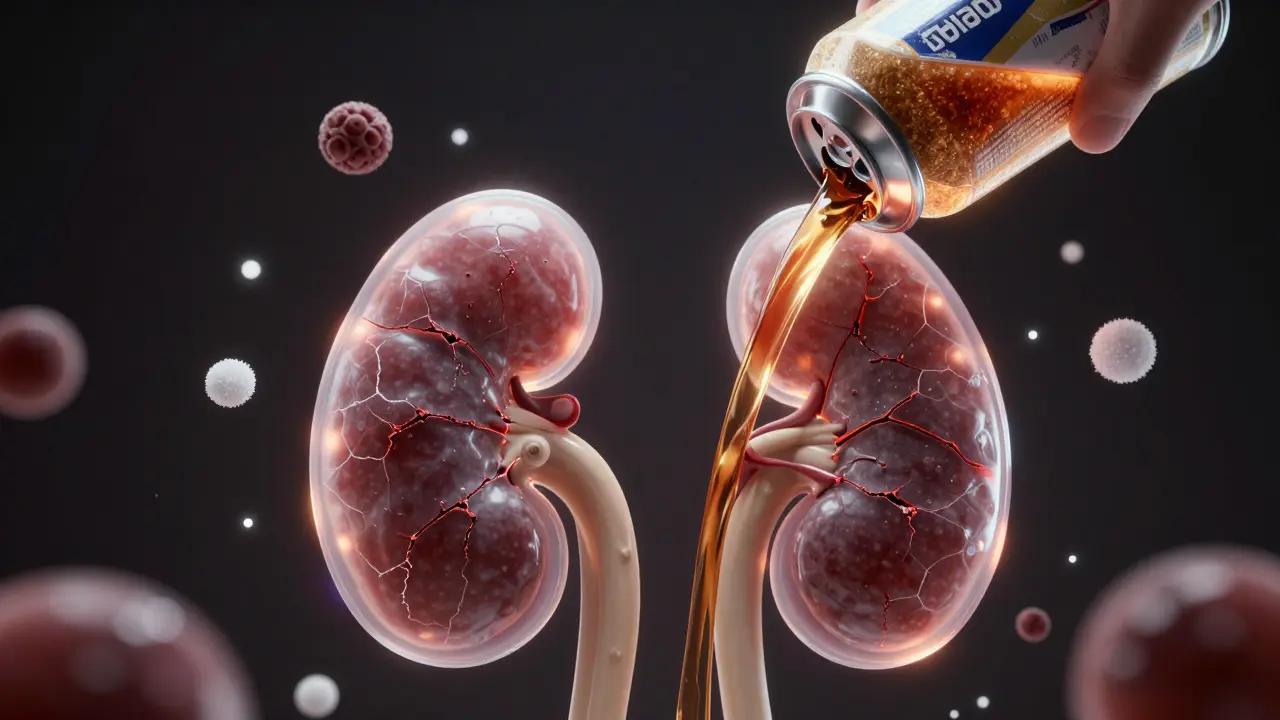
Every year, millions of people reach for an energy drink to power through a long day, a late-night study session, or a tough workout. But what most don’t realize is that those sugary, caffeinated bottles might be quietly harming their kidneys - and the damage can start faster than you think.
How energy drinks hurt your kidneys
Your kidneys are your body’s filtration system. They clean about 120 to 150 quarts of blood every day, turning waste into urine while keeping essential nutrients and fluids balanced. When you drink an energy drink, you’re flooding your system with a mix of ingredients that force your kidneys to work overtime.
The main offenders? High sugar, massive doses of caffeine, and artificial additives. A single 16-ounce can of popular energy drinks often contains 50 grams of sugar - that’s more than 12 teaspoons. The American Heart Association recommends no more than 25 grams of added sugar per day for women. One drink blows past that limit. Your kidneys have to filter all that sugar through your bloodstream. Over time, this constant strain can lead to kidney scarring and reduced function.
Caffeine is another big problem. A typical energy drink has 150 to 250 milligrams of caffeine. For comparison, a regular cup of coffee has about 95 milligrams. That much caffeine causes your blood vessels to constrict, which raises blood pressure. High blood pressure is one of the top two causes of kidney damage, alongside diabetes. When your kidneys are forced to handle high pressure day after day, the tiny filtering units - called glomeruli - start to break down.
Sugar and diabetes: A dangerous combo
It’s not just about the sugar in one drink. Regular energy drink consumption is strongly linked to weight gain and insulin resistance. A 2023 study from the University of Queensland tracked over 12,000 adults and found that those who drank energy drinks three or more times a week were 44% more likely to develop prediabetes within two years. Prediabetes means your body can’t manage blood sugar properly. That’s a direct path to type 2 diabetes - and diabetes is the number one cause of kidney failure worldwide.
When blood sugar stays high, it damages the blood vessels in the kidneys. The filters become leaky, allowing protein to escape into urine. This early sign - called microalbuminuria - is often ignored because it doesn’t cause symptoms. By the time swelling, fatigue, or foamy urine appear, up to 70% of kidney function may already be gone.
Caffeine overdose and acute kidney injury
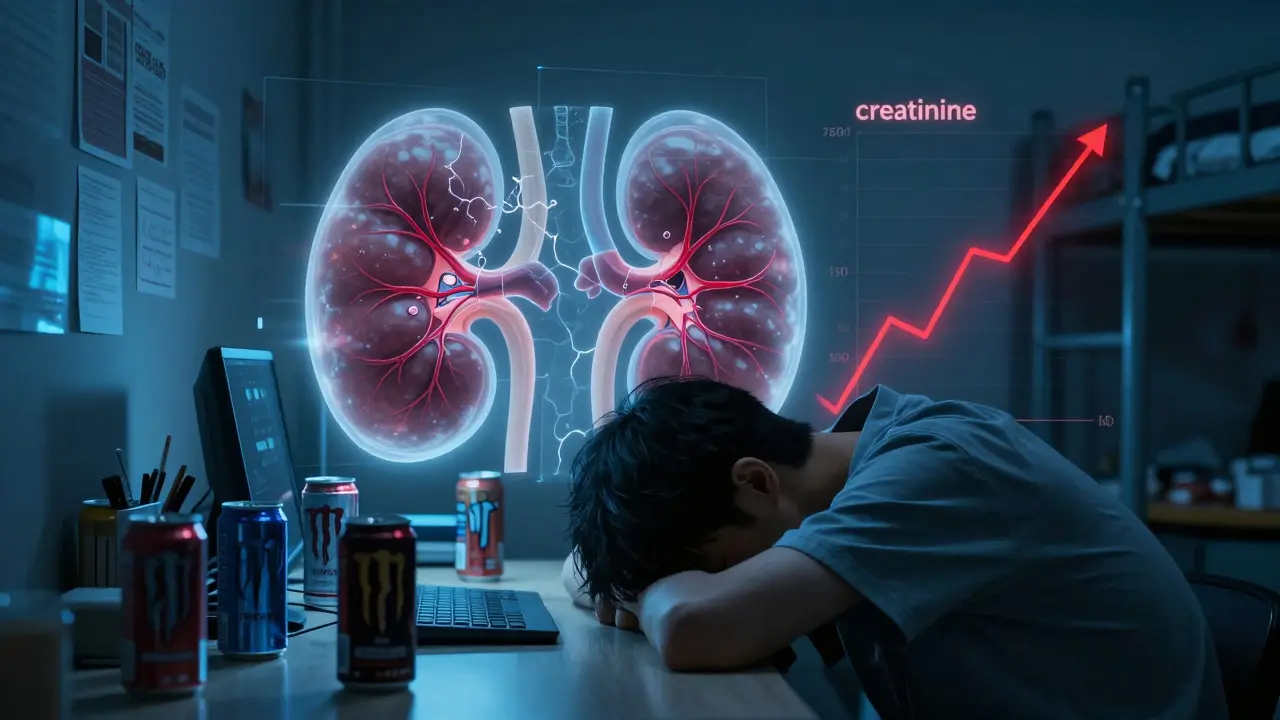
It’s not just long-term damage. There’s also the risk of sudden kidney failure from one bad energy drink experience. In 2024, a 21-year-old man in Brisbane was rushed to hospital after downing four energy drinks in under two hours. He had a heart palpitation, severe vomiting, and his creatinine levels - a key kidney function marker - spiked to 5.2 mg/dL (normal is under 1.2). He needed emergency dialysis for three days.
That case isn’t rare. A 2025 review in the Journal of Nephrology found 147 cases of acute kidney injury directly tied to energy drink overuse in Australia and New Zealand over the past five years. Most victims were under 30. The pattern? High caffeine, dehydration from diuretic effects, and often mixing energy drinks with alcohol or stimulants like Adderall.
The hidden ingredients you can’t see
Energy drinks don’t just have sugar and caffeine. They’re packed with unregulated additives that stress your kidneys even more:
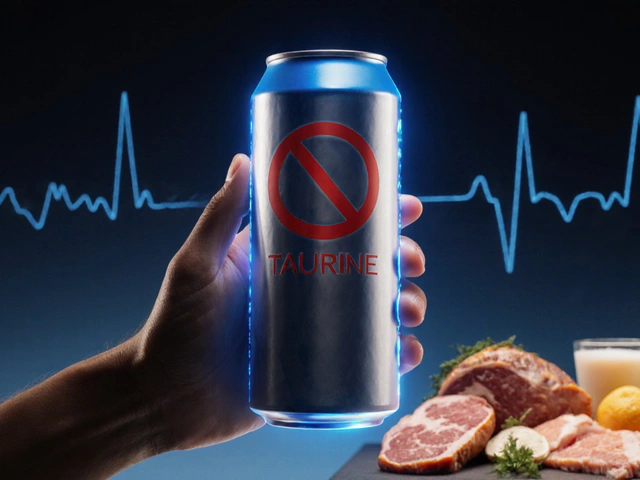
- Taurine: An amino acid that’s generally safe in small amounts, but when combined with high caffeine, it may increase oxidative stress in kidney tissue.
- Guarana: A plant that contains natural caffeine - often not listed separately on labels. One can may have 100 extra milligrams you didn’t know about.
- Artificial sweeteners: Aspartame and sucralose are common in "sugar-free" versions. Studies show they alter gut bacteria and may trigger inflammation in the kidneys.
- Herbal extracts: Ginseng, yerba mate, and green tea extract are often added for "natural energy." But they can interfere with kidney filtration and blood pressure regulation.
These ingredients aren’t tested together. No one knows how they interact in your body over time. But your kidneys are the ones paying the price.
Who’s most at risk?
You don’t have to be overweight or have diabetes to be vulnerable. Here are the groups most likely to suffer kidney damage from energy drinks:
- Teens and young adults: Their kidneys are still developing. A 2024 Australian study found 68% of high school students consumed energy drinks weekly - and 22% showed early signs of kidney stress on blood tests.
- People with high blood pressure: Even if it’s mild, energy drinks can push it into dangerous territory.
- Those taking certain medications: Diuretics, blood pressure pills, and some antibiotics can interact badly with caffeine and sugar.
- People who exercise intensely: They think they need the boost, but dehydration from caffeine plus electrolyte imbalance can trigger rhabdomyolysis - a condition where muscle tissue breaks down and clogs the kidneys.
What to drink instead
You don’t need energy drinks to feel alert. Here’s what actually works:
- Water with a pinch of salt and lemon: Replenishes electrolytes naturally. Studies show it improves focus better than sugary drinks.
- Green tea: Has moderate caffeine (25-40 mg) plus antioxidants that protect kidney cells.
- Cold brew coffee: Lower acidity, smoother caffeine hit. Stick to one 8-ounce cup.
- Beetroot juice: Boosts nitric oxide, which improves blood flow to kidneys and lowers blood pressure.
And if you’re tired? Sleep. Not another drink. Chronic fatigue is a sign your body needs rest - not a chemical boost.
Signs your kidneys are under stress
Kidney damage doesn’t hurt. That’s why it’s so dangerous. But these signs shouldn’t be ignored:
- Swelling in ankles, feet, or hands
- Constant fatigue or trouble concentrating
- Foamy or dark-colored urine
- High blood pressure you can’t control
- Reduced urine output
If you notice even one of these and you drink energy drinks regularly, get a simple blood test for creatinine and eGFR. It takes five minutes. It could save your kidneys.
Bottom line
Energy drinks don’t give you energy. They trick your body into a temporary state of overdrive - and your kidneys are the ones cleaning up the mess. Every sip adds up. You might feel fine today, but the damage is silent, slow, and irreversible.
Stop thinking of them as harmless pick-me-ups. They’re a daily toxin for your kidneys. If you’re drinking more than one a week, you’re risking long-term harm. Cut them out. Your kidneys will thank you - even if you can’t feel it yet.


Comments (15)
Michael Thomas
7 Mar 2026
Energy drinks are just sugar water with a caffeine boost. No wonder kidney cases are rising. If you can't handle a cup of coffee, you shouldn't be running marathons or pulling all-nighters. Simple solution: stop being lazy and sleep more.
Also, the FDA needs to regulate these like soda. They're not 'energy supplements' - they're chemical cocktails.
Abert Canada
8 Mar 2026
I grew up in Canada where energy drinks were banned in schools for years. We didn’t need them. We had water, sleep, and real food. Now I see kids chugging them like they’re Gatorade. It’s sad. Your kidneys don’t care if you're 'just trying to get through finals'. They just work until they break.
Green tea is the real MVP. Cheap. Safe. Works.
Xavier Lévesque
10 Mar 2026
So let me get this straight… we’re telling people to stop drinking energy drinks because they’re bad… but also suggesting beetroot juice as an alternative?
Bro. That’s literally a smoothie with a side of existential dread. If you’re gonna drink something that tastes like dirt and costs $8 a bottle, just go full juice cleanse already.
Thabo mangena
11 Mar 2026
I commend the author for presenting a comprehensive and scientifically grounded analysis. The data presented regarding microalbuminuria and the correlation with prediabetes is particularly compelling. In South Africa, where healthcare access is uneven, early detection remains critical. I urge all readers to consult with qualified medical professionals before altering dietary habits.
Karl Fisher
11 Mar 2026
Okay but have you seen the ingredients list on Monster? It looks like a chem lab exploded in a comic book. I’m not saying don’t drink them - I’m saying if you’re gonna do it, do it with style. Maybe wear a lab coat. Or a top hat. And definitely film it for TikTok.
Also, I’ve been drinking them since I was 14. My kidneys? They’re basically vibing.
Buddy Faith
12 Mar 2026
Caffeine is a toxin and so is sugar and so are your kidneys if they let you drink 4 in 2 hours
the real danger is the government letting corporations sell poison as energy
they dont want you to sleep they want you to work
also guarenteed this was written by a big pharma shill
Scott Perlman
12 Mar 2026
Just drink water. Sleep. Move around. Your body knows what to do. You don’t need a bottle with a logo on it to feel awake. Seriously. Try it for a week. You’ll be surprised how much better you feel without the crash.
Sandi Johnson
14 Mar 2026
Oh so now we’re blaming energy drinks for everything? What’s next? ‘The Hidden Risk in Air’? I’m pretty sure my kidneys are fine. I just stopped drinking them after I saw the guy in the ER who drank 12 in one night. That’s not a lifestyle. That’s a dare.
Eva Monhaut
15 Mar 2026
I used to chug these like they were water. Then I started getting weird swelling in my ankles and constant brain fog. Got my blood work done. My eGFR was borderline. I switched to cold brew and water with lemon. Within two weeks, the fog lifted. I didn’t even realize how tired I’d been.
It’s not about willpower. It’s about listening to your body before it screams.
mark nine
17 Mar 2026
Taurine and guarana? Yeah they sound fancy but they’re just caffeine in disguise. The real issue is marketing. These drinks are sold to teens like they’re sports drinks. They’re not. They’re chemical wake-up calls with a side of kidney damage.
Also, if you’re mixing them with Adderall… you’re not a student. You’re a walking ER visit.
Tony Smith
19 Mar 2026
It is with great respect for public health that I must emphasize the profound implications of chronic consumption of these beverages. The physiological burden placed upon the renal system is not merely theoretical - it is quantifiable, documented, and entirely preventable.
I urge all individuals under the age of 25 to abstain entirely. Your future self will thank you.
Rakesh Kumar
20 Mar 2026
In India we have chai. Real chai. With ginger, cardamom, milk, and sugar. No chemicals. No mystery extracts. Just warmth and rhythm. I don’t need a can to wake up. I need a 5am walk and a cup of tea that smells like home.
Also my uncle had kidney failure at 42. He drank 3 energy drinks a day for 8 years. He’s on dialysis now. Don’t be him.
Bill Castanier
21 Mar 2026
The article is well-researched and clearly written. The inclusion of specific studies and lab values adds credibility. I especially appreciate the emphasis on early signs like microalbuminuria - most people don’t know this is a red flag.
Also, beetroot juice? Brilliant suggestion. It’s underappreciated and scientifically sound.
Ronnie Kaye
22 Mar 2026
So let me get this straight - you’re telling me I can’t have my ‘I’m a warrior of productivity’ can before my 6am gym session? What am I supposed to do? Cry into my protein shake?
Also I’ve been drinking these for 10 years. My kidneys are fine. I’m 32. I run 5Ks. I’ve got more energy than my 20-year-old nephew. So… yeah.
Priyank Panchal
24 Mar 2026
This is why Westerners are weak. In India we don’t need energy drinks. We have turmeric, yoga, and discipline. You drink this because you’re lazy. You think a chemical will fix your lack of sleep, lack of diet, lack of purpose. Fix yourself. Not your beverage.