
Is Powerade a Sports Drink or an Energy Drink? The Clear Difference Explained

Powerade is often mistaken for an energy drink because it’s bright, sweet, and sold next to brands like Red Bull and Monster. But if you look closer, it’s not designed to wake you up-it’s built to keep you going. So is Powerade a sports drink or an energy drink? The answer isn’t just about ingredients. It’s about purpose.
What Makes a Drink a Sports Drink?
A true sports drink has three core ingredients: water, electrolytes, and carbohydrates. That’s it. No stimulants. No high doses of caffeine. No guarana. Just what your body loses when you sweat-sodium, potassium, magnesium-and a little sugar to help replace energy.
Powerade fits this exactly. Its original formula contains 21 grams of sugar per 20 oz bottle, mostly from high fructose corn syrup. It also has sodium, potassium, calcium, and magnesium-all electrolytes lost during exercise. The sugar isn’t there to give you a buzz. It’s there to help your muscles absorb water faster and delay fatigue during prolonged activity.
The American College of Sports Medicine recommends drinks like Powerade for athletes exercising over 60 minutes. Why? Because after an hour of intense movement, your glycogen stores drop. A sports drink helps refill them without the crash that comes from caffeine spikes.
What Defines an Energy Drink?
Energy drinks are built for stimulation, not hydration. Their main job is to make you feel alert. That’s why they pack in caffeine-often 80 to 300 mg per can. Some have as much as a strong cup of coffee. Others add taurine, guarana, L-carnitine, or B-vitamins in doses far beyond what your body needs.
Compare that to Powerade. A 20 oz bottle has 0 mg of caffeine. Zero. Not a trace. That’s not an accident. It’s by design. Powerade doesn’t want to speed up your heart rate. It wants to slow down dehydration.
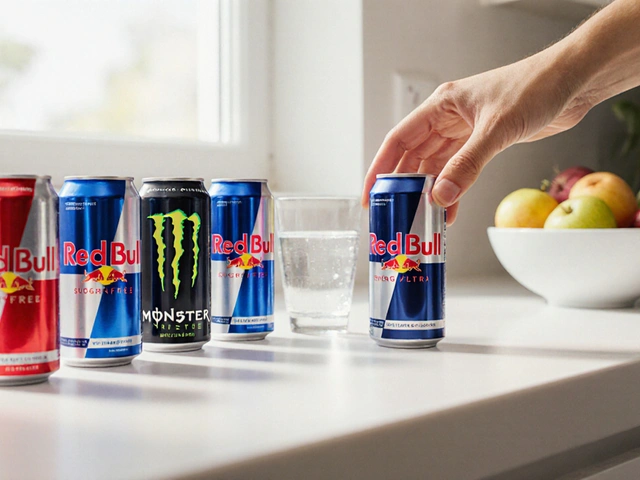
Energy drinks like Red Bull or Rockstar also often contain artificial colors, preservatives, and higher sugar levels than sports drinks. But even more importantly, they’re marketed for late-night studying, driving, or partying-not for running, cycling, or playing soccer.
Why People Confuse Powerade with Energy Drinks
The confusion makes sense. Both come in colorful bottles. Both taste sweet. Both sit on the same shelf in the grocery store. And both are sold in gyms and convenience stores. But that’s where the similarity ends.
Marketing plays a big role. Powerade’s ads show athletes pushing through tough workouts. That makes people think, “This must be like Red Bull.” But look at the fine print. Powerade’s tagline isn’t “Unleash Your Inner Beast.” It’s “Rehydrate. Refuel. Recover.”
Also, some newer versions of Powerade, like Powerade ION4 Zero, are sugar-free. That might make you think it’s trying to compete with sugar-free energy drinks. But again, it’s still caffeine-free. It’s still focused on replacing electrolytes-not giving you a jolt.

What Happens If You Use Powerade Like an Energy Drink?
Let’s say you drink Powerade before a late-night study session. You expect to feel more awake. What happens? Nothing. You might feel a little better because you’re hydrated. But you won’t feel alert. No adrenaline rush. No mental clarity boost.
On the flip side, if you drink Red Bull before a 10K run, you might feel wired at first. But caffeine is a diuretic. It makes you lose more water. That’s the opposite of what you need during endurance sports. Plus, the sugar crash after 45 minutes can leave you feeling worse than if you’d drunk nothing at all.
Powerade doesn’t have that risk. It won’t make you jittery. It won’t interfere with sleep. It won’t spike your blood pressure. That’s why coaches, trainers, and sports med teams recommend it for youth athletes, marathoners, and even team sports like basketball and football.
When Should You Drink Powerade?
Powerade works best when you’re sweating. That means:
- During a workout longer than 60 minutes
- After a hot yoga class or outdoor training session
- During team practices in summer heat
- When you’re recovering from illness and losing fluids
It’s not meant for daily sipping. If you’re sitting at a desk, drinking Powerade just because it tastes good, you’re consuming extra sugar with no benefit. That’s not healthy. One bottle a day during exercise? Fine. Two bottles a day while watching TV? That’s a soda habit with electrolytes.
For casual use, water is still the best choice. Powerade is a tool-not a daily beverage.
How Powerade Compares to Other Drinks
Here’s how Powerade stacks up against other popular drinks:
| Drink | Caffeine (mg) | Sugar (g per 20 oz) | Electrolytes? | Best For |
|---|---|---|---|---|
| Powerade | 0 | 21 | Yes | Endurance exercise, heat exposure |
| Gatorade | 0 | 34 | Yes | Team sports, prolonged activity |
| Red Bull | 80 | 27 | No | Short-term alertness |
| Water | 0 | 0 | No | Everyday hydration |
Notice something? Powerade and Gatorade are nearly twins. Both are sports drinks. Both are caffeine-free. Both are designed for sweat loss. Red Bull? Totally different category. It’s an energy drink. Water? The gold standard for most people most of the time.

Who Should Avoid Powerade?
Not everyone needs it. If you’re not sweating heavily, Powerade adds unnecessary sugar. That’s why:
- Children under 12 shouldn’t drink it regularly
- People with diabetes should avoid the regular version
- Anyone trying to cut sugar should stick with the Zero version-or just water
- People with high blood pressure should watch sodium intake, even if it’s low
Powerade Zero is a better option for those watching sugar. It uses artificial sweeteners like sucralose and acesulfame potassium. It still has electrolytes. It still has no caffeine. But it’s not “healthier.” It’s just sugar-free.
Bottom Line: Powerade Is a Sports Drink-Not an Energy Drink
Powerade doesn’t contain caffeine. It doesn’t promise a rush. It doesn’t claim to improve focus or mental energy. It’s not trying to be an energy drink. It’s trying to replace what you lose when you work hard.
Calling it an energy drink is like calling a wrench a hammer. Both are tools. Both are metal. But they do completely different jobs.
If you’re playing soccer, hiking for hours, or training in 90-degree heat, Powerade helps. If you’re pulling an all-nighter, it won’t. And that’s okay. You don’t need every drink to do everything. Use the right tool for the job.
Is Powerade better than water for hydration?
Powerade is better than water only if you’re exercising intensely for more than an hour or sweating heavily in hot weather. For everyday hydration, water is always the best choice. Powerade adds sugar and sodium, which aren’t needed unless you’re losing electrolytes through sweat.
Does Powerade have caffeine?
No, original Powerade and Powerade ION4 contain zero caffeine. Even Powerade Zero has no caffeine. This is intentional-it’s designed to hydrate, not stimulate. If you want caffeine, you need to pick a different drink.
Can kids drink Powerade?
Kids can drink Powerade during prolonged sports activities, like a 2-hour soccer game or a hot day of training. But it’s not meant for daily use. Regular consumption adds unnecessary sugar and sodium to their diet. Water or diluted fruit juice are better for everyday hydration.
Is Powerade Zero healthier than regular Powerade?
Powerade Zero has no sugar, so it’s better if you’re trying to reduce sugar intake. But it uses artificial sweeteners, which some people prefer to avoid. Neither version is a health drink-they’re both sports drinks meant for specific situations. Neither should be a daily beverage.
Why do some energy drinks have electrolytes?
Some energy drinks add electrolytes as a marketing tactic to look more like sports drinks. But they still contain high caffeine and sugar. The electrolytes don’t make them suitable for endurance sports. If a drink has caffeine and claims to be for athletes, read the label carefully-it’s likely more hype than help.
What to Drink Instead
If you’re looking for hydration without sugar, stick with water. Add a pinch of salt and a squeeze of lemon if you’re sweating a lot. For longer workouts, coconut water is a natural option with potassium and less sugar than Powerade.
If you need energy for mental focus, try green tea-it has a small amount of caffeine and L-theanine for calm alertness. If you need a quick boost before a workout, a banana and a cup of coffee work better than any energy drink.
Powerade has its place. But only in the right context. Don’t let the color or the name fool you. It’s not here to energize you. It’s here to keep you going-safely, steadily, and without a crash.

Comments (15)
Eric Etienne
19 Dec 2025
Powerade? More like SugarWater with a fancy label. I drink it after gym just cause it tastes better than plain water, but yeah, it ain't magic. Zero caffeine, zero chill.
Sandy Pan
20 Dec 2025
It's fascinating how marketing turns functional tools into identity symbols. We don't drink Powerade for hydration-we drink it because it looks like victory. The bottle, the color, the name-it's not about electrolytes, it's about performing the idea of athleticism. We've turned hydration into a costume.
And yet, the truth is quieter: sweat, water, salt. That's all the body needs. The rest is just noise dressed in sport.
Red Bull sells adrenaline. Powerade sells dignity. One makes you feel alive. The other makes you feel like you're doing it right.
Maybe that's the real difference.
Amanda Ablan
21 Dec 2025
Biggest thing people miss: Powerade doesn't need caffeine because it's not meant to be a pick-me-up. It's meant to keep you going when you're already spent. If you're tired and drink it before a study session, you're expecting the wrong thing. Hydration ≠ stimulation. Simple as that.
Also, if you're not sweating buckets, just drink water. No shame in it.
Janiss McCamish
22 Dec 2025
Powerade Zero has no sugar but still has artificial sweeteners. That's not healthier. It's just different. Stop pretending it's a wellness product. It's a sports drink. Use it when you sweat. Don't sip it while scrolling.
Richard H
22 Dec 2025
Why do Americans think they need a drink with electrolytes to walk to the fridge? We used to just drink water. Now we need branded juice for everything. This is why we're weak.
Kendall Storey
23 Dec 2025
Real talk: if you're doing HIIT or a 2-hour soccer match, Powerade’s your BFF. But if you’re just sitting there binge-watching Netflix? Nah. That’s just liquid candy with a side of sodium. Don’t be that guy.
Coconut water > Powerade for casual hydration. Less sugar, natural electrolytes, tastes like a beach vacation.
Pamela Tanner
23 Dec 2025
The table comparing Powerade, Gatorade, Red Bull, and water is accurate and well-structured. It clearly demonstrates that the distinction between sports drinks and energy drinks is not merely semantic but physiological and functional. The absence of caffeine in Powerade is a deliberate formulation choice aligned with hydration science.
ravi kumar
24 Dec 2025
I play cricket in 100°F heat in India. Powerade saved my legs during a 3-hour match last summer. Water alone wasn't enough. I don't drink it daily, but when I sweat, I need those salts. Simple.
Kevin Hagerty
25 Dec 2025
Wow someone actually wrote a 2000 word essay on a sports drink. Congrats. You win the internet today. Next up: Is bottled water just expensive rain?
Dylan Rodriquez
27 Dec 2025
Let’s not forget that kids and teens are the ones being targeted hardest by this marketing. They see Powerade in ads with pro athletes and think, ‘This is what champions drink.’ But champions also know that real recovery is sleep, food, and water. Powerade is a tool, not a trophy.
And for parents? If your kid is playing 90 minutes of soccer in the sun, sure. But if they’re drinking it after school because it’s ‘cool’? That’s not hydration. That’s habit formation with a price tag.
We need to teach the difference between performance and perception. Not every colorful bottle is a solution.
Megan Blakeman
27 Dec 2025
Powerade Zero is a game changer for people trying to cut sugar but still need electrolytes after yoga or hiking!! I used to get cramps, now I just grab the zero version and I’m good to go!! 😊
Ashton Strong
27 Dec 2025
The scientific consensus on electrolyte replacement during prolonged physical exertion is well-documented. The American College of Sports Medicine's guidelines are not arbitrary; they are evidence-based. Powerade fulfills these criteria with precision, and its formulation reflects decades of exercise physiology research. To conflate it with energy drinks is to misunderstand the fundamental purpose of hydration strategies in athletic performance.
Meredith Howard
27 Dec 2025
Powerade contains no caffeine yet many still mistake it for an energy drink this confusion stems from visual branding and shelf placement not from actual composition the distinction is clear to those who read labels but not to the average consumer the real issue is not the product but the lack of nutritional literacy
Steven Hanton
28 Dec 2025
I’ve coached youth soccer for 12 years. We used to hand out Gatorade. Now we use Powerade because it’s slightly lower in sugar and the kids prefer the flavor. But we tell them: drink it during the game, not after. And never before. It’s not a reward. It’s fuel.
Teaching kids to use the right tool for the right job matters more than the brand.
Kristina Kalolo
29 Dec 2025
Interesting breakdown. I never realized Powerade had no caffeine. I always assumed it did because of the branding. Shows how much perception shapes understanding.