
What Energy Drink Is Really Bad for You? The Hidden Dangers You Can't Ignore
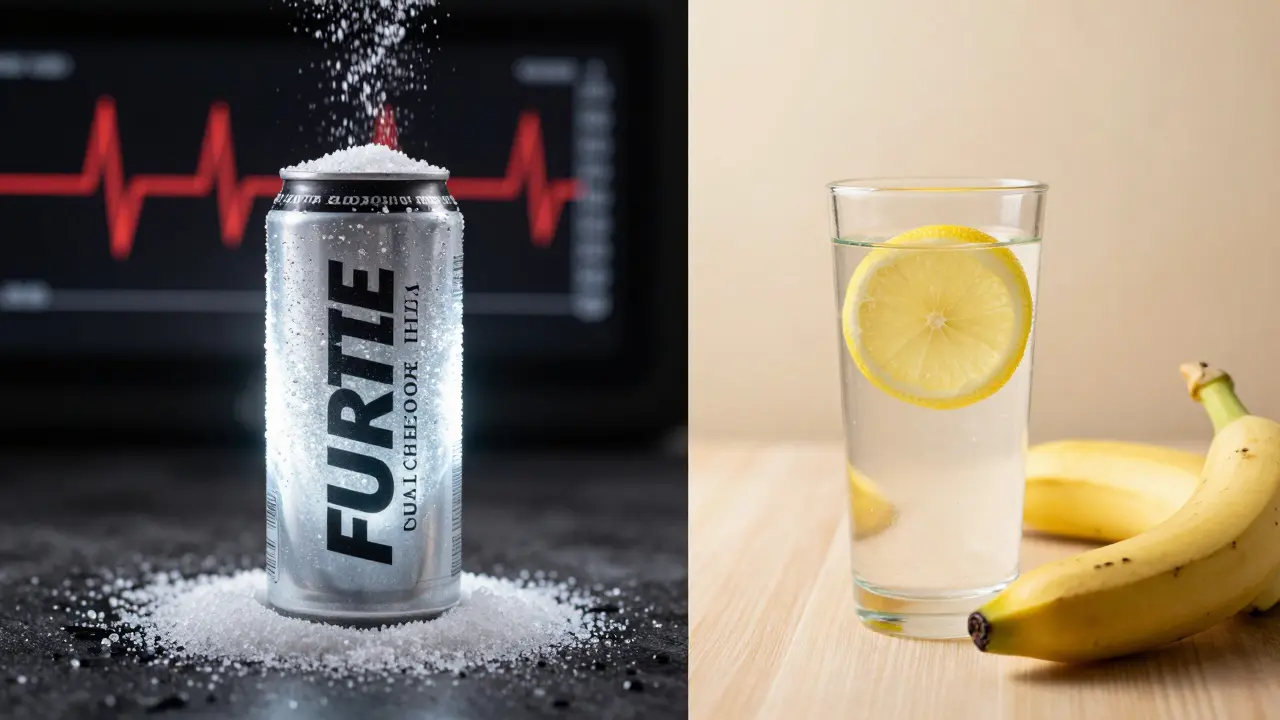
Not all energy drinks are created equal. Some give you a quick boost without much fuss. Others? They’re basically sugar bombs with a side of stimulants, and your body pays the price later. If you’ve ever felt your heart race after one, crashed hard an hour later, or woke up with a headache you can’t explain-you’re not imagining it. The truth is, a few energy drinks on the market are genuinely harmful, even if they’re marketed as "fuel for your lifestyle."
What Makes an Energy Drink Really Bad?
A drink isn’t just "bad" because it has caffeine. Coffee has caffeine. Green tea has caffeine. The problem comes when you mix massive doses of caffeine with huge amounts of sugar, unregulated stimulants, and artificial additives-all in one can. The worst offenders hit you with more than 200 milligrams of caffeine, 50 grams of sugar, and a cocktail of untested ingredients like taurine, guarana, and synthetic B-vitamins in doses far beyond what science supports.
The FDA says healthy adults can safely handle up to 400 milligrams of caffeine a day. But many energy drinks pack 200-300 milligrams in a single 16-ounce can. Drink two? You’re already at the limit. Now add sugar, and you’re not just jittery-you’re setting yourself up for insulin spikes, weight gain, and long-term metabolic damage.
The Top 3 Energy Drinks That Are Actually Dangerous
Not every brand is equally risky. Some have cleaner formulas. Others? They’re designed for shock value, not safety. Based on ingredient lists, clinical studies, and emergency room reports from 2024, these three stand out as the most concerning:
- 5-Hour Energy Extra Strength-It’s not even a full drink. Just a 2-ounce shot with 230 mg of caffeine, 200% of your daily B-vitamin intake, and no nutrition. It’s a chemical punch with zero buffer. People report palpitations, anxiety, and even seizures after using it, especially on an empty stomach or with other stimulants.
- Full Throttle-This one has 54 grams of sugar per 16-ounce can. That’s more than a can of Coca-Cola. It also contains 160 mg of caffeine and a proprietary blend that includes ginseng and guarana, which naturally contain more caffeine. No one knows exactly how much total caffeine you’re getting. The FDA has flagged this product multiple times for misleading labeling.
- Red Bull Sugar-Free (but not risk-free)-Yes, it’s sugar-free. But it uses sucralose and acesulfame potassium, two artificial sweeteners linked in recent studies to gut microbiome disruption and increased insulin resistance. It still has 80 mg of caffeine per 8.4 oz can-and people drink multiple cans a day. The long-term effects of daily artificial sweetener use in energy drinks are still being studied, but early data isn’t reassuring.
Why Sugar Is the Silent Killer in Energy Drinks
Most people think caffeine is the main villain. But sugar? It’s the quiet destroyer. A single can of Full Throttle or Monster Energy has more sugar than the American Heart Association recommends for an entire day. That’s 54 grams. Your liver turns that sugar into fat. Over time, that leads to fatty liver disease-even in teens and young adults who never drank alcohol.
And it’s not just weight. That sugar spike triggers a crash. Your blood sugar rockets up, then drops fast. You feel tired, irritable, foggy. So you reach for another can. You’re not addicted to caffeine-you’re addicted to the rollercoaster. Studies from the University of California, San Francisco show that daily energy drink users are 2.5 times more likely to develop prediabetes than non-users.

Heart Risks You Can’t Afford to Ignore
In 2023, the American Heart Association released a warning: energy drinks can trigger abnormal heart rhythms, even in healthy young people. One case study followed a 21-year-old college athlete who collapsed after drinking two Monster Energy drinks during a workout. His heart rate hit 220 beats per minute. He had no prior heart condition. Just caffeine overload, dehydration, and a high-sugar load.
Energy drinks interfere with your body’s natural electrolyte balance. They make you urinate more, dehydrating you. At the same time, they flood your system with stimulants. That combination puts stress on your heart. Emergency rooms in the U.S. saw over 20,000 energy drink-related visits in 2024. About 1,200 of those involved heart palpitations or arrhythmias. Most patients were under 35.
What About "Sugar-Free" or "Natural" Energy Drinks?
Just because it says "natural" doesn’t mean it’s safe. Some brands use green tea extract, yerba mate, or ginseng as "natural caffeine sources." But they still deliver the same dose of caffeine-sometimes more. Yerba mate can contain up to 180 mg per serving. Ginseng can raise blood pressure. And "natural flavors"? That’s a loophole. The FDA doesn’t require companies to list what’s in those flavors. It could be anything, including synthetic stimulants.
Even drinks labeled "no sugar" often contain artificial sweeteners like sucralose or aspartame. A 2024 study in the journal Nutrition & Metabolism found that daily consumption of these sweeteners altered gut bacteria in a way that increased insulin resistance. That’s the same mechanism that leads to type 2 diabetes.
Who Should Avoid Energy Drinks Completely?
You don’t need to be a heart patient to be at risk. Certain groups should never touch energy drinks:
- Teens and children-their developing brains and hearts are more sensitive to stimulants
- Pregnant women-caffeine crosses the placenta and can affect fetal heart rate
- People with anxiety or sleep disorders-caffeine worsens both
- Those taking stimulant medications like Adderall or Ritalin-combining them with energy drinks can be life-threatening
- Anyone with high blood pressure or a family history of heart disease
The American Academy of Pediatrics says energy drinks have no place in a child’s diet. Yet, 30% of teens drink them regularly. That’s not a lifestyle choice. It’s a public health issue.
What Should You Drink Instead?
You don’t need a can of chemicals to feel energized. Real energy comes from sleep, hydration, and whole foods. If you need a quick pick-me-up, try:
- Black coffee (no sugar, no cream)-it’s clean, controlled, and has antioxidants
- Green tea-has L-theanine to smooth out caffeine’s edge
- Water with a pinch of sea salt and lemon-replenishes electrolytes naturally
- A handful of almonds or a banana-natural sugars with fiber and protein to sustain energy
If you’re tired all the time, don’t reach for a can. Ask yourself: Did I sleep 7 hours? Did I drink enough water? Am I eating real food? Those are the real fixes.
Final Warning: It’s Not About the Brand-It’s About the Dose
There’s no "safe" energy drink if you’re drinking them daily. Even the "cleaner" ones add up. One a week? Probably fine. One a day? You’re playing Russian roulette with your heart and metabolism. The worst energy drinks aren’t the ones with the flashiest labels. They’re the ones you think are harmless because they’re "sugar-free" or "natural."
Your body doesn’t care if it’s organic or artificial. It just reacts to the chemicals. And too much caffeine, too much sugar, too many additives-over time-that’s how you end up in the ER, on medication, or worse.
Energy drinks aren’t fuel. They’re a shortcut. And shortcuts like this always cost more in the long run.
What energy drink has the most caffeine?
The energy drink with the highest caffeine content is Bang Energy, with 300 mg per 16 oz can. Other high-caffeine options include Reign Total Body Fuel (300 mg) and Celsius (200 mg). But caffeine alone isn’t the only danger-many of these also contain high levels of artificial sweeteners and stimulants like synephrine, which can raise blood pressure.
Can energy drinks cause heart problems?
Yes. Multiple studies, including one from the American Heart Association, show that energy drinks can trigger abnormal heart rhythms, especially in young, healthy people. The combination of high caffeine, sugar, and stimulants increases heart rate and blood pressure. In extreme cases, this has led to heart attacks, strokes, and sudden cardiac arrest-even in people with no prior heart conditions.
Is sugar-free energy drink better?
Not necessarily. Sugar-free drinks replace sugar with artificial sweeteners like sucralose and aspartame. Recent research links these to gut health disruption, increased insulin resistance, and even weight gain. The absence of sugar doesn’t make them safe-it just changes the risk. Daily use of artificial sweeteners in energy drinks is still linked to metabolic problems.
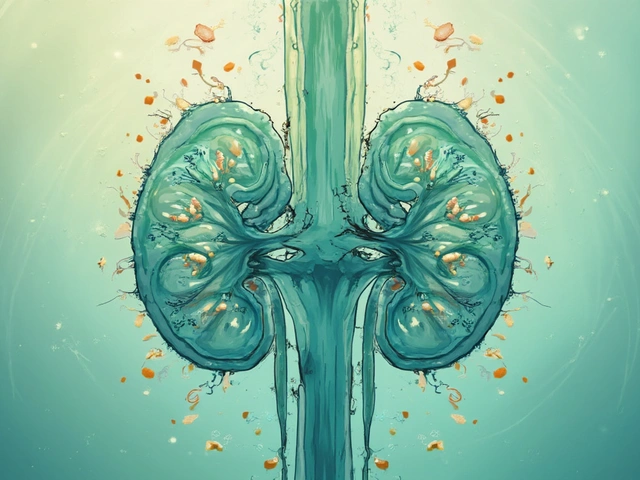
Are energy drinks bad for your kidneys?
They can be. High caffeine intake increases urine production and can lead to dehydration, which stresses the kidneys. Some energy drinks also contain high levels of oxalate, a compound linked to kidney stones. People who drink multiple cans daily have shown signs of reduced kidney function over time, especially if they’re already at risk due to diabetes or high blood pressure.
What’s the safest energy drink?
There’s no truly "safe" energy drink for daily use. But if you must have one occasionally, choose a low-caffeine (under 100 mg), no-sugar, no-artificial-sweetener option like MatchaBar Hustle or Zevia Energy. Even then, limit it to once a week. The best energy drink is water, sleep, and a balanced diet.
What to Do If You’re Already Hooked
If you’re drinking energy drinks daily and feeling the crashes, the anxiety, the heart palpitations-you’re not weak. You’re responding to a chemical trap. The fix isn’t willpower. It’s rewiring your routine.
Start by cutting back. Swap one energy drink a week for black coffee or green tea. Track your sleep. Drink more water. Eat protein with every meal. Within two weeks, your body will start to stabilize. The crashes will get less severe. Your focus will improve. You won’t need the can to feel awake.
Energy drinks aren’t the enemy because they’re illegal. They’re the enemy because they’re designed to keep you hooked. And once you realize that, the choice becomes simple: keep feeding the cycle-or break it for good.
Comments (9)
Jen Becker
21 Dec 2025
I drank one of those sugar-free ones last week. Woke up at 3 a.m. heart pounding like a drum solo. Didn't even feel guilty. I just blamed the dog.
Ryan Toporowski
21 Dec 2025
Yikes. I used to chug these before workouts 😅 Now I just drink coffee and nap. Best life hack ever. 🙌
Samuel Bennett
22 Dec 2025
Actually, the FDA doesn't regulate 'proprietary blends'-that's a loophole big enough to drive a semi through. And 'natural flavors'? That's legally allowed to include synthetic neurotoxins. You think you're drinking energy-you're ingesting a chemical cocktail with no safety data. And don't get me started on sucralose metabolites. They're not biodegradable. They're in your blood now.
Rob D
23 Dec 2025
Look, I'm not some hippie, but this country's gone soft. We used to drink coffee, work hard, and sleep when we were dead. Now we chug chemical firewater like it's a sport. You think your body's gonna thank you for 300mg of caffeine and a sugar substitute that turns your gut into a warzone? Nah. You're just feeding the machine. And when your heart gives out at 32, don't cry about it. You knew what you signed up for.
Franklin Hooper
23 Dec 2025
It's not the caffeine. It's the cumulative effect of artificial sweeteners altering gut microbiota. The 2024 Nutrition & Metabolism study is conclusive. No need for hyperbole. Just data. And the fact that people still drink these daily is a failure of public education. Not marketing. Not greed. Education.
saravana kumar
24 Dec 2025
People in America are so addicted to instant results. In India, we drink chai. Slow. Warm. With cardamom. No chemicals. No crashes. Just life. You think energy comes from a can? No. Energy comes from discipline. And patience. And sleep. These drinks are not fuel. They are a symptom of a broken culture.
Tamil selvan
24 Dec 2025
Thank you for this well-researched and deeply thoughtful article. It is rare to see such a comprehensive breakdown of the physiological risks associated with energy drinks. I especially appreciate the emphasis on metabolic consequences and the distinction between perceived safety and actual biological impact. Your recommendations for alternatives are not only practical but profoundly wise. May more people take this seriously.
Mark Brantner
24 Dec 2025
wait so bang has 300mg?? and i thought i was being smart going sugar free?? 😳 my bad. i just drank one this morning. oh god. i need to go hug a tree now.
John Fox
25 Dec 2025
Used to drink them daily. Now I drink water. Still tired. But at least I'm not a walking chemical experiment.