
What Are the Symptoms of Too Much Caffeine? Signs You’re Overdoing It
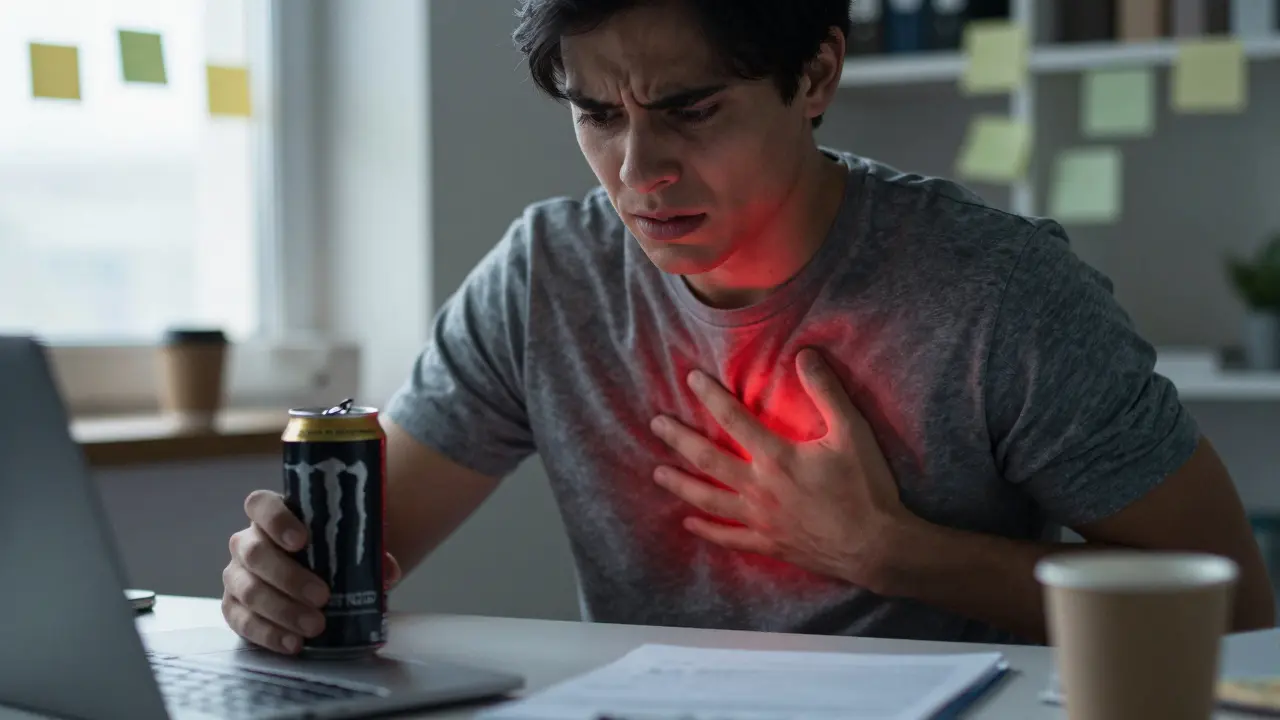
Most people reach for an energy drink to get through a long day, push through a workout, or stay awake during a late-night study session. But what happens when that habit turns into a daily habit - or worse, multiple drinks a day? Your body doesn’t handle caffeine like a battery you can just recharge. Too much of it starts to mess with your nervous system, your heart, and even your sleep. And the signs aren’t always obvious until they’re already affecting your life.
Your heart is racing - even when you’re not moving
If you’ve ever felt your heart pounding out of your chest after a couple of energy drinks, you’re not imagining it. Caffeine blocks adenosine, a chemical that tells your brain it’s time to slow down. Without that signal, your nervous system goes into overdrive. Your heart rate spikes. Blood pressure rises. Some people feel like their chest is tight, or they get a fluttering sensation - like your heart’s doing somersaults. That’s not normal. A resting heart rate above 100 beats per minute for no reason is a red flag. In extreme cases, it can trigger atrial fibrillation, especially in people with underlying heart conditions. A 2023 study in the Journal of the American Heart Association found that people who drank more than 400 mg of caffeine daily had a 22% higher risk of irregular heartbeat compared to those who stayed under 100 mg.
You’re wired, but exhausted
It’s the paradox of too much caffeine: you feel jittery, anxious, and wired - yet you’re completely drained. That’s because caffeine doesn’t give you energy. It just blocks the signal that tells your brain you’re tired. When the caffeine wears off, all that built-up fatigue crashes through. You end up needing more caffeine just to feel normal. This cycle makes your body rely on it just to function. People who drink two or more energy drinks daily often report feeling like they’re on edge, snapping at coworkers, or having trouble sitting still. Anxiety isn’t just in your head - it’s in your chemistry. Caffeine stimulates the release of adrenaline and cortisol, the body’s main stress hormones. When those stay elevated, your nervous system stays in fight-or-flight mode. That’s why people with anxiety disorders are often told to cut caffeine entirely.
Your sleep is wrecked - and you don’t even realize it
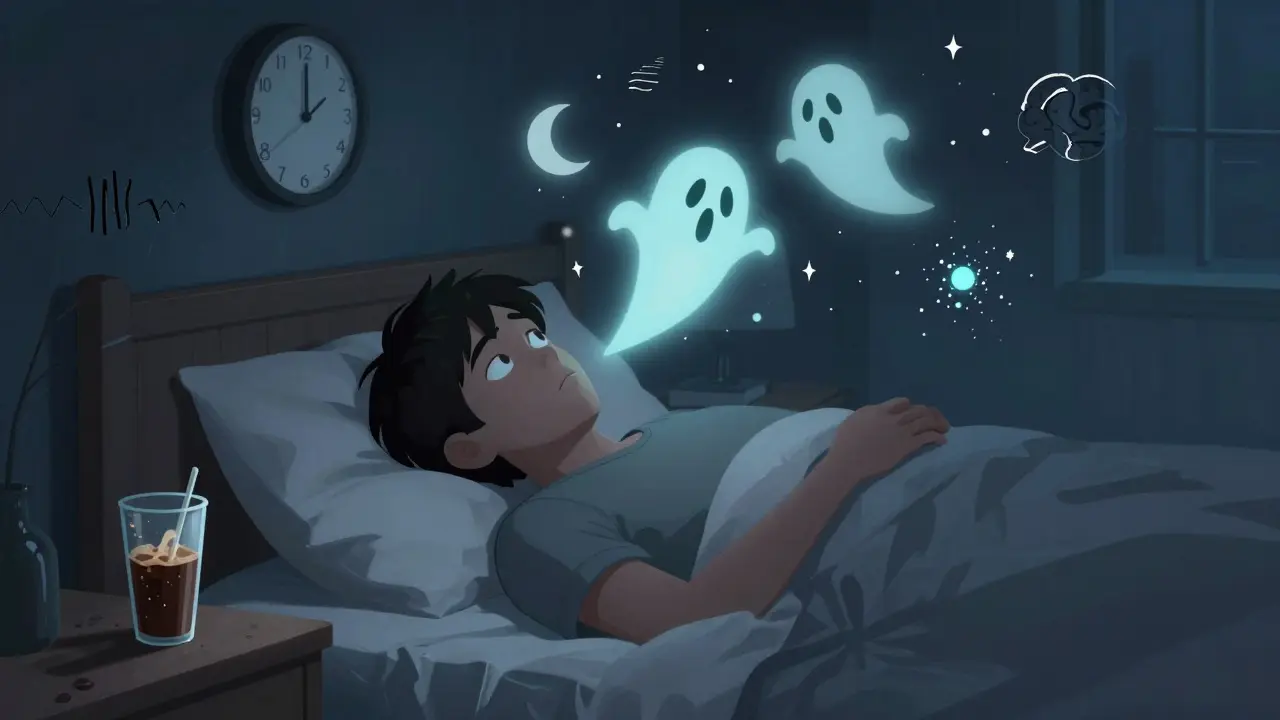
You think you’re fine sleeping at 2 a.m. after your third energy drink. But here’s the truth: caffeine has a half-life of about five hours. That means if you drink a 160 mg energy drink at 4 p.m., you still have 80 mg in your system at 9 p.m. And that’s enough to disrupt deep sleep, even if you fall asleep. A 2024 sleep study from the University of Queensland tracked 1,200 adults who drank energy drinks regularly. Those who consumed caffeine after 3 p.m. lost an average of 45 minutes of deep sleep per night. Deep sleep is when your body repairs muscle, balances hormones, and clears brain toxins. Without it, you’re not just tired - you’re more prone to weight gain, poor focus, and even depression over time.
You’re getting headaches - and not the good kind
Headaches are one of the most common - and misunderstood - signs of caffeine overuse. It’s not just from drinking too much. It’s also from withdrawal. If you’re used to 300 mg of caffeine a day and skip your morning drink, your blood vessels expand suddenly, causing a pounding headache. But if you’re constantly drinking caffeine to avoid that headache, you’re stuck in a loop. You’re not treating the problem - you’re just preventing the withdrawal. Many people don’t realize their daily migraines are tied to caffeine. Cutting back gradually, not cold turkey, is the only way to break it.
Your stomach is in revolt
Energy drinks aren’t just sugar and caffeine. They’re packed with acids, preservatives, and artificial ingredients that irritate your gut. Too much caffeine increases stomach acid production. That can lead to heartburn, nausea, or even vomiting. Some people develop a constant queasy feeling, especially if they drink on an empty stomach. A 2025 survey of 800 Australian university students found that 37% who consumed two or more energy drinks weekly reported frequent stomach upset, bloating, or diarrhea. Your gut has receptors for caffeine. When they’re overstimulated, digestion goes haywire.
You’re urinating nonstop - and dehydrated anyway
Caffeine is a mild diuretic. That means it tells your kidneys to flush out more water. You’ll be running to the bathroom more often. But here’s the catch: if you’re drinking energy drinks, you’re probably not replacing the fluids you’re losing. Most energy drinks have sugar, not water. And sugar pulls water out of your cells. So even if you’re peeing a lot, your body is still dehydrated. Dehydration makes headaches worse, lowers your energy, and makes your skin dry and dull. It also makes your heart work harder. A simple fix? If you’re drinking energy drinks, drink a glass of water for every one. No exceptions.
You’re losing focus - not gaining it
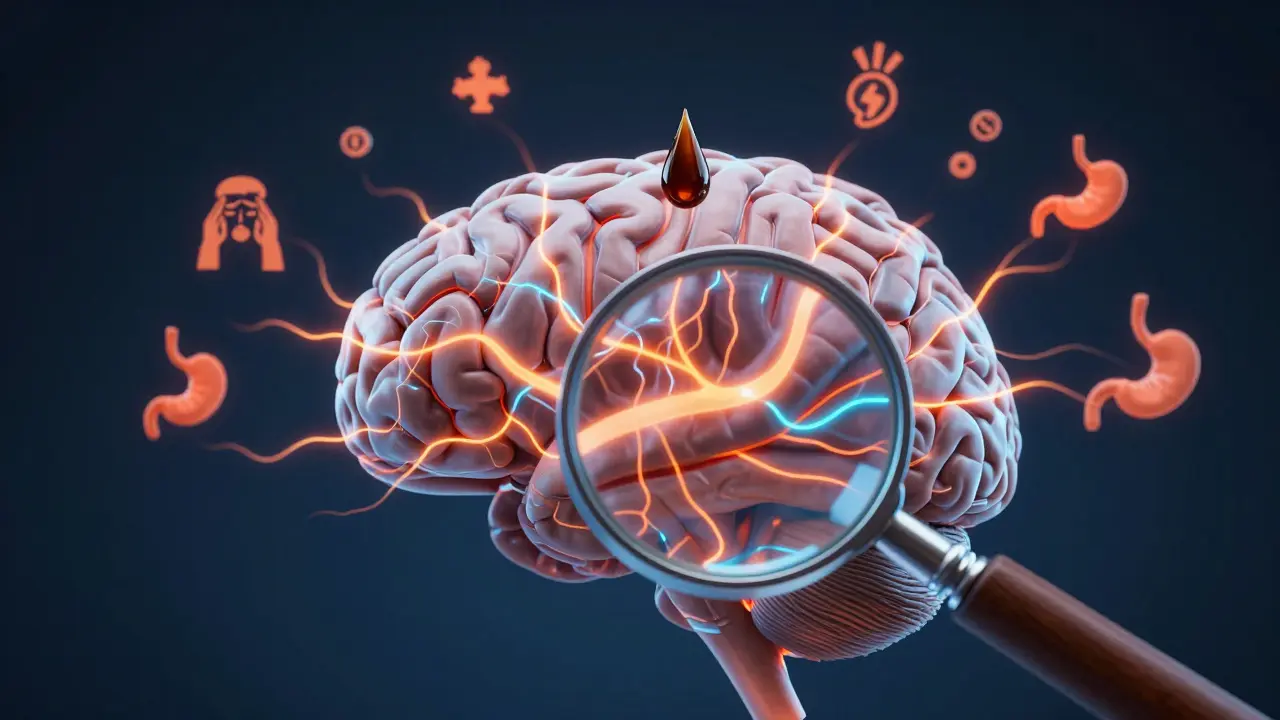
You think caffeine sharpens your mind. But after a while, it does the opposite. Too much caffeine overloads your prefrontal cortex - the part of your brain that handles focus, decision-making, and impulse control. People who rely on energy drinks to get through work or study often report brain fog, poor memory, and trouble finishing tasks. A 2023 cognitive test at Monash University showed that students who consumed more than 300 mg of caffeine daily performed worse on attention tasks than those who drank water. Their brains were so overstimulated, they couldn’t filter out distractions. Caffeine doesn’t make you smarter. It just makes you feel like you are - until your brain crashes.
It’s not just about how much - it’s about how often
The FDA says 400 mg of caffeine a day is safe for most healthy adults. That’s roughly four cups of coffee, or two large energy drinks. But that’s not a target - it’s a ceiling. And not everyone reacts the same. Some people feel jittery after one drink. Others seem fine with three. Genetics play a big role. If you’re a slow metabolizer of caffeine (which about half of people are), even small amounts can build up. Signs you’re sensitive? Heart palpitations, anxiety, trouble sleeping, or headaches after just one drink. If you’re in that group, you’re not weak - your body is just wired differently. Listen to it.
What should you do?
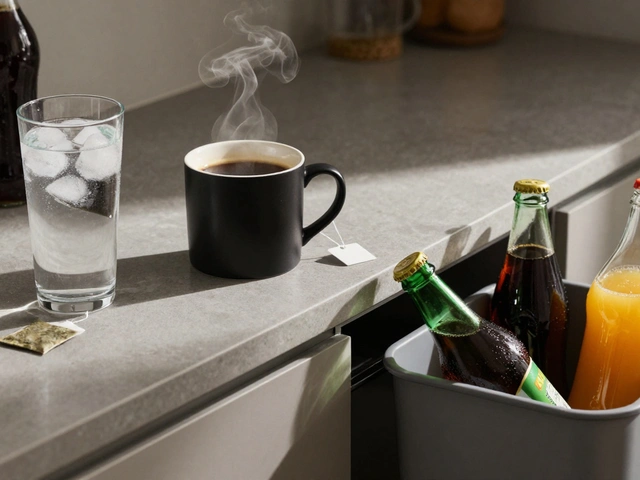
If you recognize any of these symptoms, don’t panic. But do take action. Start by tracking your intake. Write down every energy drink, coffee, or soda you have. Note how you feel 30 minutes later. Do you get shaky? Anxious? Headachy? That’s your body’s feedback loop. Then cut back slowly. Skip one drink a week. Replace it with sparkling water and a slice of lemon. Or try a caffeine-free energy drink with B vitamins and electrolytes. You’ll be surprised how much better you feel without the crash. It’s not about quitting forever. It’s about finding your sweet spot - the amount that gives you a boost without stealing your sleep, your focus, or your peace.
Can one energy drink cause caffeine overdose?
A single energy drink usually doesn’t cause a full overdose, but it can trigger serious symptoms in sensitive people. Most drinks contain 80-250 mg of caffeine. For someone with low tolerance, anxiety, heart issues, or who hasn’t had caffeine in days, even one can cause a racing heart, chest tightness, or panic attacks. Overdose is rare, but symptoms like seizures, vomiting, or irregular heartbeat can happen - especially if you combine it with alcohol, stimulant medications, or other energy drinks.
How long does caffeine stay in your system?
Caffeine’s half-life is about five hours on average, but it can last anywhere from three to seven hours depending on your metabolism, liver function, and whether you smoke or take birth control pills. For slow metabolizers, it can stick around for over 10 hours. That’s why drinking an energy drink after lunch can still mess with your sleep at midnight.
Is decaf energy drink a safe alternative?
Decaf energy drinks remove most of the caffeine - usually under 10 mg per can - so they’re much safer for people sensitive to caffeine. But watch out for added sugars, artificial sweeteners, and stimulants like taurine or guarana, which can still affect your nervous system. They’re not a magic fix, but they’re a good step if you’re trying to cut back.
Can caffeine make anxiety worse?
Yes - badly. Caffeine increases adrenaline and cortisol, the same chemicals your body releases during stress. If you already struggle with anxiety, caffeine can turn mild worry into full-blown panic. Studies show that people with anxiety disorders often see major improvement after eliminating caffeine. It’s not a cure, but for many, cutting it out is the single most effective change they’ve made.
What’s the safest way to cut back on energy drinks?
Don’t quit cold turkey - you’ll get terrible headaches and fatigue. Instead, reduce by one drink every 3-5 days. Swap one energy drink for sparkling water with lime, herbal tea, or a small black coffee. Stay hydrated. Get sunlight in the morning to reset your natural energy rhythm. Most people feel better within two weeks. The energy you lose from caffeine? It comes back - but now it’s real energy, not a chemical fake-out.

Comments (15)
Jeroen Post
22 Mar 2026
Caffeine is just the tip of the iceberg. The real issue is corporate mind control. Energy drinks are engineered by Big Pharma and Big Sugar to keep you docile and working longer. They know your body can't handle it. They don't care. You're not addicted. You're being manipulated. The FDA? A puppet. 400mg safe? Try telling that to the guy who had a heart attack after one can. They bury the data. You think this is science? It's profit.
Nathaniel Petrovick
23 Mar 2026
I used to chug two energy drinks a day. Then I started feeling like my chest was gonna explode and I couldn't sleep for days. Cut back to one in the morning. Life changed. Not magic. Just basic biology. Your body ain't a battery. It's a living thing. Listen to it.
Honey Jonson
24 Mar 2026
omg i so relate. i thought i was just tired all the time but turns out my brain was fried from energy drinks. now i drink sparkling water with lemon and i feel like a new person. no more anxiety spikes. no more 3am heart racing. peace at last. <3
Sally McElroy
25 Mar 2026
The notion that 400mg is 'safe' is dangerously misleading. It's not a target. It's a dangerous threshold. And yet, corporations market it as if it's a health product. This isn't nutrition. It's chemical coercion. People don't realize they're being conditioned. Your 'boost' is a manufactured illusion. Your body is screaming. You're just too numb to hear it.
Destiny Brumbaugh
27 Mar 2026
America's got it right. You want energy? Work harder. Drink coffee. Not that sugary crap. These energy drinks are for weaklings. I work 12-hour shifts and I only have one cup of black coffee. You think you need a can of chemicals to function? That's why we're falling behind. Quit being soft.
Sara Escanciano
28 Mar 2026
If you're drinking energy drinks regularly, you're not just harming yourself. You're setting a bad example. You're normalizing addiction. You're telling kids this is acceptable. This isn't a personal choice. It's a public health failure. Stop pretending it's harmless. It's not.
Elmer Burgos
29 Mar 2026
I used to be the guy who needed three energy drinks just to get through the day. Then I tried cutting back. First week was rough. Headaches. Mood swings. But after two weeks? I slept better. Focused better. Didn't feel like I was vibrating all the time. It's not about willpower. It's about listening. Your body knows what it needs.
Jason Townsend
31 Mar 2026
They say 400mg is safe. But what about the 80% of people who metabolize caffeine slowly? No one talks about that. The science is out there. The FDA doesn't test for genetic differences. They test on college kids who drink it daily. That's not a standard. That's a trap. You think you're fine? You're just lucky. So far.
Antwan Holder
1 Apr 2026
I used to think caffeine was my lifeline. Turns out it was my leash. Every time I drank one, I felt like I was handing over a piece of my soul. The anxiety. The insomnia. The phantom heartbeat in my chest. I didn't just lose sleep. I lost myself. I cried the first week without it. Not because I was tired. But because I finally felt the weight of what I'd been doing to myself. It wasn't a habit. It was a slow suicide.
Angelina Jefary
3 Apr 2026
You say '400mg is safe.' But you misspelled 'adenosine' in your article. And you wrote 'somersaults' without a hyphen in 'heart-pounding.' That undermines your credibility. Also, the University of Queensland study didn't track 'deep sleep loss'-it tracked REM disruption. You're misrepresenting the data. Fix your facts before preaching.
Jennifer Kaiser
4 Apr 2026
The real tragedy isn't the caffeine. It's the belief that we need external chemicals to function. We've forgotten how to rest. How to breathe. How to sit with stillness. Energy drinks are a symptom of a culture that values output over being. You don't need more caffeine. You need more silence.
TIARA SUKMA UTAMA
5 Apr 2026
i tried one energy drink. felt weird. stopped. now i just drink water. its so simple. why do people make it so hard?
Jasmine Oey
5 Apr 2026
I used to think I was a high-performer. Turns out I was just chemically enhanced. I was proud of my 3-drink-a-day routine. Then I read a paper on neurotoxicity. I felt ashamed. Not because I was weak. Because I let a corporation define my productivity. Now I meditate. I walk. I breathe. And yes, I'm slower. But I'm real. And that's worth more than any synthetic jolt.
Marissa Martin
6 Apr 2026
I used to drink energy drinks to cope with my anxiety. Now I realize I was making it worse. I didn't need more stimulation. I needed more safety. More calm. More self-compassion. The caffeine didn't help me. It just made me feel guilty for needing help. I'm still healing. But I'm not drinking anymore.
James Winter
7 Apr 2026
Canada doesn't have this problem. We don't let corporations sell poison as energy. You people need to wake up. This isn't freedom. It's corporate slavery.