
Red Bull vs Monster: Which Energy Drink Is Worse for Athletes?
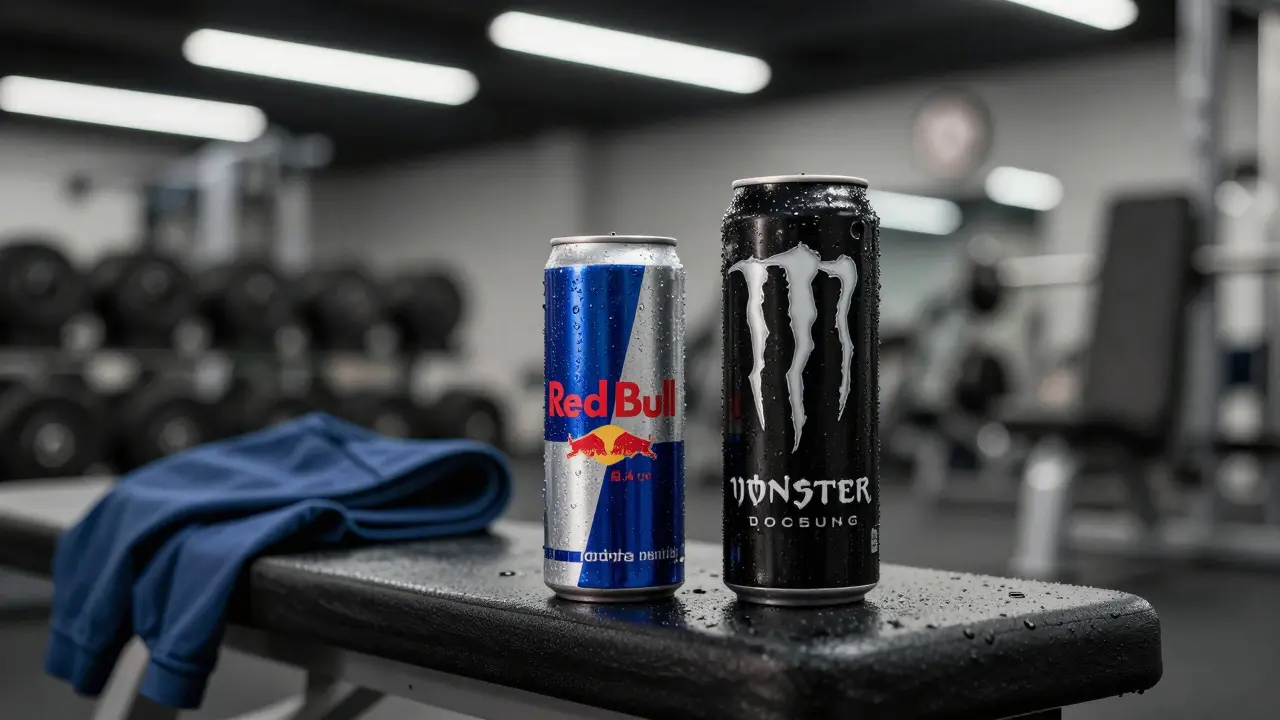
Two cans sit on the gym bench after a hard workout. One says Red Bull. The other says Monster. Both promise a surge of energy. But which one is actually worse for your body - especially if you’re an athlete pushing limits daily?
Red Bull: The Original, But Not the Cleaner Choice
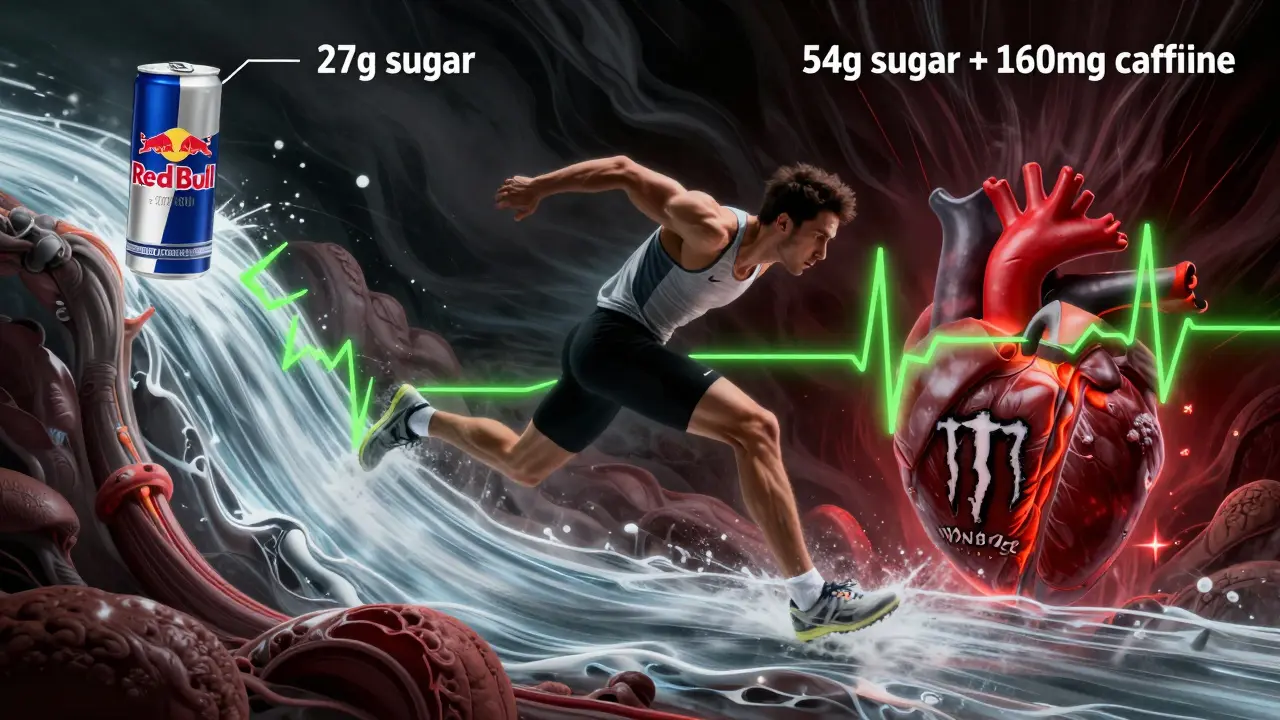
Red Bull launched in 1987 and became the blueprint for modern energy drinks. It’s small - 8.4 oz - but packs a punch. One can has 27 grams of sugar and 80 mg of caffeine. That’s about the same as a cup of coffee, but the sugar? That’s nearly 7 teaspoons. For athletes, that sugar spike can feel like a boost, but it’s followed by a crash that messes with recovery.
Red Bull also contains B-vitamins, taurine, and glucuronolactone. These aren’t harmful on their own, but they don’t do much for performance either. The real driver is caffeine and sugar. Athletes who drink Red Bull before training often report jitteriness, heart palpitations, or nausea. That’s not a performance enhancer - that’s a warning sign.
And here’s the catch: Red Bull markets itself as a sports drink. But it’s not designed for hydration. It doesn’t have electrolytes in meaningful amounts. If you’re sweating through a 90-minute soccer match or a 5K run, drinking Red Bull won’t replace what you lost. It’ll just add sugar to your dehydration.
Monster: Bigger, Stronger, and More Dangerous
Monster Energy is the bigger sibling. A standard 16 oz can has 54 grams of sugar - that’s over 13 teaspoons - and 160 mg of caffeine. That’s more than two cups of coffee in one drink. And that’s just the original flavor. Some Monster variants, like Monster Ultra or Monster Rehab, have less sugar, but they still use artificial sweeteners like sucralose and acesulfame potassium, which can disrupt gut bacteria and insulin response over time.
Monster also adds extra stimulants like L-carnitine, ginseng, and guarana. Guarana alone contains caffeine - sometimes as much as another 40 mg per can. So when you see “160 mg caffeine” on the label, the real total might be closer to 200 mg. That’s above the FDA’s recommended single-dose limit for healthy adults.
For athletes, this is a problem. High caffeine doses can raise heart rate and blood pressure to unsafe levels during intense exercise. A 2023 study in the Journal of Sports Medicine found that athletes who consumed Monster before training had a 22% higher incidence of irregular heart rhythms compared to those who drank water. That’s not a small risk - it’s a red flag.
Sugar: The Silent Saboteur
Both drinks are loaded with sugar. But the difference matters. Red Bull’s 27 grams is bad. Monster’s 54 grams is worse. And athletes don’t need extra sugar. Your muscles store glycogen - your real fuel. You get that from food, not soda.
When you drink a sugary energy drink, your body floods with insulin. That shuts down fat burning. It also causes inflammation. Chronic inflammation slows recovery, increases injury risk, and lowers performance over time. A 2024 study from the University of Colorado showed that college athletes who drank energy drinks 3+ times a week had 35% longer recovery times after intense sessions than those who avoided them.
Even if you’re not overweight, sugar from energy drinks turns to fat in your liver. That’s not the kind of fuel you want building up before your next game or race.
Caffeine: More Isn’t Better
Caffeine can improve endurance and focus - but only in controlled doses. The American College of Sports Medicine recommends 3-6 mg of caffeine per kilogram of body weight for performance gains. For a 150-pound athlete, that’s 200-400 mg total per day - spread out, not gulped in one go.
Monster gives you 160 mg in one can. Red Bull gives you 80. But many athletes drink more than one. That’s easy to do. You’re tired. You’re rushing. You think, “I’ll just have another.” Then you hit 320 mg by midday. Now your heart is racing. Your sleep is gone. Your cortisol is through the roof. That’s not performance. That’s burnout.
And here’s what no one tells you: caffeine tolerance builds fast. What felt like a boost last month now just keeps you from crashing. You’re not performing better - you’re just avoiding withdrawal headaches.
What About the “Zero Sugar” Versions?
Red Bull Zero and Monster Zero Sugar sound like safer bets. But they replace sugar with artificial sweeteners. Sucralose and acesulfame K have been linked to changes in gut microbiome, altered glucose metabolism, and increased cravings for sweets. A 2025 meta-analysis in the British Journal of Nutrition found that athletes using zero-sugar energy drinks had higher blood sugar spikes after meals than those who drank water.
They also contain the same stimulants - caffeine, taurine, guarana - without the sugar buffer. That means the caffeine hits harder and faster. No sugar to slow absorption. Just pure stimulant rush. For athletes with sensitive stomachs or heart conditions, that’s a recipe for trouble.
What Should Athletes Drink Instead?
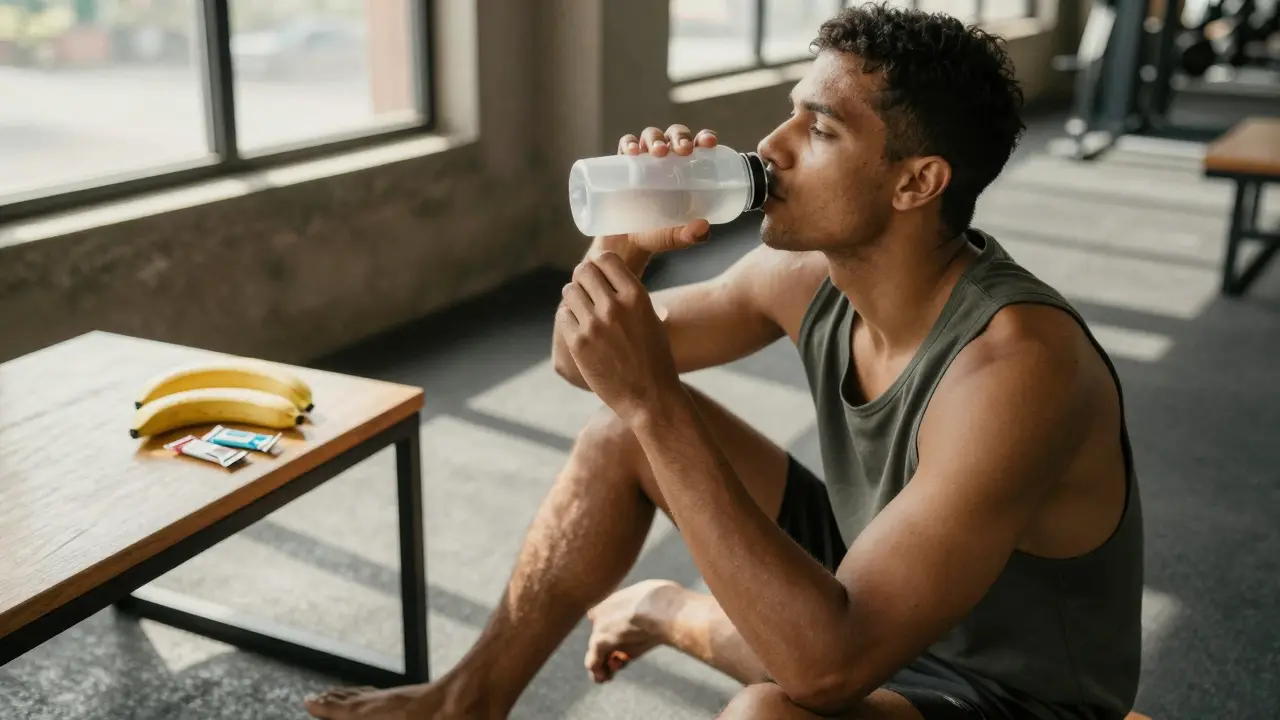
You don’t need a can of Red Bull or Monster to perform well. Real fuel comes from real food and smart hydration.
- Water with a pinch of salt and a squeeze of lemon - replenishes electrolytes naturally.
- Coconut water - low sugar, high potassium, no additives.
- Black coffee - 1 cup before training gives you clean caffeine without sugar or chemicals.
- Electrolyte tablets (like Nuun or LMNT) - dissolve in water, no artificial colors or sweeteners.
- Whole foods - bananas for potassium, oats for slow carbs, nuts for sustained energy.
These options don’t promise a 30-second buzz. But they don’t crash you either. They support recovery. They help you sleep. They keep your heart steady. And they actually make you better at your sport.
Bottom Line: Neither Is Good - But Monster Is Worse
Red Bull is bad. Monster is worse. One is a small, sugary hit. The other is a large, chemical-loaded sledgehammer.
For athletes, the goal isn’t to pick the lesser evil. It’s to stop drinking them altogether. Energy drinks don’t make you stronger. They don’t speed up recovery. They don’t improve endurance. They just trick your body into thinking it’s energized - while quietly damaging your sleep, heart, and metabolism.
If you’re using these drinks to get through training, ask yourself: Are you fueling your body - or masking exhaustion? The real energy comes from rest, nutrition, and consistency. Not a can.
Is Red Bull better than Monster for athletes?
No. Red Bull has less sugar and caffeine than Monster, but both are harmful for athletes. Red Bull’s smaller size makes it seem less risky, but it still causes sugar crashes, dehydration, and disrupted sleep. Monster’s higher caffeine and larger volume make it more dangerous, especially during intense training.
Can energy drinks improve athletic performance?
Caffeine in controlled doses (3-6 mg per kg of body weight) can improve endurance and focus. But energy drinks like Red Bull and Monster deliver that caffeine with harmful additives - sugar, artificial sweeteners, and extra stimulants - that hurt recovery and heart health. The risks outweigh the benefits for most athletes.
Do zero-sugar energy drinks like Monster Zero or Red Bull Zero help?
Not really. Zero-sugar versions replace sugar with artificial sweeteners like sucralose and acesulfame K, which can still disrupt insulin response and gut health. They also contain the same high levels of caffeine and stimulants. You avoid sugar, but you still get the jitters, heart strain, and sleep disruption.
How much caffeine is safe for athletes per day?
The American College of Sports Medicine recommends 3-6 mg of caffeine per kilogram of body weight per day. For a 150-pound athlete, that’s about 200-400 mg total - spread out over the day. One Monster can has 160 mg. Two cans can push you over the limit, especially if you also drink coffee or tea.
What are the long-term effects of drinking Red Bull or Monster regularly?
Regular use is linked to high blood pressure, irregular heart rhythms, poor sleep, insulin resistance, and increased body fat - especially around the liver. Athletes who drink these daily report slower recovery, more injuries, and decreased endurance over time. The short-term energy boost isn’t worth the long-term damage.

Comments (15)
Victoria Kingsbury
31 Dec 2025
Honestly, I used to chug Red Bull before lifting until I started crashing harder than my deadlift PR. Switched to black coffee and electrolytes - my sleep improved, my gains stayed, and I stopped feeling like my heart was trying to escape my chest. Who knew real fuel beats chem-laced sugar bombs?
Also, the part about liver fat buildup? Yeah, that hit hard. I thought I was ‘lean’ so it didn’t matter. Turns out, sugar doesn’t care if you’re ripped.
Tonya Trottman
1 Jan 2026
Let me get this straight - you’re telling me people pay $3 for a can of liquid ADHD and call it ‘performance enhancement’? The only thing these drinks enhance is the GDP of Big Sugar and the bankruptcy rate of athletes’ kidneys.
And don’t even get me started on ‘zero sugar’ - sucralose is basically sugar’s evil twin who stole its ID and went to college. It’s not healthier, it’s just sneakier. Also, ‘guarana’? That’s just caffeine in a Hawaiian shirt. Stop being fooled by marketing.
Rocky Wyatt
1 Jan 2026
I used to be one of those guys who thought Monster was my wingman. Then I had a panic attack mid-sprint because my heart felt like it was being stabbed by a drill. I didn’t even know I was that sensitive until my coach pulled me aside and said, ‘You’re not tired - you’re poisoned.’
Now I drink water. I sleep 8 hours. I eat bananas. And yeah, I still feel tired sometimes. But at least I’m not hallucinating caffeine ghosts before bed.
Santhosh Santhosh
3 Jan 2026
As someone who trains in the early morning in a country where energy drinks are sold like candy at bus stops, I’ve seen too many young athletes believe these cans are part of the ritual. It’s not just about the sugar or caffeine - it’s the psychology. They think if they don’t drink it, they’re not serious. But real discipline is choosing the quiet path: water, sleep, whole food. The body doesn’t need fireworks to burn bright.
I’ve coached kids who quit these drinks and suddenly had more stamina, better focus, and fewer injuries. The science is clear. The culture? Still stuck in the 2000s.
Veera Mavalwala
4 Jan 2026
Monster is the energy drink equivalent of a neon tattoo on your spleen - flashy, loud, and permanently stupid. Red Bull? At least it’s compact like a polite slap. Monster? It’s a sledgehammer wrapped in a glittery can screaming ‘I’M A WARRIOR’ while your liver weeps in the corner.
And zero sugar? Pfft. That’s like replacing gasoline with glitter and calling it ‘eco-friendly fuel.’ You still explode. You just explode cleaner. Meanwhile, real athletes are out there drinking coconut water like it’s a sacred ritual - and they’re the ones winning races, not just surviving them.
Ray Htoo
5 Jan 2026
Biggest eye-opener for me? The part about caffeine tolerance turning into dependency. I used to think I was ‘used to it’ - turns out I was just avoiding withdrawal headaches. When I cut out Red Bull cold turkey, I felt like a zombie for three days. But after a week? My brain felt clearer than it had in years.
Also, the 2024 study on recovery times? That’s the one that got me. If your ‘boost’ is costing you 35% longer to recover, you’re not training smarter - you’re training in circles. I now use LMNT packets. No sugar. No junk. Just salt, potassium, and dignity.
Natasha Madison
5 Jan 2026
Who owns these companies? Big Pharma? The FDA? Why is this even legal? I’ve read reports that these drinks are designed to mimic stimulant abuse patterns - they’re not for athletes, they’re for addicts. And they market them to teens with extreme sports ads like it’s a rite of passage.
They’re not selling energy. They’re selling addiction disguised as performance. And the government lets them because money talks louder than heart rhythms. Wake up. This isn’t nutrition. It’s corporate warfare on your biology.
Sheila Alston
6 Jan 2026
It’s not just about health - it’s about respect. If you’re an athlete, you owe it to your body to treat it like a temple, not a soda machine. These drinks are the lazy person’s shortcut to ‘hard work.’ Real strength comes from discipline, not chemical crutches.
And for the love of all that’s holy, stop telling kids it’s ‘normal’ to drink this stuff. You’re not being cool - you’re being dangerous. I’ve seen too many young athletes with arrhythmias because their ‘pre-workout’ was a Monster. Shame on the culture that lets this continue.
sampa Karjee
8 Jan 2026
Let’s be clear: the notion that Red Bull is ‘better’ than Monster is a bourgeois delusion. Both are industrial toxins wrapped in branding. The only difference is scale. One is a micro-dose of poison, the other is a macro-dose. Neither is performance-enhancing - they’re performance-corrupting.
And those ‘zero sugar’ variants? A marketing ploy for the guilt-ridden middle class who want to feel virtuous while still ingesting neurochemical warfare. The body doesn’t care if your sweetener is artificial - it only cares that it’s not food.
Patrick Sieber
9 Jan 2026
My dad used to say, ‘If it comes in a can with a logo on it, it’s probably not helping you.’ He was right.
I used to drink Red Bull before races. Now I drink water with a pinch of sea salt and a lemon wedge. I sleep better. I recover faster. I don’t need a chemical jolt to feel alive. Turns out, my body was already capable - I just stopped poisoning it.
Kieran Danagher
10 Jan 2026
Monster’s ‘guarana’ is just caffeine’s cousin who never graduated high school but thinks he’s a genius. It’s not ‘natural’ - it’s just a sneaky way to bump the caffeine count without having to print a higher number on the label.
Also, the FDA limit? That’s for healthy adults. Athletes aren’t healthy adults - they’re high-performance machines with fragile wiring. You don’t rev a Ferrari on leaded gas and call it ‘efficient.’
OONAGH Ffrench
10 Jan 2026
Energy drinks are not sports nutrition. They are recreational stimulants repackaged as performance aids. The industry exploits the myth that effort must be chemically amplified. Real endurance is built through consistency, not chemical escalation.
Water. Sleep. Food. These are not boring. They are the foundation. Everything else is decoration. And decoration doesn’t win races - it just makes you look like you’re trying too hard.
poonam upadhyay
12 Jan 2026
Why are we even debating this?!?!?! Red Bull? Monster? Both are corporate poison-pellets disguised as energy!?!?!? The sugar? The artificial sweeteners? The guarana? The taurine? The glucuronolactone?!!?!? They’re not ingredients - they’re chemical cocktails designed to hijack your dopamine and sell you more cans!?!?!?! And you’re all sitting here like it’s a choice?!?!?!? It’s not - it’s addiction! And the companies know it!?!?!? They’re not selling drinks - they’re selling dependency!?!?!? STOP BEING NAIVE!!?!?!?
Shivam Mogha
12 Jan 2026
Water. Sleep. Food. That’s it.
mani kandan
13 Jan 2026
What struck me most was the liver fat buildup from sugar - even in lean athletes. We assume ‘I’m fit, so I’m fine.’ But fat isn’t always visible. Sometimes it’s hiding in the liver, quietly turning your metabolism into a broken engine.
Also, the fact that zero-sugar versions still spike blood sugar after meals? That’s the real kicker. It’s not just about the drink - it’s about how it rewires your body’s response to everything else you eat.
I started replacing my post-workout Monster with a banana and a cup of green tea. My recovery improved. My cravings dropped. My sleep returned. No magic. Just biology. And it’s beautiful when you stop fighting it.