
Is There an Energy Drink That Is Not Bad for You? The Real Low-Calorie Options That Work
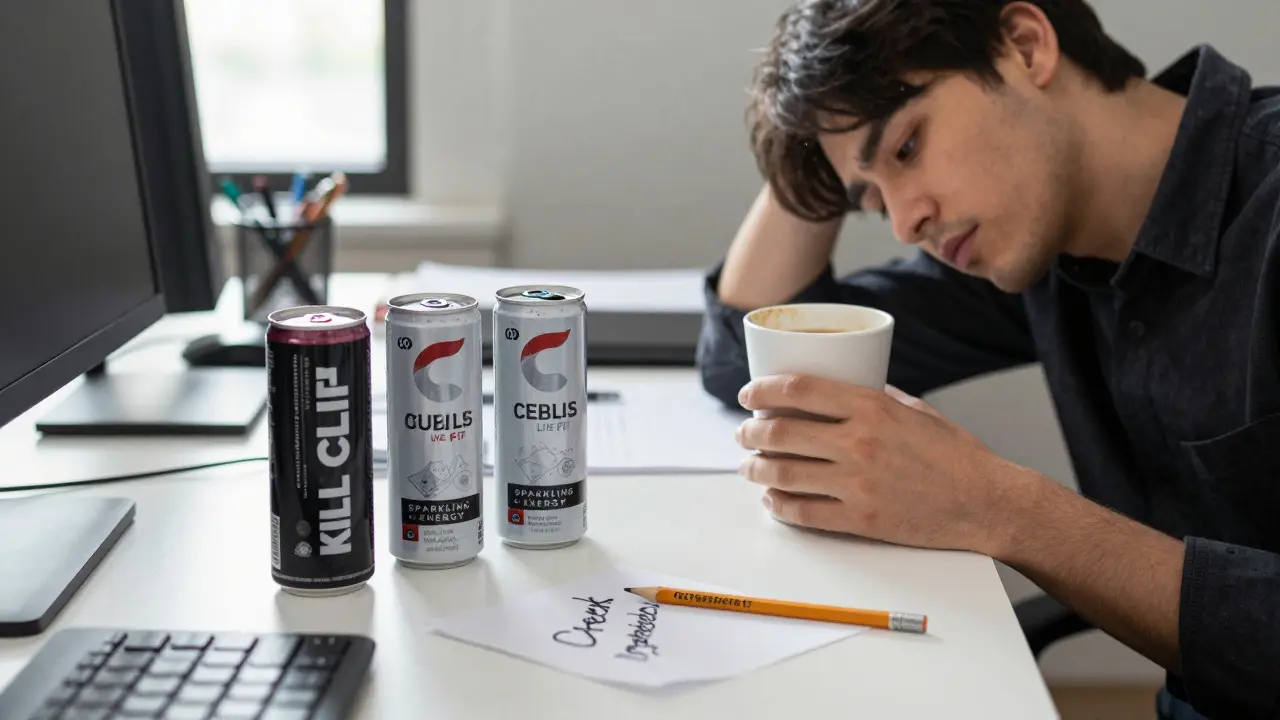
You’ve been there. Mid-afternoon slump. Coffee’s gone cold. Your brain feels like it’s running on low battery. You reach for an energy drink-hoping for a quick boost-but then you stop. Low-calorie energy drinks promise energy without the sugar crash, but are they really any better? Or are they just sugar in disguise, hiding behind fancy labels and green packaging?
The truth? Most energy drinks aren’t healthy. Even the ones labeled "zero sugar" or "natural" can pack a punch of stimulants, artificial sweeteners, and unregulated ingredients that mess with your sleep, heart, and mood. But that doesn’t mean all energy drinks are bad. There are real options out there-ones that actually give you clean energy without the side effects. You just need to know what to look for.
What Makes an Energy Drink "Bad"?
It’s not just about sugar. Even sugar-free energy drinks can be harmful if they’re loaded with synthetic caffeine, artificial flavors, preservatives, and untested herbal blends. The FDA doesn’t require energy drink makers to list total caffeine content on the label. That means a can could have anywhere from 80mg to 300mg of caffeine-and you won’t know until you dig into the fine print.
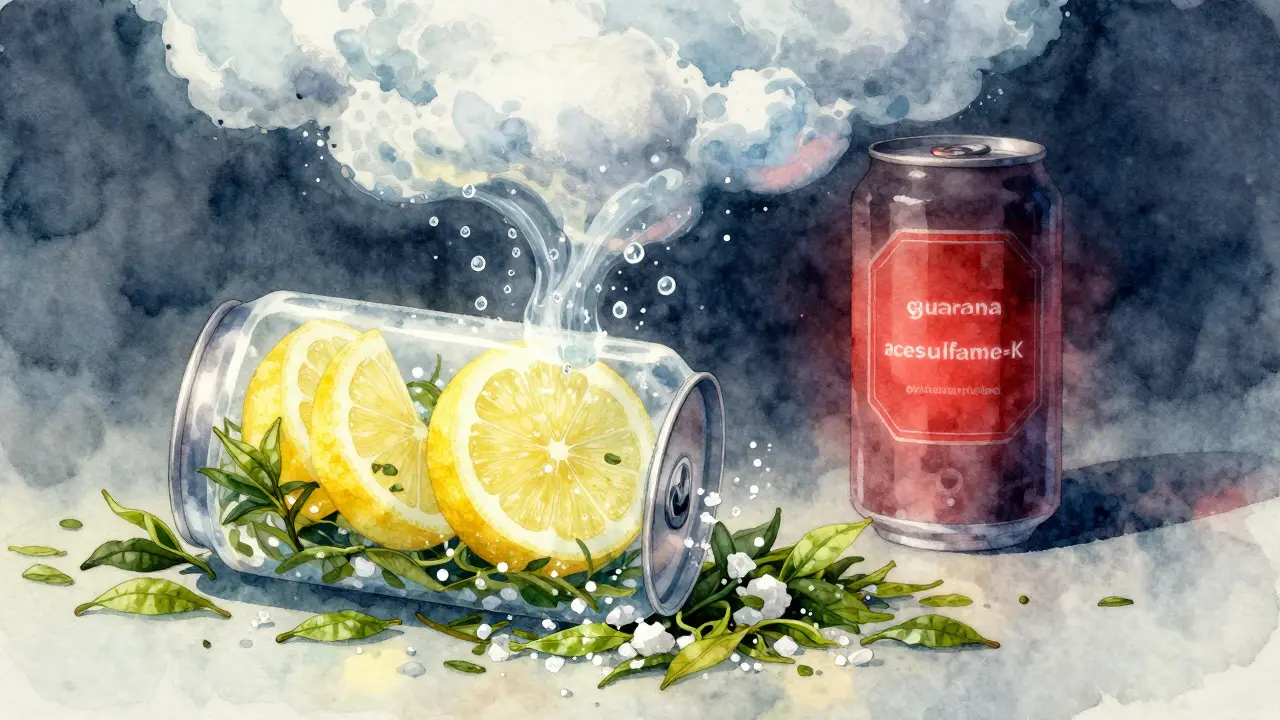
Then there’s the sugar substitute problem. Most low-calorie drinks use artificial sweeteners like sucralose, acesulfame-K, or aspartame. Studies from the American Heart Association show these sweeteners can still trigger insulin spikes, disrupt gut bacteria, and increase cravings for sweets-even if they don’t add calories.
And don’t forget the extras: taurine, guarana, ginseng, L-theanine. These sound natural, but in energy drinks, they’re often used as caffeine boosters, not for their health benefits. Guarana alone contains about twice the caffeine of coffee beans. So when a drink says "150mg caffeine from green tea and guarana," you’re not getting a gentle lift-you’re getting a double hit.
What Does a "Good" Low-Calorie Energy Drink Look Like?
Not all low-calorie energy drinks are created equal. The ones that actually work without harming you share a few key traits:
- Caffeine under 100mg per serving-enough to wake you up, not enough to make your heart race.
- No artificial sweeteners-sweetened with stevia, monk fruit, or nothing at all.
- No hidden stimulants-no guarana, yohimbe, or synephrine.
- Simple, transparent ingredients-you should recognize every item on the label.
- Electrolytes and B vitamins-to support hydration and natural energy production.
Think of it like this: a good energy drink shouldn’t feel like a chemical reaction in your body. It should feel like a gentle nudge-like a cup of strong tea, but more convenient.
Real Examples of Low-Calorie Energy Drinks That Actually Work
Here are three brands that meet the criteria above-and are widely available in Australia, the U.S., and Europe as of 2026:
1. Kill Cliff IGNITE
With just 100mg of naturally sourced caffeine from green coffee beans, 250mg of electrolytes, and sweetened only with stevia and monk fruit, this drink is designed for people who want to avoid sugar and artificial junk. It’s also free of artificial colors and preservatives. A 12oz can has only 10 calories. Many endurance athletes and office workers swear by it for afternoon focus without the jitters.
2. Bubly Sparkling Energy
From the makers of Bubly, this is a lighter option: 35mg of caffeine per can (about half a cup of coffee), zero sugar, and naturally flavored. It’s bubbly, refreshing, and tastes like fruit-not chemicals. It’s not going to power you through a 12-hour shift, but for a mid-morning pick-me-up or a post-lunch reset? Perfect. And it’s the only one on this list you can find in most grocery stores.
3. Celsius Live Fit
Celsius uses 200mg of caffeine from green tea extract, but pairs it with ginger, green tea catechins, and a blend of B vitamins. It’s marketed as a metabolism booster, and while that’s a stretch, the ingredients are real and backed by some clinical studies. It’s sweetened with stevia and has zero sugar. It’s not for everyone-200mg of caffeine is a lot if you’re sensitive-but if you need a serious boost and can handle the caffeine, it’s one of the cleanest options out there.
What to Avoid at All Costs
Just because a drink says "low-calorie" doesn’t mean it’s safe. Here are the red flags:
- "Natural flavors"-this term means nothing. It could be synthetic chemicals disguised as "natural."
- Added vitamins above 100% DV-your body can’t use excess B12 or niacin. You’re just peeing out money.
- Multiple forms of caffeine-if it lists caffeine + guarana + green tea extract + yerba mate, you’re getting more than you think.
- Proprietary blends-if the label says "Energy Blend: 500mg" without breaking it down, walk away.
- High sodium-some drinks have over 300mg of sodium per can. That’s nearly 15% of your daily limit.
There’s a reason these brands don’t list exact amounts: they don’t want you to know how much you’re really consuming.
Alternative: Make Your Own Clean Energy Drink
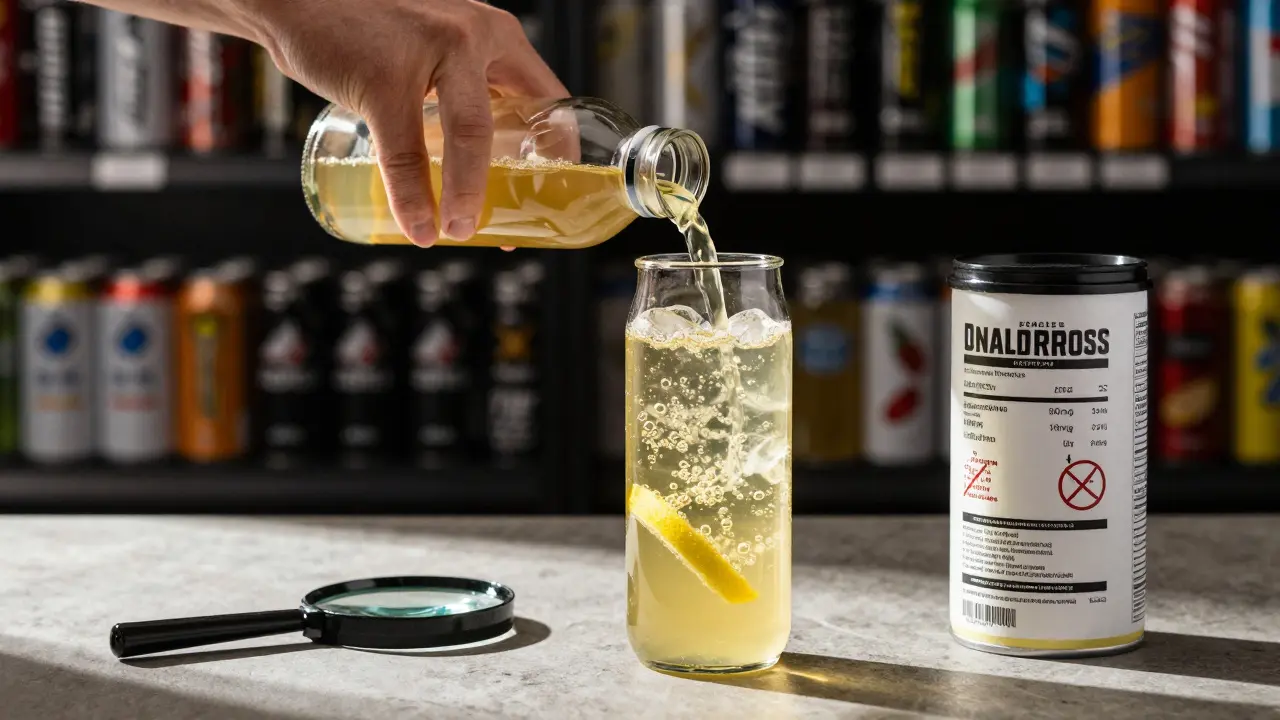
Why buy something packaged when you can make something better? Here’s a simple recipe that takes 2 minutes:
- 1 cup cold brewed green tea (cooled in the fridge)
- 1/2 tsp lemon juice
- Pinch of sea salt (for electrolytes)
- 1 tsp stevia or 1-2 drops of monk fruit extract
- Ice and a splash of sparkling water (optional)
This gives you about 40mg of caffeine, no sugar, no additives, and a refreshing taste. You control everything. And it costs less than $0.20 per serving.
Who Should Skip Energy Drinks Altogether?
Even the "good" ones aren’t for everyone:
- People with anxiety or heart conditions
- Pregnant or breastfeeding women
- Teens under 18
- Anyone who sleeps poorly or has trouble falling asleep
- People taking stimulant medications (like ADHD drugs)
If you fall into any of these groups, skip the energy drinks. Try a walk, a cold splash on your face, or a 10-minute power nap instead. They’re safer and more effective long-term.
Final Verdict: Yes, There Are Healthy Options
There is such a thing as a low-calorie energy drink that isn’t bad for you-but they’re rare. You can’t trust the marketing. You have to read the label like a detective. Look for low caffeine, no artificial sweeteners, no hidden stimulants, and real ingredients.
When you find one that fits, use it sparingly. Not every afternoon needs a boost. Sometimes your body just needs rest. But when you need a clean, reliable lift-without the crash, the jitters, or the guilt-there are options that work. You just have to know what to look for.
Are zero-sugar energy drinks really healthier?
Not necessarily. Zero sugar just means no sucrose or high-fructose corn syrup. Many still contain artificial sweeteners like sucralose or aspartame, which can still affect blood sugar, gut health, and cravings. The real health test is the full ingredient list-not just the sugar count.
Can I drink energy drinks every day?
Even the cleanest energy drinks aren’t meant for daily use. Regular caffeine intake can lead to tolerance, meaning you need more for the same effect. It can also disrupt sleep patterns and increase anxiety. Limit them to 2-3 times a week at most, and never rely on them to get through the day.
Is caffeine in energy drinks worse than coffee?
It’s not the caffeine itself-it’s how it’s delivered. Coffee gives you a slow, steady release. Energy drinks often flood your system with caffeine all at once, plus added stimulants like taurine or guarana. That sudden spike is what causes jitters, crashes, and heart palpitations.
Do electrolytes in energy drinks actually help?
Yes-if you’re sweating, dehydrated, or exercising. Electrolytes like sodium, potassium, and magnesium help your body retain water and support nerve and muscle function. But if you’re just sitting at a desk, you don’t need extra electrolytes. Most people get enough from food. Don’t pay extra for them unless you’re active.
What’s the safest energy drink for beginners?
Start with Bubly Sparkling Energy. It has only 35mg of caffeine (less than half a cup of coffee), no artificial sweeteners, and no hidden stimulants. It’s mild, refreshing, and easy to tolerate. If you feel fine after one, you can slowly try others with higher caffeine levels.
Comments (13)
Gareth Hobbs
29 Jan 2026
Zero sugar? LOL. You think the FDA gives a damn? They let Big Energy get away with 300mg caffeine in a can and call it "natural". And don't get me started on those "electrolytes"-they're just salt bombs for people who can't drink water. This is all a psyop to keep you addicted while they rake in billions. Wake up, sheeple.
Zelda Breach
29 Jan 2026
The fact that you think stevia is "clean" is proof you’ve never read a single peer-reviewed study. Sucralose disrupts gut microbiota, stevia alters insulin signaling, and monk fruit is a patent-protected monopoly disguised as nature. You’re not avoiding sugar-you’re just paying for the placebo version.
Alan Crierie
29 Jan 2026
I really appreciate how you broke this down. I used to chug Celsius every day until I started tracking my sleep-and wow, I was waking up at 3am like a startled raccoon. Switched to Bubly Sparkling Energy and now I actually sleep through the night. No jitters. No crash. Just… calm energy. 🙏
Nicholas Zeitler
30 Jan 2026
I just want to say-YES. The DIY version is literally the best thing I’ve ever done for my energy levels. I make it every morning. Green tea, lemon, pinch of salt. I even add a little ginger now. It’s cheaper than coffee, and I don’t feel like I’ve been hit by a truck at 4pm. Thank you for this.
Teja kumar Baliga
31 Jan 2026
In India, we’ve been drinking masala chai with a dash of cardamom for centuries. No caffeine overload. No chemicals. Just warmth, spice, and slow energy. Maybe we don’t need energy drinks at all-just better habits.
k arnold
2 Feb 2026
So you’re telling me the only safe energy drink is one with 35mg of caffeine? That’s just a fancy soda with a marketing team. I’ll take my Red Bull and my 12-hour nap thank you very much.
Tiffany Ho
4 Feb 2026
I tried Kill Cliff last week and I didn’t feel like my heart was gonna explode. That’s a win. I used to think I needed something strong but now I’m just happy I can get through the afternoon without shaking
michael Melanson
5 Feb 2026
I used to think the DIY version was too much work. Then I made it once and realized I’d been wasting money on overpriced chemical cocktails for years. Now I keep a big jar in the fridge. It’s my new ritual. Simple. Clean. Effective.
lucia burton
7 Feb 2026
The real issue here is systemic: we’ve normalized chronic fatigue as a lifestyle. We’re not just drinking energy drinks-we’re medicating burnout with corporate-designed neurochemical hacks. The fact that we’ve normalized 200mg caffeine as "clean" is a cultural indictment. We’ve outsourced rest to profit-driven beverage companies and called it innovation.
Denise Young
8 Feb 2026
Let’s be real-Celsius is a pyramid scheme disguised as a fitness brand. They’re not selling energy. They’re selling the illusion of metabolic transformation. The science? Thin. The marketing? Aggressive. The price? Criminal. And yes, I’ve done the lab reports.
Sam Rittenhouse
10 Feb 2026
I used to think I needed an energy drink to survive my 10-hour workdays. Then I started taking 5-minute walks outside. No caffeine. No sweeteners. Just sunlight and air. And guess what? My brain felt clearer than any drink ever gave me. Sometimes the best energy boost is the one you don’t buy.
Peter Reynolds
12 Feb 2026
I read the whole thing. I think you're right about reading labels. I just wish more people knew how to. Most folks just pick the one with the prettiest can
Fred Edwords
12 Feb 2026
Bubly Sparkling Energy has 35mg of caffeine, yes-but it also contains citric acid, which can erode enamel over time. And while stevia is "natural," the extraction process often involves methanol and hexane. Transparency isn’t just about listing ingredients-it’s about disclosing processing methods.