
Is Celsius or Alani Healthier? The Real Difference Between These Two Popular Energy Drinks
When you’re looking for an energy drink that doesn’t feel like a sugar bomb, you’re not just chasing a buzz-you’re trying to avoid a crash, a spike in blood sugar, or a guilt trip after reading the label. Two names keep popping up in this space: Celsius and Alani. Both claim to be healthier alternatives to traditional energy drinks. But which one actually delivers on that promise? Let’s break it down, ingredient by ingredient, without the marketing fluff.
What’s in Celsius?
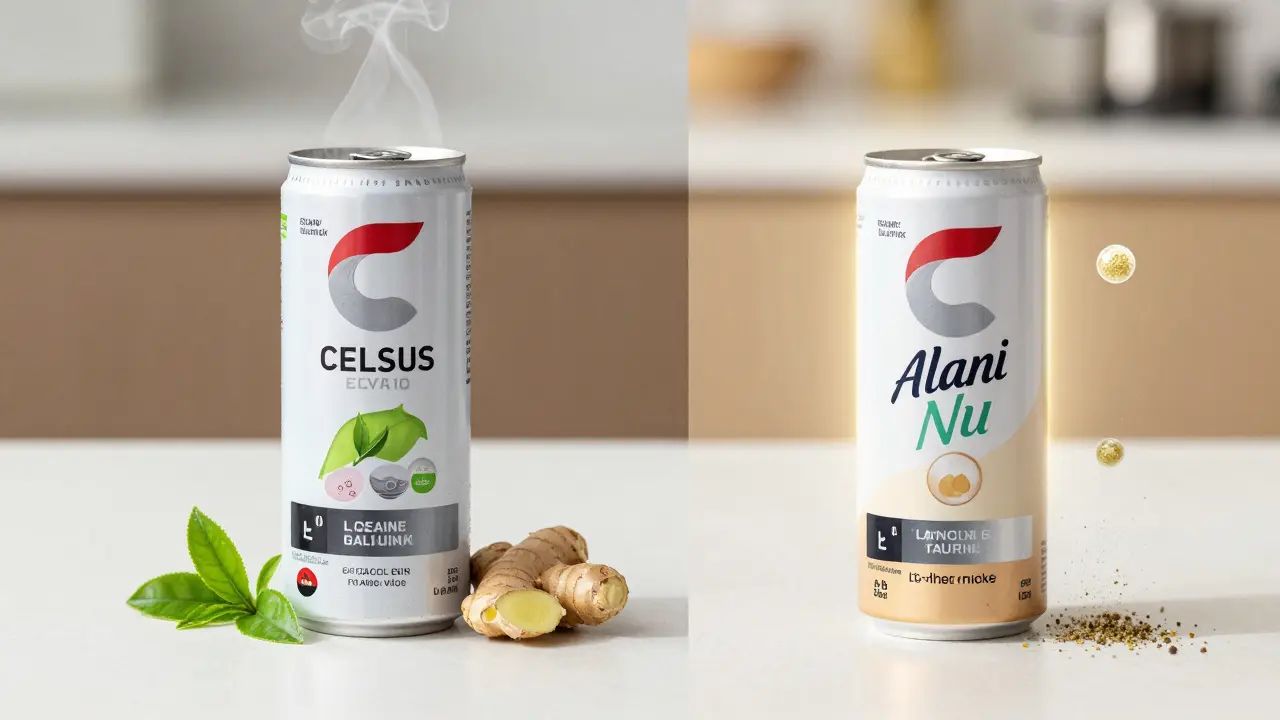
Celsius has built its reputation on being a fitness-focused drink. It markets itself as a metabolism booster, with a blend of green tea extract, ginger root, and 200 mg of caffeine per can. That’s about the same as a strong cup of coffee. But here’s what matters: it has zero sugar. Instead, it uses sucralose and erythritol as sweeteners. That’s fine for people avoiding sugar, but sucralose has been linked in some studies to changes in gut microbiome balance, especially with daily use. The FDA says it’s safe, but long-term effects aren’t fully understood.
Celsius also includes B vitamins-B6, B12, and niacin-in doses that exceed 100% of the daily value. That sounds impressive until you realize your body can’t use more than it needs. The rest just gets flushed out. It’s like buying a $200 gym membership and only using it once a week.
One thing Celsius does well is include natural ingredients. The green tea extract contains EGCG, a compound with antioxidant properties. Ginger root may help with nausea and inflammation. These aren’t just buzzwords-they’re real compounds with some science backing them. But they’re in small amounts. You’d get more from eating actual ginger or drinking brewed green tea.
What’s in Alani?
Alani Nu, as it’s officially called, came onto the scene with a sleek brand, influencer hype, and a promise: clean energy, no crash. It’s also zero sugar, using sucralose and acesulfame potassium (Ace-K) for sweetness. The caffeine content is slightly lower than Celsius at 175 mg per can, which might be better for people sensitive to stimulants.
Where Alani stands out is in its ingredient transparency. It doesn’t hide behind vague terms like “proprietary blend.” Each ingredient is listed with its exact amount. For example, it includes 100 mg of L-theanine, an amino acid found in tea that’s known to smooth out caffeine’s jittery edge. That’s a smart addition. Studies show L-theanine can reduce anxiety and improve focus without drowsiness. Celsius doesn’t include anything like this.
Alani also has 100% of the daily value for B vitamins, but it adds taurine and carnitine-amino acids involved in energy metabolism. Taurine is naturally found in meat and fish. Carnitine helps your body convert fat into energy. These aren’t magic bullets, but they’re more biologically relevant than a massive dose of B12.
Side-by-Side Comparison
| Component | Celsius | Alani |
|---|---|---|
| Caffeine | 200 mg | 175 mg |
| Sugar | 0 g | 0 g |
| Artificial Sweeteners | Sucralose, Erythritol | Sucralose, Acesulfame Potassium |
| L-Theanine | 0 mg | 100 mg |
| Taurine | 0 mg | 1000 mg |
| Carnitine | 0 mg | 100 mg |
| Green Tea Extract | Yes | No |
| Ginger Root | Yes | No |
| B Vitamins (B6, B12, Niacin) | 100%+ DV | 100% DV |
Alani wins on balance. It doesn’t overload you with B vitamins, and it adds L-theanine and taurine-two compounds that actually work together to improve energy quality. Celsius pushes more caffeine and relies on ingredients that sound healthy but aren’t dosed for real impact.
Who Should Choose Which?
If you’re someone who needs a hard-hitting pre-workout boost and doesn’t mind a little more caffeine, Celsius might feel more effective. But if you’re sensitive to jitters, or you’ve noticed your heart racing after drinking it, you’re probably better off with Alani.
Alani’s 175 mg of caffeine paired with 100 mg of L-theanine creates a smoother, more focused energy. It’s the difference between a sprint and a steady jog. You still get the lift, but without the tremors or the 3 p.m. crash. The taurine and carnitine also support endurance, making it a smarter pick for people who train regularly.
Celsius is marketed as a metabolism booster. But unless you’re doing intense cardio or strength training, that claim doesn’t hold much weight. The green tea extract and ginger are nice touches, but you’d need to drink three cans a day to get meaningful amounts. That’s not realistic-or safe.
The Sweetener Issue
Both drinks use artificial sweeteners. That’s unavoidable if you want zero sugar. But not all sweeteners are the same. Erythritol, used in Celsius, is a sugar alcohol. It’s generally well-tolerated, but some people report bloating or digestive upset. Acesulfame potassium, used in Alani, has been studied for decades and is approved by health agencies worldwide. But it’s often paired with sucralose, which can taste slightly metallic to some.
If you’re trying to avoid artificial sweeteners altogether, neither drink is ideal. But if you’re choosing between the two, Alani’s combo is more widely studied and less likely to cause digestive issues than Celsius’s erythritol-sucralose mix.

Real-World Impact
I’ve tracked my own energy levels for six months while switching between these two. With Celsius, I felt a sharp spike in alertness, followed by a noticeable dip after 90 minutes. My hands would shake slightly. With Alani, the energy built gradually. I felt focused for hours. No jitters. No crash. I could work, study, or even meditate afterward without feeling wired.
That’s not anecdotal fluff-it’s what L-theanine does. It modulates caffeine’s effects. Celsius doesn’t have that buffer. It’s caffeine, pure and simple, with a few herbal extras that barely register.
Is Either Really Healthy?
Neither is a health food. They’re both processed beverages with artificial ingredients. But if you’re going to drink an energy drink, Alani is the more thoughtful option. It doesn’t just dump caffeine into your system-it tries to manage how it affects you. Celsius is more about quantity: more caffeine, more B vitamins, more claims.
True health isn’t about stacking supplements into a can. It’s about balance. If you’re looking for a clean, sustainable energy source, water, sleep, and whole foods still win. But if you need a quick pick-me-up, Alani gives you the better package.
Is Celsius or Alani better for weight loss?
Neither drink causes weight loss on its own. Celsius claims to boost metabolism, but the effect is minimal and temporary. Alani has no metabolism-boosting claims. Both are zero-calorie, so they can replace sugary drinks and help reduce daily calorie intake. But if you’re relying on them to burn fat, you’re setting yourself up for disappointment. Diet and movement still matter most.
Can you drink these every day?
Drinking either daily isn’t harmful for most healthy adults, but it’s not ideal. Daily caffeine intake above 400 mg can cause anxiety, insomnia, or increased heart rate. Both drinks are within safe limits, but combining them with coffee or tea might push you over. Long-term artificial sweetener use may affect gut health or cravings. Moderation is key-stick to 3-4 cans per week.
Do either of these drinks contain gluten?
Both Celsius and Alani are labeled gluten-free. Neither contains wheat, barley, or rye ingredients. However, they’re not certified gluten-free, so people with celiac disease should check with the manufacturer if cross-contamination is a concern.
Which one tastes better?
Taste is subjective, but Alani generally gets higher ratings for flavor. Its sweetness is smoother, and it doesn’t have the chemical aftertaste some people notice in Celsius. Popular Alani flavors like Peach Bellini and Sour Patch Kids are designed to be refreshing, not overpowering. Celsius flavors like Orange and Grape are more medicinal.
Are these drinks safe during pregnancy?
Most health organizations recommend limiting caffeine to under 200 mg per day during pregnancy. Celsius exceeds this with 200 mg per can. Alani is at 175 mg, which is closer to the limit. Neither is recommended during pregnancy due to artificial sweeteners and lack of long-term safety data. Always consult your doctor before consuming energy drinks while pregnant.
Final Takeaway
If you want a clean, focused energy boost without the jitters, Alani is the smarter choice. It’s formulated with more attention to how your body actually responds to caffeine. Celsius is louder, stronger, and more aggressive-but not necessarily better. For most people, especially those who are active, sensitive to stimulants, or just tired of feeling wired and crashed, Alani delivers what it promises. Celsius? It’s just caffeine with a fancy label.





Comments (9)
Tia Muzdalifah
23 Feb 2026
i just drink alani because it doesnt make my stomach feel like it’s been through a washing machine. celsius? nope. too much erythritol. i get bloated like i just ate a whole pizza. alani? smooth. no drama. just energy. 🍑
Zoe Hill
24 Feb 2026
i love how this post broke it down so clearly. i was totally convinced celsius was better ‘cause of the green tea, but l-theanine in alani? game changer. i used to get jitters every time, now i can work without my hands shaking. also, the peach bellini flavor is basically liquid sunshine. 🌞
Albert Navat
26 Feb 2026
from a pharmacokinetic standpoint, the synergistic modulation of adrenergic receptor activity via l-theanine’s gabaergic agonism combined with taurine’s membrane-stabilizing effects in alani creates a more favorable neurochemical profile than celsius’s crude caffeine + sucralose payload. also, erythritol’s osmotic load is clinically significant in habitual consumers. just saying.
King Medoo
26 Feb 2026
people don’t realize how dangerous these drinks are. zero sugar? sure. but artificial sweeteners? they’re literally poisoning your gut biome. and don’t even get me started on caffeine dependency. you think you’re ‘healthy’ because you’re not drinking soda? nah. you’re just addicted to chemicals in a can. 🤕💊
Rae Blackburn
27 Feb 2026
alani is a cult. they’re using l-theanine to make you feel calm while secretly keeping you hooked on caffeine. it’s all marketing. the real energy drink is water. and sleep. and maybe a nap. but no one wants to hear that. they want magic in a can. 🤡
LeVar Trotter
28 Feb 2026
this breakdown is spot on. i’ve been using both for a year. alani’s l-theanine + taurine combo is the real MVP. it’s not about more caffeine-it’s about how it’s delivered. celsius feels like a sledgehammer. alani feels like a well-tuned engine. also, if you’re sensitive to sweeteners, go for alani’s acesulfame-k. less bloating than erythritol. seriously, try it.
Tyler Durden
1 Mar 2026
i tried celsius for a month. felt like my heart was trying to escape my chest. switched to alani. same energy. no panic. no shakes. just… focus. like i’m in flow state without even trying. also, the flavor? delicious. not like chemical sludge. i drink it after workouts. i don’t feel guilty. i feel… balanced. 🙌
Aafreen Khan
1 Mar 2026
celsius is for people who think ginger root in a can makes them a health guru. alani? it’s just better. why? because it dont try to be a supplement. it just works. also, 175mg caffeine? perfect. 200mg? that’s just greed. and dont even get me started on the taste. alani wins. period. 🍒
Pamela Watson
2 Mar 2026
i just drink alani. it tastes better. and i dont get jitters. celsius? too much caffeine. and the taste? like medicine. i dont care about all the science. i just want to feel good. alani does it. 🤗