
Is Gatorade the healthiest energy drink? Here's what the numbers really show
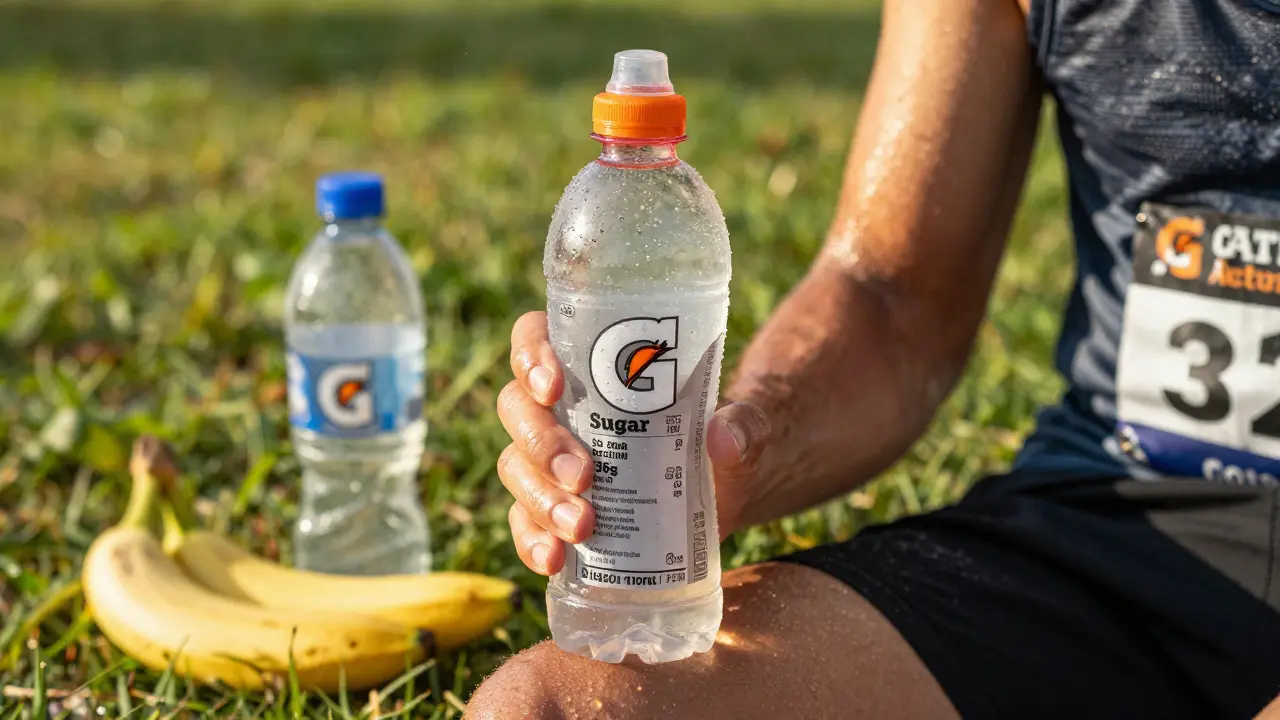
When you’re sweating through a workout or pushing through a long shift, Gatorade is often the first thing you reach for. It’s everywhere - in gyms, locker rooms, convenience stores, even kids’ lunchboxes. But is it really the healthiest energy drink out there? The label says "replenish electrolytes," and the ads show athletes thriving. But behind the bright orange bottles and catchy slogans, the truth is more complicated.
What’s actually in a bottle of Gatorade?
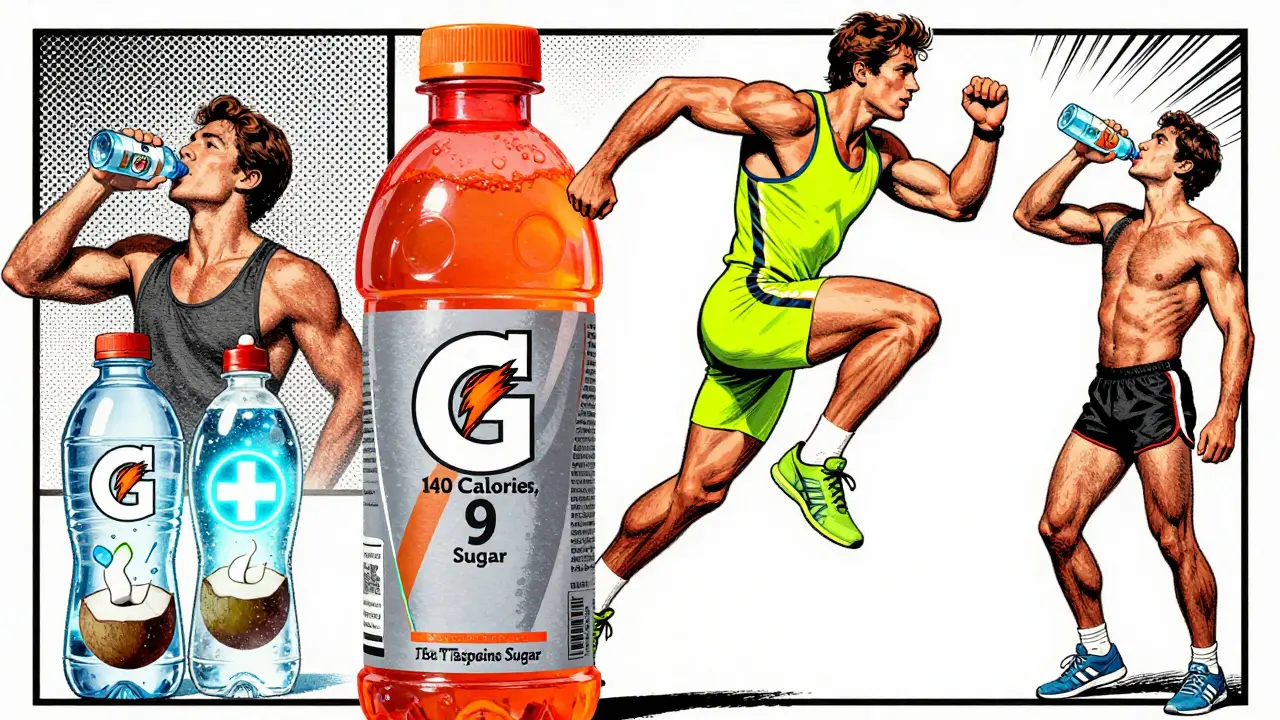
A standard 20-ounce bottle of Gatorade Thirst Quencher has 140 calories and 36 grams of sugar. That’s about 9 teaspoons of sugar - more than half the daily limit the World Health Organization recommends for an adult. It also has 270 mg of sodium, which sounds high until you realize it’s meant to replace what you lose through sweat. But if you’re not sweating hard for over an hour, you don’t need that much sodium.
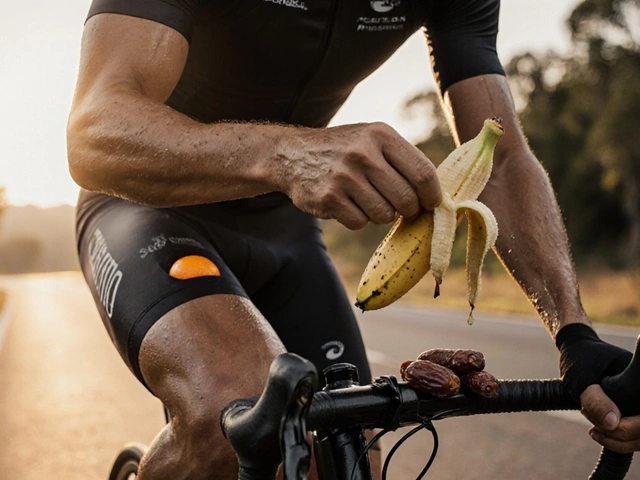
It does contain electrolytes: potassium, sodium, and a bit of magnesium. That’s useful after intense exercise. But for most people doing a 30-minute jog or a spin class, water and a banana give you the same potassium without the sugar spike.
There’s no caffeine in regular Gatorade. That’s a plus if you’re avoiding stimulants. But it also means it doesn’t deliver the mental alertness people often look for in an "energy" drink. So if you’re drinking it for a pick-me-up, you’re not getting what you think you are.
How does Gatorade compare to other "energy" drinks?
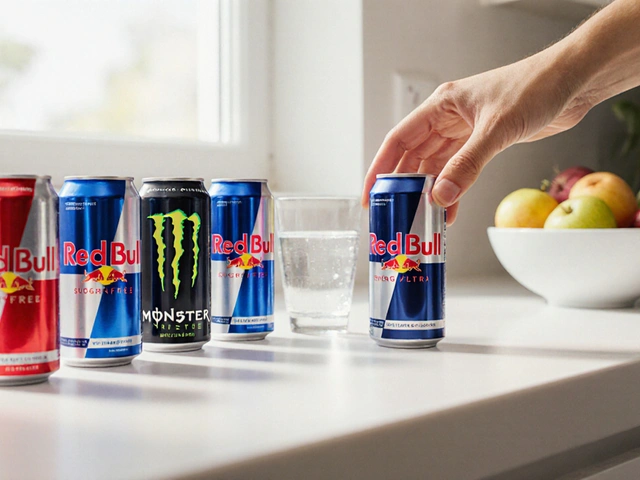
Let’s put Gatorade side by side with some other popular options. Take Monster Energy - a 16-ounce can has 210 calories, 54 grams of sugar, and 160 mg of caffeine. That’s a lot more sugar and a strong stimulant. Red Bull? 110 calories, 27 grams of sugar, and 80 mg of caffeine. Even these "energy" drinks have less sugar than Gatorade per ounce - but they pack in caffeine, which Gatorade doesn’t.
Now look at low-calorie alternatives like Powerade Zero or Propel. Powerade Zero has zero calories, zero sugar, and uses artificial sweeteners like sucralose and acesulfame potassium. Propel has 10 calories per bottle and uses sucralose too. They still have electrolytes, but without the sugar crash.
Here’s the real comparison:
| Drink | Calories | Sugar (g) | Sodium (mg) | Caffeine (mg) | Sweetener |
|---|---|---|---|---|---|
| Gatorade Thirst Quencher | 140 | 36 | 270 | 0 | High-fructose corn syrup |
| Powerade Zero | 0 | 0 | 270 | 0 | Sucralose, acesulfame K |
| Propel Fitness Water | 10 | 0 | 270 | 0 | Sucralose |
| Monster Energy (16 oz) | 210 | 54 | 240 | 160 | High-fructose corn syrup |
| Red Bull (16 oz) | 110 | 27 | 105 | 80 | Sucrose, glucose |
By this table, Gatorade isn’t the worst - but it’s not the healthiest either. It’s in the middle: more sugar than zero-calorie options, less than most energy drinks, and no caffeine. If your goal is hydration after a marathon, it makes sense. If you’re drinking it because you feel tired, you’re misusing it.
Who actually benefits from Gatorade?
Not everyone. The American College of Sports Medicine says you only need a sports drink if you’re exercising intensely for more than 60 minutes. That means marathon runners, triathletes, or soccer players in full-match conditions. For everyone else - including weekend warriors, gym-goers, or office workers chasing energy - water is enough.
Here’s a simple rule: if you’re not sweating so hard you’re losing more than 2% of your body weight in fluid, you don’t need Gatorade. For most people, that’s never. Even a 45-minute HIIT class won’t deplete your electrolytes enough to warrant sugar-laden recovery.
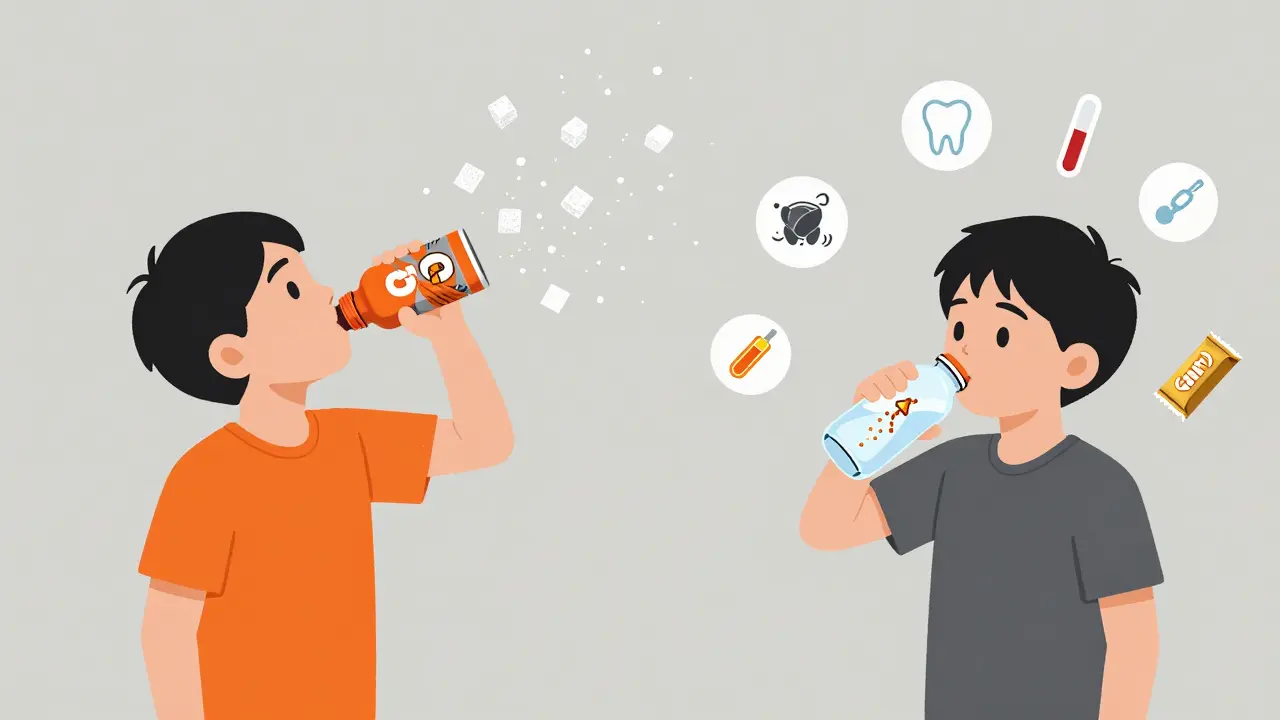
And here’s something most people don’t realize: drinking sugary sports drinks regularly can lead to weight gain, tooth decay, and insulin resistance - even if you’re "active." A 2023 study in the Journal of the American Heart Association found that adults who drank one sugary sports drink per day had a 22% higher risk of developing type 2 diabetes over five years, regardless of their activity level.
What are better alternatives for everyday energy?
If you’re looking for something to help you feel alert or recover after exercise without the sugar, here’s what works:
- Water + electrolyte tablets - Brands like Nuun or LMNT let you add electrolytes to water without sugar. Just drop one in, and you get sodium, potassium, and magnesium. Zero calories.
- Coconut water - Natural, lightly sweet, and full of potassium. One cup has about 45 calories and 6 grams of sugar - less than half of Gatorade. Check the label: some brands add sugar.
- Green tea - Contains a gentle caffeine boost (25-40 mg per cup) and antioxidants. No sugar. You can chill it and drink it cold.
- Homemade electrolyte drink - Mix 1 liter of water, 1/4 tsp salt, 2 tbsp lemon juice, and 1 tbsp honey. That’s about 50 calories and 12 grams of sugar - way less than Gatorade, and you know exactly what’s in it.
Even if you’re an athlete, you don’t need Gatorade every day. Many pro teams now use custom electrolyte mixes or even just salt capsules with water. Why? Because they’ve learned that sugar isn’t the key to recovery - sodium and potassium are.
Why does Gatorade still dominate the market?
Marketing. Gatorade spends hundreds of millions every year on sponsorships - from the NFL to college teams to youth tournaments. It’s built into the culture of sports. Parents think it’s the "right choice" because it’s on the sidelines at every game. But just because it’s popular doesn’t mean it’s healthy.
It’s also one of the few brands that’s easy to find. Most grocery stores don’t stock zero-sugar electrolyte drinks in the same aisle. You have to go to the supplement section or order online. That makes Gatorade the default.
But the market is changing. More people are reading labels. More parents are asking, "Why does my kid need 36 grams of sugar after soccer practice?" And companies are responding. Brands like Liquid I.V., Kill Cliff, and BodyArmor (which now has a low-sugar line) are growing fast.
Bottom line: Is Gatorade the healthiest energy drink?
No. Not even close.
If you’re a serious athlete training for hours under heat and sweat, Gatorade can help. But if you’re just trying to get through the afternoon, recover from a casual workout, or give your child something to drink after school - you’re better off with water, a piece of fruit, or a zero-sugar electrolyte option.
Calling Gatorade an "energy drink" is misleading. It’s not designed to energize - it’s designed to replace fluids and electrolytes lost during extreme exertion. Most people aren’t doing extreme exertion. So you’re not recharging your body. You’re just adding sugar to your day.
Next time you grab a bottle, ask yourself: "Am I sweating out 36 grams of sugar?" If the answer is no - put it back. Your body will thank you.
Is Gatorade good for weight loss?
No. Gatorade has 140 calories per bottle, mostly from sugar. Drinking it regularly without intense exercise adds empty calories that can lead to weight gain. If you’re trying to lose weight, stick to water or zero-calorie electrolyte drinks.
Does Gatorade have caffeine?
Regular Gatorade does not contain caffeine. Some specialty versions, like Gatorade Energy, do - but those are less common and still high in sugar. If you need caffeine, choose tea, coffee, or a low-sugar energy drink.
Is Gatorade better than water for hydration?
Only if you’re exercising intensely for over an hour in hot conditions. For everyday hydration, water is better. Your body absorbs water faster, and you don’t get unnecessary sugar or sodium. Gatorade’s electrolytes are only needed after heavy sweating.
Are zero-sugar sports drinks healthier than Gatorade?
Yes, for most people. Zero-sugar options like Powerade Zero or Propel have the same electrolytes without the sugar spike. They’re better for dental health, blood sugar control, and weight management. The artificial sweeteners they use are approved by health agencies and safe for regular use.
Can kids drink Gatorade daily?
No. Children don’t need the sugar or sodium in Gatorade unless they’re competing in endurance sports. Daily consumption increases their risk of cavities, weight gain, and unhealthy taste preferences. Water or milk are far better choices for kids.


Comments (12)
Kristina Kalolo
15 Jan 2026
Just grabbed a Gatorade after my 45-minute bike ride and now I feel guilty. Guess I’ve been lying to myself this whole time.
Megan Blakeman
16 Jan 2026
I used to drink this like water… now I see it’s just liquid candy with a side of sodium. My kid’s soccer team gets it after every game-maybe we should switch to water and a banana. 🙃
Akhil Bellam
16 Jan 2026
Of course Gatorade isn’t healthy-it’s a corporate propaganda tool disguised as hydration. You think Nike or Pepsi cares about your electrolytes? They care about your wallet. And you, my friend, are the product.
Pamela Tanner
17 Jan 2026
The data here is accurate, but the framing is misleading. Gatorade isn’t marketed as a health product-it’s marketed as a performance enhancer for athletes. The problem isn’t Gatorade; it’s the cultural assumption that everyone needs it. That’s the real issue.
Gabby Love
18 Jan 2026
My gym just started offering Nuun packets at the water station. No one uses them. Everyone still grabs the Gatorade. It’s sad. The science is right, but habit wins every time.
Steven Hanton
18 Jan 2026
Interesting breakdown. I never realized how much sodium was in there. I thought it was just sugar. But if you’re in a desert doing manual labor for six hours, you probably do need it. Context matters.
allison berroteran
19 Jan 2026
I used to think hydration was just about water, but after hiking in 100-degree heat and collapsing from cramps, I learned the hard way that electrolytes matter. I still don’t drink Gatorade-I make my own with lemon, salt, and a splash of maple syrup-but the point stands: for most people, it’s overkill.
Michael Jones
21 Jan 2026
Stop drinking sugar water and start drinking water. That’s it. No more excuses. Your body doesn’t need a commercial to tell you how to survive
ravi kumar
22 Jan 2026
In India, we have nimbu pani with salt and black salt after workouts. Simple, cheap, and works better than anything in a bottle. Why do we copy American marketing when we already have better traditions?
Amber Swartz
24 Jan 2026
Someone’s clearly never been to a high school football game. Parents buy Gatorade like it’s holy water. I’ve seen kids chug it after a 15-minute scrimmage. It’s not hydration-it’s emotional parenting. They’re trying to show they care by buying the expensive stuff. Sad.
Barbara & Greg
26 Jan 2026
It is not merely a beverage; it is a symbol of our collective surrender to industrialized convenience. We have outsourced our physiological wisdom to corporations who profit from our ignorance. Gatorade is not a drink-it is a moral failure dressed in orange plastic.
selma souza
26 Jan 2026
Correction: The table says "20 oz serving" for Gatorade, but Monster and Red Bull are listed as 16 oz. You can’t compare them directly without normalizing to the same volume. Also, "sucralose" is misspelled as "sucralose" in the last row. Fix your data before you fix the world.