
Is One Red Bull a Week OK? The Real Health Impact
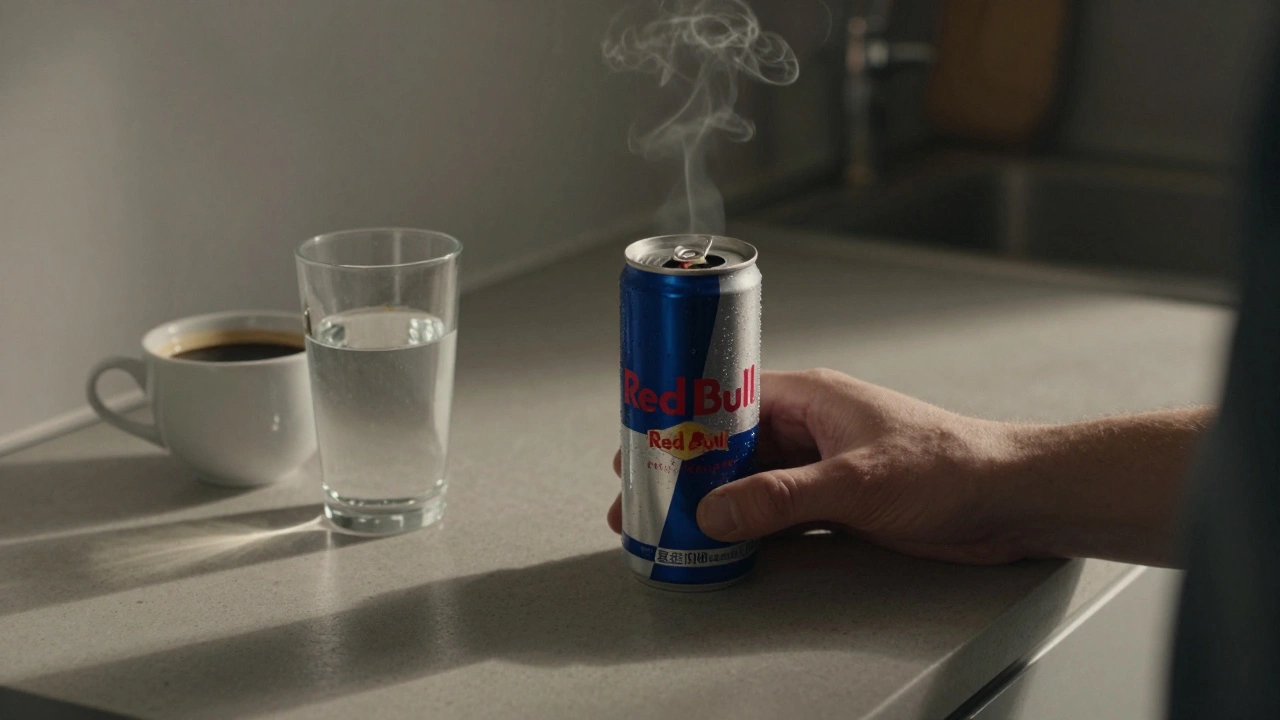
One Red Bull a week. Sounds harmless, right? You grab it after a late night, before a workout, or just because you’re tired. But is that single can really doing nothing to your body? The answer isn’t as simple as yes or no.
What’s actually in one can of Red Bull?
A standard 250ml can of Red Bull contains 80mg of caffeine - about the same as a cup of home-brewed coffee. It also has 27 grams of sugar, which is nearly 7 teaspoons. That’s close to the World Health Organization’s recommended daily limit for added sugar for women, and more than half of what men should aim for. Then there’s taurine, B-vitamins, and glucuronolactone - ingredients that sound scientific but don’t actually give you energy. Your body makes taurine naturally. B-vitamins help turn food into energy, but if you’re already eating a balanced diet, they’re just expensive urine.
The real kicker? Sugar and caffeine together. Caffeine masks fatigue, while sugar gives you a quick spike - then a crash. That’s not energy. That’s a temporary illusion your body pays for later.
How caffeine affects your body weekly
One Red Bull a week means about 80mg of caffeine, seven times a month. That’s 560mg a month - under the 400mg daily limit most health agencies recommend. So technically, you’re within safe caffeine limits. But limits aren’t the same as safe for everyone.
Some people feel jittery after 50mg. Others sleep fine after 300mg. Genetics play a big role. If you’re sensitive to caffeine, even one can a week can mess with your sleep quality. Poor sleep leads to higher cortisol, which increases belly fat, weakens immunity, and makes you crave more sugar. It’s a loop.
And here’s what most people miss: caffeine tolerance builds up. That one can that used to perk you up? After a few months, it might not do much. So you start drinking more. Or you switch to energy shots. Or you add another one on weekends. Habit sneaks in slowly.
Sugar - the silent problem
Let’s talk about the 27 grams of sugar. That’s not natural sugar from fruit. It’s refined, processed sugar. One can of Red Bull has more sugar than a McDonald’s apple pie. And it’s liquid. That means it hits your liver fast. No fiber to slow it down. No protein or fat to balance it.
Studies show that regularly drinking sugary beverages - even just once a week - increases your risk of fatty liver disease, type 2 diabetes, and weight gain. A 2023 study in the British Medical Journal followed 100,000 adults over 10 years. Those who drank one sugary drink a week had a 12% higher risk of developing metabolic syndrome than those who drank none.
It’s not about the one can. It’s about the pattern. Your body doesn’t see it as a treat. It sees it as a toxin to process. And your pancreas? It’s working overtime to pump out insulin.
Who should avoid even one a week?
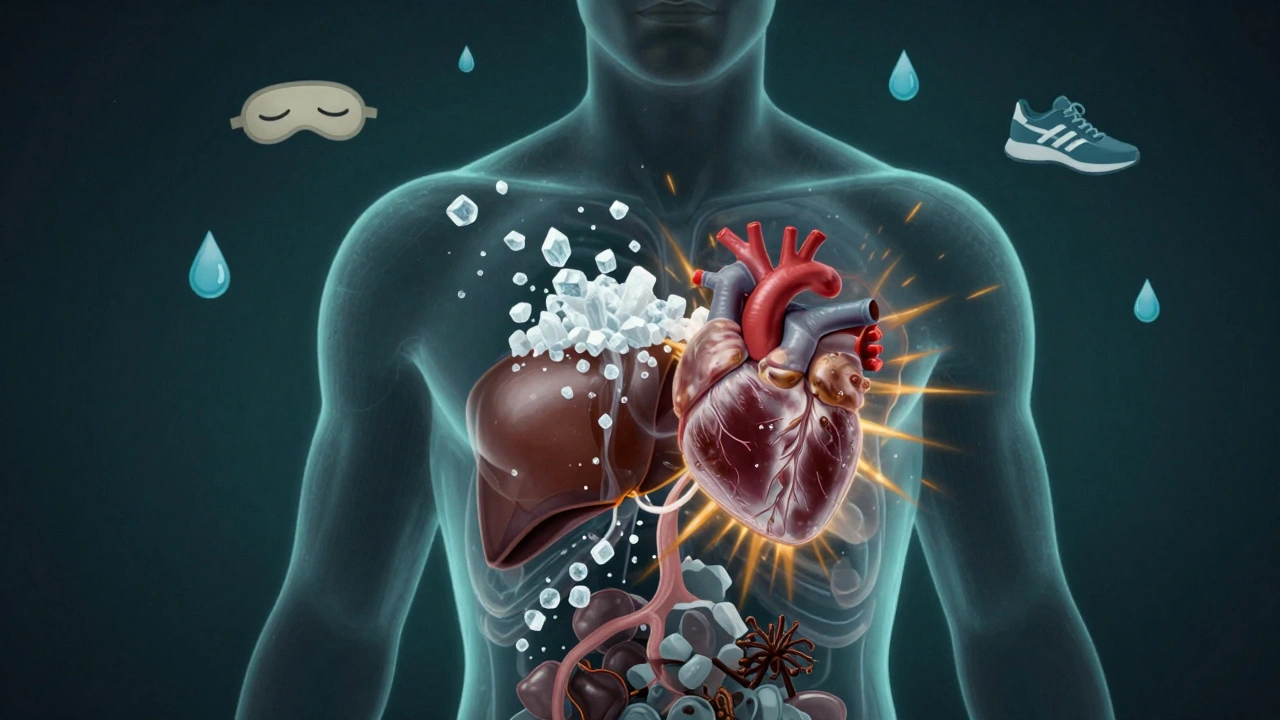
Some people shouldn’t touch Red Bull at all - even once a week.
- Anyone under 18 - their brains are still developing, and caffeine can interfere with sleep cycles critical for learning and memory.
- People with anxiety or heart conditions - caffeine can trigger palpitations or panic attacks.
- Pregnant women - the American College of Obstetricians and Gynecologists recommends under 200mg of caffeine per day. One Red Bull is 40% of that.
- People taking certain medications - like antidepressants, ADHD drugs, or antibiotics - caffeine can interact dangerously.
If you fall into any of these groups, skip it. There’s no benefit that outweighs the risk.
What if you’re healthy and active?
Let’s say you’re a 30-year-old who runs 3 times a week, eats vegetables, sleeps 7 hours, and doesn’t feel jittery. One Red Bull a week? Probably fine. But it’s still not a smart habit.
Why? Because you’re training your body to need artificial stimulation. You’re not fixing the root cause of your tiredness - maybe it’s poor sleep, dehydration, or not enough protein. Red Bull doesn’t solve those. It just covers them up.
And here’s a real-world example: A client I worked with in Brisbane - a 34-year-old gym-goer - drank one Red Bull every Saturday before his workout. He thought it helped his performance. But his recovery got worse. His sleep quality dropped. He started craving sweets all week. When he switched to black coffee (no sugar) and drank more water, his energy levels stabilized. He didn’t need the can anymore.
Better alternatives to Red Bull
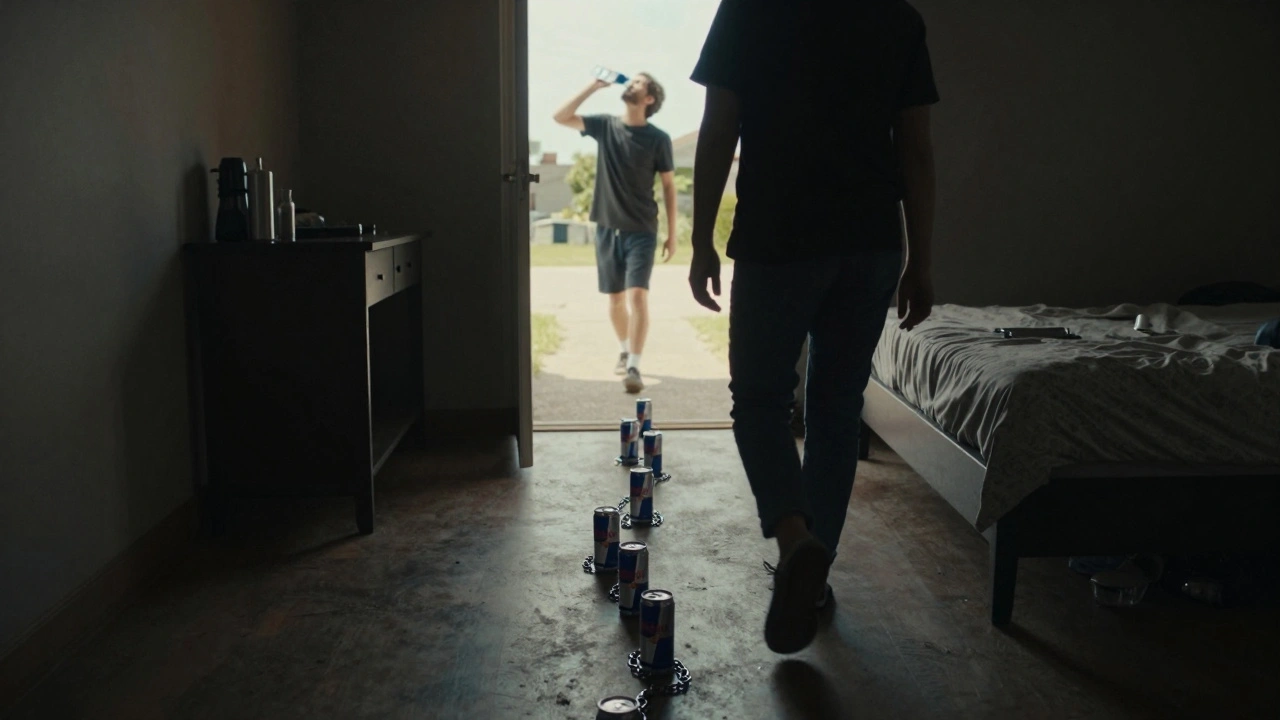
You don’t need energy drinks to feel alert. Here’s what actually works:
- Water - dehydration is the #1 cause of afternoon fatigue. Drink a glass before you reach for the can.
- Black coffee - no sugar, no nonsense. 150mg caffeine in a 250ml cup. You control the dose.
- Green tea - has L-theanine, which smooths out caffeine’s edge. Less crash, more focus.
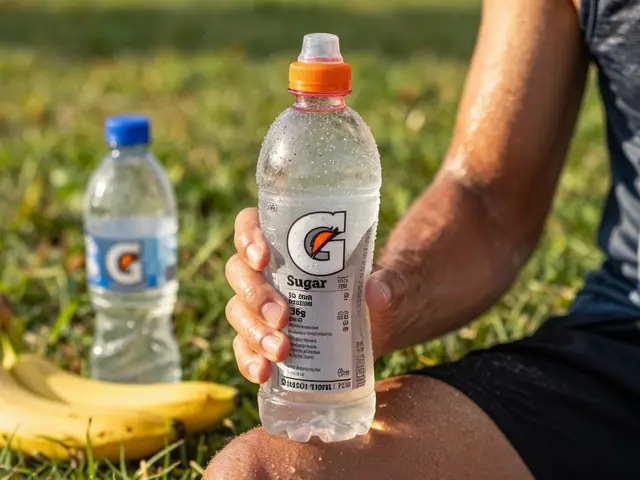
- Electrolyte drinks - if you’re sweating a lot, your body might just need sodium and potassium. Try a low-sugar version.
- 10-minute walk - movement boosts blood flow and oxygen. Nothing beats natural stimulation.
And if you’re craving the taste? Try sparkling water with a splash of lime and a pinch of sea salt. It’s fizzy, refreshing, and has zero sugar.
How to break the habit
If you’ve been drinking one Red Bull a week for a while, quitting might feel harder than you think. That’s because your brain associates it with reward - a quick fix for tiredness.
Here’s how to quit without feeling deprived:
- Track it for a week. Write down when and why you reach for it. Is it stress? Boredom? Fatigue?
- Replace it with a non-caffeinated ritual. Brew tea. Stretch. Step outside.
- Set a 30-day challenge. No Red Bull. See how your sleep, cravings, and energy change.
- After 30 days, ask yourself: Did I miss it? Or did I just miss the habit?
Most people find that after two weeks, they don’t even think about it anymore.
The bottom line
One Red Bull a week won’t kill you. But it’s not harmless either. It’s a small, daily risk that adds up. Sugar. Caffeine. Empty calories. A habit that trains your body to depend on artificial boosts instead of fixing real problems.
If you’re healthy, active, and mindful - you can probably get away with it. But why choose a drink that’s designed to create dependence when you can build real, lasting energy from sleep, water, movement, and food?
Real energy doesn’t come in a can. It comes from how you live.
Is one Red Bull a week bad for your heart?
For most healthy adults, one Red Bull a week is unlikely to cause direct heart damage. But caffeine can raise blood pressure temporarily and increase heart rate. If you have existing heart conditions, high blood pressure, or arrhythmias, even small amounts can trigger symptoms. The sugar also contributes to inflammation, which is linked to long-term cardiovascular risk. It’s not the one can - it’s the pattern.
Does Red Bull affect sleep if I drink it on Friday night?
Yes. Caffeine has a half-life of about 5-6 hours. That means if you drink a Red Bull at 8 PM on Friday, you still have 40mg of caffeine in your system by midnight. That’s enough to delay sleep onset and reduce deep sleep, especially if you’re sensitive. Even if you fall asleep, your rest quality drops. Weekend sleep doesn’t fully make up for it.
Can I drink Red Bull if I’m trying to lose weight?
It’s not a good idea. The 27 grams of sugar in one can is 110 empty calories. Sugar spikes insulin, which tells your body to store fat. Even if you burn off the calories later, the hormonal disruption makes fat loss harder. Plus, sugar cravings often follow. You end up eating more overall. Water, black coffee, or unsweetened green tea are far better choices.
Are sugar-free Red Bulls better?
Sugar-free versions replace sugar with artificial sweeteners like aspartame or acesulfame K. That cuts calories but doesn’t fix the caffeine issue. Some studies link artificial sweeteners to altered gut bacteria and increased sugar cravings. They also don’t satisfy the brain’s reward system the same way sugar does - which can make you want more. So while they’re lower in sugar, they’re not a healthy swap.
What’s the safest amount of caffeine per week?
There’s no official weekly limit, but experts recommend staying under 400mg of caffeine per day - that’s about 5 cans of Red Bull. But that’s a daily max, not a weekly target. For long-term health, aim for 100-200mg per day, max. That’s 1-2 cups of coffee. One Red Bull a week (80mg) is within that range, but only if you’re not getting caffeine from other sources like tea, soda, or chocolate.
If you’re thinking about cutting back, start by swapping one Red Bull for water or tea. Notice how you feel after a week. You might be surprised how much better you sleep, how much less you crave sweets, and how steady your energy becomes - without any cans at all.



Comments (15)
mark nine
10 Dec 2025
One can a week? Sure, why not. I’ve been doing it for years. No crashes, no sleep issues. Just a little boost before the gym. If your body handles it, who cares what the internet says.
Tony Smith
10 Dec 2025
One might argue, with the utmost formality and deference to scientific consensus, that the ingestion of a sugary, caffeine-laden, chemically fortified beverage on a weekly basis constitutes a subtle yet statistically significant deviation from optimal physiological homeostasis. One might also observe that the human body, having evolved over millennia without the benefit of energy drinks, may not be optimally equipped to process such concoctions. One might, in fact, be inclined to suggest that the very act of consuming Red Bull is an act of cultural surrender to corporate neuroscience.
Rakesh Kumar
11 Dec 2025
Bro, I thought I was the only one! I drink one every Friday night before gaming and I feel like a superhero. But then I wake up at 3 AM with my heart pounding like a drum. Now I’m scared. Is my liver crying? 😭
Bill Castanier
13 Dec 2025
Water works better. Move more. Sleep more. Simple. Not sexy. True.
Ronnie Kaye
13 Dec 2025
Oh wow so now we’re policing one can of soda a week? Next they’ll ban breathing too fast. People have lives. Sometimes you’re tired. Sometimes you need a boost. Chill out. It’s not a drug, it’s a drink. Get a hobby.
Priyank Panchal
14 Dec 2025
You people are weak. In India we drink chai with sugar and still run marathons. One Red Bull? Pathetic. You’re all addicted to comfort. Go lift something heavy. Then come back.
Wilda Mcgee
15 Dec 2025
That sugar spike is like throwing a glitter bomb into your bloodstream. It’s sparkly for a second, then you’re covered in sticky, fluorescent mess for days. And your pancreas? It’s just standing there holding a mop, wondering why it signed up for this.
Chris Atkins
17 Dec 2025
My cousin drinks two a day and runs a marathon every month. He’s fine. Maybe it’s not the drink, maybe it’s the person. Just saying
Jen Becker
18 Dec 2025
So you’re saying I can’t have my Saturday ritual? My one tiny rebellion against the soul-crushing grind of adulthood? You’re not just attacking Red Bull. You’re attacking my identity.
Rob D
19 Dec 2025
USA invented caffeine. We don’t need your European tea-sipping nonsense. Red Bull is American grit in a can. If you can’t handle one can a week, maybe you should move to Sweden and drink aquavit.
Franklin Hooper
21 Dec 2025
There is a grammatical inconsistency in your use of the phrase 'expensive urine.' While colloquially understood, the construction lacks a subject-verb agreement. It should read 'it is expensive urine' or 'you produce expensive urine.' The omission suggests a disregard for linguistic precision, which undermines the credibility of your entire argument.
Jess Ciro
22 Dec 2025
Red Bull is a government mind-control tool disguised as an energy drink. The B-vitamins? They’re laced with lithium. The sugar? It’s to keep you docile. They don’t want you thinking clearly. They want you tired, distracted, and buying more cans. Wake up.
John Fox
23 Dec 2025
I used to drink one every Friday. Stopped for a month. Felt better. Didn’t miss it. Now I just drink coffee and go to bed earlier. No drama.
Tasha Hernandez
24 Dec 2025
You don’t understand the pain. I’ve been drinking Red Bull since I was 16. It’s the only thing that made me feel alive during my divorce. Now you want me to give it up? What am I supposed to feel instead? Emptiness? Sadness? The silence?
Kathy Yip
24 Dec 2025
so i was thinking… what if the real issue isnt the red bull but the fact that we’ve normalized needing artificial boosts to function? like… why are we so tired all the time? is it sleep? diet? work? or are we just… broken? i dont know. but i think we’re missing the point. the drink is just a symptom.