
Do Pro Athletes Drink Red Bull? The Truth Behind the Energy Drink Trend
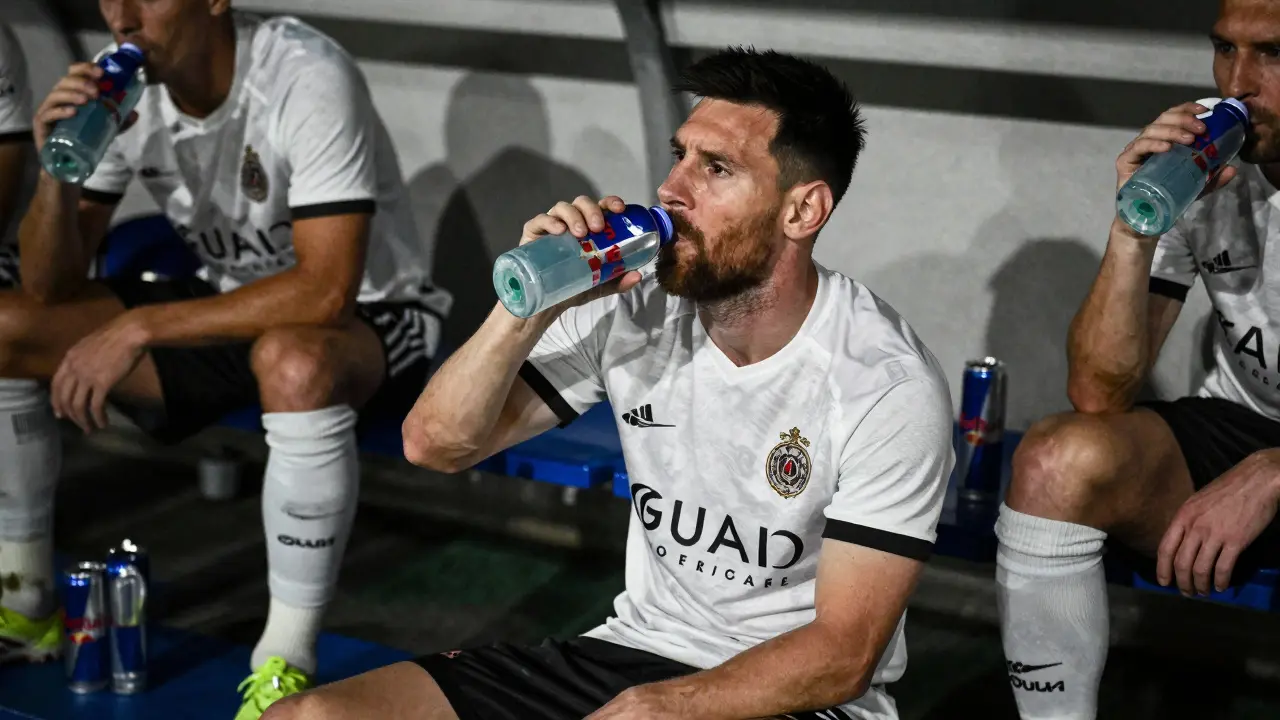
When you see a pro athlete downing a can of Red Bull before a game or match, it’s easy to assume it’s part of their routine-like stretching or hydrating. But here’s the thing: most elite athletes don’t drink Red Bull at all. Not before competition. Not during. Not even as a post-game treat. And the reason isn’t about marketing-it’s about science, regulation, and what actually helps performance.
Red Bull’s Ingredients: What’s Really in the Can?
Red Bull contains 80 milligrams of caffeine per 250ml can. That’s about the same as a home-brewed cup of coffee. But it also has 27 grams of sugar. That’s more than half the daily recommended limit for added sugar by the American Heart Association. Add in taurine, B-vitamins, and glucuronolactone, and you’ve got a cocktail designed for quick energy, not sustained performance.
For a sprinter, a soccer player, or a tennis pro, that sugar spike leads to a crash within 45 to 60 minutes. And crashes don’t help you win. They make you sluggish, jittery, or worse-prone to injury. Pro athletes train their bodies to burn fat efficiently, maintain steady glucose levels, and delay fatigue. A sugary drink like Red Bull works against that.
What Do Elite Athletes Actually Drink?
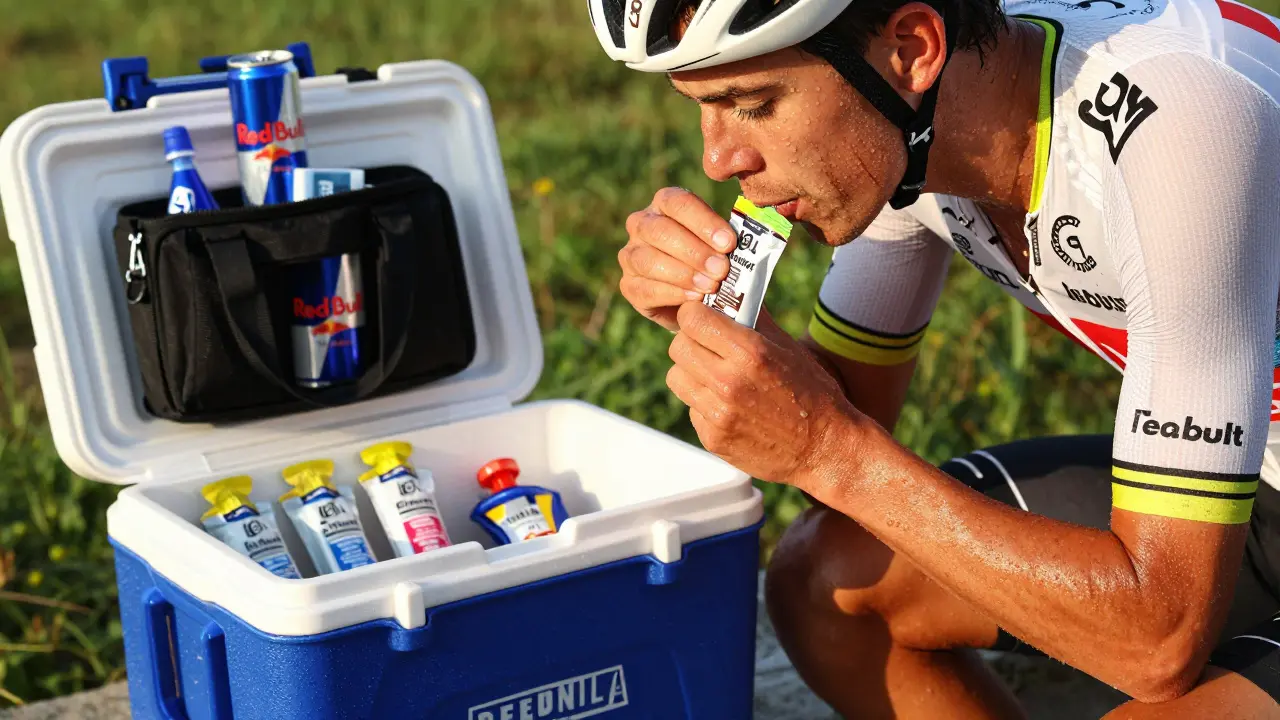
Look at the hydration stations at the Tour de France, the NBA finals, or the US Open. You won’t see Red Bull. You’ll see:
- Electrolyte solutions with sodium, potassium, and magnesium
- Carbohydrate gels with 15-20g of glucose per serving
- Caffeine tablets (100-200mg) taken 30-60 minutes before competition
- Water, plain or flavored with natural extracts like lemon or mint
Top-tier athletes use precision nutrition. They don’t guess. They test. They track. And they avoid anything with uncontrolled sugar or unverified additives. A 2023 study from the International Society of Sports Nutrition reviewed 147 elite athletes across 12 sports. None reported using Red Bull as a pre-performance fuel. Zero.
Why Do Some Athletes Still Drink It?
Because of the ads.
Red Bull sponsors extreme sports, motorsports, and action athletes-people who need a burst of adrenaline, not endurance. Think snowboarders, motocross racers, or skydivers. These athletes aren’t playing 90-minute soccer matches or running 26.2 miles. Their events are short, explosive, and high-risk. A quick energy boost might make sense in that context.
Also, some younger athletes or amateurs see Red Bull in videos, think it’s a secret weapon, and copy it. But amateur athletes don’t have access to sports scientists, blood tests, or recovery labs. What works for a pro in a controlled environment doesn’t translate to the weekend warrior.
The Caffeine Factor: Yes, But Not Like This
Caffeine? Absolutely. It’s one of the most researched performance enhancers in sports. The NCAA and WADA allow up to 12 micrograms per milliliter of urine-that’s the equivalent of about 5-6 cups of coffee. Many pro runners, cyclists, and swimmers take 3-6mg of caffeine per kilogram of body weight before competition. That’s 200-400mg for a 70kg athlete.
But they don’t get it from a sugary soda. They use:
- Caffeine capsules (pure, measured, fast-absorbing)
- Caffeine-infused gum (for rapid absorption through the mouth)
- Black coffee (no sugar, no cream)
Red Bull’s caffeine is buried under sugar, which slows absorption. The body has to process the sugar first. That delays the caffeine effect. And when the sugar crashes, the caffeine is just starting to kick in. It’s a mismatch.
Regulations and Doping Risks
Red Bull isn’t banned. But that doesn’t mean it’s safe for pro athletes. Many sports organizations require athletes to check every supplement for banned substances. Red Bull doesn’t list all its ingredients in detail on its label. Taurine? B-vitamins? Glucuronolactone? They’re not regulated as strictly as pharmaceuticals.
Some athletes have failed drug tests after consuming energy drinks with unlisted stimulants. In 2021, a minor league baseball player tested positive for synephrine-a stimulant found in some energy drinks, but not listed on Red Bull’s official ingredient list. He claimed he only drank Red Bull. The league couldn’t prove otherwise. He was suspended.
Top athletes avoid anything with ambiguity. They use only third-party certified products-like NSF Certified for Sport or Informed-Sport. Red Bull isn’t certified. Not even close.
What About Recovery?
After a game, athletes need to replenish glycogen, rehydrate, and repair muscle. Red Bull? It’s the opposite of recovery. Sugar spikes insulin, which can block fat burning. Caffeine is a diuretic-it makes you lose water. And the artificial flavors? They add zero nutritional value.
Recovery drinks for pros look like this: whey protein, casein, electrolytes, 30-50g of complex carbs (like oats or maltodextrin), and maybe 50mg of caffeine if they’re tired. Not a sugary soda.
So, Do Any Pro Athletes Drink Red Bull?
Maybe. Occasionally. Outside competition.
Some might grab one after a game to celebrate. Others might drink it on a long flight or during a layover. But never as part of their training or performance protocol. You won’t find a single elite coach recommending it. You won’t see it on the table at team meetings. And you won’t find it in any official sports nutrition guide.
Red Bull is a brand. It’s not a performance tool. It’s a marketing machine. And it’s been very good at making people think it’s essential for athletes.
What Should Athletes Do Instead?
If you’re serious about performance, here’s what works:
- Hydrate with water and electrolytes before, during, and after activity
- Use 100-200mg of caffeine 60 minutes before competition (capsules or coffee)
- Get carbs from whole foods-bananas, rice, oats-not candy-like drinks
- Avoid anything with more than 5g of sugar per 100ml
- Only use supplements with NSF or Informed-Sport certification
Real performance doesn’t come from a can. It comes from sleep, recovery, training, and smart fueling. Red Bull might make you feel like a pro. But it won’t make you one.

Comments (8)
Jen Deschambeault
2 Mar 2026
Had a coach in college who swore by caffeine pills and electrolytes. Red Bull? He’d roll his eyes and say, 'You wanna crash mid-game? Go ahead.' Real athletes fuel like engineers-not like kids at a rave.
Just saying.
Kayla Ellsworth
2 Mar 2026
So let me get this straight. You’re telling me the entire sports industry is immune to marketing? That athletes don’t drink Red Bull because they’re too smart, not because brands pay them to pretend they don’t?
Yeah right.
Soham Dhruv
4 Mar 2026
my dude i used to drink red bull before pickup basketball and honestly it made me feel like a superhero for like 20 mins then i crashed harder than my ankle on a bad landing
now i just drink black coffee and water and i play longer and smarter
no cap
also i never knew taurine was a thing until now lol
Bob Buthune
4 Mar 2026
It’s not even about the sugar or the caffeine anymore. It’s about the psychological trap. Red Bull doesn’t sell energy. It sells identity. It sells the fantasy that you can be that guy in the video-flying off a cliff, screaming, muscles popping-when in reality you’re just trying to get through your 9-to-5 without passing out.
And now? Now it’s weaponized. Every influencer with a gym membership posts a ‘pre-workout Red Bull’ video. It’s not performance. It’s performance theater.
And we’re all just consumers in the background, nodding along like we’re part of the team.
Meanwhile, the real athletes? They’re asleep. Recovering. Doing the boring stuff. The stuff no one films.
You don’t become elite by drinking a can. You become elite by refusing to need it.
Jane San Miguel
5 Mar 2026
It is, in fact, a fascinating case study in the commodification of athletic identity. Red Bull’s marketing apparatus has successfully conflated adrenaline-fueled spectacle with physiological optimization, thereby constructing a false equivalence between extreme sports entertainment and elite athletic performance.
Their sponsorship of skydivers and snowboarders is not incidental-it is strategic obfuscation. The average consumer, lacking access to peer-reviewed sports science literature, conflates the aesthetics of risk with the mechanics of endurance.
Moreover, the absence of NSF certification renders the product not merely suboptimal, but ethically dubious in high-stakes competitive environments. One must ask: if a product cannot withstand third-party scrutiny, why should an athlete trust it?
Kasey Drymalla
5 Mar 2026
they all lie. the real truth is the government and the sports leagues are in cahoots with big pharma to hide the real performance enhancers
red bull has a secret ingredient that makes you faster but they dont want you to know because it's cheaper than their patented pills
you think those labs are for science? nah they're for coverups
ask yourself: why does every pro athlete have a branded water bottle but never a red bull can?
because they were told to
they're all programmed
Dave Sumner Smith
7 Mar 2026
you know what’s wild? the fact that you’re even surprised athletes don’t drink red bull
they’re not dumb
they’re not sheep
they’re paid millions to not get injured
if red bull had even one study showing it improved endurance or recovery
they’d be plastered on every locker room wall
but they don’t
because it doesn’t
and you know what else doesn’t work?
people who think sugar gives them energy
that’s why you’re tired after lunch
and why you’re reading this instead of sleeping
you’re the market
they made you
and now you’re mad because the truth doesn’t feel good
go drink some water
Cait Sporleder
8 Mar 2026
While the article presents a compelling, evidence-based argument grounded in sports physiology and regulatory frameworks, I find myself reflecting on the sociocultural dimensions of this phenomenon. The normalization of Red Bull as a performance enhancer-despite its lack of scientific validation-is a textbook example of symbolic capital being conflated with functional utility. The brand’s aesthetic, from its silver can to its extreme-sports imagery, constructs a narrative of transcendence: the idea that consumption equals transformation.
Furthermore, the psychological mechanism at play here is not merely about misinformation, but about aspirational identification. The amateur athlete, lacking institutional support and scientific literacy, turns to visible symbols of success-often mediated through social media-because they offer a tangible, albeit illusory, pathway to elite status.
It is not merely a beverage choice; it is a ritual of belonging. And until we address the systemic inequities in access to sports science education and resources, this symbolic consumption will persist, regardless of biochemical efficacy.
One might argue that the real performance-enhancing substance here is not caffeine or sugar-but hope.