
Alcohol vs Sugar: Which One Actually Damages Your Body More?
You've probably heard a dozen different theories at parties or in the gym. Some people swear that sugar is a slow poison that ruins your metabolism, while others point to alcohol as the ultimate toxin. When you're staring at a menu or picking an energy drink, the choice often boils down to a trade-off: do I take the high-calorie syrup or the drink that messes with my head? The truth is, neither is a "winner" in a contest of health, but they break your body in very different ways.
Key Takeaways for Your Health
- Sugar primarily drives insulin resistance and systemic inflammation.
- Alcohol acts as a direct cellular toxin, specifically targeting the liver and brain.
- Both can lead to fatty liver disease, though through different biological pathways.
- The "worst" depends on your specific health goals-weight loss vs. organ longevity.
The Metabolic Chaos of Sugar
When we talk about sugar, we aren't just talking about the white crystals in your kitchen. We're talking about Sucrose is a common table sugar composed of glucose and fructose. Most energy drinks and sodas are loaded with this. The real problem starts with fructose. Unlike glucose, which every cell in your body can use for energy, fructose is processed almost exclusively by your liver.
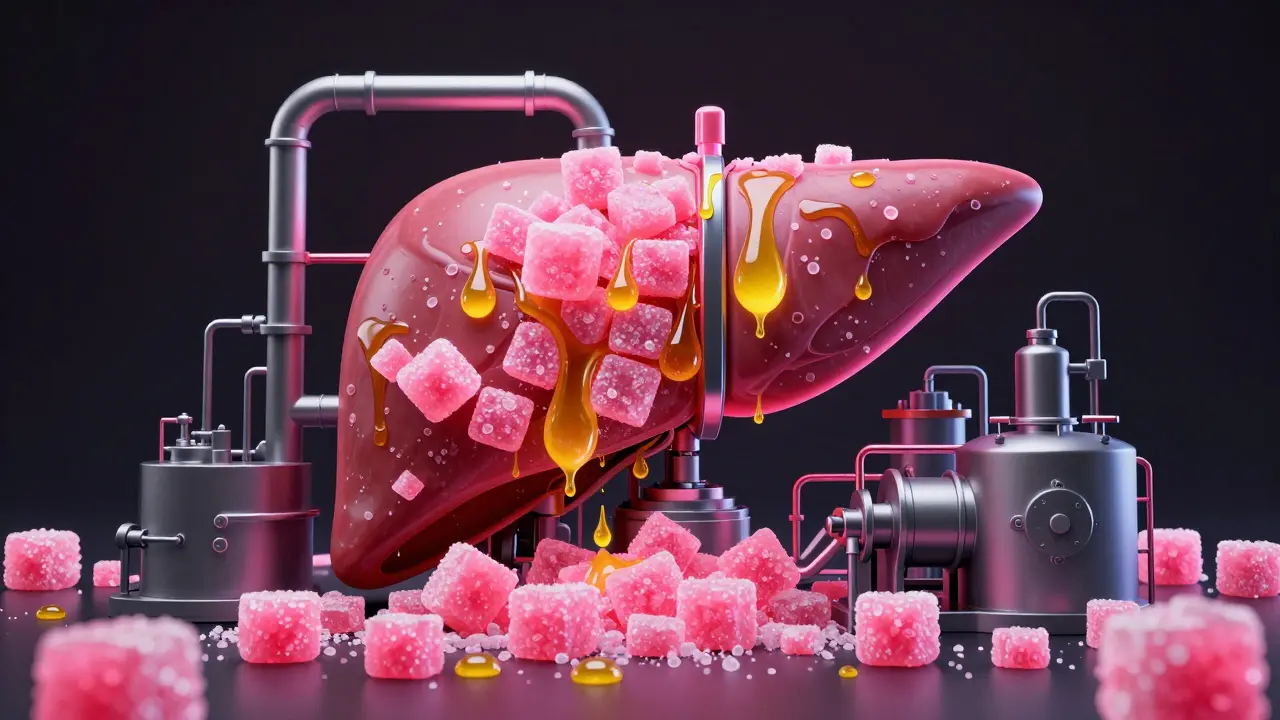
Imagine your liver as a processing plant. When you flood it with a 50g dose of sugar from a large energy drink, the plant gets overwhelmed. Instead of burning the energy, the liver converts that excess sugar into fat. This process, known as de novo lipogenesis, is how you end up with Non-Alcoholic Fatty Liver Disease (NAFLD). It's a strange irony: you don't even have to drink a drop of booze to develop a "drunkard's liver."
But the damage doesn't stop at the liver. Every time you spike your blood sugar, your pancreas pumps out Insulin, the hormone responsible for moving sugar into your cells. If you do this ten times a day, your cells start ignoring the signal. This is insulin resistance, the direct highway to type 2 diabetes. Have you ever felt that "sugar crash" where you're suddenly exhausted and irritable? That's your blood sugar plummeting after an insulin overreaction.
Alcohol: The Direct Cellular Toxin
Alcohol is a different beast entirely. While sugar is a fuel source that your body simply can't handle in large amounts, Ethanol is the intoxicating alcohol found in drinks, which the body treats as a poison. Your body doesn't want to "store" alcohol; it wants to get rid of it as fast as possible.
The liver handles this via an enzyme called alcohol dehydrogenase. However, this process creates a byproduct called acetaldehyde, which is highly toxic and can damage DNA. While sugar causes a metabolic backup, alcohol causes actual chemical burns and oxidative stress within your cells. This is why alcohol can lead to cirrhosis-the permanent scarring of liver tissue-much faster than sugar typically can.
Then there's the brain. Alcohol is a central nervous system depressant. It alters the balance of neurotransmitters, specifically GABA and Glutamate. While sugar might make you "foggy," alcohol actively shrinks the prefrontal cortex over time, affecting your decision-making and impulse control. It doesn't just add calories; it rewires how you think.
Comparing the Damage
To figure out which is worse, we need to look at the specific markers of damage. Sugar is a long-game destroyer; it erodes your health over decades through metabolic decay. Alcohol can be an acute destroyer, causing immediate organ stress and systemic toxicity.
| Feature | High Sugar Intake | Heavy Alcohol Intake |
|---|---|---|
| Primary Target Organ | Pancreas & Liver | Liver & Brain |
| Main Health Risk | Type 2 Diabetes / Obesity | Cirrhosis / Cognitive Decline |
| Effect on Insulin | Causes Insulin Resistance | Can cause acute hypoglycemia |
| Mechanism of Harm | Metabolic Overload | Direct Chemical Toxicity |
| Inflammation Type | Systemic (Low-grade) | Acute Organ Inflammation |
The Energy Drink Dilemma: A Double Whammy
Many people ask this question because they are choosing between a sugary energy drink and a cocktail. Here's the catch: many modern drinks combine the worst of both worlds. Some "hard" energy drinks mix high levels of caffeine, massive amounts of sugar, and alcohol. This is a dangerous cocktail for your heart and liver.
Caffeine masks the sedative effects of alcohol, meaning you don't feel how drunk you actually are. Meanwhile, the sugar spikes your insulin, and the alcohol prevents your liver from processing that sugar efficiently. You end up in a state of metabolic gridlock. If you're choosing between a 60g sugar energy drink and a glass of wine, the "winner" depends on whether you're more worried about your waistline or your liver enzymes.

Which One Should You Fear More?
If you are looking at long-term systemic health, sugar is arguably more "dangerous" because it is invisible and ubiquitous. You can avoid a drink at a bar, but it's nearly impossible to avoid hidden sugars in sauces, breads, and drinks. This constant drip of glucose keeps your insulin levels high 24/7, leading to chronic inflammation.
However, in terms of raw toxicity, alcohol wins. You can survive a high-sugar diet for a long time before you hit a crisis point. Alcohol, on the other hand, can cause acute poisoning or severe liver failure in a much shorter timeframe if abused. One is a slow leak in the boat; the other is a hole punched through the hull.
For most people, the real danger is the synergistic effect. When you consume sugar and alcohol together, the liver prioritizes breaking down the alcohol (the toxin) first. This means the sugar stays in your bloodstream longer, causing a more massive insulin spike and promoting more fat storage. It's the perfect recipe for weight gain and metabolic dysfunction.
Can sugar cause liver damage without alcohol?
Yes. This is called Non-Alcoholic Fatty Liver Disease (NAFLD). When the liver is overwhelmed by fructose, it converts the excess into fat droplets. Over time, this can lead to inflammation and scarring, mimicking the effects of long-term alcohol abuse.
Is artificial sweetener a better alternative to sugar?
It's a trade-off. While sweeteners like sucralose don't spike blood glucose, some research suggests they may alter the gut microbiome or keep your cravings for sweets alive. They avoid the insulin spike but don't necessarily "heal" the metabolism.
Does alcohol help burn sugar?
Absolutely not. Alcohol actually inhibits gluconeogenesis (the production of glucose) and forces the liver to stop processing other nutrients, which often leads to higher blood sugar instability and increased fat storage.
Which is harder to quit: sugar or alcohol?
Both trigger the dopamine reward system in the brain. Alcohol has more severe physical withdrawal symptoms (which can be life-threatening), while sugar creates intense psychological cravings and metabolic dependency.
Can I offset the damage of sugar by exercising?
Exercise helps by using up the glucose in your muscles, reducing the insulin load on your pancreas. However, it doesn't completely negate the inflammatory effects of high fructose on the liver.



Comments (9)
Sally McElroy
12 Apr 2026
The tragedy of modern existence is that we treat our bodies like waste bins!!! We trade our long-term sanctity for a momentary spike of dopamine... it's honestly a moral failing to ignore the slow rot of sugar while pretending we're healthy just because we don't drink!!!
James Winter
13 Apr 2026
Sugar is way worse. Alcohol is fine in moderation. Stop overthinking it.
Jennifer Kaiser
14 Apr 2026
We need to look at this from a perspective of consciousness. The body is a vessel, and while the biological markers are important, the intent behind why we consume these substances matters more. If we use sugar or alcohol to numb a void in our souls, the chemical damage is just a reflection of a deeper, spiritual starvation. We aren't just talking about insulin or acetaldehyde, but about the human condition and how we cope with existence. True health is a balance of the mind and the physical form, and ignoring the psychological root of addiction is just treating the symptom rather than the disease. It's an assertive truth that we are more than just biological machines to be optimized.
Aimee Quenneville
15 Apr 2026
wow such a laaaudable analysis... like we all knew that soda is bad lol... amazing discovery!!!!
TIARA SUKMA UTAMA
16 Apr 2026
Do you drink a lot? I bet you do. Tell me your diet.
Jasmine Oey
17 Apr 2026
Omg, it's literally so tragic how people just gulp down corn syrup like it's water!! Like, have some self-respect for your organs, sweetie! Honestly, the lack of discipline in society today is just... wow. I can't even imagine being okay with such sloppily managed health choices!!
Cynthia Lamont
19 Apr 2026
The logic here is barely holding on! You're oversimplifying the synergy between glucose and ethanol in a way that is honestly embarrassing to read! It's dramatic how people think a simple table can explain the complexity of metabolic failure! Get your facts straight or don't post at all!
Dmitriy Fedoseff
20 Apr 2026
The comparison is flawed because it ignores the cultural ritual of alcohol. In many societies, a drink is a bridge between people, whereas sugar is a solitary, corporate-driven addiction designed for profit. To equate the two as mere chemical inputs is a failure of philosophical depth. One is a poison of the spirit through isolation; the other is a poison of the liver through excess. We must respect the boundary between biological toxicity and cultural significance, and frankly, anyone who can't see that is blind to the reality of human interaction.
Marissa Martin
21 Apr 2026
I suppose some people just prefer to ignore the obvious warnings until it's too late.