
What organ is most affected by energy drinks?
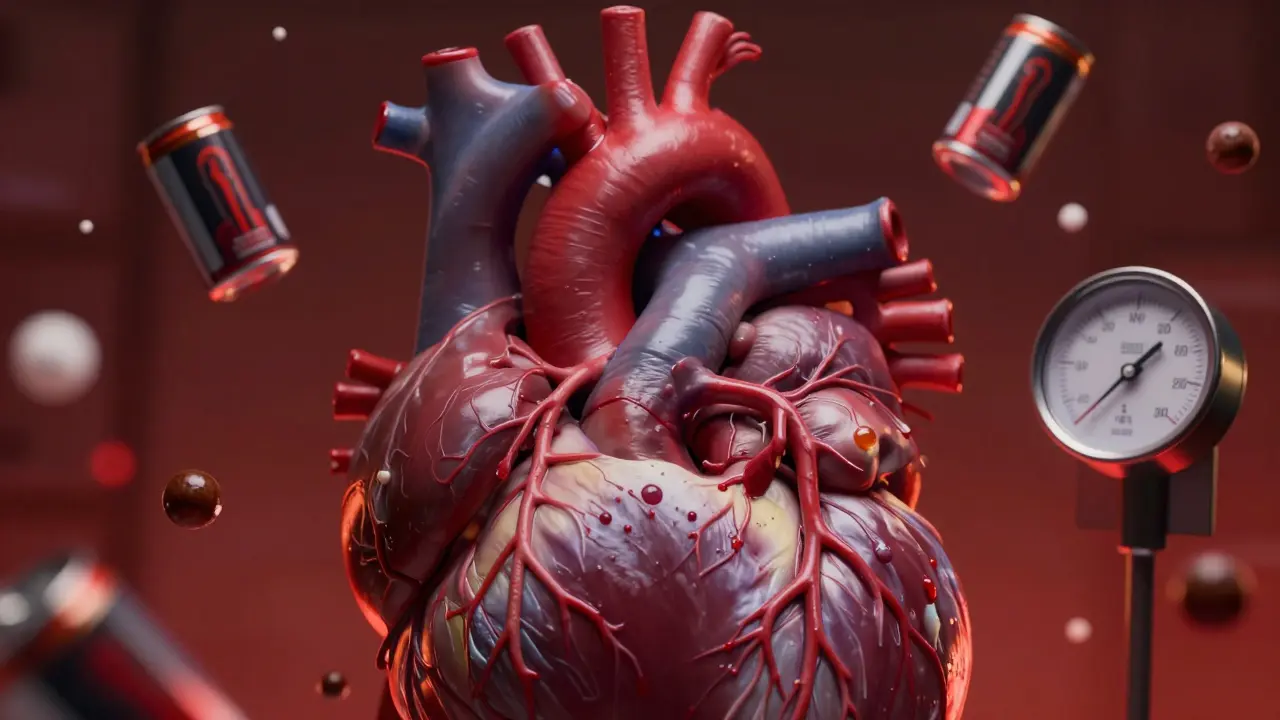
When you down an energy drink, you’re not just getting a quick buzz-you’re flooding your body with a potent mix of caffeine, sugar, and stimulants. But while you might feel energized, your body is working overtime to handle the load. One organ takes the biggest hit: your heart.
The heart bears the brunt
Energy drinks spike your heart rate and blood pressure within minutes. A 2022 study published in the Journal of the American Heart Association found that just one 16-ounce energy drink increased systolic blood pressure by an average of 6.8 mm Hg and heart rate by 12 beats per minute in healthy adults. That’s the same as running a short sprint. For someone with underlying heart conditions, this can trigger arrhythmias, palpitations, or even heart attacks.Why? Caffeine blocks adenosine, a chemical that normally slows your heart. At the same time, the sugar and other stimulants like taurine and guarana trigger adrenaline release. Your heart doesn’t know if you’re running from a bear or just scrolling on your phone-it just pumps harder. And when you’re drinking these daily, that constant stress wears down the muscle over time.
The liver doesn’t get a break
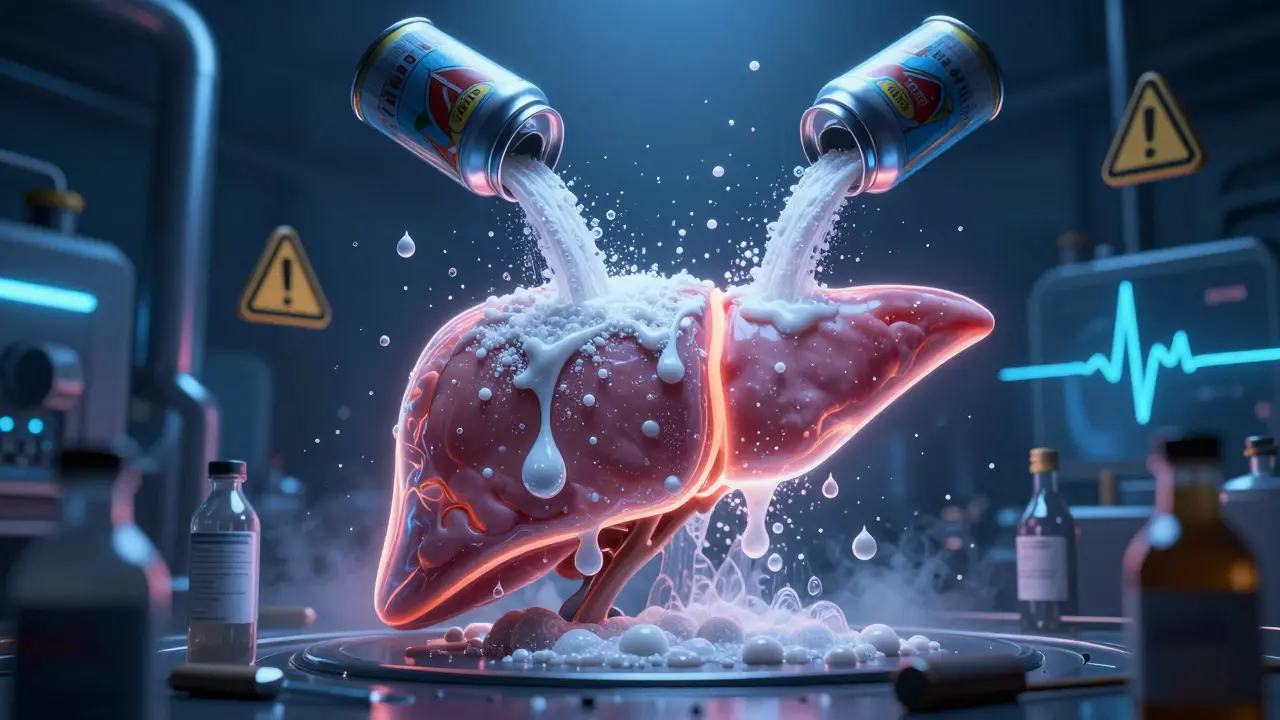
Your liver is the body’s detox center. When you consume energy drinks, it’s the first organ to process the flood of caffeine, artificial sweeteners, and sugar. A single can can contain up to 54 grams of sugar-that’s nearly 14 teaspoons. Your liver turns that sugar into fat, especially when it’s already overloaded from processed foods.Over time, this leads to non-alcoholic fatty liver disease (NAFLD). A 2023 analysis from the University of Sydney tracked 1,200 young adults who consumed energy drinks at least three times a week. Nearly 40% showed early signs of liver fat buildup-even if they weren’t overweight. That’s alarming because NAFLD often has no symptoms until it’s advanced. And unlike alcohol-related liver damage, this one creeps up silently, fueled by the same drinks marketed as “energy boosters.”
Other organs in the crosshairs
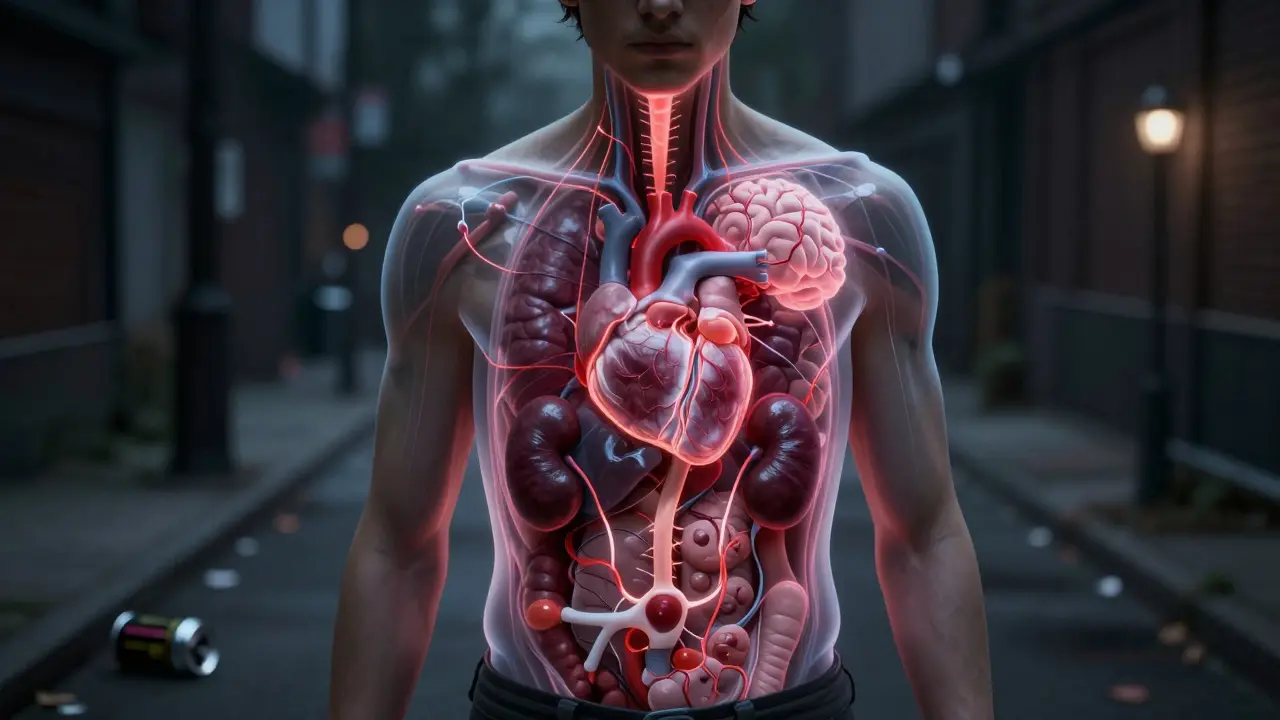
Your kidneys aren’t safe either. Caffeine is a diuretic, which means it pulls water out of your body. When you’re chugging energy drinks and not drinking enough water, your kidneys have to work harder to filter out the toxins. Chronic dehydration from these drinks can lead to kidney stones or even acute kidney injury in extreme cases.Then there’s your brain. High doses of caffeine can disrupt sleep patterns, increase anxiety, and even cause headaches or seizures in sensitive individuals. Teens and young adults are especially vulnerable-their brains are still developing, and caffeine alters dopamine signaling in ways that may increase dependency.
And let’s not forget your stomach. The acidity in energy drinks (often lower than soda, but still high) can irritate the stomach lining. People who drink them regularly report nausea, acid reflux, and even ulcers. One 19-year-old college student in Brisbane ended up in the ER with a bleeding ulcer after drinking three energy drinks a day for six months. His doctors said it wasn’t stress-it was the drinks.
What’s really in these drinks?
Most people don’t realize how little regulation there is. In Australia, energy drinks don’t need to list the total caffeine content if it’s under 320mg per liter. But many brands push that limit. A 500ml can of some popular brands contains 160mg of caffeine-equivalent to two strong coffees-plus another 40mg from guarana, which isn’t always counted. That’s 200mg in one drink. The FDA recommends no more than 400mg of caffeine per day for adults. One drink can take you halfway there.Sugar isn’t the only hidden problem. Ingredients like inositol, L-carnitine, and B-vitamins sound healthy, but they’re added in amounts too low to help and too high to be safe in combination. The real danger isn’t any single ingredient-it’s the cocktail.
Who’s most at risk?
Teens and young adults are the biggest consumers. A 2024 survey in Queensland found that 68% of high school students had consumed an energy drink in the past month. Athletes think they need them for performance-but studies show they don’t improve endurance. In fact, they can cause cramping and dehydration during exercise.People with anxiety, heart conditions, or sleep disorders should avoid them entirely. Even healthy people aren’t immune. The American Heart Association warns that energy drinks are not safe for children, pregnant women, or those with caffeine sensitivity.
What should you do instead?
If you’re tired, your body isn’t asking for caffeine-it’s asking for sleep, water, or movement. A 10-minute walk, a glass of water, or a short nap will do more for your energy than any drink. If you need a boost, try:- Green tea (natural caffeine + L-theanine for calm focus)
- Electrolyte drinks with no sugar or artificial sweeteners
- Black coffee (no added sugar, limit to one cup)
- Hydration with a pinch of sea salt and lemon
These options give you steady energy without the crash or the organ damage.
Bottom line
The heart takes the hardest hit from energy drinks-but the liver, kidneys, brain, and stomach aren’t far behind. There’s no such thing as a “safe” energy drink if you’re drinking them regularly. They’re not sports nutrition. They’re not health products. They’re stimulant cocktails designed to get you hooked.If you’re drinking them to stay awake, push through a workout, or chase a mood boost-you’re trading short-term energy for long-term damage. Your organs don’t get a day off. Neither should your caution.
Can energy drinks cause heart problems in healthy people?
Yes. Even healthy people can experience increased heart rate, high blood pressure, and irregular heartbeats after consuming energy drinks. A 2022 study found that one 16-ounce can raised blood pressure and heart rate in otherwise healthy adults to levels similar to moderate exercise. In rare cases, this can trigger serious arrhythmias or heart attacks, especially when combined with physical exertion or alcohol.
Is the sugar in energy drinks worse than the caffeine?
Both are harmful, but in different ways. Caffeine overloads the nervous and cardiovascular systems, while sugar overloads the liver and leads to fat buildup, insulin resistance, and metabolic damage. One can of energy drink often has more sugar than the daily limit recommended by the WHO. For long-term health, sugar may be the bigger silent threat-especially since it’s hidden behind terms like “dextrose” or “fruit juice concentrate.”
Do sugar-free energy drinks damage your liver?
Yes. Sugar-free versions still contain high levels of caffeine and artificial sweeteners like sucralose or aspartame, which are processed by the liver. A 2023 study linked daily consumption of sugar-free energy drinks to early signs of fatty liver disease, even without weight gain. The liver doesn’t care if the sugar is real or artificial-it still has to detoxify the chemicals. Over time, this stresses liver cells and reduces their function.
How many energy drinks are too many?
One per day is already risky. The American Heart Association recommends no more than 400mg of caffeine per day for adults. Many energy drinks contain 160-200mg per can, meaning two cans can push you to the limit. Add caffeine from coffee, tea, or chocolate, and you’re over. For teens, the limit is 100mg per day-so even one energy drink is too much. Daily use, even one drink, increases the risk of long-term organ damage.
Can you reverse the damage from energy drinks?
Some damage can be reversed if you stop drinking them early. Blood pressure and heart rate often return to normal within days or weeks of quitting. Fatty liver can improve with diet changes and exercise. But if you’ve developed chronic high blood pressure, heart rhythm issues, or advanced liver scarring, the damage may be permanent. The earlier you cut them out, the better your chances of recovery.

Comments (13)
Jim Sonntag
17 Jan 2026
One can and I’m already sweating like I ran a marathon. Guess my heart thinks I’m being chased by a bear. Cool. I’ll just stick to coffee now.
Deepak Sungra
18 Jan 2026
bro i drank 3 in one night last week and woke up with my heart doing the cha-cha. no regrets. also my liver sent me a thank you note in the form of a 3am panic attack.
Samar Omar
19 Jan 2026
The real tragedy isn’t the caffeine or the sugar-it’s the collective societal delusion that we can outsource biological regulation to a neon-lit can of chemically engineered adrenaline. We’ve turned our physiology into a performance metric, and now we’re surprised when the engine blows. The heart is merely the canary in the coal mine. The real failure is our refusal to acknowledge that rest is not laziness-it’s a biological imperative.
chioma okwara
19 Jan 2026
u guys r so dramatic its just caffeine lol my cousin drinks 5 a day and still runs marathons smh
John Fox
20 Jan 2026
I used to chug them before gym now I just drink water and nap for 15 minutes. My joints thank me
Tasha Hernandez
21 Jan 2026
Let’s be real-energy drinks are just corporate-designed emotional band-aids for people too exhausted to admit they’re burned out. And the marketing? Pure psychological warfare. You’re not buying energy. You’re buying a ticket to a slow-motion collapse wrapped in a flashy logo.
Anuj Kumar
22 Jan 2026
this is all a scam by the big pharma and big sugar cartel to make us dependent. they dont want us to sleep naturally. they want us to be zombies buying cans. you think your heart is the problem? wait till you find out what’s really in the can
Sarah Meadows
23 Jan 2026
The FDA’s guidelines are outdated. We’re not talking about a cup of coffee-we’re talking about engineered neurostimulant payloads designed to bypass natural homeostasis. If you’re not monitoring your cardiovascular biomarkers after regular consumption, you’re not being responsible-you’re being reckless.
Nathan Pena
23 Jan 2026
The data presented is statistically significant, methodologically sound, and corroborated by multiple peer-reviewed longitudinal studies. One must, therefore, conclude that the consumption of energy beverages constitutes a non-trivial public health risk, particularly among adolescent populations exhibiting elevated catecholamine sensitivity.
Mike Marciniak
24 Jan 2026
They’re not just in energy drinks. They’re in the water supply. The government knows. They want us weak. The liver damage? It’s not the sugar. It’s the fluoride and the microplastics they add to make you come back for more.
Mbuyiselwa Cindi
26 Jan 2026
I used to be one of those people who drank them daily. Once I quit, my sleep improved, my anxiety dropped, and I actually started enjoying my mornings again. It’s not about willpower-it’s about listening to your body. You don’t need a boost. You need rest.
Krzysztof Lasocki
26 Jan 2026
I used to think I needed them to grind. Then I realized I just needed to stop pretending I’m a machine. Now I walk. I breathe. I sleep. And yeah-I’m more productive than ever. Who knew?
Jim Sonntag
26 Jan 2026
Lmao Nathan just turned a post about energy drinks into a TED Talk. I’m not mad. I’m impressed.