
What Energy Drink Is NCAA Approved? A Clear Guide for Student-Athletes
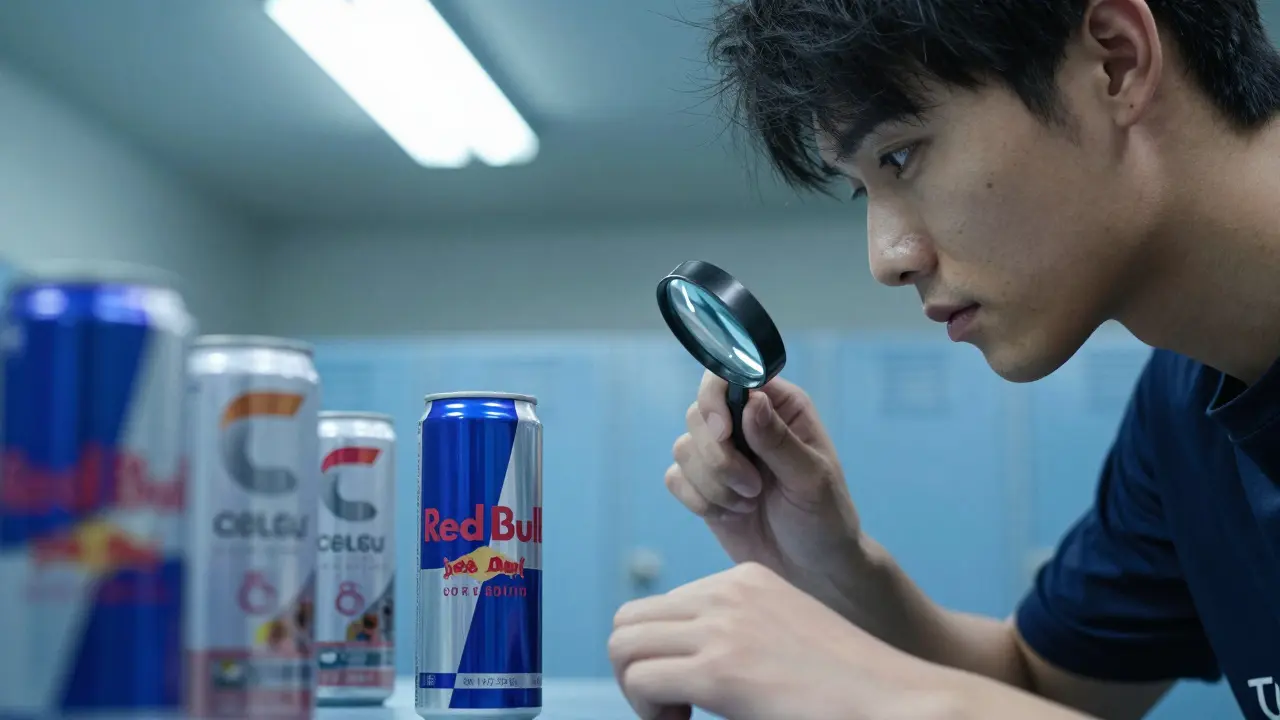
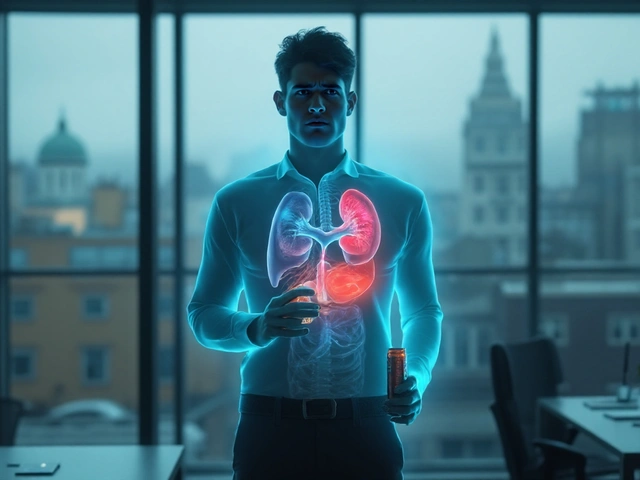
Every year, hundreds of college athletes reach for an energy drink before practice, game day, or finals week-only to find out later it could cost them their eligibility. The NCAA doesn’t publish a simple list of approved energy drinks. Instead, it bans specific ingredients. Knowing what’s allowed isn’t about brand names-it’s about reading labels and understanding the rules.
What the NCAA Actually Bans
The NCAA doesn’t approve products. It bans substances. If an energy drink doesn’t contain any banned ingredients, it’s technically allowed. The real problem? Many popular energy drinks sneak in compounds that violate NCAA policy.
Here’s what’s strictly forbidden:
- DMAA (1,3-dimethylamylamine) - found in some pre-workout and energy products, banned since 2012.
- DMBA (1,3-dimethylbutylamine) - a close relative of DMAA, also prohibited.
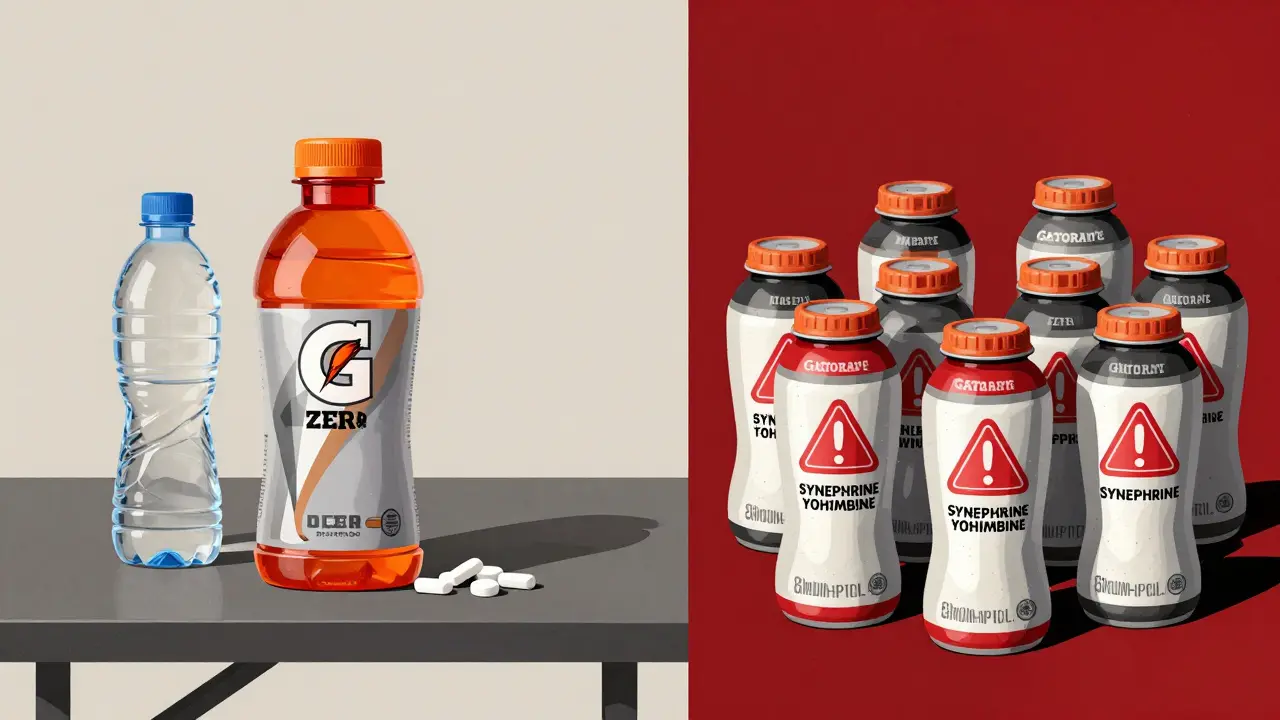
- Synephrine - often labeled as bitter orange extract, banned because it’s a stimulant with similar effects to ephedrine.
- Yohimbine - used in fat-burning supplements and some energy drinks, banned due to its stimulant properties.
- High-dose caffeine - while caffeine itself isn’t banned, levels above 15 micrograms per milliliter in urine (roughly 500-600 mg consumed) trigger a positive test. That’s about 3-4 cans of most energy drinks in one sitting.
These aren’t obscure chemicals. They’re common in products marketed as “natural” or “clean.” A student-athlete might think they’re choosing a healthy option-until they fail a drug test.
Which Brands Are Safe?
There’s no official NCAA list of approved brands. But based on ingredient reviews and testing by athletic departments, a few energy drinks consistently avoid banned substances:
- Powerade Zero - no caffeine, no stimulants, just electrolytes and artificial sweeteners. Used by many NCAA teams as a hydration option.
- Gatorade Zero - similar to Powerade, designed for hydration without stimulants. Contains no caffeine or banned compounds.
- Bodyarmor Lyte - uses coconut water, no artificial stimulants, and keeps caffeine under 100 mg per bottle. Many college programs recommend it.
- Monster Energy Zero Ultra - contains caffeine (140 mg per can) but no banned stimulants. As long as the athlete doesn’t consume more than one can before testing, it’s compliant.
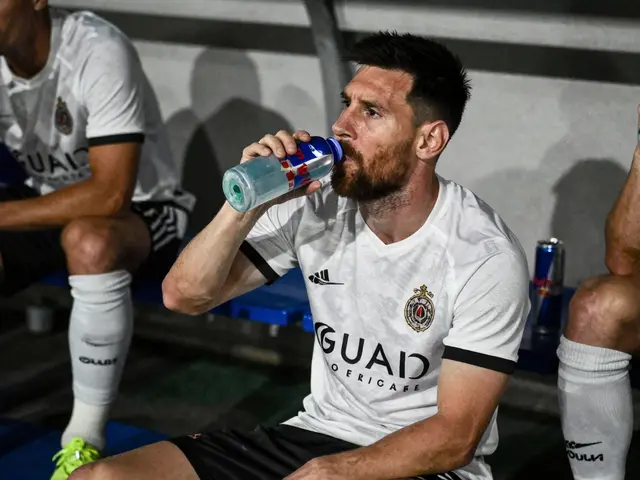
- Red Bull Energy Drink (Original) - contains caffeine (80 mg per 8.4 oz can) and B vitamins. No banned stimulants. It’s one of the most common choices among NCAA athletes.
Important: Even safe brands can vary by flavor or region. Always check the label. For example, Monster Energy “Zero Sugar” is fine, but Monster Energy “Ultra Rose” contains yohimbine in some markets. Same brand, different rules.
Why Some Popular Drinks Are Risky
Brands like Bang Energy, Celsius, and Rockstar Pure Zero often look clean-but they’re loaded with hidden red flags.
Bang Energy uses creatine, caffeine, and “Super Creatine” (a compound that breaks down into creatinine, which is fine), but also contains synephrine in some versions. The NCAA doesn’t distinguish between natural and synthetic forms-synephrine is banned regardless.
Celsius markets itself as a “fitness drink,” but its ingredient list includes green tea extract (which contains caffeine) and ginger root. While ginger is fine, green tea extract can push caffeine levels dangerously high if combined with other sources. Plus, some versions contain grapefruit extract, which interferes with drug metabolism and could affect test results.
Rockstar Pure Zero has no sugar, but its “Energy Blend” includes taurine, glucuronolactone, and caffeine. Taurine and glucuronolactone are allowed, but the caffeine content (240 mg per can) puts athletes at risk of exceeding the NCAA limit if they drink more than one or combine it with coffee or pre-workout supplements.
Even “natural” or “organic” claims don’t matter. The NCAA doesn’t care if an ingredient comes from a plant. If it’s on the banned list, it’s banned.
How to Check Any Energy Drink
Here’s a simple 3-step process every student-athlete should follow:
- Find the Supplement Facts label - not the marketing front. Look at the back of the can or bottle.
- Look for banned ingredients - scan for DMAA, DMBA, synephrine, yohimbine, or high-dose caffeine (>150 mg per serving).
- Check the total caffeine - if you’re drinking multiple drinks, eating caffeine gum, or having coffee, add it all up. Stay under 500 mg total before any drug test.
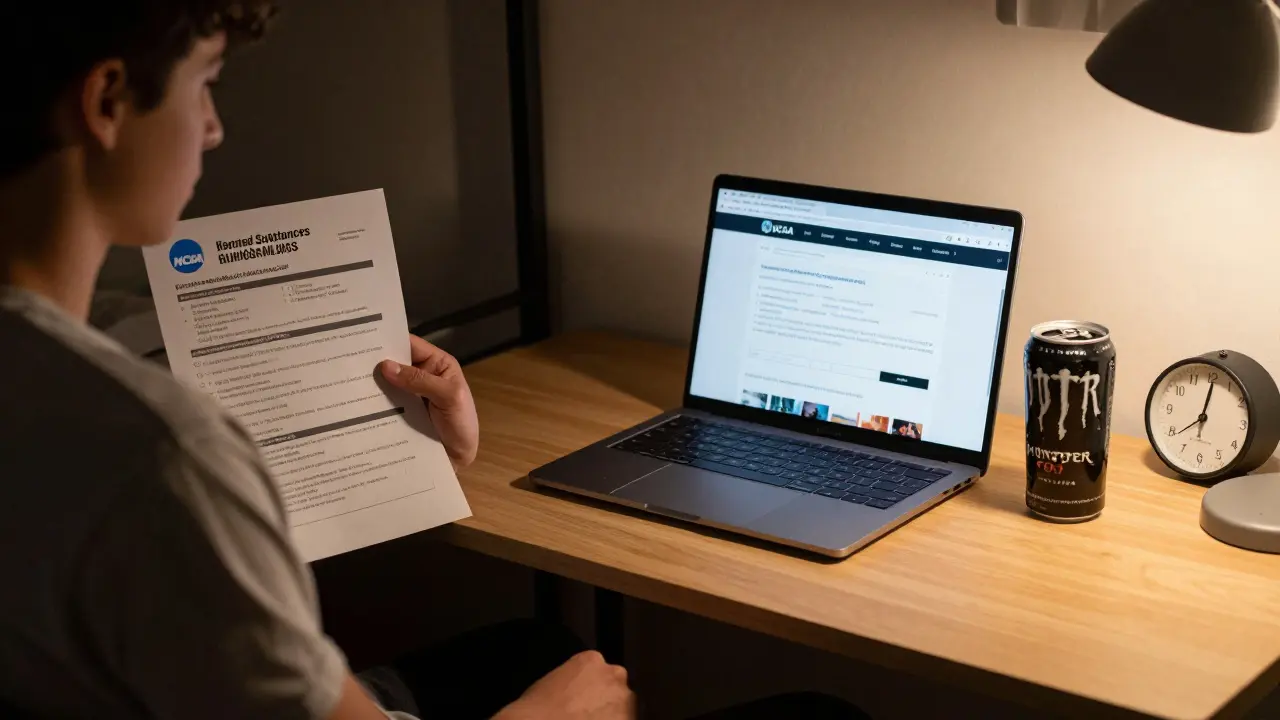
Pro tip: Use the NCAA’s official banned substance list. It’s updated every year and available through your athletic department. Most schools provide a printed cheat sheet. If yours doesn’t, ask for it.
What Happens If You Get Caught?
A positive test for a banned stimulant doesn’t mean automatic suspension-but it’s serious.
First offense: Mandatory education, possible suspension from one or more contests. Second offense: Loss of eligibility for one full season. Third offense: Permanent ineligibility.
There’s no “I didn’t know” excuse. The NCAA holds athletes responsible for everything they consume. Even if a supplement was sold as “NCAA-safe” by a third-party website, if it contains a banned substance, you’re still on the hook.
What to Drink Instead
You don’t need energy drinks to perform. Many top NCAA programs rely on:
- Water + electrolyte tablets (like Nuun or Liquid IV)
- Coconut water (natural potassium, no additives)
- Low-sugar sports drinks (Powerade Zero, Gatorade Zero)
- Black coffee (1-2 cups before practice, well before testing)
- Proper sleep and balanced meals
Real performance comes from recovery, not stimulants. Athletes who focus on hydration, sleep, and nutrition consistently outperform those relying on energy drinks-even if they’re “approved.”
Bottom Line
The NCAA doesn’t approve energy drinks. It bans ingredients. Your job is to know what’s in what you drink. Stick to simple, transparent options like Red Bull, Bodyarmor Lyte, or Gatorade Zero. Avoid anything with “proprietary blends,” stimulant extracts, or unlisted ingredients. When in doubt, don’t drink it. Your eligibility isn’t worth the risk.
Can I drink Red Bull before a game if I’m an NCAA athlete?
Yes, Red Bull Original is allowed. It contains 80 mg of caffeine per 8.4 oz can and no banned stimulants like synephrine or yohimbine. As long as you don’t consume more than one can and avoid other caffeine sources before a drug test, you’re within NCAA limits.
Is Celsius safe for NCAA athletes?
Celsius is risky. While it doesn’t contain DMAA or synephrine, it uses green tea extract, which can push caffeine levels high. Some versions also include grapefruit extract, which can interfere with drug metabolism. Many athletic departments advise against it. Stick to simpler options.
Does caffeine count as a banned substance in the NCAA?
No, caffeine is not banned, but it’s monitored. If your urine tests above 15 micrograms per milliliter, you’ll be flagged. That’s roughly 500-600 mg of caffeine total-about 5 cans of Red Bull or 4 cups of strong coffee. Most athletes won’t hit that unless they’re combining drinks, pills, and coffee.
Are energy drinks with B vitamins allowed?
Yes. B vitamins like B6 and B12 are not banned and are commonly found in sports drinks and energy beverages. They’re safe and often helpful for energy metabolism. Just make sure they’re not mixed with banned stimulants.
What should I do if my school doesn’t have a list of approved drinks?
Ask your athletic trainer or compliance officer for the NCAA banned substance list. Most schools have a printed guide or digital resource. If not, download the latest version from the NCAA website. Never guess. When in doubt, choose water or a basic sports drink like Gatorade Zero.
Comments (8)
Sandi Johnson
31 Dec 2025
So let me get this straight - I can drink Red Bull before a game, but if I grab a Celsius because it says ‘metabolism booster’ on the can, I’m risking my entire college career? Thanks, NCAA, for making nutrition into a game of Russian roulette with a caffeine-loaded roulette wheel.
At least the energy drink aisle should come with a warning label: ‘May contain banned substances. Blame your coach if you fail a test.’
Eva Monhaut
1 Jan 2026
Reading this felt like someone handed me a flashlight in a dark tunnel. I used to think ‘natural’ meant safe - turns out ‘natural’ just means the FDA didn’t get around to banning it yet.
My brother’s a D1 soccer player and he switched to coconut water + Nuun after a scare last year. No more energy drinks. No more stress. Just hydration that doesn’t come with a legal asterisk.
It’s wild how we’ve turned performance into a chemistry exam. Real strength is discipline, not stimulants. Kudos to the article for cutting through the noise.
And yes, Gatorade Zero is the MVP of the locker room. No drama. No surprises. Just electrolytes doing their job.
mark nine
2 Jan 2026
Red Bull fine. Bang? Nope. Celsius? Maybe not. Bodyarmor Lyte? Yeah.
Check the label. Don’t trust the front. Caffeine adds up fast. One can plus coffee plus pre-workout = bad day.
Simple.
Tony Smith
4 Jan 2026
It is, without a shadow of a doubt, a matter of profound institutional responsibility that student-athletes are expected to navigate a labyrinth of regulatory subtleties while simultaneously managing academic rigor, training schedules, and social pressures.
One might reasonably conclude that the burden of compliance should rest not with the athlete, but with the purveyor of the product - yet here we are.
It is, perhaps, a tragic irony that a beverage marketed as ‘energy’ often saps the very autonomy it purports to enhance.
May I respectfully suggest that athletic departments distribute laminated cheat sheets - not merely as a convenience, but as a moral imperative?
Rakesh Kumar
4 Jan 2026
Bro, I just came from India and I’m stunned - here in the US, kids are scared to drink coffee before practice because of rules?
In my college, we drank chai with sugar and cardamom before matches and no one even knew what caffeine was - we just knew we felt awake.
But yeah, I get it - this stuff is serious. I saw a guy get suspended for a supplement he bought online. He cried for a week.
So yeah, stick to Red Bull. One can. Don’t mix. And pray to the NCAA gods.
Also, coconut water? That’s the real power drink. Natural. No drama. Just good vibes.
Bill Castanier
4 Jan 2026
Red Bull: allowed. Bang: banned. Celsius: risky. Gatorade Zero: safe.
Label check: mandatory.
Caffeine total: under 500mg.
Water: always the best option.
Don’t guess. Don’t risk.
Ronnie Kaye
4 Jan 2026
So let me get this straight - I can drink a Red Bull before a game, but if I drink two, I’m a cheater? What’s next? Are we gonna ban sleep? Or oxygen? The NCAA is running a cult.
Meanwhile, my teammate downed three cans of Monster and still got benched because he ‘looked tired.’
At this point, the real banned substance is common sense.
Just give us a list. Or shut up and let us drink.
Also, Powerade Zero tastes like liquid plastic. But hey, at least it won’t get me suspended. So… I guess that’s a win?
Priyank Panchal
5 Jan 2026
This article is garbage. You say Red Bull is fine but don’t mention that it’s owned by Coca-Cola - a company that funds NCAA compliance programs. You’re whitewashing corporate influence.
And you call Celsius risky? It’s got more natural ingredients than your ‘approved’ drinks.
You’re not protecting athletes - you’re protecting Big Sports Drink.
Real athletes don’t need your lists. They need transparency. And you’re not giving it.
Stop pretending this is about safety. It’s about control.