
What Are Sports Drinks and Energy Drinks? Key Differences and What They Really Do
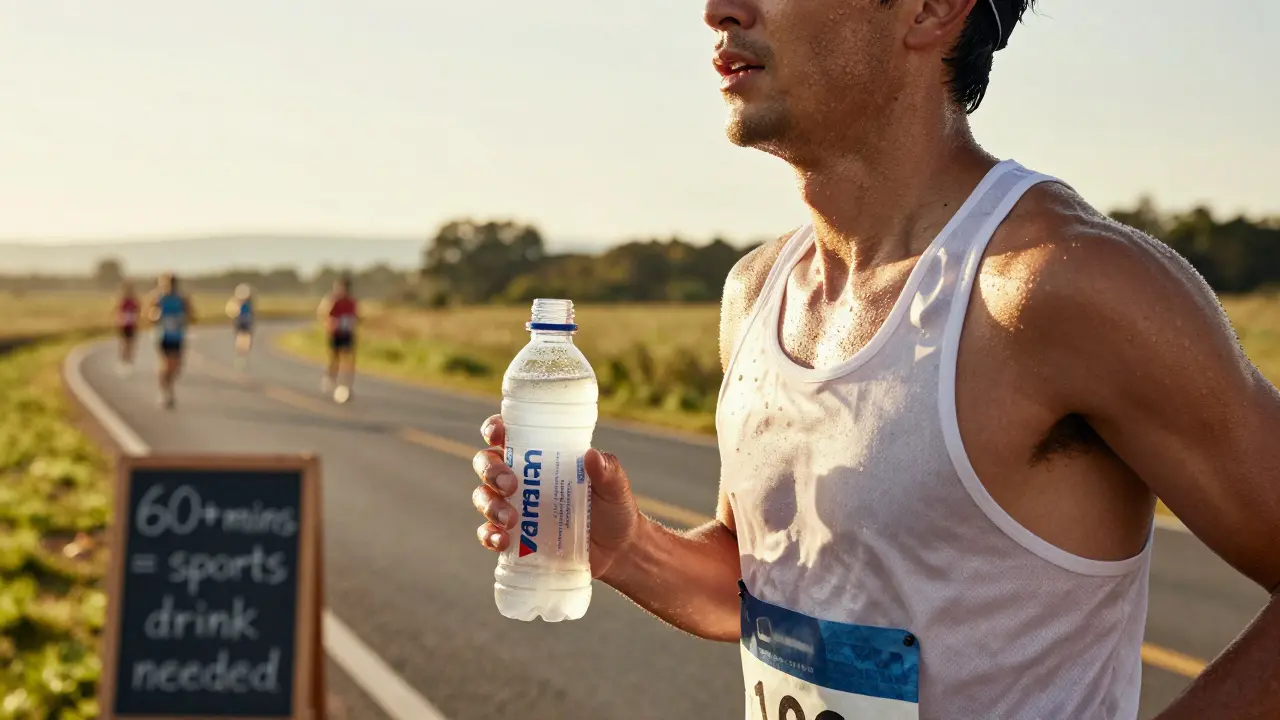
Ever grabbed a bright blue or neon green drink after a workout, thinking it’s the best thing for your body? You’re not alone. But here’s the truth: sports drinks and energy drinks aren’t the same thing-even though they look similar on store shelves. One helps you recover. The other tries to wake you up. Mixing them up can cost you more than just money-it can mess with your health, your performance, and your hydration.
What Exactly Is a Sports Drink?
A sports drink is designed for one thing: replacing what you lose during intense physical activity. Think sweat. Think muscle fatigue. Think electrolytes vanishing from your body.
Most sports drinks contain three key ingredients: water, carbohydrates (usually in the form of sugar), and electrolytes like sodium, potassium, and sometimes magnesium. The science is simple: when you sweat hard for more than 60 minutes-say, during a soccer match, a long run, or a tough cycling session-you lose fluids and salts. Your muscles need sugar to keep going. That’s where sports drinks step in.
Take Gatorade, for example. A 500ml bottle has about 30 grams of sugar and 110mg of sodium. That’s not random. It’s based on research from the American College of Sports Medicine, which found that drinks with 6-8% carbohydrates and 460-1,150mg of sodium per liter help maintain performance and reduce cramping during prolonged exercise.
But here’s the catch: if you’re not sweating buckets for over an hour, you probably don’t need it. Drinking a sports drink after a 20-minute walk or a light gym session just adds empty calories. In fact, a 2023 study in the Journal of the International Society of Sports Nutrition showed that recreational athletes who drank sports drinks daily without intense training gained an average of 1.8kg over six months-mostly from extra sugar.
What Makes an Energy Drink Different?
Energy drinks aren’t about hydration. They’re about stimulation. Their main goal? To give you a quick jolt of alertness, usually through caffeine.
Most energy drinks pack 80 to 300mg of caffeine per can-equivalent to one to three cups of coffee. Some even add guarana, taurine, or yerba mate, which can boost caffeine’s effects. Sugar? Often over 50g per can. That’s more than a candy bar.
Take Red Bull. One 250ml can has 80mg of caffeine, 27g of sugar, and 1,000mg of taurine. Sounds like a performance enhancer? Not really. Taurine doesn’t give you energy-it’s an amino acid that might help with muscle function, but studies show it doesn’t replace caffeine’s stimulant effect.
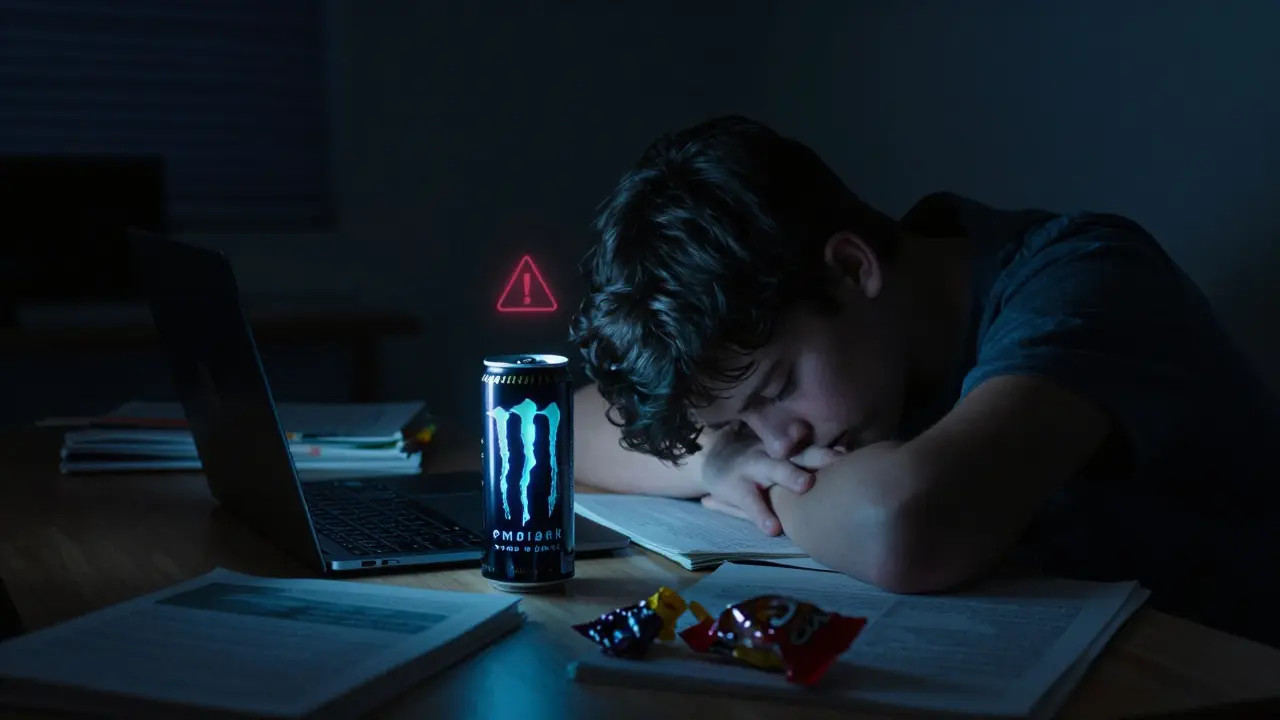
The real issue? Energy drinks were never meant to be consumed during or after exercise. They’re marketed as late-night study aids, party boosters, or morning wake-up calls. But too many athletes drink them before training, thinking it’ll improve endurance. That’s a myth. Caffeine can help with focus and short bursts of power, but the sugar crash that follows can leave you more drained than before.
Why Mixing Them Up Is a Bad Idea
Here’s where things get dangerous. Some people think, “If sports drinks help with sweat, and energy drinks help with energy, then combining them must be better.” It’s not.
Drinking an energy drink after a marathon? You’re flooding your body with caffeine and sugar while your system is already stressed. Your heart rate spikes, your blood pressure rises, and your kidneys work overtime to flush out the excess. A 2024 report from the Australian Sports Commission found that emergency room visits linked to energy drink consumption among athletes rose 42% between 2020 and 2025, mostly after intense physical activity.
And what about sports drinks as daily beverages? That’s another trap. A 2022 study in the British Medical Journal tracked 15,000 teenagers over five years. Those who drank sports drinks daily were 54% more likely to develop tooth decay and 38% more likely to gain unhealthy body fat compared to those who stuck to water.
Bottom line: sports drinks belong on the field. Energy drinks belong in the break room-not the locker room.
What Should You Actually Drink?
For most people, water is still the best choice. Always. Unless you’re doing serious, prolonged exercise, there’s no need for added sugar or caffeine.
If you’re exercising hard for over an hour, go with a sports drink that has:
- Less than 8% sugar (check the label: if sugar is listed as the first ingredient, it’s too high)
- At least 100mg of sodium per 250ml
- No artificial colors or stimulants like guarana or yohimbine
For recovery, try chocolate milk. Seriously. It has the right ratio of carbs to protein, natural electrolytes, and less sugar than most sports drinks. A 2021 study from the University of Texas found that chocolate milk helped athletes recover muscle strength faster than commercial sports drinks.
And if you need a pick-me-up? Go for black coffee or a small can of low-sugar energy drink-once in a while. Don’t make it part of your daily routine.
What’s in the Labels You’re Ignoring
Look at the back of any sports or energy drink. You’ll see a list of ingredients that sound like a chemistry lab. Here’s what really matters:
| Component | Sports Drink | Energy Drink |
|---|---|---|
| Primary Purpose | Rehydration and endurance support | Stimulate alertness |
| Typical Caffeine | 0-40mg per 500ml | 80-300mg per 250ml |
| Sugar Content | 12-20g per 250ml | 25-60g per 250ml |
| Electrolytes | Sodium, potassium, magnesium | Usually none or minimal |
| Common Additives | None beyond sugars and salts | Taurine, guarana, B-vitamins, artificial flavors |
| Best Used For | Intense activity over 60 minutes | Short-term mental focus (not exercise) |
Notice anything? Energy drinks have no real electrolytes. That’s why they don’t help you recover. And sports drinks? They rarely have enough caffeine to be stimulating. So they’re not energy boosters either.
Who Actually Needs These Drinks?
You don’t need a sports drink if you’re:
- Working out for less than 60 minutes
- Exercising in cool weather
- Not sweating heavily
- Trying to lose weight
You definitely shouldn’t use energy drinks if you’re:
- Under 18
- Have heart issues or high blood pressure
- Take medication (especially antidepressants or ADHD drugs)
- Planning to work out within 3 hours of drinking one
There’s a reason the Australian Therapeutic Goods Administration banned energy drinks for sale to children under 16 in 2024. The risks aren’t theoretical. In 2023, a 14-year-old in Queensland collapsed after drinking two energy drinks before a soccer game. He had a rare heart condition that went undiagnosed. The caffeine triggered a fatal arrhythmia.
Final Takeaway: Stick to the Basics
Sports drinks have a real place-for serious athletes in long, sweaty events. Energy drinks? They’re a shortcut with a price tag. And that price? It’s paid in sleep, heart health, and long-term energy crashes.
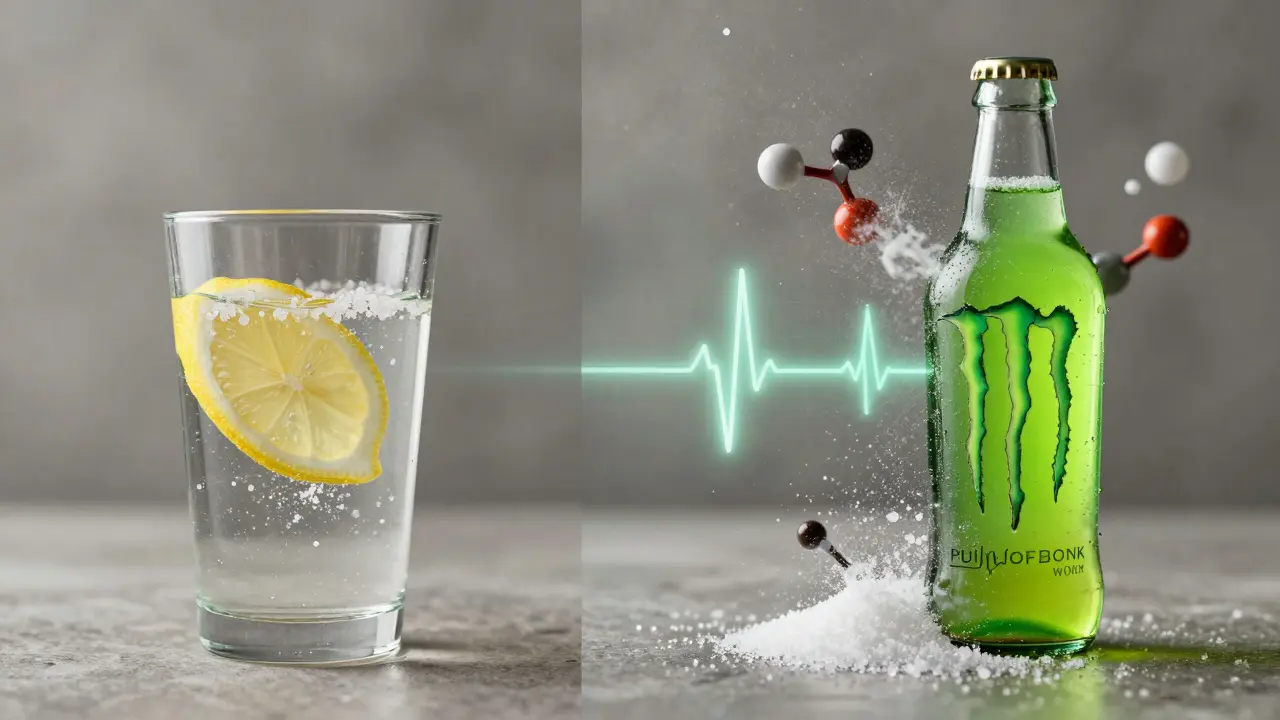
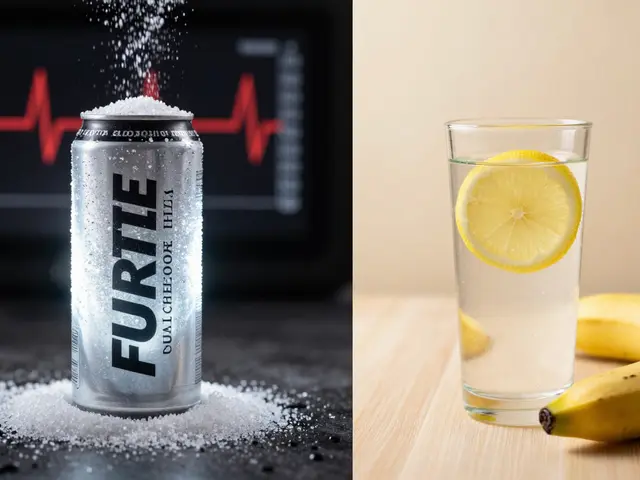
Water. That’s your best friend. Add a pinch of salt and a squeeze of lemon if you’re sweating a lot. Eat a banana after a workout for natural potassium. Drink milk for recovery. Skip the neon bottles. Your body will thank you.
Are sports drinks better than water for workouts?
Only if you’re exercising intensely for more than 60 minutes, especially in hot weather. For shorter or lighter workouts, water is enough-and better. Sports drinks add unnecessary sugar and calories that can lead to weight gain if you’re not burning off the extra energy.
Can energy drinks improve athletic performance?
Caffeine in energy drinks can help with focus and short bursts of power, like sprinting or lifting heavy weights. But the sugar and other stimulants often cause crashes, dehydration, or heart strain. Most athletes get better results from caffeine pills or coffee, without the extra sugar and additives.
Is it safe for teens to drink energy drinks?
No. Health authorities in Australia, Canada, and the UK now advise against energy drinks for anyone under 18. Their bodies are still developing, and high caffeine levels can disrupt sleep, increase anxiety, and affect heart rhythm. Some teens have ended up in emergency rooms after mixing energy drinks with alcohol or intense exercise.
Do sports drinks help you lose weight?
No. Most sports drinks contain 150-250 calories per bottle. If you’re not burning that much during exercise, those calories turn into fat. People who drink them daily without intense training often gain weight. If you’re trying to lose weight, stick to water, unsweetened tea, or black coffee.
What’s the healthiest alternative to sports drinks?
For most people, water with a pinch of salt and a slice of lemon works. For recovery after intense exercise, low-fat chocolate milk is scientifically proven to replenish glycogen and repair muscles better than many commercial sports drinks. Coconut water also has natural electrolytes but less sugar than most sports drinks.


Comments (13)
Denise Young
17 Feb 2026
Let me just say this: sports drinks are the wellness-industrial complex’s answer to ‘I didn’t train hard enough, but I want to feel like I did.’ The science is solid-6-8% carbs, sodium in the 460-1150mg/L range-but most people aren’t hitting that threshold. You’re not a marathoner, you’re scrolling through Instagram while eating a granola bar. Your body doesn’t need electrolyte optimization. It needs a glass of water and a reality check.
And don’t get me started on energy drinks. Taurine? It’s not a stimulant. It’s an amino acid that your liver makes naturally. Adding it to a can of liquid sugar is like putting a ‘100% natural’ sticker on a dumpster fire. The real performance enhancer? Sleep. Recovery. Nutrition. Not neon-colored liquid caffeine bombs marketed as ‘fuel.’
I’ve seen high school athletes chugging Red Bull before practice. Their coaches think it’s ‘motivation.’ It’s not. It’s a cardiac stress test with a side of tooth decay. And yes, I’ve read the 2024 Australian report. The ER visits aren’t outliers-they’re predictable.
Chocolate milk as a recovery drink? Brilliant. It’s got the 3:1 carb-to-protein ratio, natural electrolytes, and zero guarana. Why are we still selling sports drinks with ingredients that sound like they were pulled from a sci-fi novel? Because marketing > science. Again.
Water with lemon and salt. Banana after a workout. That’s the real biohacking. The rest is just corporate placebo with a 20% profit margin.
Sam Rittenhouse
18 Feb 2026
There’s a quiet tragedy in how we’ve turned hydration into a product category. We used to drink water because we were thirsty. Now we drink something that looks like it came out of a lab because we’re afraid we’re not ‘optimized.’
I’ve coached youth soccer for 12 years. I’ve seen kids collapse after chugging energy drinks before games. Not from heat. Not from exhaustion. From caffeine overload. Their hearts were racing like they’d just run a sprint-except they hadn’t even warmed up.
And yet, the parents buy it. They think it’s ‘performance-enhancing.’ It’s not. It’s a sugar rush followed by a crash that leaves them more tired than before. It’s like giving a toddler a candy bar before naptime and wondering why they’re screaming.
Water. A banana. A piece of toast. That’s recovery. That’s fuel. We don’t need chemistry sets in bottles. We need common sense.
And if you’re a teenager drinking this stuff daily? You’re not ‘tough.’ You’re setting yourself up for a lifetime of anxiety, insomnia, and insulin resistance. Your body isn’t a machine to be tuned. It’s a living system. Treat it like one.
Peter Reynolds
19 Feb 2026
Sports drinks have a place but most people don’t qualify for it. Water works fine. Chocolate milk is underrated. Energy drinks are just caffeine and sugar with extra steps. Don’t overthink it. Your body knows what it needs.
Ben De Keersmaecker
20 Feb 2026
The distinction between sports and energy drinks is not merely functional-it’s philosophical. One is engineered for physiological equilibrium during prolonged exertion; the other, a pharmacological intervention aimed at circumventing natural fatigue cycles.
What’s alarming is not the composition of these beverages, but the normalization of their consumption. The fact that a 14-year-old can walk into a gas station and purchase a 250ml can of liquid stimulant-without parental oversight, without medical consultation-is a symptom of a culture that prioritizes artificial stimulation over biological rhythm.
And yet, we call this progress. We call it innovation. Meanwhile, the body’s innate homeostatic mechanisms are being drowned out by marketing campaigns that equate sweat with worthiness.
Water remains the most elegant solution. It requires no formulation. No additives. No branding. Just presence. And perhaps, in a world obsessed with enhancement, that’s the most radical act of all.
Aaron Elliott
20 Feb 2026
While the article presents a reasonably coherent argument grounded in peer-reviewed literature, it fails to address the deeper epistemological flaw in modern nutritional discourse: the conflation of efficacy with desirability.
Just because a beverage is scientifically appropriate for a narrow demographic does not mean it should be commercially available to the general public. The regulatory failure here is not in labeling-it is in permitting the commodification of physiological states. We have turned recovery into a consumer product and energy into a chemical transaction.
Furthermore, the suggestion that chocolate milk is superior to sports drinks is not merely anecdotal-it is a systemic indictment of the sports nutrition industry’s inability to innovate beyond sugar-water formulas. Yet, no one questions why corporations continue to profit from suboptimal solutions.
The real question is not what you should drink, but why we allow corporations to dictate what we believe we need.
Chris Heffron
22 Feb 2026
Just wanted to say-this is one of the clearest breakdowns I’ve read. I’ve been telling people for years that energy drinks before a workout are a bad idea, and no one listens. Then they wonder why they feel awful after.
Also, chocolate milk? Yes. My cousin’s a college athlete and she swears by it. Way better than Gatorade. And cheaper.
And can we just agree that ‘electrolyte water’ with a $5 price tag is just tap water with a fancy label? 😅
Adrienne Temple
22 Feb 2026
My 16-year-old started drinking Monster before soccer practice because his ‘coach said it helps.’ I found out when he couldn’t sleep for three nights straight. We switched to water + a banana. He’s sleeping better, not crashing after games, and I didn’t have to pay $4 for a can of neon poison.
Also-chocolate milk?! I tried it after my runs and I actually like it. No weird chemicals. Just milk and cocoa. Who knew? 😊
Sandy Dog
22 Feb 2026
Okay but like… have you seen the ingredients list on some of these drinks? It’s like a villain’s potion from a Marvel movie. Taurine? Guarana? Yohimbine? Who named these things? Are they trying to summon a demon or just hydrate?
I used to drink these after the gym. Then I started having heart palpitations. Not ‘oh I’m tired’ palpitations. Actual ‘is my chest going to explode’ palpitations. Went to the doctor. He said, ‘Did you drink something with caffeine and sugar?’ I said yes. He said ‘stop.’
Now I drink water with a lemon wedge. And I feel like a wizard. Like I’ve unlocked some ancient secret of human existence. It’s not just hydration. It’s enlightenment.
Also-chocolate milk. I’m obsessed. I put it in my coffee now. It’s a vibe. 🥛✨
Nick Rios
23 Feb 2026
I appreciate the data. But honestly? The real problem isn’t the drinks. It’s the culture that tells us we need external fixes for natural processes.
Our bodies weren’t designed to be ‘optimized.’ They were designed to adapt. Rest. Eat. Move. Sleep.
When we start believing we need a bottle to do what nature already provides, we lose touch with what’s simple-and what’s true.
Water works. Food works. Sleep works.
Everything else is noise.
Amanda Harkins
24 Feb 2026
I used to think sports drinks were ‘healthy’ because they had ‘electrolytes.’ Then I read the label. 30g of sugar. In one bottle. That’s not hydration. That’s a dessert with a side of sodium.
Now I drink water. Sometimes I add a pinch of salt. Feels weird at first. Then it feels… normal. Like my body finally got what it wanted.
And yeah-chocolate milk after a hard session? Surprisingly good. Not because it’s science. Because it’s just… right.
Jeanie Watson
24 Feb 2026
I don’t get why people buy these. Water is free. Why pay for sugar water with a logo?
Mark Tipton
24 Feb 2026
Let’s not pretend this is about health. This is about control. The sports drink industry didn’t invent electrolyte replacement-they invented dependency. They took a biological need-hydration-and turned it into a branded ritual.
And the energy drink market? It’s not about performance. It’s about exploiting sleep deprivation in a society that glorifies burnout. The fact that these are marketed to teens? That’s not an oversight. That’s a business model.
There’s a reason the FDA hasn’t regulated caffeine content in energy drinks: because they’re classified as ‘supplements.’ And supplements? They’re the Wild West of consumer regulation.
Meanwhile, the real solution-water, rest, nutrition-isn’t profitable. So it gets ignored. The system doesn’t want you to be healthy. It wants you to keep buying.
And if you think you’re ‘in control’ because you only drink one a day? You’re already in the game. The game is rigged. The bottle is the trap.
Adithya M
26 Feb 2026
Water is best. End of story. Why overcomplicate? If you are running marathon then drink electrolyte drink. If not then stop drinking sugar water. Energy drinks? Only if you want to crash hard. Chocolate milk? Yes. Good science. Simple. Effective. Why are people so confused? 😅