
Artificial Ingredients in Energy Drinks: What’s Really in Your Can?
When you crack open an energy drink, you’re not just getting caffeine and sugar—you’re consuming a mix of artificial ingredients, chemical compounds created in labs to mimic natural flavors, colors, or preservatives. Also known as synthetic additives, these substances are added to boost shelf life, sweetness, or color without using real food. Many of these aren’t found in nature. They’re designed to make drinks taste better, look brighter, or last longer—but not necessarily to help your body.
Take artificial sweeteners, lab-made alternatives to sugar like sucralose, acesulfame-K, and aspartame. They’re everywhere in zero-sugar energy drinks, promising no calories but still triggering cravings, messing with gut bacteria, and possibly affecting insulin response. Studies show they don’t make you healthier—they just swap one problem for another. Then there’s food additives, chemicals like preservatives, colorants, and stabilizers added to maintain texture and appearance. Some, like Red 40 or Yellow 5, are banned in parts of Europe but still common in U.S. energy drinks. And don’t forget the hidden stimulants: ingredients like DMAA or synephrine, sometimes buried under vague labels like "energy blend."
These aren’t just random chemicals. They’re chosen because they’re cheap and effective at making you feel a quick rush. But that rush doesn’t last. What follows is a crash, a headache, or worse—trouble sleeping, a racing heart, or long-term metabolic disruption. The truth? Your body doesn’t need any of this. Real energy comes from water, sleep, and whole foods. Energy drinks with artificial ingredients are like putting cheap gas in a sports car—it might start, but it won’t run right for long.
Below, you’ll find real breakdowns of what’s in popular brands, how these ingredients affect your body, and what actually works better. No fluff. No marketing. Just facts from the science—and the people who’ve tried to quit them.
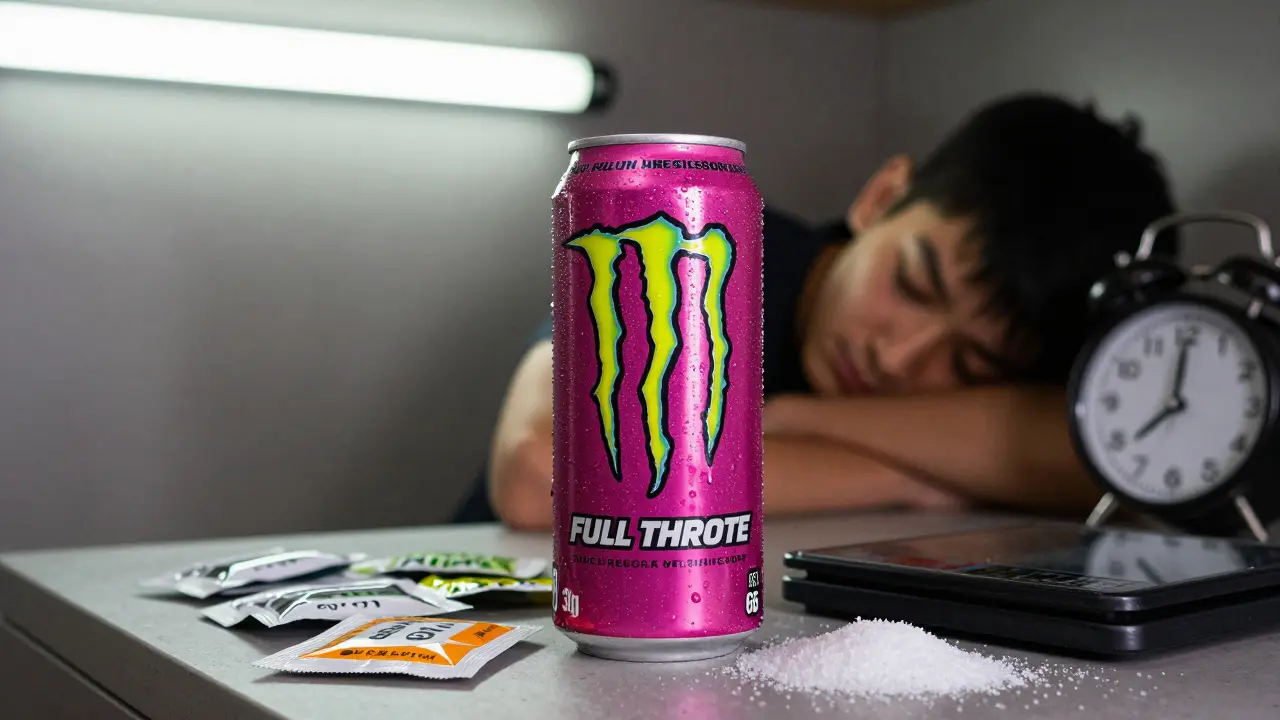
Full Throttle is the most unhealthy energy drink due to its extreme sugar, caffeine, and artificial additives. Regular consumption raises risks of metabolic syndrome, heart issues, and weight gain. Real energy comes from sleep and whole foods - not cans.
The unhealthiest drink ever isn't soda or alcohol - it's the standard energy drink. Packed with sugar, artificial sweeteners, and unregulated stimulants, these drinks damage your metabolism, sleep, and heart. Here's what's really inside and what to drink instead.
The #1 unhealthiest food isn't a burger or candy-it's your daily energy drink. Packed with sugar, artificial chemicals, and hidden stimulants, these drinks damage your liver, heart, and metabolism-even in healthy people.