
Did the Florida Gators Invent Gatorade? The Real Story Behind the Sport’s Most Famous Drink
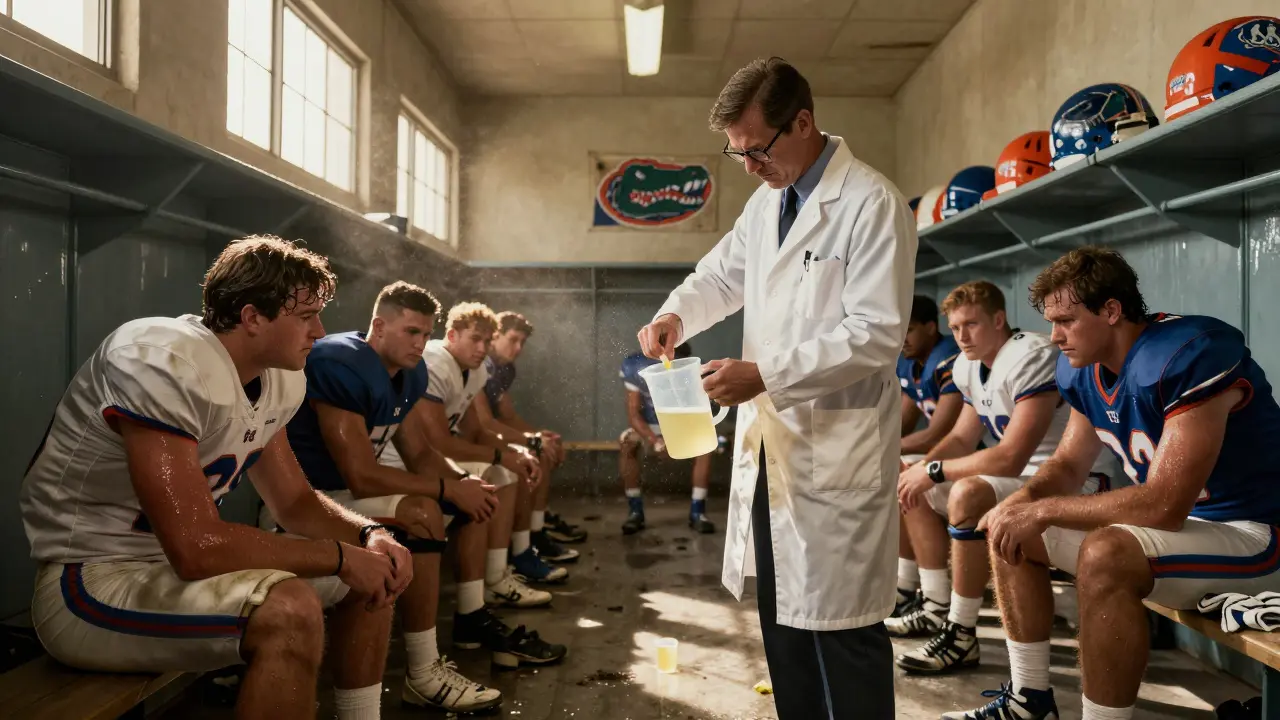
People often assume Gatorade was created by a big corporation or a lab full of scientists in a lab coat. But the truth is simpler-and way more messy. It was born in a sweltering Florida locker room in 1965, not by a marketing team, but by a group of frustrated football coaches and a young medical researcher. And yes, the Florida Gators were right in the middle of it.
The Heat That Changed Everything
In the summer of 1965, the University of Florida’s football team was falling apart. Players were collapsing on the field. They were cramping, vomiting, and losing weight-sometimes more than 10 pounds in a single game. Back then, the standard advice was to drink water and rest. But water wasn’t fixing anything. The players were losing electrolytes, not just fluids. Their bodies were shutting down.
Head coach Ray Graves didn’t know why. But he knew something had to change. He called in Dr. Robert Cade, a kidney specialist and professor at the university’s medical school. Cade wasn’t a sports scientist. He didn’t study energy drinks. He studied how kidneys filtered waste. But he had the tools to test what was leaving the players’ bodies-and what they needed to get back.
The First Batch Was Made in a Kitchen
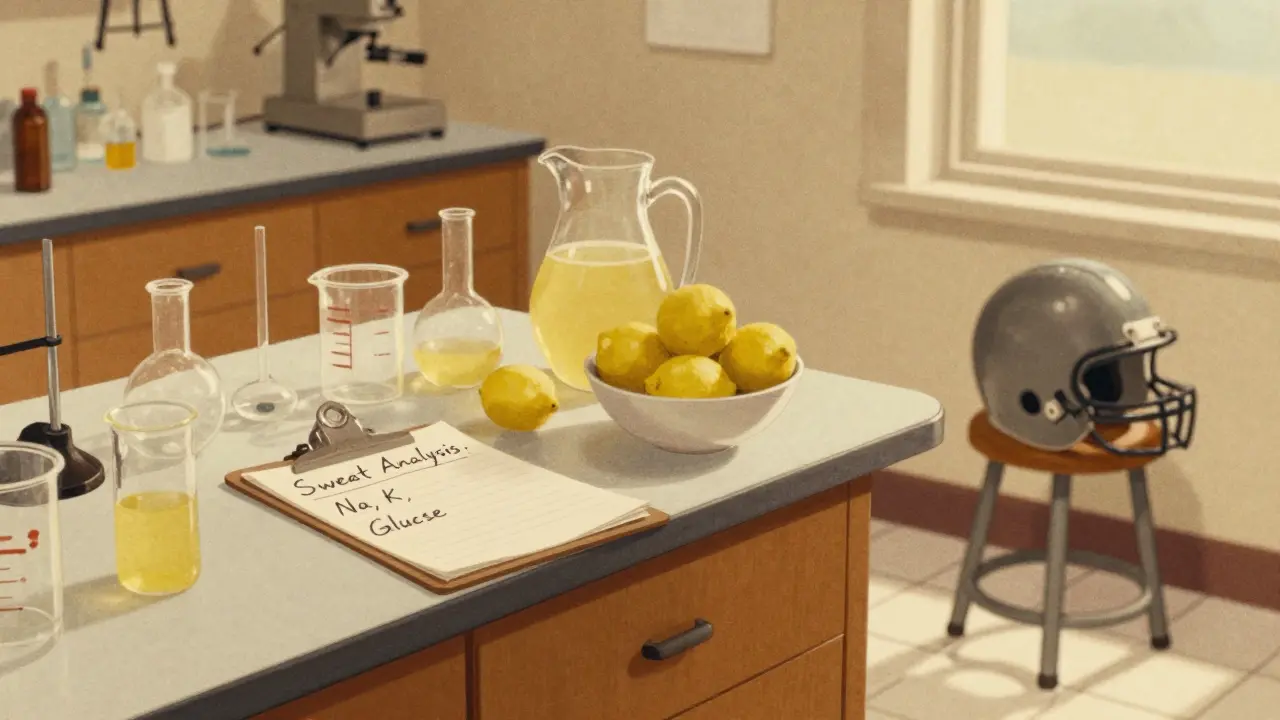
Cade and his team-Dr. Dana Shires, Dr. James Free, and Dr. Alejandro de Quesada-started collecting sweat samples from Gators players during practice. They analyzed the fluid and found it was full of sodium, potassium, and other minerals. They also noticed the players were losing far more than they were replacing.
They mixed a drink: water, sugar, salt, and a little lemon juice. No fancy additives. No artificial colors. Just what the body needed to recover. They gave it to the team during a practice. Within days, players stopped collapsing. They could run longer. They didn’t lose as much weight. The difference was obvious.
The first batch? Made in a kitchen. The first test? Done on the field. The first name? Gatorade-named after the team that needed it.
It Wasn’t an Instant Hit
The drink worked, but no one outside the team cared. The NCAA didn’t recognize sports drinks. Medical journals ignored them. The team’s win against LSU in 1965, where players stayed hydrated and dominated the second half, was the turning point. Reporters noticed the players looked fresher than usual. They asked why. Someone said, “They’ve been drinking Gatorade.”
That’s how the name got out. By 1966, the Gators were winning more games. By 1967, other college teams started asking for it. By 1968, a local businessman named Jim Free (no relation to the doctor) saw the potential and helped license the formula. He partnered with a small company called Stokely-Van Camp, which later sold it to Quaker Oats in 1983.
It wasn’t invented to sell. It was invented to survive.
Why the Myth Persists
Today, Gatorade is a $10 billion brand. You see it in commercials with NFL stars, Olympic athletes, and TikTok influencers. The logo is everywhere. So it’s easy to think it was created by a marketing department in a boardroom. But the truth is buried under decades of advertising.
People forget that before Gatorade, athletes drank soda, milk, or just water. No one thought about replacing electrolytes. No one knew sweat had value beyond being gross. The Florida Gators didn’t just use Gatorade-they were the reason it existed.
What Makes Gatorade Different?
Before Gatorade, sports drinks were just sweet water. Gatorade was the first to match the exact electrolyte loss of human sweat. Its original formula had:
- 6% carbohydrates (mostly sucrose and glucose) to fuel muscles
- 20-30 mmol/L sodium to retain fluid and prevent cramping
- 2-5 mmol/L potassium to support nerve and muscle function
Those numbers weren’t chosen for taste. They were chosen because they matched what the body lost. Other drinks copied the formula later. But Gatorade was the first to get it right.
Did the Gators Invent It? Yes-But Not Alone
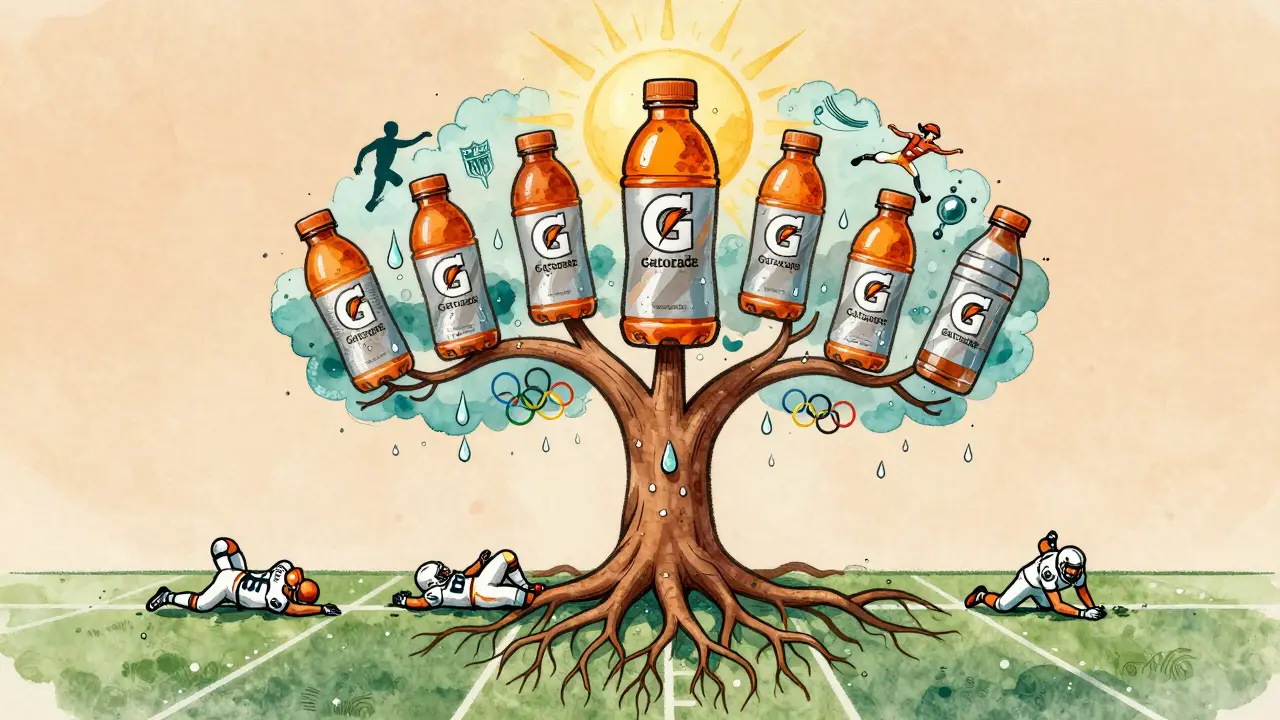
The Florida Gators didn’t sit down and design a drink. They didn’t patent it. They didn’t run a focus group. But without them, Gatorade wouldn’t exist. The players provided the sweat samples. The coaches demanded a solution. The team’s struggles gave the science its purpose.
So yes-the Florida Gators invented Gatorade. Not as a company, not as a brand, but as the reason it was made. They were the problem. And they became the solution.
The Legacy Lives On
Today, every elite athlete-from soccer players in Brazil to marathon runners in Kenya-uses some version of Gatorade’s original science. Even companies like Powerade and BodyArmor owe their existence to what happened in that Florida locker room.
The University of Florida still holds the original patent rights. They license the formula and use the royalties to fund medical research. Every time you drink a bottle of Gatorade, a small part of that money goes back to science.
And if you ever visit the University of Florida’s sports medicine lab, you’ll see a plaque. It doesn’t say “Invented Here.” It says: “This drink was created to help our athletes. It worked.”
What About Today’s Versions?
Modern Gatorade has changed. It’s got more flavors, more sugar, more caffeine in some versions, and even plant-based sweeteners now. But the core science hasn’t changed. It still replaces what sweat takes away. That’s why it still works.
There are alternatives now-electrolyte tablets, coconut water, homemade mixes. But none of them were born from a team of athletes collapsing under the Florida sun. None of them were tested on a football field before being sold to the world.
Gatorade’s origin isn’t just a fun fact. It’s a reminder that the best innovations come from real problems-not from market research.


Comments (9)
Stephanie Serblowski
19 Jan 2026
Okay but let’s be real - Gatorade was basically the first ‘hustle culture’ product. Coaches were like ‘yo we’re dying’ and the doc was like ‘hold my beaker’ 🧪🥤. No VC funding. No focus groups. Just sweat, sugar, and sheer desperation. The ultimate underdog story. Also, the fact that UF still owns the patent and funds research? That’s the kind of legacy you can’t buy. #ScienceWins
Renea Maxima
20 Jan 2026
They didn’t invent it. They just got lucky. The real invention was capitalism recognizing a biological need and turning it into a branded commodity. The Gators were just the accidental vessel. The drink was always going to be monetized - it’s just how the system works. We’re all just consumers waiting to be optimized. 🤖💧
Jeremy Chick
22 Jan 2026
Bro. I played high school ball in Texas. We drank Kool-Aid mixed with salt packets. We called it ‘Texas Thunder Juice.’ No one died. We just screamed at each other and kept running. Gatorade’s just corporate sweat water with a better logo. Also, the lemon juice? That was just to make it taste less like pool water. 😎
Sagar Malik
23 Jan 2026
Wait - let me get this straight. A bunch of white American med students, using sweat from black athletes (let’s not ignore the racial dynamics here), created a drink that now profits billions - and the athletes got zero royalties? This isn’t innovation. This is bio-extraction. The NCAA knew. The university knew. They let it happen. And now they’re patting themselves on the back with plaques? 🤡 The real Gatorade is the exploitation of Black bodies disguised as ‘team spirit.’
Seraphina Nero
23 Jan 2026
This is actually really sweet. Like, in a quiet, human way. People think science is all labs and microscopes, but sometimes it’s just someone noticing their teammates are falling over and saying, ‘We gotta fix this.’ No fanfare. Just care. And now it helps people everywhere. That’s the good stuff.
Megan Ellaby
25 Jan 2026
ok but i just made my own gatorade last week with water, honey, pinch of salt, and a squeeze of orange. cost me $0.50. it worked better than the bottle i bought. why do we pay $3 for something that was literally made in a kitchen? also, i think the lemon juice was just to make it not taste like saltwater lol
Rahul U.
26 Jan 2026
Fascinating. The original formula’s electrolyte ratios were empirically derived from human sweat - not guesswork. This is foundational work in exercise physiology. Modern sports nutrition still relies on these benchmarks. Even isotonic solutions in developing countries trace back to this. The Gators didn’t just create a drink; they defined a new medical paradigm for endurance. 🙏
E Jones
26 Jan 2026
Did you know the original Gatorade formula was secretly used by the CIA in the 70s to test endurance on undercover agents in desert ops? They needed something that wouldn’t show up on blood tests - and this was it. The lemon juice? A cover for the citric acid that masked the sodium chloride signature. Quaker Oats didn’t buy Gatorade - they bought the *patent*… and the silence. The University of Florida doesn’t fund research with royalties - they fund *disappearances*. That plaque? It’s not a tribute. It’s a warning. You think you’re drinking hydration. You’re drinking a government-approved placebo wrapped in a brand. 🕵️♂️🧪
Barbara & Greg
27 Jan 2026
It is deeply troubling that the commercialization of a medical innovation, born from the physical suffering of student-athletes, has been romanticized as a grassroots triumph. The University of Florida, as an institution of higher learning, should have ensured equitable compensation for the athletes whose bodily fluids were the very basis of the product. To celebrate this as an ‘underdog story’ is to glorify exploitation under the guise of patriotism. There is no honor in profiting from the collapse of young men - only responsibility. And responsibility, it seems, was never considered.