
Why Can't Athletes Drink Energy Drinks?
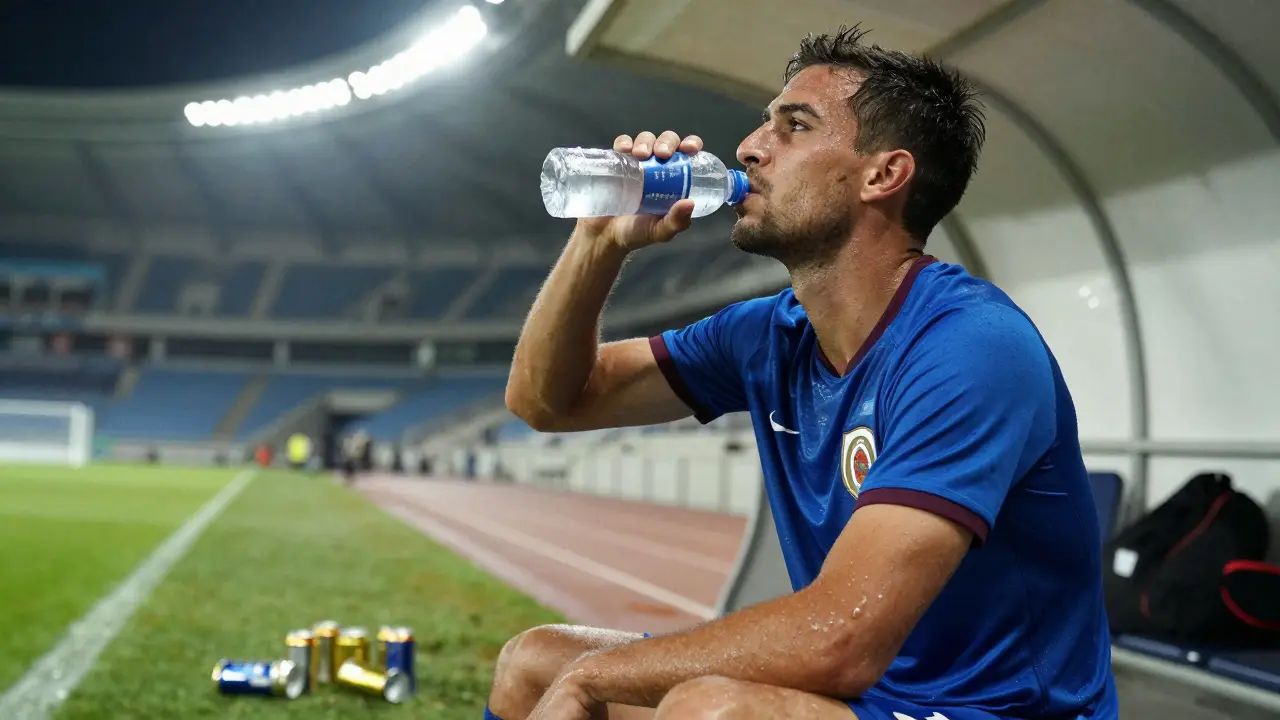
Ever watched a professional athlete sip water during a timeout while everyone else around them is chugging sugary energy drinks? There’s a reason for that-and it’s not just about personal preference. Energy drinks might seem like a quick boost, but for athletes, they can do more harm than good. Let’s break down why.
They’re loaded with sugar
Most energy drinks pack in 27 to 40 grams of sugar per can. That’s more than the daily limit the American Heart Association recommends for women. For athletes, this isn’t just about calories-it’s about how the body reacts. When you drink a sugary energy drink before or during exercise, your blood sugar spikes fast, then crashes harder. That crash doesn’t just make you tired-it messes with your focus, coordination, and reaction time. Think about a soccer player in the 80th minute. They don’t need a sugar rush followed by a slump. They need steady energy, not a rollercoaster.
Caffeine overload is risky
Energy drinks often contain 80 to 300 milligrams of caffeine per serving. For comparison, a standard cup of coffee has about 95 milligrams. Athletes already get caffeine from coffee, pre-workout powders, or even gum. Add an energy drink on top, and you’re flirting with dangerous levels. The International Society of Sports Nutrition says 3 to 6 mg of caffeine per kg of body weight can improve performance-but anything over 9 mg/kg starts to cause side effects. For a 70 kg athlete, that’s 630 mg total. One energy drink can push you past that. Symptoms? Jitters, heart palpitations, nausea, even anxiety. In extreme cases, it can trigger arrhythmias. That’s not a performance edge-that’s a medical emergency waiting to happen.
They dehydrate you
It’s ironic, right? You drink something called an “energy drink” to feel more alive, but many of them are actually dehydrating. Caffeine is a mild diuretic, meaning it makes you pee more. And when you’re sweating out liters of fluid during training or competition, you can’t afford to lose more. A 2023 study in the Journal of Sports Medicine found that athletes who consumed energy drinks before endurance events had significantly higher urine output and lower plasma volume than those who drank water or electrolyte solutions. Lower plasma volume? That means less blood flow to your muscles and less oxygen delivery. Translation? You tire faster.
They lack proper electrolytes
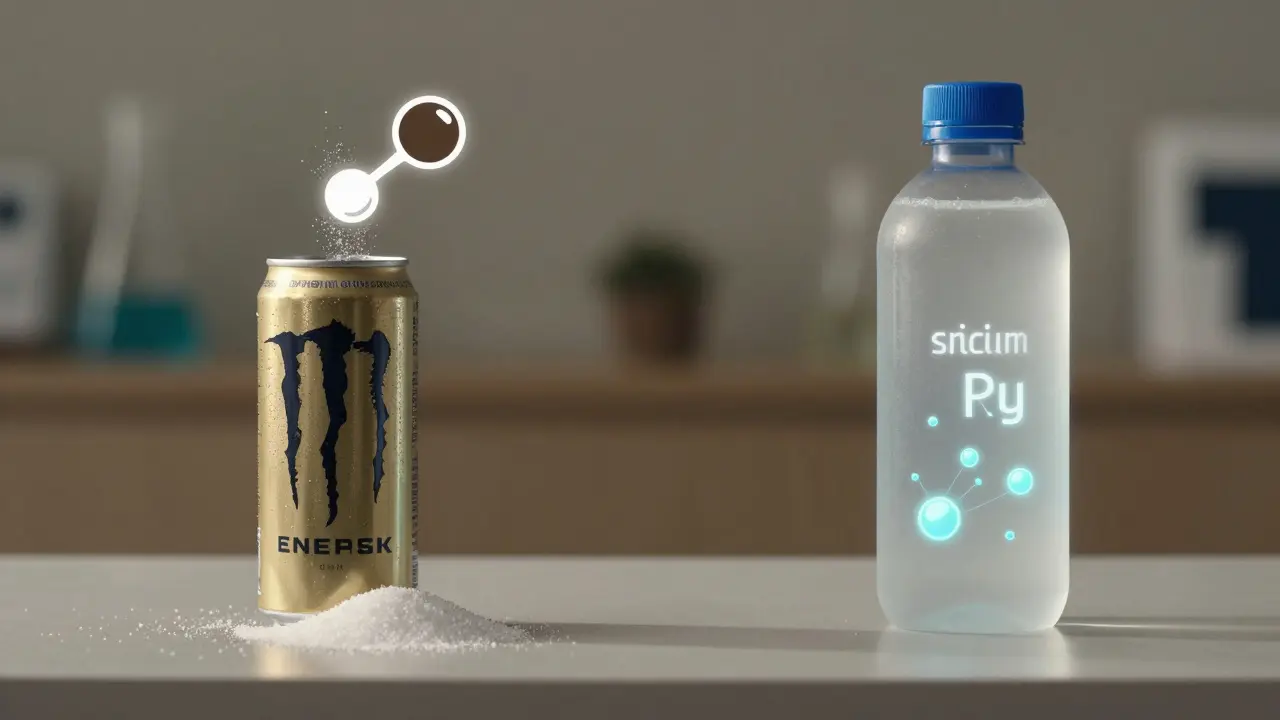
When you sweat, you lose sodium, potassium, magnesium, and chloride. Replacing those is critical. But energy drinks? They’re full of sugar and caffeine, with maybe 50 mg of sodium and zero potassium. That’s not hydration-it’s a mismatch. Elite athletes use sports drinks with 400-1100 mg of sodium per liter and balanced electrolytes. Energy drinks? They’re designed for office workers needing a quick buzz, not for athletes needing recovery. Even the “low-sugar” versions still miss the mark on the minerals your body actually needs.
They mask fatigue
One of the biggest dangers of energy drinks is how they trick your brain. Caffeine blocks adenosine receptors, the chemical that tells you you’re tired. So you feel awake-even when your body is screaming for rest. That’s dangerous. Athletes need to listen to their bodies. Pushing through fatigue without proper recovery leads to overtraining syndrome, injuries, and longer downtime. A runner who drinks an energy drink to keep going at mile 20 might not realize they’re on the edge of a muscle tear. That’s not endurance. That’s self-sabotage.

Regulations and bans
It’s not just science-it’s rules. The NCAA bans energy drinks with caffeine levels above 15 mg per ounce. The World Anti-Doping Agency (WADA) monitors caffeine use and has set thresholds for testing. In 2024, two Olympic-level triathletes were disqualified after testing above the limit, not from supplements, but from energy drinks they thought were “safe.” Even in high school sports, many leagues now prohibit energy drinks during competition. Why? Because the risks aren’t theoretical. They’ve been seen in real athletes.
What should athletes drink instead?
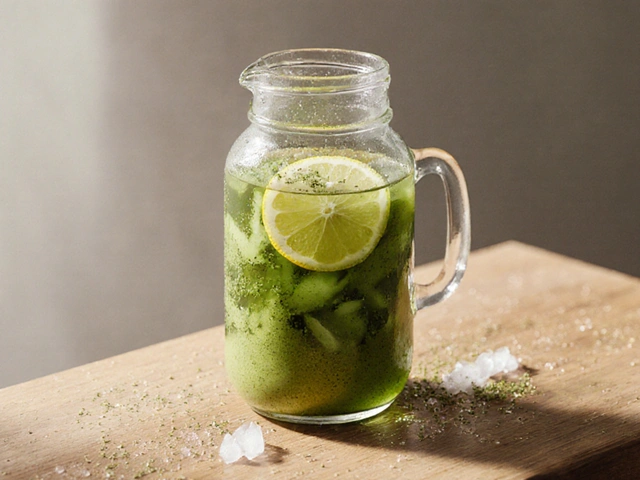
Simple. Water. Electrolyte solutions. Coconut water. Low-sugar sports drinks with proven formulas. For pre-workout fuel, a banana with a pinch of salt works better than a can of Red Bull. For recovery, chocolate milk has been shown in multiple studies to outperform energy drinks in muscle repair and rehydration. Even plain water with a pinch of sea salt and lemon gives you more real benefit than any energy drink on the shelf.
It’s not about willpower-it’s about science
Some people say, “But I drink them and I’m fine.” Maybe you are. But you’re not an elite athlete. And even if you are, the margin for error is razor-thin. Professional sports teams now have nutritionists on staff for a reason. They don’t guess. They test. They track. And every one of them avoids energy drinks. Why? Because when you’re competing at the highest level, small mistakes cost big results. A 2% drop in hydration. A 0.3-second delay in reaction. A muscle cramp in the final lap. These aren’t random. They’re predictable. And energy drinks make them more likely.
Energy drinks aren’t banned because they’re evil. They’re avoided because they’re a bad tool for the job. Athletes need precision, balance, and sustainability-not a sugar-and-caffeine bomb that leaves them drained, dehydrated, and at risk.
Can athletes have any caffeine at all?
Yes, but carefully. Up to 6 mg of caffeine per kilogram of body weight is considered safe and performance-enhancing for most athletes. That’s about 420 mg for a 70 kg person. But that should come from controlled sources like coffee, caffeine tablets, or sports gels-not energy drinks, which are unpredictable in dose and full of other harmful ingredients.
Are sugar-free energy drinks safer for athletes?
Not really. Sugar-free versions still have high caffeine, artificial sweeteners, and no meaningful electrolytes. Some even contain stimulants like taurine or synephrine, which aren’t well-studied in athletes and may interact with heart function. They’re still not designed for athletic performance or recovery.
Why do some athletes still drink energy drinks?
Marketing works. Energy drink companies sponsor teams, post influencers, and make their products look cool. Many athletes, especially younger ones, believe they’re getting a performance boost. But studies show no real benefit beyond what caffeine alone provides-and the downsides are well-documented. It’s habit, not science.
Do energy drinks affect recovery after training?
Yes. High sugar and caffeine interfere with glycogen replenishment and muscle repair. After intense exercise, your body needs protein, carbohydrates, and electrolytes-not a cocktail of stimulants and empty calories. Energy drinks delay recovery, increase inflammation, and can lead to chronic fatigue if used regularly.
What do professional teams use instead?
Most teams use custom-formulated electrolyte drinks with sodium, potassium, and sometimes a small amount of glucose. Brands like Maurten, Skratch Labs, and Gatorade Endurance are common. Many also use whole foods-bananas, dates, salted nuts-during breaks. The goal is steady fuel, not spikes and crashes.

Comments (11)
Jim Sonntag
8 Mar 2026
So let me get this straight - we’re banning energy drinks because they’re bad for athletes but cool enough to sponsor half the UFC? Marketing’s a drug and we’re all addicts.
Also, I’ve seen pro cyclists chug Red Bull like it’s water. Guess they’re just really bad at their jobs.
Deepak Sungra
8 Mar 2026
Bro i just drank one before my gym session and i felt like a god
now im crying on the floor but hey at least i tried
Samar Omar
10 Mar 2026
The sheer ignorance of casual consumers who equate 'energy' with 'chemical assault' is almost poetic in its tragicomic inevitability. Energy drinks are not beverages - they are pharmacological performance artifacts masquerading as convenience, and to suggest that hydration can be achieved through a cocktail of artificial sweeteners, taurine, and caffeine is not merely misguided - it is a fundamental misunderstanding of human physiology, rooted in a culture that confuses stimulation with sustenance. I have read the Journal of Sports Medicine, and I am not impressed by the average Reddit user’s grasp of biochemistry.
chioma okwara
12 Mar 2026
u guys r so overthinking this
energy drinks r just like coffee but with more fizz
if u get heart palpitations u prob just need to chill
John Fox
13 Mar 2026
Water works fine
Why make it complicated
Tasha Hernandez
15 Mar 2026
Let’s be real - the real reason athletes avoid them isn’t science. It’s because their sponsors don’t make energy drinks. If Red Bull suddenly started paying $10 million to every Olympian who chugged one before the race? You’d see a whole new sport. The body doesn’t care. The wallet does.
Anuj Kumar
16 Mar 2026
They banned it because the government hates fun
Also I heard the FDA is run by yoga instructors who hate caffeine
It’s all a plot to make us weak
Christina Morgan
16 Mar 2026
I love how this post breaks it down so clearly - water, electrolytes, balance. It’s not about restriction, it’s about smart fueling. I coach high school track and we switched from energy drinks to coconut water and bananas last season. The kids had fewer cramps, better focus, and zero crashes. It’s not magic. It’s just biology working the way it’s supposed to.
Kathy Yip
17 Mar 2026
I’ve always wondered why people think ‘sugar-free’ means ‘healthy’... I mean, if it’s got 200mg of caffeine and a mystery stimulant called ‘synephrine’ that no one’s studied in athletes... is that really better? Or just less sticky? I guess my body doesn’t care if it’s poisoned with aspartame or sucralose - either way, my heart’s still going ‘uh oh’.
Bridget Kutsche
19 Mar 2026
I used to drink them before games in college - thought I was being smart. Then I got a stress-induced arrhythmia during a scrimmage. Turns out, 300mg of caffeine + 40g of sugar + dehydration = bad day. Now I use a homemade mix: water, pinch of salt, lemon, honey. No jitters. No crash. Just steady energy. If you’re an athlete, your body’s a precision instrument. Don’t fuel it with a jackhammer.
Jack Gifford
20 Mar 2026
The real villain here isn’t the energy drink - it’s the fact that most people don’t know how to read a nutrition label. You can’t blame the product if you’re treating it like a protein shake. That said - yeah, don’t drink them. Stick to water, electrolytes, and food. Your future self will thank you.