
How Much Caffeine Is in a Coke? The Real Number You Need to Know
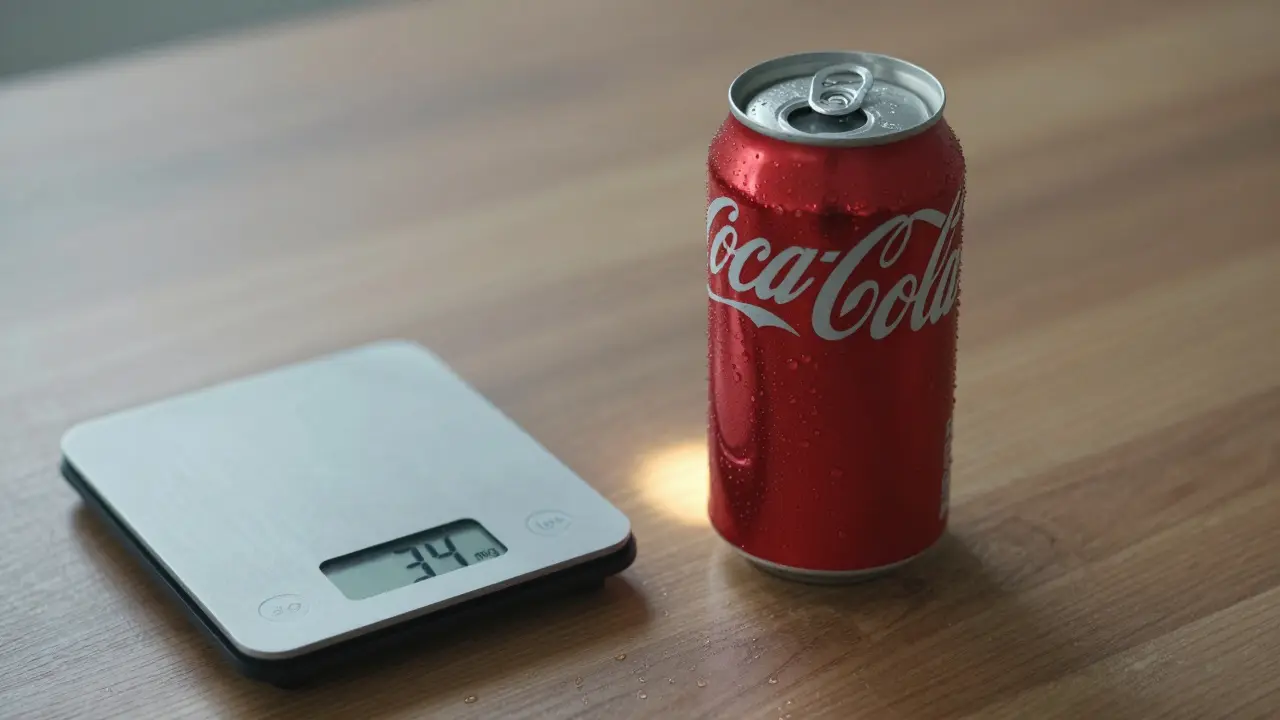
Ever crack open a Coke and wonder just how much caffeine you’re really drinking? It’s not just a fizzy drink - it’s a quiet source of stimulation that shows up in your morning routine, afternoon slump, or late-night study session. But how much caffeine is actually in a standard can of Coke? And does it even compare to what you’d find in an energy drink?
The exact caffeine count in a standard Coke
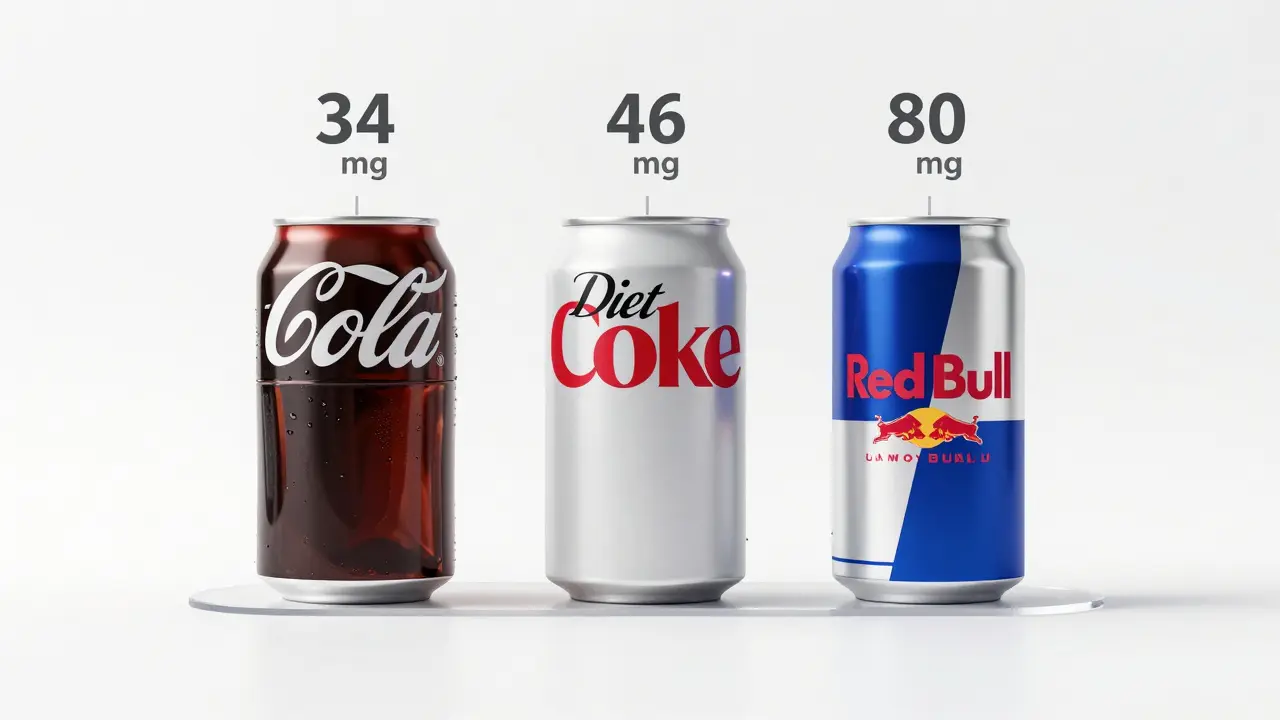
A 12-ounce (355 ml) can of regular Coca-Cola contains 34 milligrams of caffeine. That’s the number you’ll find on Coca-Cola’s official nutrition facts in the U.S. and Australia. It’s consistent across most countries, though some international versions - like those in Japan or parts of Europe - may vary slightly due to local regulations or sugar content adjustments.
Let’s break that down. If you drink one can, you’re getting about a third of the caffeine in a typical 8-ounce cup of brewed coffee - which averages 95 mg. So no, Coke isn’t a coffee replacement. But if you’re sipping it all day - say, two or three cans - you’re quickly adding up to over 100 mg of caffeine. That’s close to half the daily limit many health experts recommend for adults.
Coke Zero and Diet Coke: Different numbers, same buzz
Not all Coke products are created equal when it comes to caffeine. Diet Coke, for example, packs 46 mg of caffeine per 12-ounce can. That’s more than regular Coke. Why? Because it’s formulated with a different blend of flavorings and preservatives that require more caffeine to maintain the taste profile people expect.
Coke Zero Sugar? It also contains 46 mg of caffeine - the same as Diet Coke. So if you think you’re cutting back by choosing a zero-sugar version, you might actually be getting more caffeine than you bargained for. People often assume diet = less stimulant, but that’s not always true.
How does Coke compare to energy drinks?
Let’s put Coke in context. A 16-ounce can of Red Bull has 142 mg of caffeine. A 12-ounce can of Monster Energy? Around 120 mg. Even a small 8.4-ounce can of Red Bull has 80 mg. That means one Monster has nearly three times the caffeine of a regular Coke.
But here’s the thing most people miss: energy drinks don’t just pack more caffeine. They often combine it with sugar, taurine, guarana, and B-vitamins - all designed to create a quick, intense spike. Coke? Just caffeine, sugar, and flavor. No added stimulants. No “energy blend.” Just a simple, predictable dose.
That’s why Coke can be a smoother option for people who want a light boost without the jitters. But if you’re drinking multiple cans a day, you’re still hitting caffeine levels that could affect sleep, heart rate, or anxiety.
What’s the safe daily limit?
The U.S. Food and Drug Administration (FDA) and Health Canada both say 400 mg of caffeine per day is safe for most healthy adults. That’s about four 12-ounce Cokes. But if you’re sensitive - or if you’re drinking coffee, tea, or chocolate on top of that - you could easily hit your limit without realizing it.
For teens? The American Academy of Pediatrics recommends no more than 100 mg per day. That’s less than three Cokes. For kids under 12? No specific limit, but most pediatricians advise avoiding caffeine entirely.
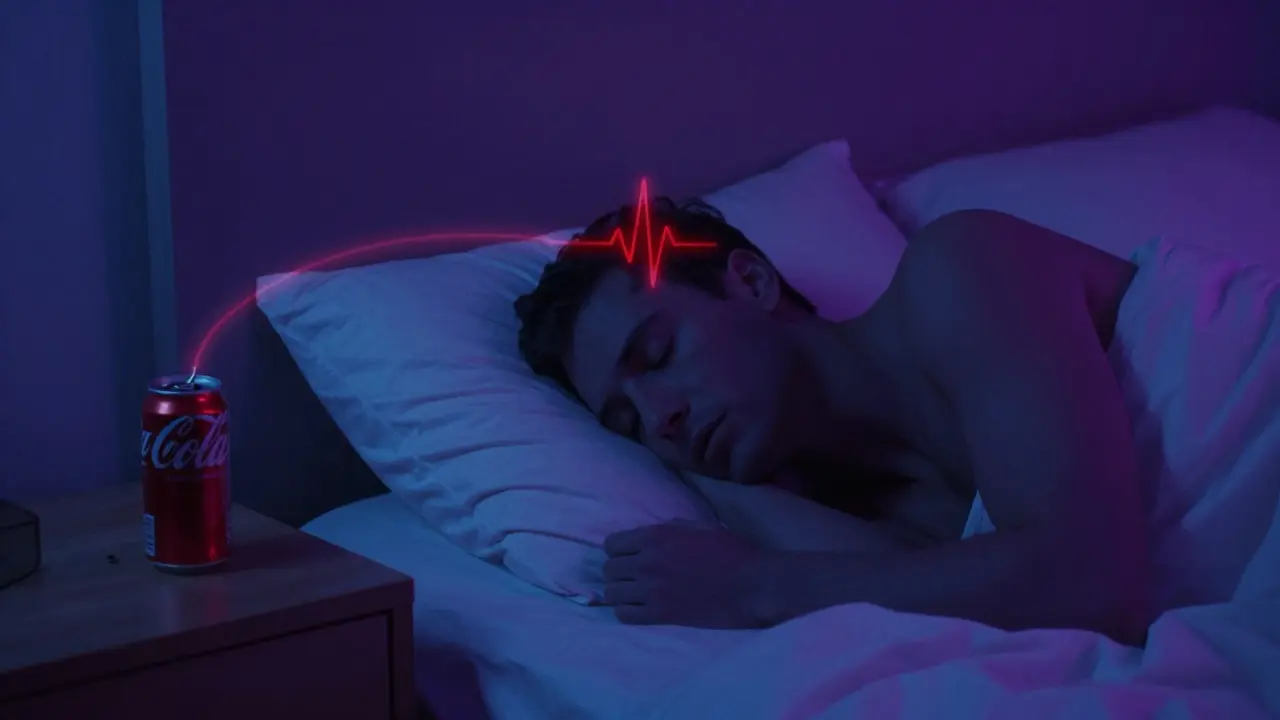
And here’s a hidden factor: caffeine builds up in your system. It takes about 5 hours for half of it to leave your body. So if you drink a Coke at 3 p.m., nearly half of that caffeine is still in your bloodstream at bedtime. That’s why some people swear they’re not sensitive to caffeine - until they start tracking when they drink it.
Why does Coke have caffeine at all?
Coca-Cola was originally developed in the 1880s as a medicinal tonic. It included coca leaf extract (which contained cocaine) and kola nut (which contains caffeine). Even after cocaine was removed in 1903, caffeine stayed. Why? Because it enhances flavor. It cuts through the sweetness and gives the drink a sharper, more satisfying taste.
Today, caffeine in Coke isn’t there to energize you - it’s there to make you want another one. It’s a flavor enhancer disguised as a stimulant. And that’s why it’s so easy to drink multiple cans without thinking about it.
What about caffeine-free Coke?
If you like the taste of Coke but want to avoid caffeine entirely, there’s a solution: Caffeine-Free Coca-Cola. It’s widely available in supermarkets and vending machines. It has the same sweet, fizzy profile - just zero caffeine. That’s a great option if you’re trying to cut back, especially in the afternoon or evening.
It’s not just for people trying to quit caffeine. Pregnant women, people with heart conditions, or those on certain medications often switch to caffeine-free versions. Even athletes sometimes choose it as a hydrating, low-sugar beverage during recovery.
How to track your caffeine intake
Most people guess when it comes to caffeine. They think, “I only had one Coke,” and forget about the coffee they had at 7 a.m. or the chocolate bar at lunch.
Here’s a simple way to keep track:
- Write down every source: coffee, tea, soda, energy drinks, chocolate, medication.
- Use the standard amounts: 34 mg per Coke, 46 mg per Diet Coke, 95 mg per coffee cup.
- Set a daily goal: 200 mg if you’re sensitive, 400 mg if you’re healthy and active.
- Notice how you feel: headaches? Restlessness? Trouble sleeping? That’s your body telling you to dial back.
There’s no magic number that works for everyone. Some people drink five Cokes a day and feel fine. Others feel wired after one. Listen to your body. It’s smarter than any label.
Bottom line: Coke isn’t an energy drink - but it still matters
Yes, a can of Coke has less caffeine than most energy drinks. But it’s still a daily habit for millions. And habits add up. If you’re drinking two Cokes a day, you’re consuming 68 mg of caffeine - not a lot, but enough to interfere with sleep if you’re sensitive.
There’s nothing wrong with enjoying a Coke. But knowing exactly how much caffeine is in it? That’s power. It lets you make smarter choices - whether you’re trying to sleep better, reduce anxiety, or just understand what you’re putting in your body.
Next time you grab a Coke, pause for a second. That 34 mg? It’s not just sugar water. It’s a mild drug. And you deserve to know what you’re taking.
How much caffeine is in a 12 oz Coke?
A standard 12-ounce (355 ml) can of Coca-Cola contains 34 milligrams of caffeine. This is consistent across most countries, including the U.S. and Australia.
Is Diet Coke higher in caffeine than regular Coke?
Yes. Diet Coke contains 46 mg of caffeine per 12-ounce can, which is about 12 mg more than regular Coke. This is due to differences in flavor formulation and the need for caffeine to balance the artificial sweeteners.
Can drinking Coke every day be harmful?
Drinking one or two Cokes a day is generally safe for healthy adults, as long as total caffeine intake stays under 400 mg. But daily consumption can lead to dependence, disrupted sleep, or increased sugar intake - especially if you’re not watching your overall diet.
Does caffeine-free Coke have any caffeine?
No. Caffeine-Free Coca-Cola contains zero caffeine. It uses the same flavor profile as regular Coke but removes the stimulant entirely. It’s a good alternative for people reducing caffeine or avoiding it for health reasons.
How does Coke compare to Red Bull in caffeine content?
A 12-ounce Coke has 34 mg of caffeine. A 12-ounce Red Bull has 80 mg - more than double. A full 16-ounce can of Red Bull contains 142 mg. Energy drinks are designed for a strong, fast-acting boost; Coke delivers a mild, slow-release effect.

Comments (8)
Vimal Kumar
18 Mar 2026
I always thought Coke had like 50mg or something, turns out it's way lower than I thought. But man, if you drink two cans a day and also have coffee, you're sneaking up on 150mg before lunch. I switched to caffeine-free after my anxiety spiked last year. Not because I'm weak, just... my body said no.
Also, the part about caffeine being there for flavor, not energy? That blew my mind. Makes sense though. It's why you keep drinking it even when you're not tired.
Amit Umarani
19 Mar 2026
The article says '34 milligrams' but then later writes '34 mg' without spelling out milligrams. Inconsistent formatting. Also, '46 mg' for Diet Coke - same issue. And you say '8.4-ounce can of Red Bull has 80 mg' - that's not a standard size. It's 8.4 fl oz, not 8.4 oz. Precision matters.
Noel Dhiraj
20 Mar 2026
I used to chug Diet Coke like water until I started having heart palpitations. Turns out 46mg per can adds up fast. Now I drink water or caffeine-free Coke. The taste is almost identical. No jitters. No crash. Just... chill. And yeah, caffeine isn't there to wake you up - it's there to make you crave it again. Sneaky.
vidhi patel
20 Mar 2026
This article is riddled with grammatical inaccuracies and lacks formal citation. The phrase 'you're quickly adding up to over 100 mg' is syntactically incorrect - it should be 'you are quickly accumulating over 100 mg.' Furthermore, the use of contractions such as 'it's' and 'you're' in a factual health piece is inappropriate. The tone is overly casual for a subject that requires authoritative clarity.
Priti Yadav
22 Mar 2026
They don't tell you this, but the caffeine in Coke? It's not even natural. It's synthetic. Manufactured in labs. And they add it back in because people would stop buying it if they knew how much of a drug they're consuming. Coca-Cola was originally a cocaine-laced tonic. They just swapped one addiction for another. Wake up people.
Ajit Kumar
23 Mar 2026
It is worth noting that the FDA's recommended daily limit of 400 milligrams of caffeine applies to healthy adults, not adolescents, pregnant individuals, or those with cardiovascular conditions. The article mentions this briefly, but fails to emphasize the critical importance of individual variability in caffeine metabolism. Some individuals metabolize caffeine at half the rate of others due to genetic polymorphisms in the CYP1A2 enzyme. Thus, what is 'safe' for one may be hazardous for another. Furthermore, the claim that caffeine-free Coke has 'the same flavor profile' is misleading - numerous blind taste tests have demonstrated perceptible differences in mouthfeel and aftertaste due to the absence of caffeine's subtle bittering effect.
Diwakar Pandey
25 Mar 2026
I read this while sipping my third Coke of the day. Then I checked the clock. 3:17 p.m. Oops.
Turns out I’ve been drinking Diet Coke since 2018 thinking I was being healthy. Didn’t realize I was getting more caffeine than regular. My sleep’s been trash for years. Maybe it’s not the Netflix. Maybe it’s the 46mg per can I didn’t know I was downing.
Switched to caffeine-free last week. Slept like a rock. Weird how something so small changes everything.
Geet Ramchandani
27 Mar 2026
This whole article is a sugar-coated corporate lie. They want you to think 34mg is harmless because it’s 'less than coffee.' But they don’t tell you that Coke is engineered to be addictive. The sugar, the carbonation, the caffeine - it’s a triple-layered trap. And then they sell you 'diet' versions with even more caffeine to keep you hooked. They don’t care if you can’t sleep. They care if you keep buying. Wake up. This isn’t a beverage. It’s a behavioral modification tool disguised as refreshment.