
Do Players Eat at Halftime? What Athletes Actually Consume Between Rounds
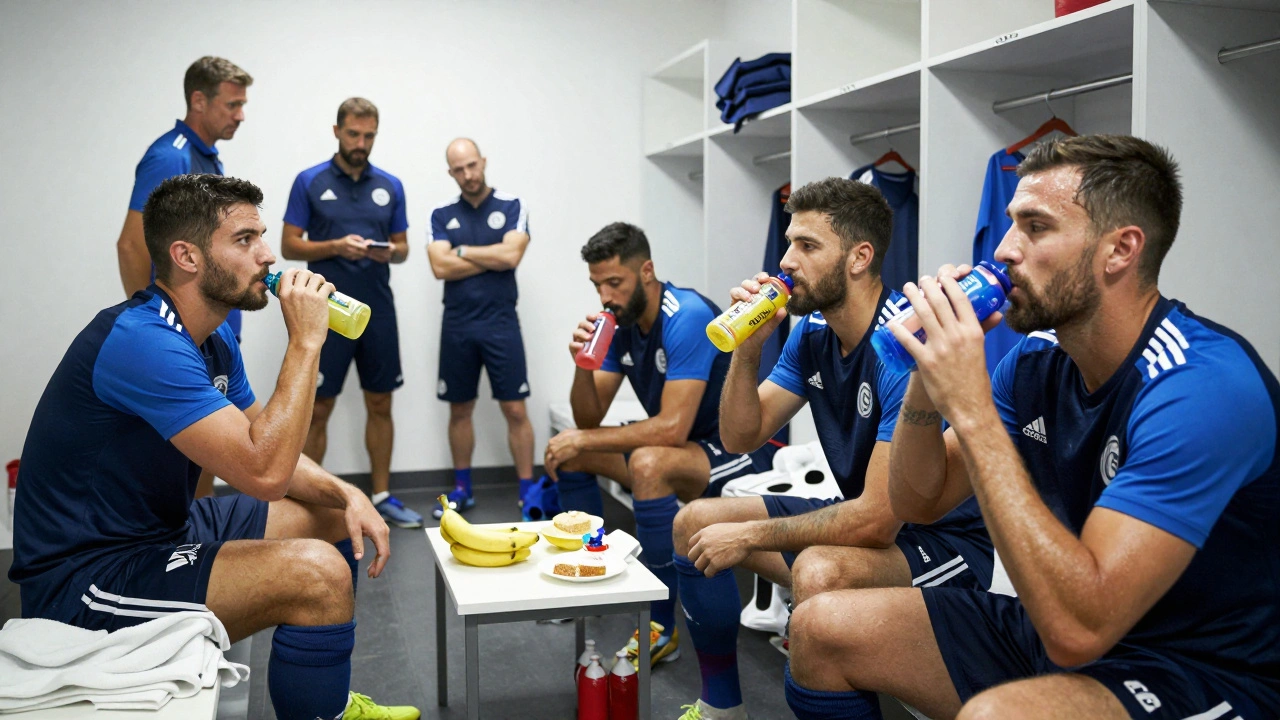
Ever watched a soccer match and wondered-do players actually eat at halftime? Or are they just sipping water and hoping for a miracle in the second half? The truth is, halftime isn’t just a break. It’s a critical window where elite athletes refuel, rehydrate, and reset their bodies to keep performing at peak levels. And what they consume? It’s not a sandwich or a bag of chips. It’s science in action.
Halftime isn’t a snack break-it’s a performance reset
Most amateur players think halftime means resting. But professional athletes treat it like a pit stop in Formula 1. In a 90-minute soccer match, players cover 7 to 12 kilometers. That’s the distance of a 5K run-on top of sprinting, jumping, and changing direction every few seconds. Their bodies burn through glycogen stores fast. By the 45th minute, many are already running on fumes.
That’s why coaches and nutritionists plan halftime like a medical intervention. The goal? Restore energy, stabilize blood sugar, and prevent cramps. It’s not about feeling full. It’s about staying sharp, fast, and strong for the next 45 minutes.
What do players actually eat? Simple carbs, fast fluids
Forget burgers, fries, or energy bars. Halftime fuel is all about speed and absorption. The body can’t digest heavy food in 15 minutes. So what’s on the menu?
- Energy gels-packed with 20-30 grams of simple sugars like glucose and fructose. Easy to swallow, absorbed in under 10 minutes.
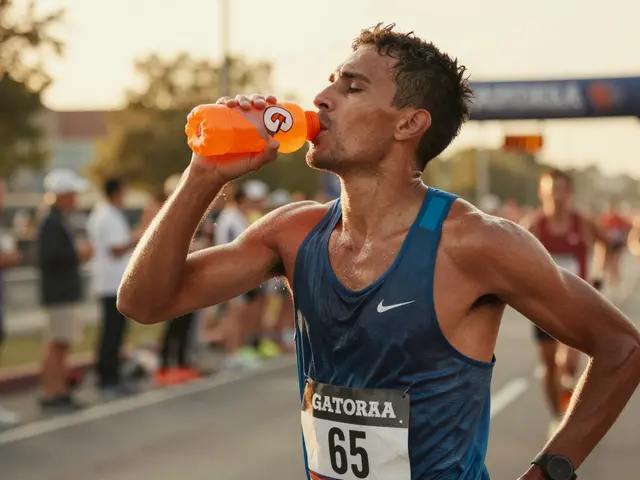
- Sports drinks-not soda, not juice. These are scientifically formulated with 6-8% carbohydrates and electrolytes. Brands like Gatorade, Powerade, and Nuun are common in pro leagues.
- Bananas-a natural source of potassium and fast-digesting carbs. Easy to peel, easy to chew. Used by tennis players, cyclists, and soccer teams alike.
- Small portions of white bread or rice cakes-sometimes with honey or jam. Low fiber, low fat, quick energy.
- Electrolyte tablets-dissolved in water. Replace sodium, potassium, and magnesium lost through sweat.
One study from the Journal of the International Society of Sports Nutrition found that soccer players who consumed 30-60 grams of carbohydrates at halftime improved sprint speed by 12% in the final 15 minutes compared to those who only drank water.
Why energy drinks? Because time is everything
Not all energy drinks are created equal. The ones athletes use aren’t the sugary, caffeine-loaded cans you see in convenience stores. These are medical-grade sports drinks designed for rapid absorption. They contain:
- 6-8% carbohydrates (not 10%+-too much slows absorption)
- 20-50 mg of sodium per 100 ml (to help retain fluids)
- No artificial colors, preservatives, or high-fructose corn syrup
- Minimal caffeine (under 30 mg per serving-enough to sharpen focus, not cause jitters)
Teams like Liverpool FC, the Australian national soccer team, and the NBA’s Golden State Warriors use custom-blended sports drinks developed with sports dietitians. These aren’t off-the-shelf products. They’re tailored to the athlete’s sweat rate, climate, and position.
Why not just water? Because water alone doesn’t replace what’s lost. Drinking only water during intense activity can dilute blood sodium levels-a dangerous condition called hyponatremia. Sports drinks fix that.
What about protein or fats? Not at halftime
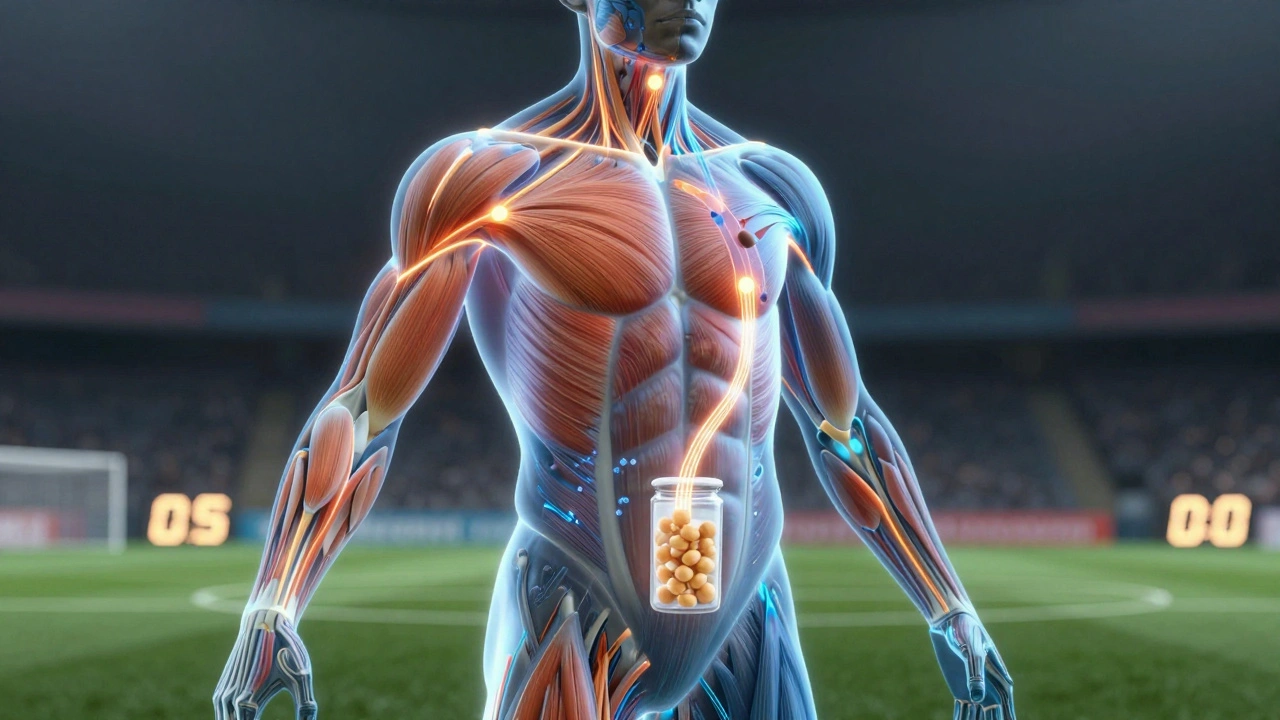
Protein and fat take longer to digest. That’s why you won’t see players chewing on chicken or nuts at halftime. In fact, eating fat or protein during exercise can cause stomach cramps, nausea, or sluggishness. The body prioritizes blood flow to muscles, not digestion.
Protein is important-but it’s saved for post-game recovery. That’s when athletes eat meals with lean meat, eggs, or whey protein shakes. Halftime? It’s all about carbs and fluids. Nothing else.
How much do they actually consume?
It’s not a buffet. It’s precision. Most athletes consume:
- 30-60 grams of carbohydrates total during halftime
- 400-800 ml of sports drink (about 1.5-3 cups)
- One banana or one energy gel
For endurance sports like marathon running or cycling, that number goes up. But in team sports? Too much can backfire. Overloading the stomach leads to sloshing, bloating, and poor performance. Athletes train their guts just like their legs.
What about younger players? Kids and teens
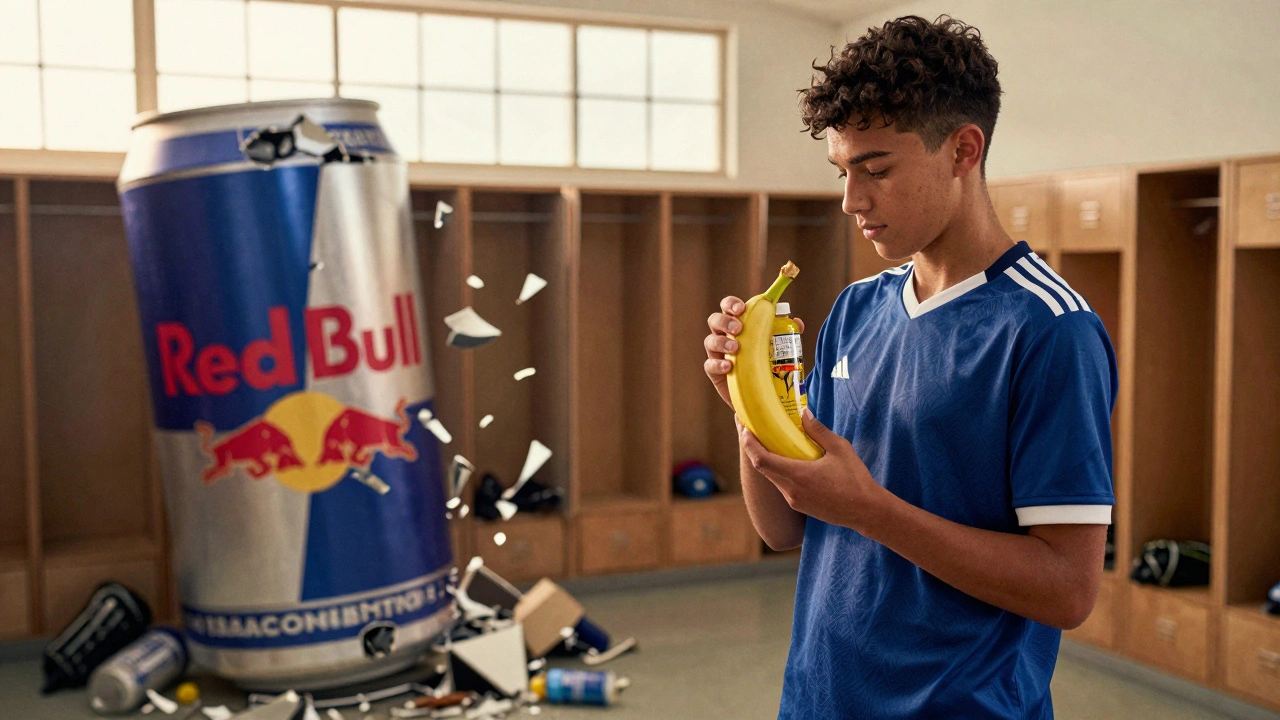
Parents often ask: Should my 14-year-old soccer player eat the same things as the pros? The answer is yes-but scaled down. Kids don’t need 60 grams of carbs. 20-30 grams is plenty. A banana and a small bottle of sports drink is enough.
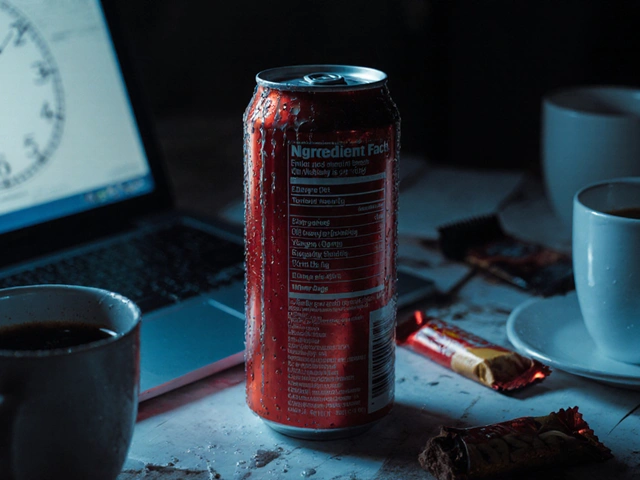
And no, don’t let them drink energy drinks with caffeine. The American Academy of Pediatrics advises against caffeine for children under 12 and recommends extreme caution for teens. The real issue? Many teens confuse sports drinks with energy drinks like Red Bull or Monster. That’s dangerous. One can of Monster has 160 mg of caffeine and 54 grams of sugar. That’s not fuel-it’s a crash waiting to happen.
What happens if they don’t eat at halftime?
Players who skip halftime fueling don’t just slow down. They risk:
- Decreased reaction time
- Slower sprint speed
- Mental fog-poorer decision-making
- Increased risk of muscle cramps
- Higher chance of injury from fatigue
A 2023 study tracking 200 professional soccer players found that those who didn’t consume carbs at halftime were 47% more likely to miss a tackle or make a poor pass in the final 10 minutes. That’s not just fatigue. That’s performance collapse.
Myth: Coffee or energy drinks boost performance
Some athletes swear by a cup of coffee or a can of Red Bull at halftime. But here’s the truth: caffeine helps-but only if it’s timed right. The effects take 30-45 minutes to kick in. That means if you drink it at halftime, you’re not getting the boost until the 75th minute. Too late.
Plus, energy drinks often contain too much caffeine (200+ mg), too much sugar, and stimulants like taurine or guarana. These can raise heart rate, cause anxiety, or lead to dehydration. For athletes, the risks outweigh the benefits.
Real performance boosters? Carbs. Water. Electrolytes. That’s it.
Bottom line: It’s not about eating-it’s about fueling
Players don’t eat at halftime because they’re hungry. They consume specific nutrients because their bodies are running on empty. It’s not a snack. It’s a strategic intervention.
If you’re an athlete, coach, or parent, remember this: what you put in during halftime determines what you can do in the final minutes. Skip it, and you’re gambling with performance. Get it right, and you’re giving your body the tools to push past fatigue, stay sharp, and win.
Halftime fuel isn’t glamorous. It’s not flashy. But it’s the difference between winning and losing.
Do soccer players eat solid food at halftime?
Yes, but only light, easy-to-digest carbs like bananas, rice cakes, or energy gels. Solid meals like sandwiches or meat are avoided because they take too long to digest and can cause discomfort during play.
Are energy drinks good for athletes at halftime?
Only if they’re sports drinks formulated for athletes-not energy drinks like Red Bull or Monster. Sports drinks contain the right balance of carbs and electrolytes for quick absorption. Energy drinks often have too much caffeine and sugar, which can hurt performance and hydration.
How many carbs should a player consume at halftime?
Most athletes consume 30-60 grams of carbohydrates during halftime. For younger players or lower-intensity sports, 20-30 grams is sufficient. This can come from one banana, one energy gel, or a sports drink with the right carb concentration.
Why don’t athletes eat protein at halftime?
Protein takes longer to digest and diverts blood flow away from muscles to the stomach. This can cause cramps or nausea during activity. Protein is important for recovery-but it’s saved for after the game.
Can kids drink sports drinks at halftime?
Yes, but in smaller amounts. A 14-year-old athlete should have about half the carbs of a professional-around 20-30 grams. Avoid caffeine and high-sugar drinks. Water and a banana are often enough for youth sports.



Comments (9)
Noel Dhiraj
6 Dec 2025
Really appreciate this breakdown. I used to think halftime was just a chance to catch breath but now I get why pros go for bananas and gels. No fancy snacks, just pure function. Feels good to know the science behind it.
vidhi patel
6 Dec 2025
It is imperative to note that the consumption of improperly formulated sports beverages may result in deleterious physiological consequences, including but not limited to electrolyte imbalance and gastric distress. The article, while largely accurate, fails to explicitly cite peer-reviewed meta-analyses regarding carbohydrate absorption kinetics, which undermines its scientific credibility.
Priti Yadav
7 Dec 2025
Wait… so you’re telling me Gatorade isn’t just government mind-control syrup disguised as hydration? I’ve always suspected. Who funds these ‘sports science’ labs? Big Sugar? The NFL? They don’t want you to know real energy comes from fasting and sunlight.
Ajit Kumar
9 Dec 2025
It is a fundamental misconception among the general populace that athletic performance can be sustained through mere ingestion of carbohydrates; the reality is far more nuanced. The body’s metabolic response to exogenous glucose is modulated by a complex interplay of insulin sensitivity, muscle glycogen depletion thresholds, and neuromuscular fatigue dynamics - none of which are adequately addressed in this oversimplified exposition. Furthermore, the assertion that protein is entirely excluded from halftime nutrition is not universally applicable, as certain endurance athletes in ultra-distance events do consume small amounts of hydrolyzed whey peptides to mitigate muscle catabolism - albeit under strictly controlled conditions.
Diwakar Pandey
9 Dec 2025
Kinda cool how something so simple - a banana and a drink - can make such a difference. I never thought about how much the gut has to be trained too. Like, you can’t just eat anything and expect to sprint after. Makes me wanna try it myself next time I play pickup.
Geet Ramchandani
9 Dec 2025
Of course they eat carbs - because the entire sports industry is built on selling you the illusion that you need their magic potions to be human. The real reason players don’t collapse? Years of genetic privilege, elite coaching, and access to resources most people can’t dream of. Don’t flatter yourself - you’re not going to ‘fuel like a pro’ with a gel from the corner store. This is just corporate wellness theater dressed up as science.
Pooja Kalra
11 Dec 2025
There is a quiet truth here - that performance is not merely physical, but existential. To consume is to acknowledge scarcity. To fuel is to surrender to the machine. What are we really optimizing for? Victory? Or the illusion of control over a body that was never meant to be engineered?
Sumit SM
12 Dec 2025
Wait - I just realized - if you don’t eat at halftime, you’re basically just running on fumes… like a car with an empty tank… and nobody wants to be that guy… right? Right?!? I mean, think about it - your muscles are screaming, your brain is foggy, your legs are lead - and you’re trying to make a pass? Are you kidding me? That’s not sport - that’s suicide with cleats! And don’t even get me started on energy drinks - those are just liquid lightning bolts wrapped in neon marketing! Don’t be fooled - it’s carbs, water, electrolytes - that’s it - no magic - no hype - just science - plain and simple - and if you’re not doing it - you’re just playing with fire - literally!
Jen Deschambeault
12 Dec 2025
My son plays U16 soccer - I’ve been giving him a banana and a small bottle of diluted sports drink. He said he felt less tired in the second half. I’m glad we skipped the Red Bull.