
What Is the Number 1 Healthiest Drink for Athletes and Active People?
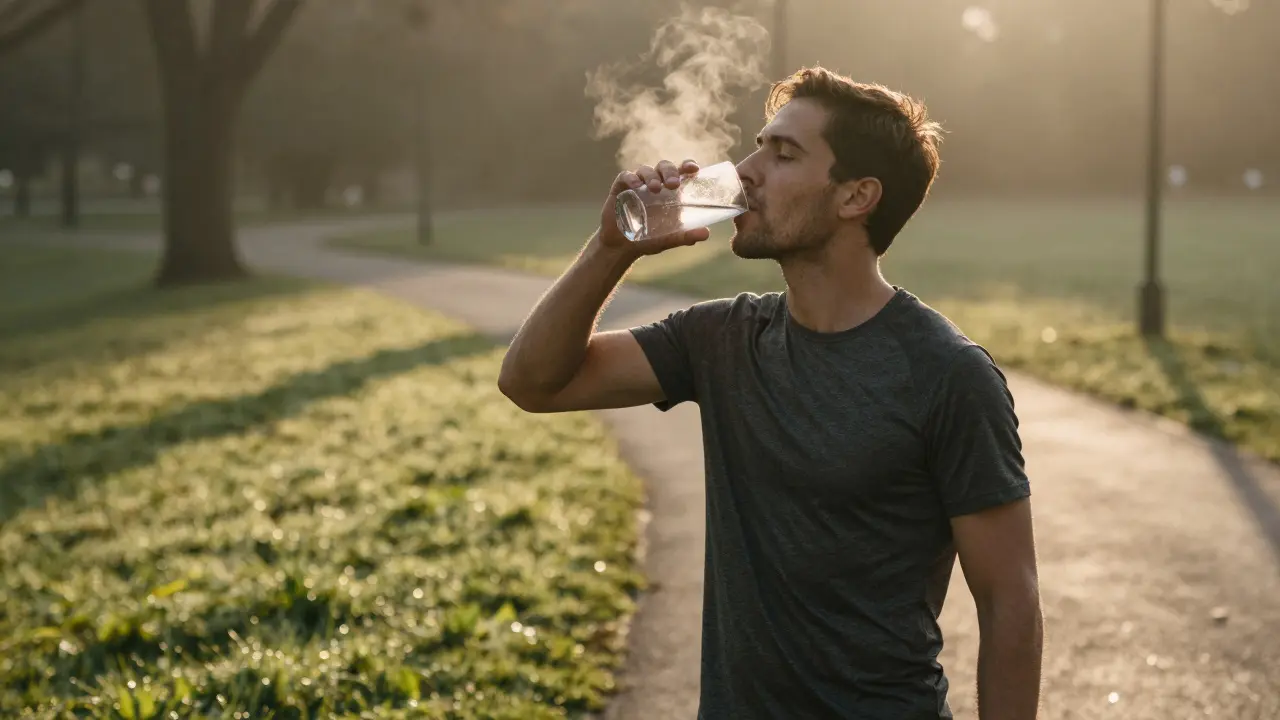
When you hear "healthiest drink," you might think of green smoothies, herbal teas, or fancy bottled waters. But if you're an athlete, a weekend warrior, or just someone who moves a lot, the real answer is simpler-and it’s been right in front of you all along: water.
Let’s be clear: no energy drink, sports drink, or electrolyte shot beats plain water when it comes to overall health, safety, and long-term performance. Not even close. And yet, billions are spent every year pushing products that claim to be "better" than water. Why? Because they’re profitable, not because they’re superior.
Why Water Is the Only Drink That Always Wins
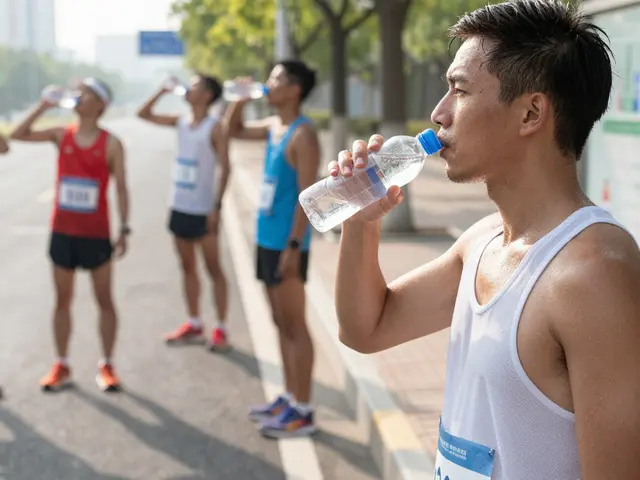
Water does one thing, and it does it perfectly: it hydrates. No additives. No sugar. No artificial colors. No stimulants. No hidden sodium spikes. Your body is 60% water. Every cell, every organ, every muscle needs it to function. When you sweat during a workout, you lose water. You replace it with water. That’s it.
Studies from the American College of Sports Medicine show that even a 2% loss of body weight through dehydration can reduce endurance, slow reaction time, and increase perceived effort. That’s not a minor drop-it’s the difference between finishing strong and hitting the wall. And the cure? Water.
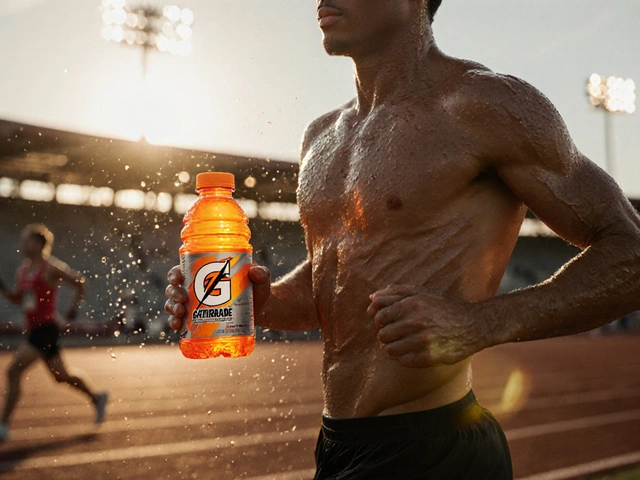
Compare that to most sports drinks. A typical 20-ounce bottle of a popular brand contains 34 grams of sugar. That’s nearly 9 teaspoons. You don’t need that much sugar to replace electrolytes. You need a pinch of salt and a little potassium. Water with a pinch of salt and a squeeze of lemon does that. For free.
What About Sports Drinks? Are They Ever Worth It?
There’s one scenario where sports drinks make sense: continuous, high-intensity exercise lasting longer than 60-90 minutes. Think marathon runners, triathletes, or soccer players in a tournament. In those cases, you’re losing not just water, but glycogen and electrolytes fast enough that you need quick fuel and sodium replacement.
Even then, you don’t need the full sugary bottle. A 2023 study in the Journal of the International Society of Sports Nutrition found that athletes who consumed diluted sports drinks (half water, half electrolyte solution) performed just as well as those drinking full-strength versions-while taking in 40% less sugar. That’s the sweet spot: enough electrolytes, minimal sugar.
For everyone else-people doing 30-minute runs, gym sessions, bike rides, or yoga-sports drinks are just liquid candy. They add empty calories. They train your taste buds to crave sweetness. And over time, that contributes to weight gain, insulin resistance, and fatty liver disease.
The Real Problem With Energy Drinks
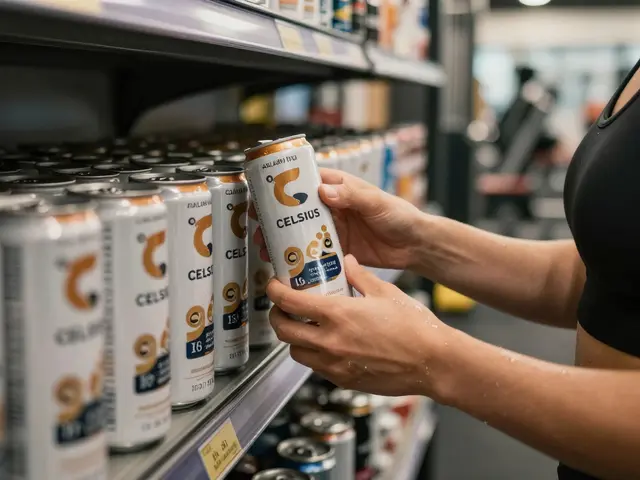
Let’s talk about the drinks marketed as "energy boosters" for athletes. These are not sports drinks. They’re caffeine bombs with sugar, taurine, guarana, and sometimes even creatine or B-vitamin cocktails. One popular brand has 200mg of caffeine per can-that’s two strong cups of coffee-plus 54 grams of sugar.
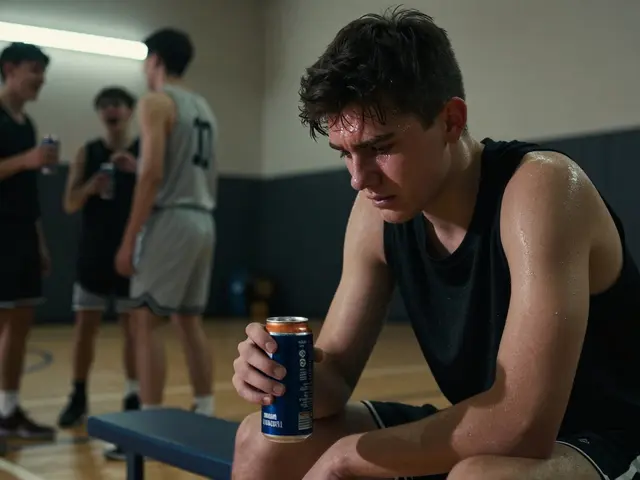
That kind of combo doesn’t give you energy. It gives you a spike, then a crash. It raises your heart rate unnaturally. It can trigger anxiety, insomnia, and even irregular heart rhythms in otherwise healthy people. The FDA has received hundreds of reports linking energy drinks to hospital visits, especially in teens and young adults.
And here’s the kicker: none of these ingredients are proven to improve performance in people who aren’t sleep-deprived or caffeine-naive. If you’re well-rested and hydrated, you don’t need them. If you’re tired, what you need is sleep-not a chemical shortcut.
Electrolytes: Do You Really Need a Bottle for Them?
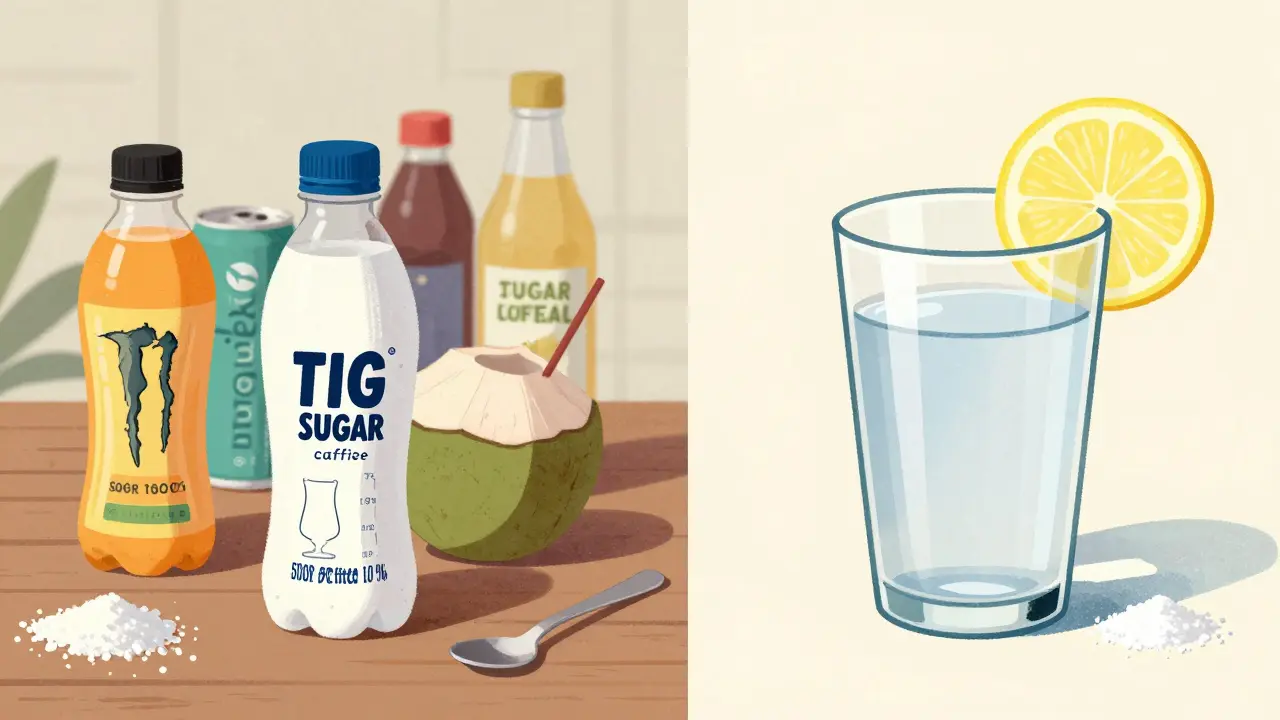
Electrolytes-sodium, potassium, magnesium, calcium-are vital. But you get them from food. A banana has more potassium than most sports drinks. A handful of almonds gives you magnesium. Salted nuts, spinach, yogurt, even a bowl of soup can replenish what you lose through sweat.
For most people, eating a balanced meal after exercise replaces electrolytes better than any drink. Even endurance athletes don’t need to chug electrolyte solutions after every workout. They need them after long sessions, and even then, they can make their own: mix 16 ounces of water, 1/4 teaspoon of salt, a squeeze of orange juice, and a dash of honey. It’s cheaper, cleaner, and just as effective.
What About Coconut Water? It’s Natural, Right?
Coconut water gets a lot of hype. It’s "natural," it’s "low-calorie," it’s "rich in electrolytes." But here’s the truth: it’s not magic. A cup of coconut water has about 60 calories and 15 grams of sugar. It has potassium-good-but very little sodium, which is the electrolyte you lose most in sweat.
For light activity, it’s fine. For a long run? You’d need to drink three or four cups to get enough sodium, and you’d be consuming over 200 calories of sugar. That’s worse than a regular sports drink. And it costs 5-10 times more than water.
It’s not unhealthy. But it’s not the healthiest. And it’s definitely not better than water.
What Should You Actually Drink?
Here’s a simple, science-backed hydration plan:
- Start your day with a glass of water. Don’t wait until you’re thirsty.
- For workouts under 60 minutes: drink water before, during, and after. That’s it.
- For workouts over 90 minutes: sip a homemade electrolyte drink (water + pinch of salt + lemon + tiny bit of honey) or use a low-sugar sports drink sparingly.
- After exercise: eat a meal with protein and carbs. That naturally restores fluids and electrolytes.
- Avoid energy drinks entirely. They’re not performance enhancers-they’re risk factors.
There’s no need to overthink it. Your body has been hydrating itself for millions of years. It doesn’t need a branded bottle to do it right.
The Bigger Picture: Why This Matters Beyond Performance
Drinking water isn’t just about running faster or lifting heavier. It’s about preventing chronic disease. Sugary drinks are the #1 source of added sugar in the American diet. That’s linked to type 2 diabetes, heart disease, and obesity. The World Health Organization says sugary drinks contribute to over 180,000 deaths worldwide each year.
Switching from sports drinks to water doesn’t just make you a better athlete. It makes you a healthier person. Long-term. For your liver, your pancreas, your heart, your brain.
And the best part? It costs nothing. You don’t need a subscription. You don’t need to buy special bottles. You just need a glass, a tap, and the discipline to choose the simple option.
Final Answer: Water. Always.
The number one healthiest drink isn’t a new product. It’s not a trendy brand. It’s not even a secret.
It’s water.
It’s free. It’s safe. It’s proven. And it works every time.
Stop overcomplicating hydration. Your body doesn’t need a label. It just needs clean, cold, simple water.
Comments (13)
Tina van Schelt
7 Jan 2026
Water. Just water. I used to buy those fancy electrolyte bottles after yoga, thinking I was being so healthy. Then I realized I was just paying for flavored sugar water. Now I drink tap water, eat a banana, and call it a day. My energy? Better. My wallet? Thank you.
Also, coconut water is basically nature’s Gatorade with a price tag that makes you cry.
Ronak Khandelwal
9 Jan 2026
Water is the original superdrink 🌍💧
Our ancestors didn’t need labels or marketing teams to survive-they drank from rivers, rain, and wells. We’ve forgotten that simplicity is power.
Stop buying into corporate hydration. Your body remembers what it needs.
And hey-if you’re sweating hard, add a pinch of Himalayan salt. That’s the real ancient tech. No patents. No ads. Just earth.
Be kind to your cells. They’ve carried you this far.
Hydrate like a human, not a consumer.
Jeff Napier
10 Jan 2026
Water is the healthiest drink lol what a joke
Ever heard of mineral water
Or alkaline water
Or hydrogen infused water
Or structured water
Or whatever the new scam is this week
They’re all better than tap water which is full of fluoride and microplastics
You’re just brainwashed by the government and big pharma
Water is a tool of control
Sibusiso Ernest Masilela
10 Jan 2026
How quaint. You think water is the answer? How pedestrian. How… American.
You speak of science like it’s gospel, yet you ignore the wisdom of Ayurveda, Traditional Chinese Medicine, even ancient Greek physicians-they all knew hydration is not merely about H2O.
Herbal infusions, fermented tonics, bone broths-these are the drinks of the enlightened.
Water is for peasants who can’t afford real nourishment.
You call yourself an athlete? Then drink like one. Not like someone who shops at Walmart.
Daniel Kennedy
11 Jan 2026
Jeff, your comment is wild but let’s not throw the baby out with the bathwater.
Yes, tap water can have contaminants-but filtration is cheap and effective. A Brita costs less than one sports drink.
And yes, mineral water has benefits-but for 99% of people, it’s overkill.
Water is the baseline. Everything else is an upgrade, not a replacement.
And if you’re doing 2-hour trail runs? Fine, make your own electrolyte mix. But don’t buy the $4 bottle. Make it for 25 cents.
Science doesn’t need to be complicated to be true.
Lauren Saunders
13 Jan 2026
Water is the answer. End of story.
But in India, we’ve always known this.
Our grandmas drank filtered water with lemon and black salt after work.
No labels. No ads.
Just wisdom.
Now everyone wants to buy a bottle.
Pathetic.
sonny dirgantara
13 Jan 2026
i just drink water and sometimes gatorade after i lift
idk why people make this so hard
its just water
why are we even having this convo
Eric Etienne
14 Jan 2026
Look, I’m not here to argue with science.
But if I’m going to spend 90 minutes on the bike, I want something that doesn’t taste like a plastic bottle.
So I drink coconut water.
It’s not perfect, but it’s better than nothing.
And honestly? I’d rather be a little sugary than dehydrated.
So yeah. I’m not buying your water cult.
Meredith Howard
14 Jan 2026
While I appreciate the empirical basis of your argument, I must respectfully note that hydration is not a monolithic phenomenon.
Individual biochemistry, environmental factors, and activity-specific metabolic demands necessitate nuanced approaches.
Water is indeed foundational, yet in high-heat, prolonged exertion, sodium loss can exceed 2,000 mg per hour-something plain water cannot address.
Furthermore, the psychological reinforcement of flavor may improve adherence to hydration protocols in non-elite athletes.
Therefore, while water remains optimal, blanket dismissal of alternatives may overlook practical compliance.
Science is not dogma-it is adaptive.
Yashwanth Gouravajjula
14 Jan 2026
Water is the answer.
But in India, we add ginger, cumin, and lemon.
Not because it’s trendy.
Because it works.
Hydration is culture too.
Kevin Hagerty
16 Jan 2026
water is the healthiest drink? wow what a revolutionary take
next you'll tell me breathing air is good for your lungs
lol
what a moron
you're probably the same guy who thinks vaccines are a hoax and that the moon landing was faked
water is poison if you drink too much
and also it's full of fluoride which gives you autism
go drink your electrolyte powder and stop being so basic
Janiss McCamish
17 Jan 2026
Real talk: if you’re drinking sports drinks regularly, you’re probably not eating well enough.
Food is the original electrolyte source.
After a workout? Eat an apple with peanut butter. Or yogurt with berries.
That gives you potassium, sodium, carbs, and protein-all in one.
Water + food > water + sugar + chemicals.
Simple. Effective. Real.
Richard H
18 Jan 2026
Water? That’s what you’re pushing? In America? We’ve got the best water in the world.
But you know what else we’ve got? Innovation.
Why settle for plain when you can have enhanced? When you can have performance-optimized? When you can have science in a bottle?
You think water is enough? Then why do elite athletes use IV drips?
Because they know: basic isn’t enough.
And if you’re not pushing the envelope, you’re falling behind.
Water is for amateurs.